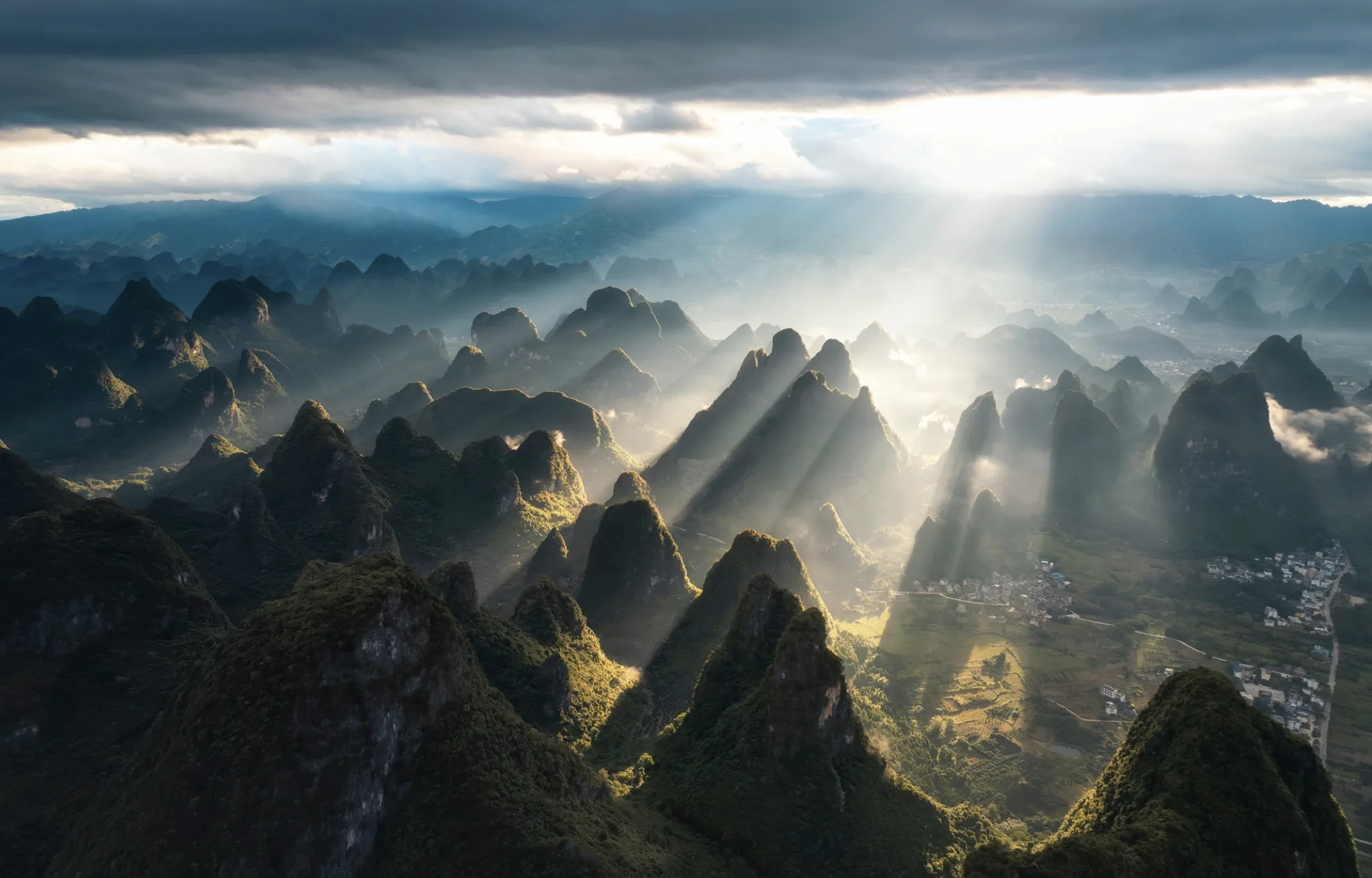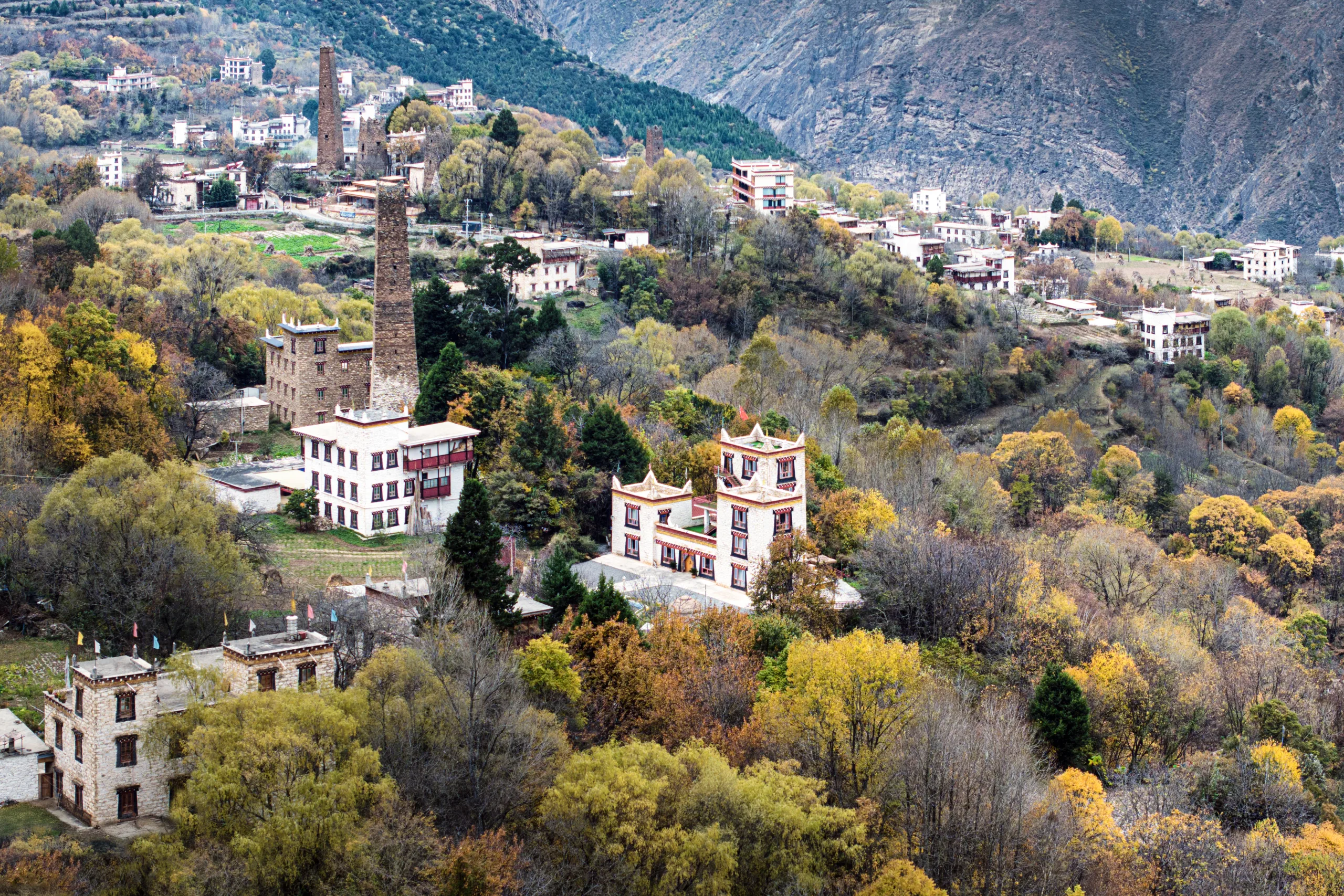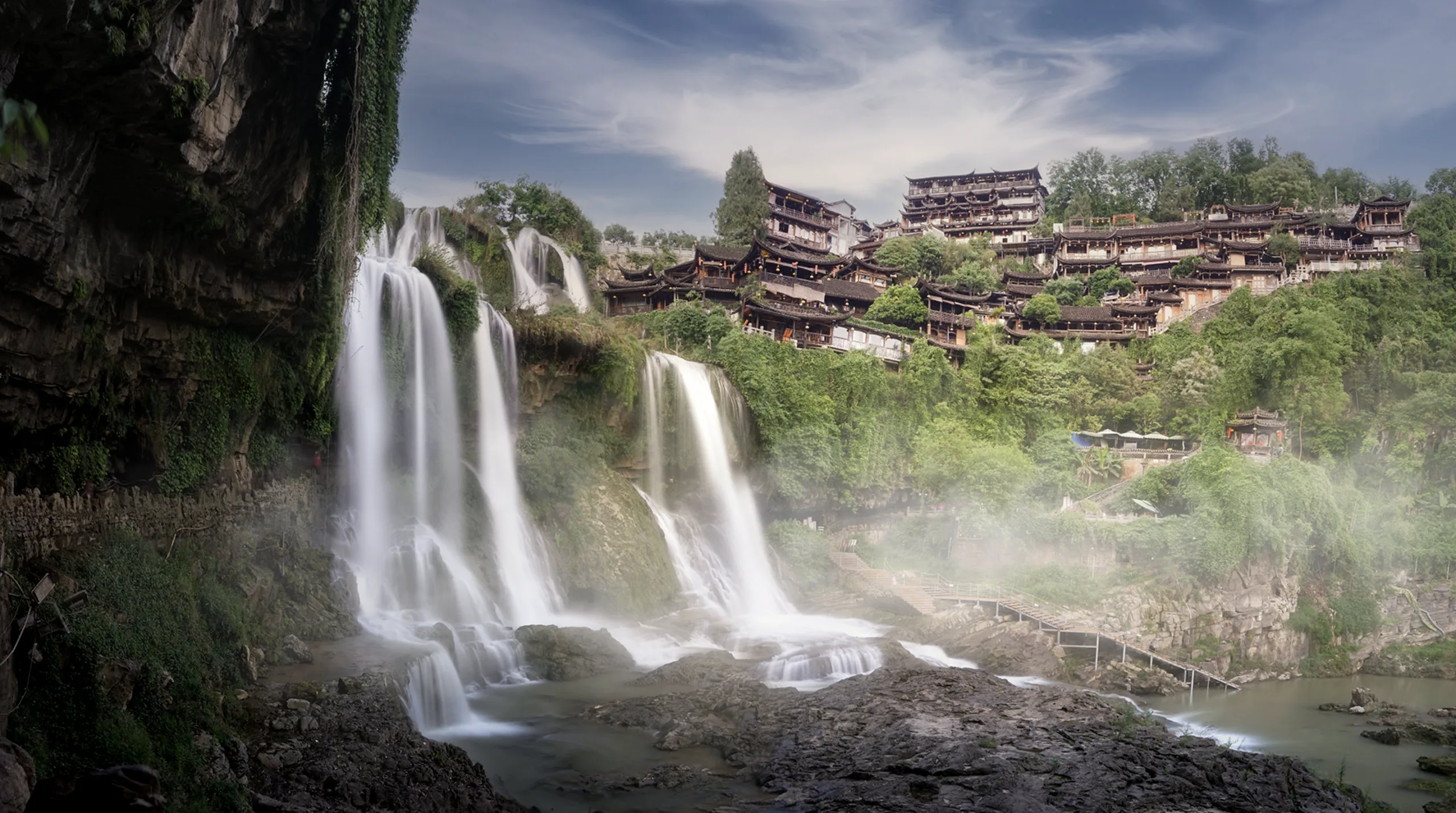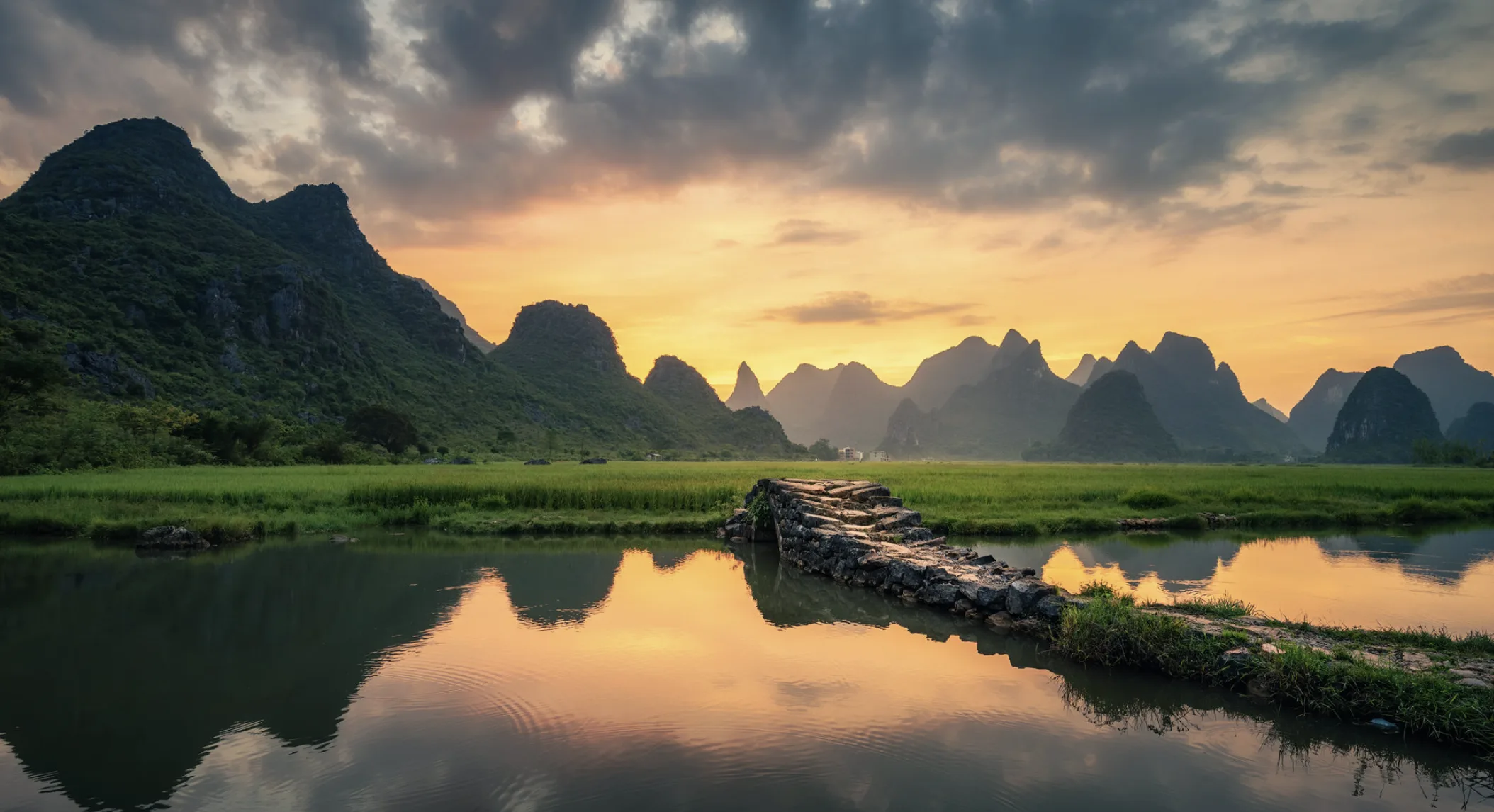
Guizhou is one of southwest China’s most fascinating regions for exploring mountain landscapes, where karst peaks, forests, valleys, waterfalls, rice terraces, and villages built among the mountains have shaped a unique relationship between people and place.
Unlike the extreme elevations of the Tibetan Plateau or technical mountain environments that require specialized equipment, Guizhou’s mountains invite travelers to explore at a slower pace. For those interested in nature, photography, light hiking, and cultural exploration, the mountains here are not simply places to admire scenery — they are gateways into the communities, traditions, and everyday rhythms that have developed alongside them. From Fanjingshan, a sacred Buddhist mountain surrounded by ancient forests, to the valleys and terraces of Miao and Dong villages, Guizhou offers a deeper way to experience how landscapes and cultures remain connected.
This guide introduces Guizhou’s major mountain regions, the best times to visit, hiking routes worth exploring, and how to combine mountain landscapes, villages, and local cultures into a meaningful journey. Eastogo specializes in immersive Guizhou journeys, arranging private transportation, local guides, and routes that connect travelers with the region’s landscapes, communities, and living cultures.
Why Explore Guizhou’s Mountains?
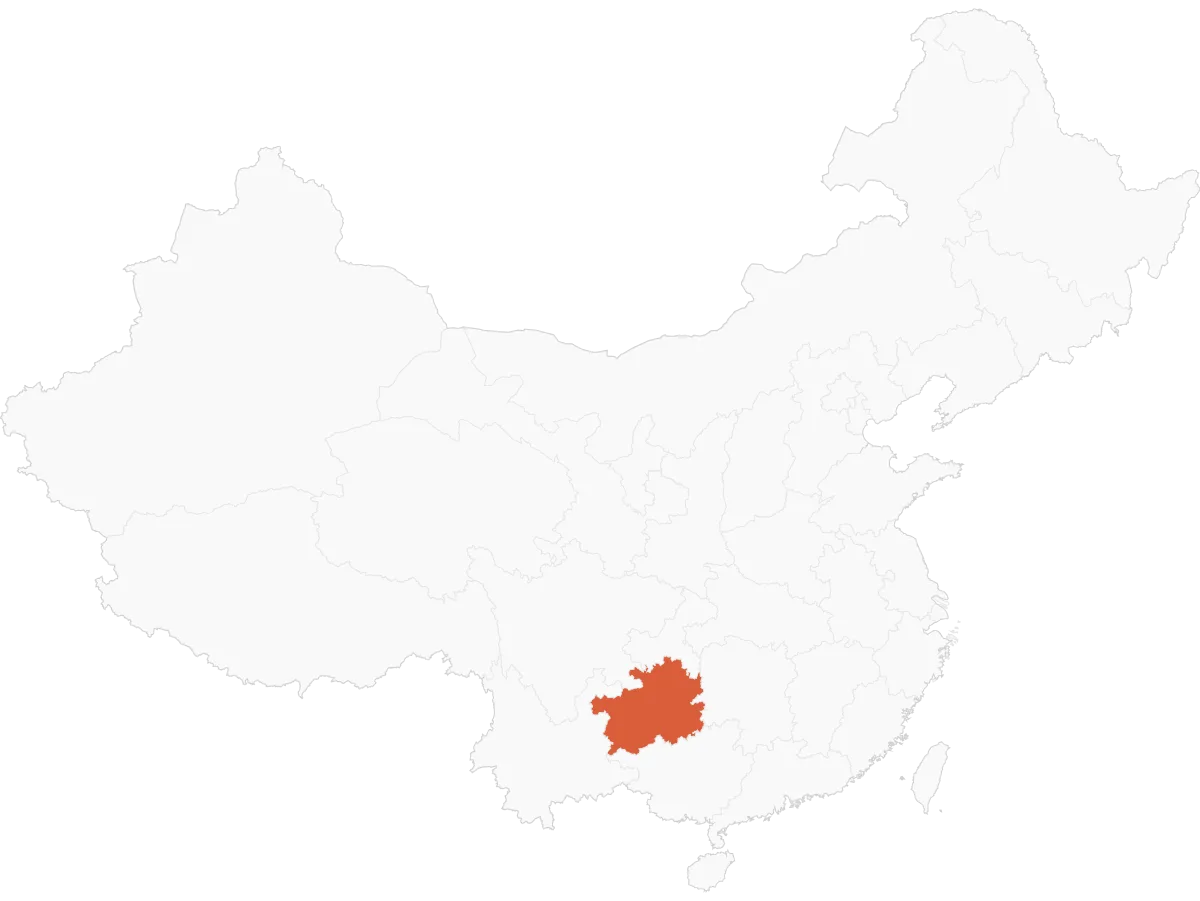
Guizhou Province, in Southwest China, is one of the most rugged parts of China, with no extensive plains and a landscape shaped almost entirely by mountains and hills. This mountainous province rises across the Yungui Plateau, creating an extraordinary diversity of natural environments — from limestone karst peaks and rivers hidden within deep valleys to waterfalls, dense forests, hillside terraces, and Miao and Dong villages built along mountain slopes. Together, these elements form the distinctive mountain landscapes of Guizhou.
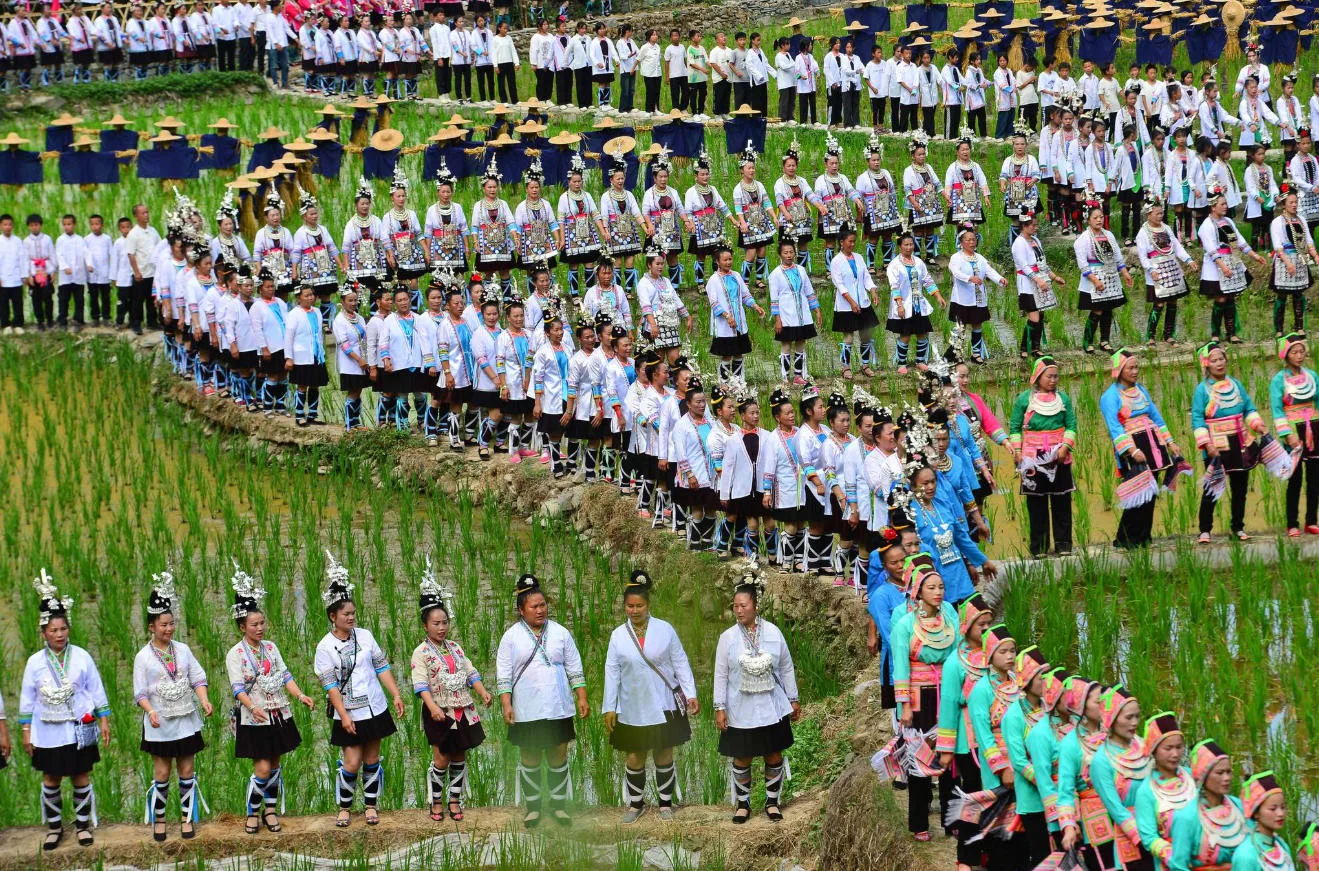
Unlike many high-altitude regions of western China, Guizhou’s mountains are not defined by conquering summits, but by the long relationship between people and nature that has shaped these landscapes. Within the folds of each mountain range are different communities, languages, and traditions, especially in rural areas where terrain still shapes daily life. The true appeal of Guizhou lies in the way travelers can experience an entire mountain journey in a single day: exploring forests and valleys, connecting with local cultures in ethnic villages, and following mountain paths and terraces to understand how communities have lived alongside this land for generations.
Best Time to Visit Guizhou Mountains: Weather, Seasons and Festivals
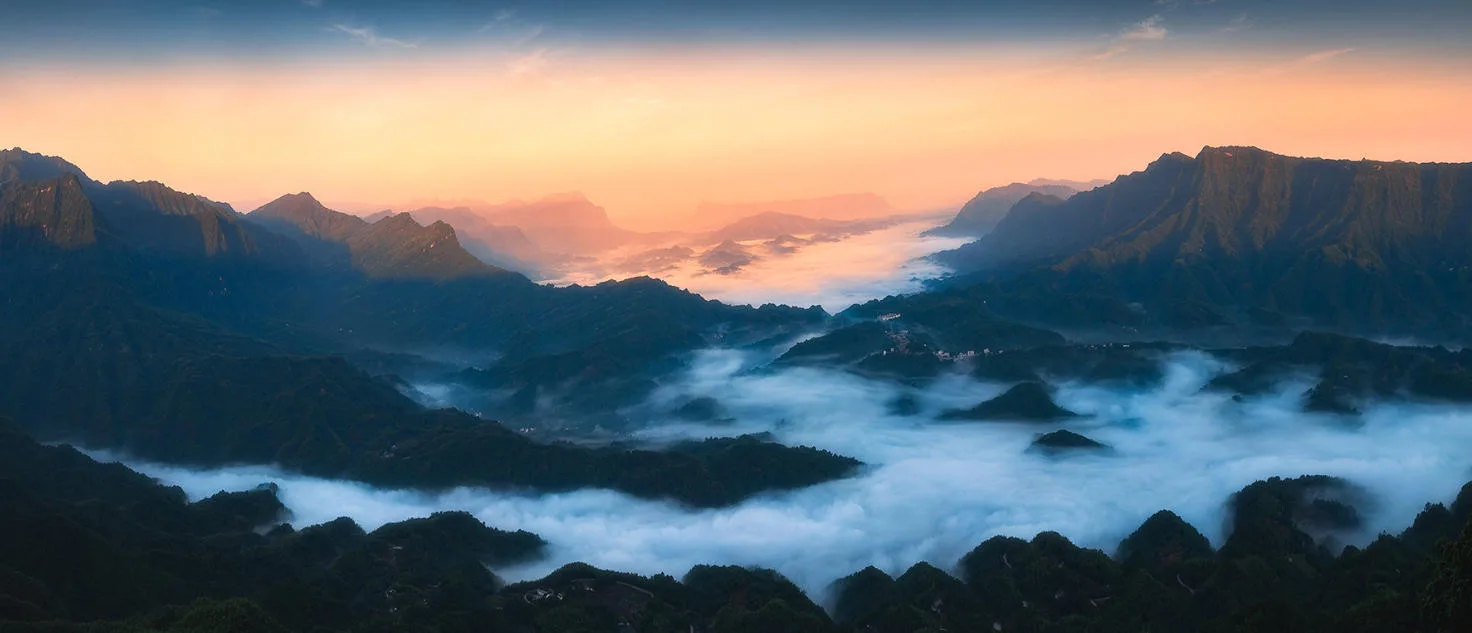
Guizhou has a pleasant climate overall, with abundant rainfall throughout the year, and weather conditions in the mountains can change quickly. Especially in spring and summer, mist, sudden showers, and low visibility are common. While these conditions may sometimes limit distant views, they also give Guizhou’s forests and mountains their deep green colors and mysterious atmosphere.
Spring and autumn are the best seasons for mountain hiking, with mild temperatures and relatively less rainfall. These seasons often bring dramatic cloud and mist landscapes, while spring’s flooded rice terraces and autumn’s harvest season offer the best opportunities to experience Guizhou’s terraced landscapes.
Summer is cooler than many other regions of China, with lush vegetation and the most impressive waterfalls and rivers. However, rainfall is more frequent, so travelers should remain flexible and prepare proper rain protection.
Winter brings fewer visitors, and higher mountain areas may experience snow. At the same time, festivals such as the Miao New Year and Dong New Year bring a strong cultural atmosphere to the season, while at other times of year travel may also coincide with the Miao people’s Sister Festival and Lusheng Festival across Guizhou’s 49 ethnic groups, including the Miao and Dong peoples. No matter when you visit, a windproof jacket and shoes with good grip are recommended — mountain weather in Guizhou can change within minutes.
Speak to An Expert
Starting Your Jounrney to Guizhou
Start designing your China journey with our destination experts.
Make An InquiryGuizhou’s Mountain Landscapes: Ranges, Peaks and Valleys
Guizhou’s mountains are not formed by a single mountain range, but by several mountain systems that shape distinct landscapes across Guizhou Province and create different travel experiences.
Different mountain regions reveal different sides of Guizhou:
- Northern Guizhou:The Dalou Mountains lie in the north, with forests, deep valleys, waterfalls, and dramatic natural landscapes.
- Western Guizhou:The Wumeng Mountains form the highest mountainous region in Guizhou, near Yunnan to the west, offering more open and expansive mountain scenery.
- Northeastern Guizhou:The Wuling Mountains extend into eastern Guizhou and are home to Fanjingshan, Guizhou’s most famous sacred mountain and a UNESCO World Natural Heritage Site.
- Southeastern Guizhou:The Miaoling Mountains run through Qiandongnan in Southeast Guizhou, where mountain landscapes, rice terraces, and Miao and Dong villages come together, making this one of the most important regions for cultural travel in Guizhou.
Because of Guizhou’s complex terrain, the province’s highways and railways are often built along river valleys and follow the natural landscape, linking these mountain regions with the east as well as other parts of southwestern China. Places that appear close on a map may require long mountain drives to reach, and some journeys between destinations can take an entire day.
For this reason, it is best to focus on one region at a time rather than trying to cover too much in a single trip.
Dalou Mountains
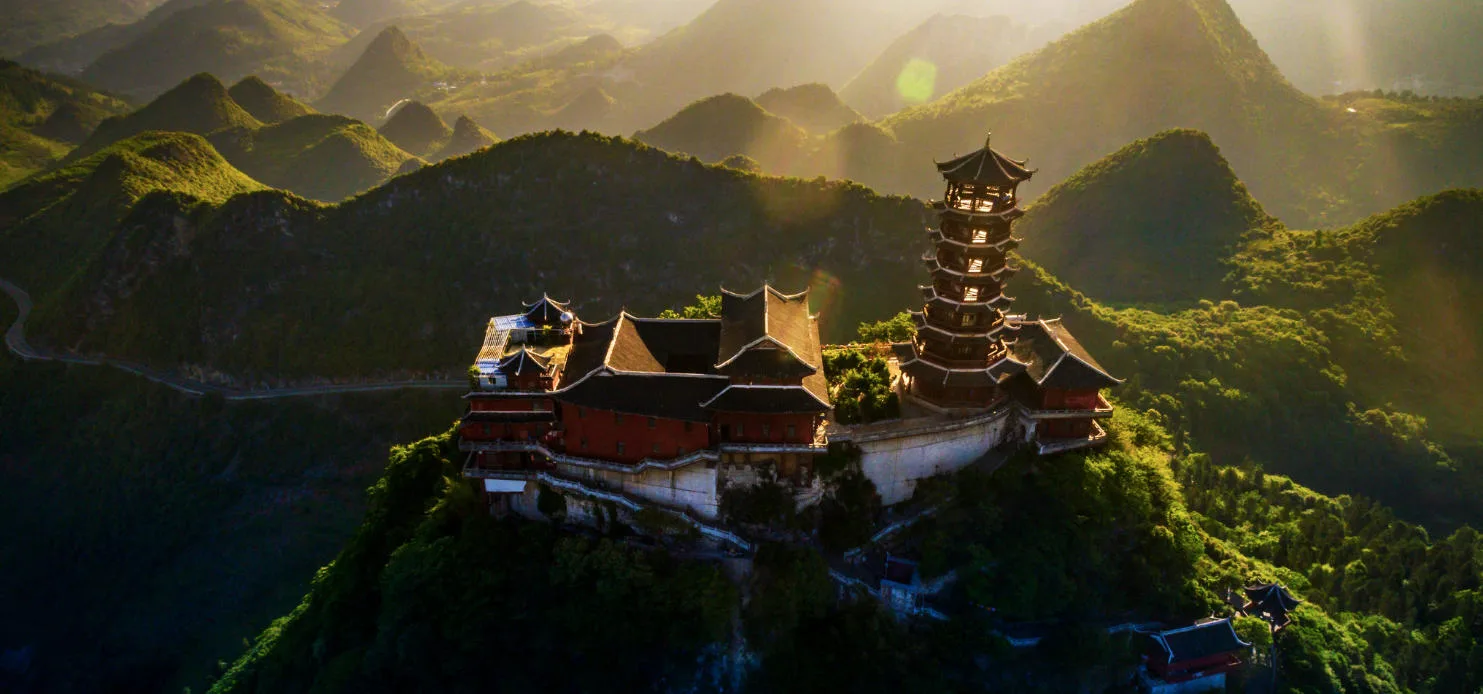
The Dalou Mountains lie in northern Guizhou Province, one of several major mountain systems in Guizhou Province, forming a natural barrier between the Guizhou Plateau and the Sichuan Basin near the Wujiang River. Chishui is one of the most important gateways for exploring this region. Known for its extensive Danxia landforms — one of the largest areas of its kind in China — Chishui also features vast forest landscapes and beautiful mountains, creating a unique combination of red sandstone cliffs, valleys, rivers, and waterfalls.
The Dalou Mountains generally range from 1,000 to 2,000 meters in elevation, and the range runs about 300 km through Guizhou. The landscape is characterized by steep mountains, deeply carved valleys, and the Chishui River winding through the region, with dense bamboo forests and waterfall clusters along both sides. From Guiyang, Chishui can be reached in around four hours by car, while travelers coming from Chongqing can reach the area in approximately two and a half hours.
Each season reveals a different side of the mountains. Spring brings fresh bamboo shoots and renewed vegetation, summer offers the most impressive waterfall scenery with abundant water flow, and autumn transforms the valleys with colorful forests, making all three seasons ideal for hiking and landscape exploration.
Wuling, Wumeng and Other Ranges
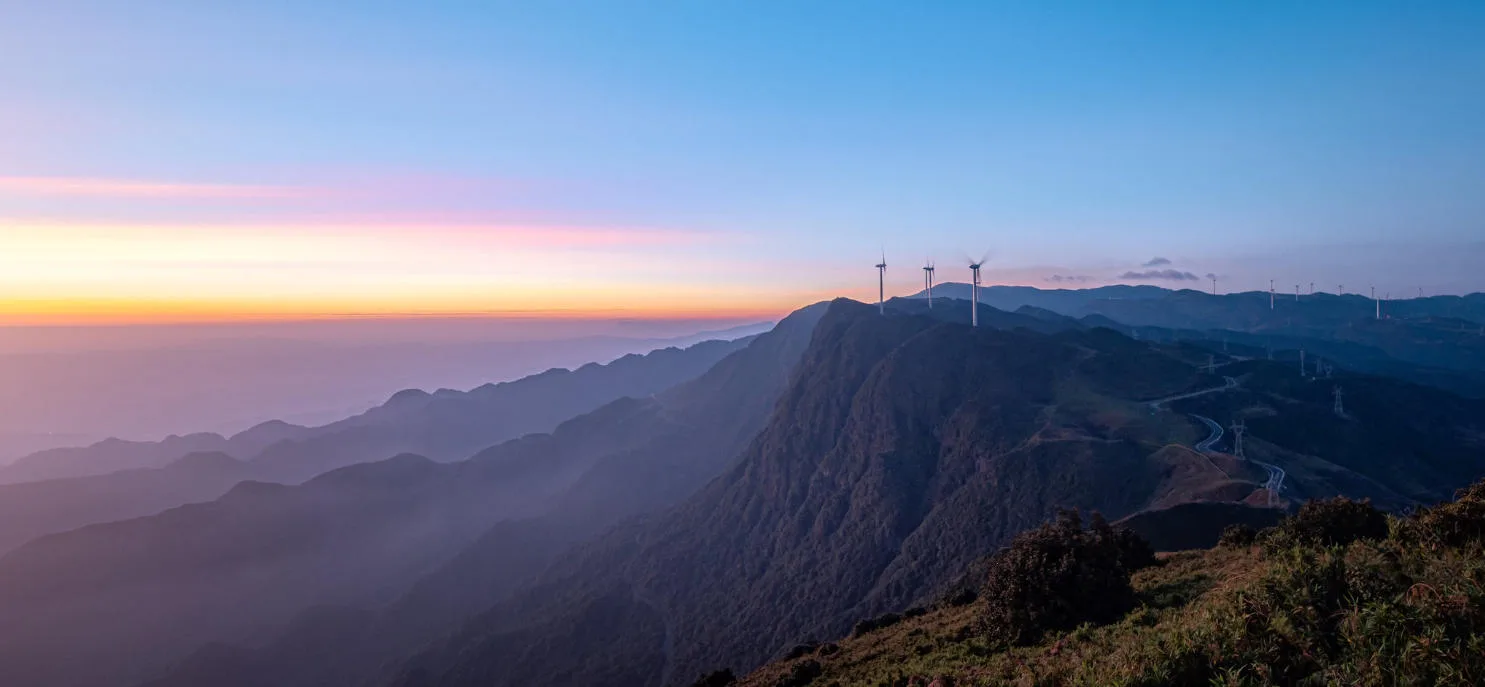
The Wuling Mountains extend from northeast to southwest, with Tujia and Miao villages scattered throughout the mountain valleys. The region combines forest landscapes, mountain scenery, and diverse ethnic cultures, making it one of the important areas for exploring the connection between nature and local communities in Guizhou.
The Wumeng Mountains, located in western Guizhou around bijie city and Liupanshui, offer a more open and remote mountain landscape, while farther south around xingyi city the scenery shifts toward the Forest of ten thousand peaks. With average elevations above 2,000 meters, they form the highest mountainous region in Guizhou, and their highest point is Jiucaiping at 2,900 meters. The area is known for its alpine grasslands, karst peak forests, and Yi ethnic culture, offering a very different experience from the forested valleys of southeastern Guizhou.
Fanjing Mountain: Guizhou’s Sacred Mountain
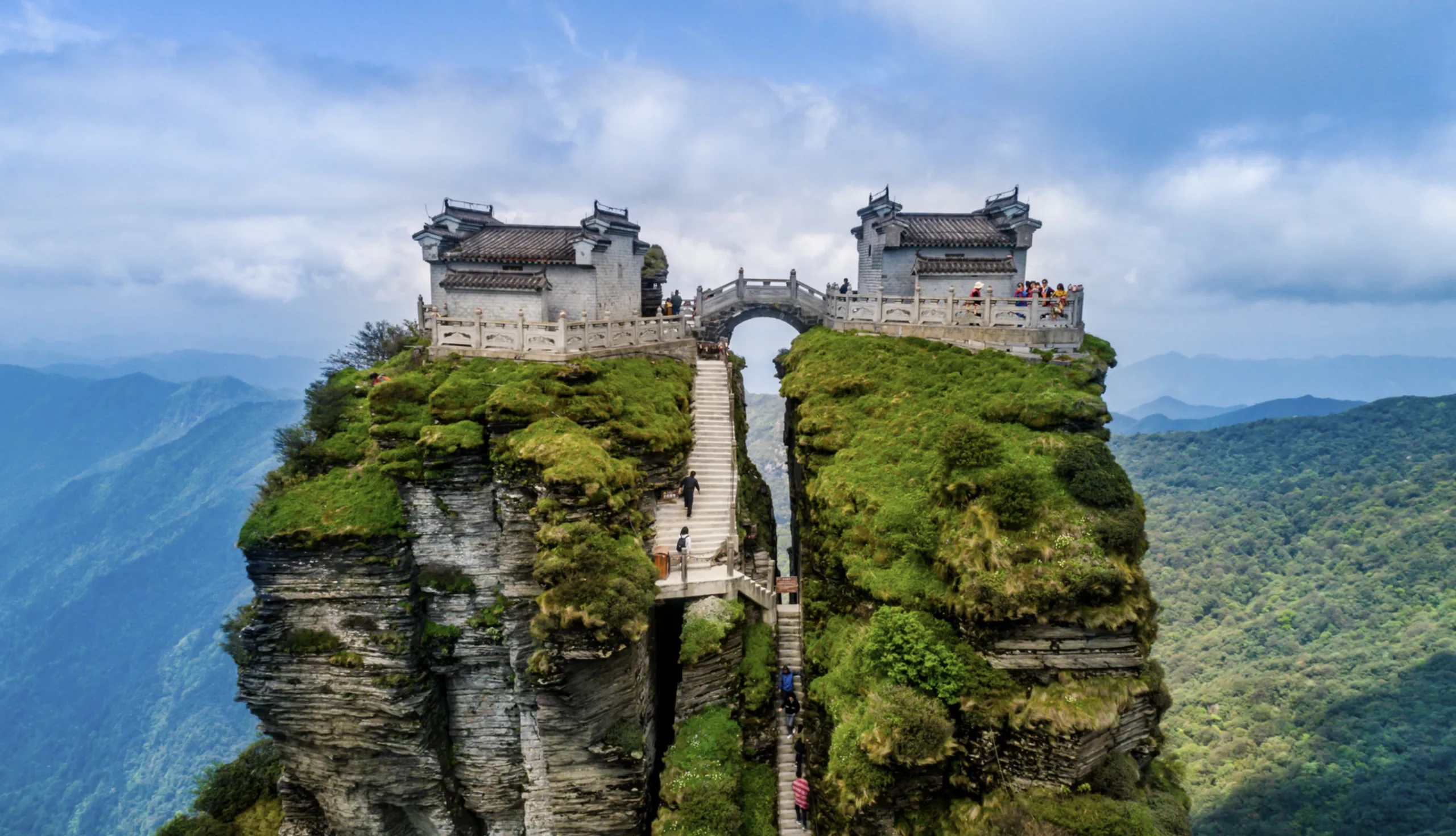
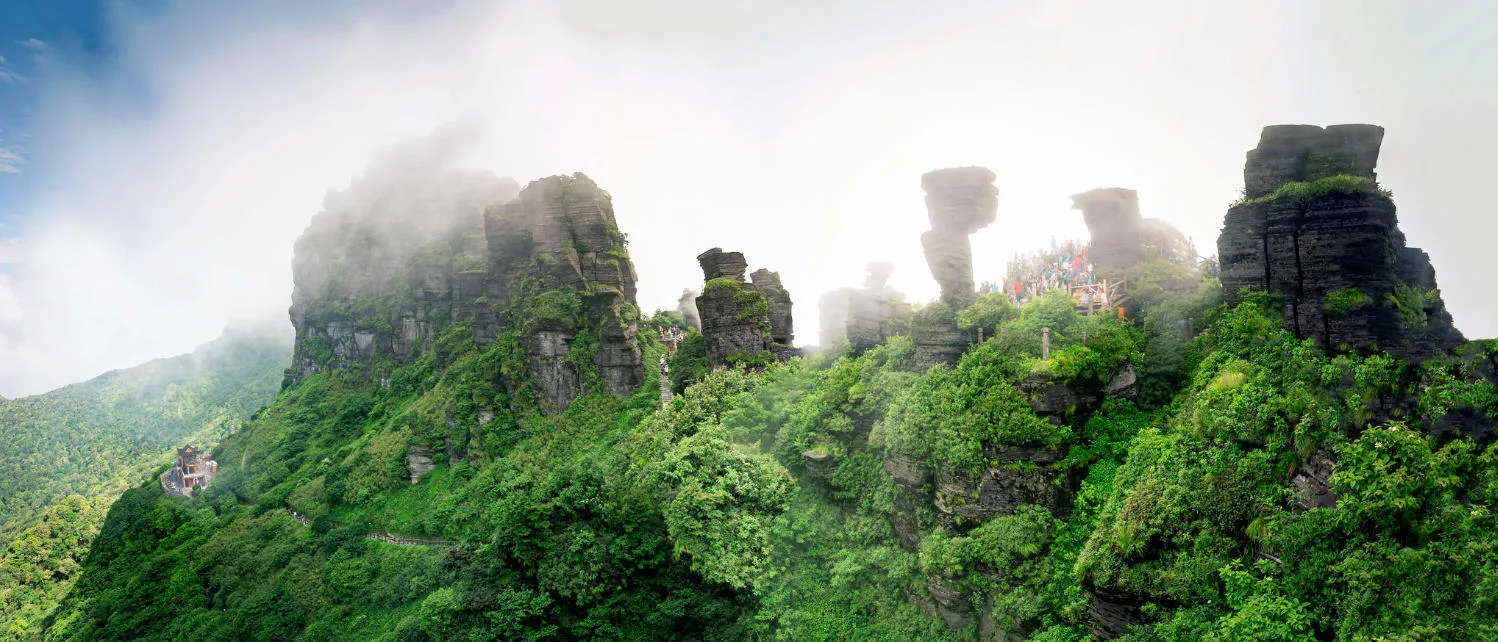
Fanjing Mountain is the most famous mountain in Guizhou and the province’s only site listed as a UNESCO World Natural Heritage Site. Rising to 2,572 meters above sea level, its most iconic landmark, the Red Cloud Golden Summit (Hongyun Jinding), stands beside the main peak as a dramatic rock formation above the surrounding mountains. A natural split divides the upper section into two peaks, with a temple built on each side and a stone bridge connecting them, while Mushroom Stone is another well-known natural formation associated with the mountain’s striking summit landscape. On clear days, visitors standing at the summit can see seas of clouds surrounding the peaks, creating the impression of a small city floating above the sky.
Fanjing Mountain is also the only habitat of the Guizhou snub-nosed monkey, with an estimated wild population of around 800 individuals, making it even rarer than the giant panda. Beyond its unique geological features, the mountain holds deep cultural significance. Fanjing Mountain has long been regarded as a sacred Buddhist mountain, where temples and the surrounding natural environment create a distinctive spiritual atmosphere.
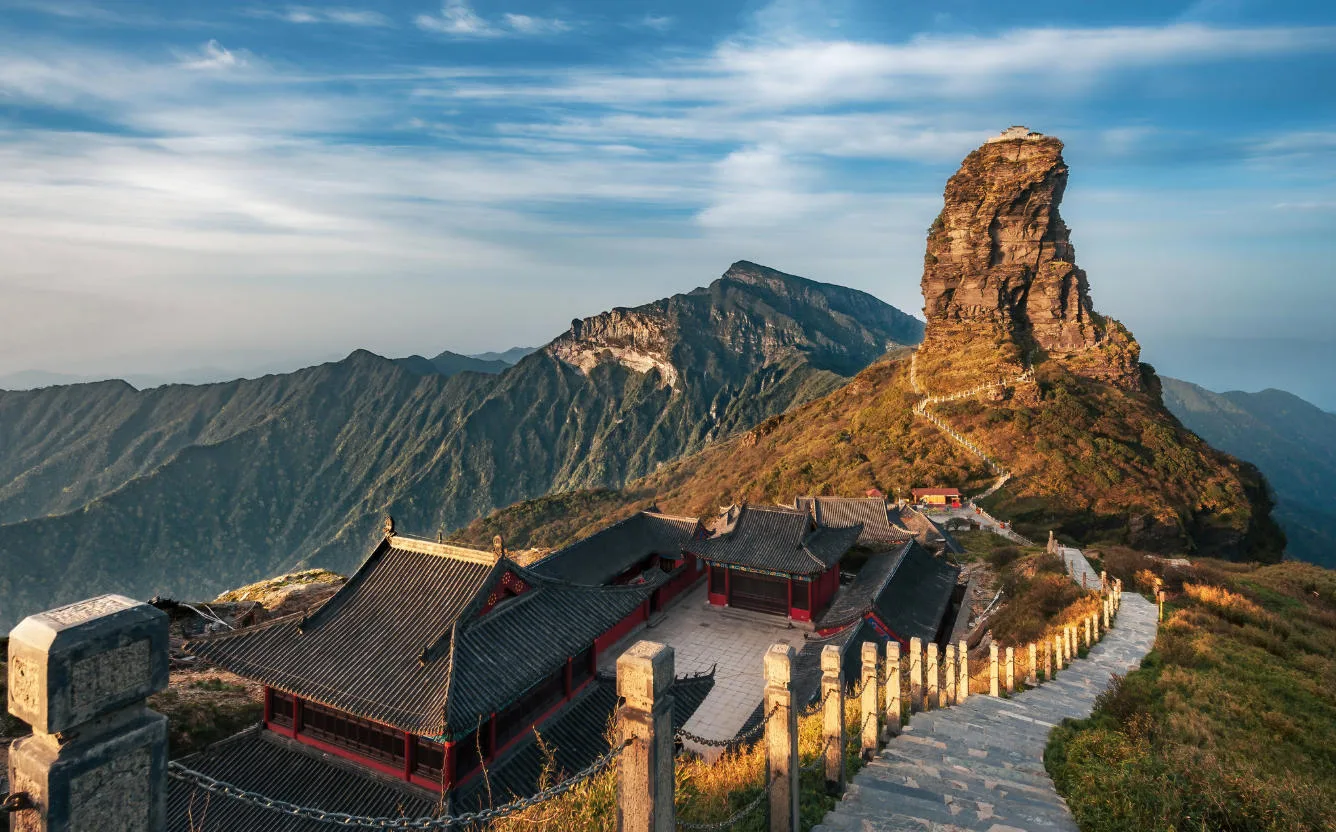
It is important to note that Fanjing Mountain is highly dependent on weather conditions. On clear days, clouds roll around the Golden Summit and the mountain can appear suspended above the landscape in the morning light. On cloudy or rainy days, however, the summit may be completely covered by mist, with very limited visibility. Before visiting, check the weather forecast carefully and consider leaving some flexibility in your itinerary so that you can adjust your hiking day if conditions are unfavorable. Temperatures at the summit can be more than 10°C lower than at the base, and strong winds are common, so a windproof jacket and rain protection are essential.
Fanjing Mountain has two entrances. The eastern entrance offers a cable car and a more accessible route, making it suitable for travelers who prefer a more comfortable sightseeing experience. The western entrance provides a longer hiking route with fewer visitors, making it a better choice for travelers seeking a more immersive hiking experience.
Hiking and Outdoor Experiences in Guizhou
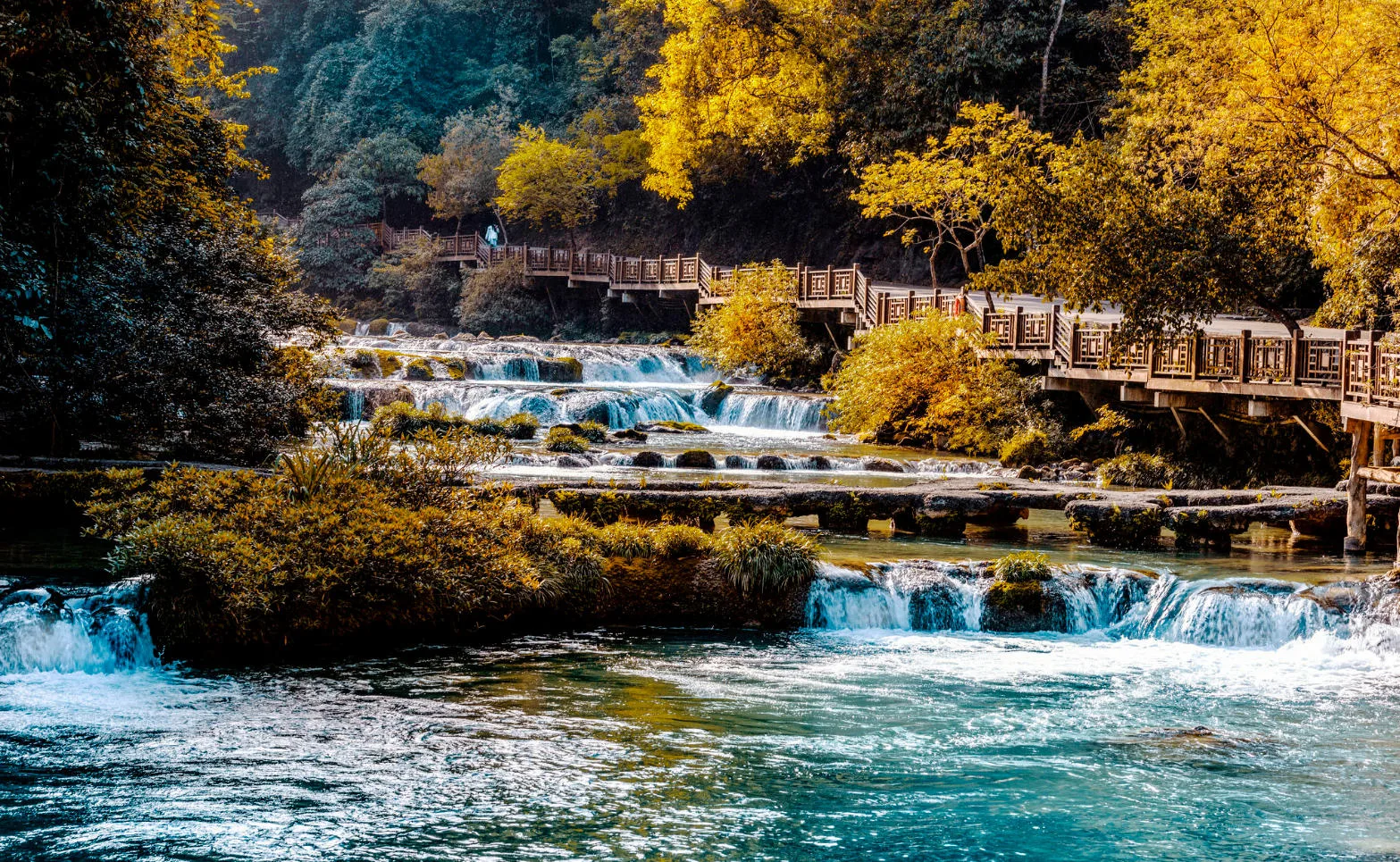
Guizhou’s mountain travel is not about conquering high-altitude peaks. From village trails to Fanjing Mountain, most hiking routes follow traditional paths and mountain routes shaped by local life rather than requiring specialized equipment or advanced hiking skills. This makes Guizhou especially suitable for travelers with moderate fitness levels who enjoy nature exploration, photography, and light outdoor experiences.
What makes hiking in Guizhou unique is that trails are rarely just about reaching a viewpoint at the top of a mountain. Instead, they connect natural landscapes with local communities and everyday life. In Qiandongnan, travelers can hike between Dong villages along mountain paths, passing through rice terraces, forests, and farmland. At Fanjingshan, whose iconic main peak area is the Red Cloud Golden Summit, travelers can explore ancient forests, distinctive mountain formations, and Mushroom Stone; the mountain rises 2,494 meters above sea level and is a UNESCO site. In Libo, wooden walkways and streams lead through karst forests and karst caves shaped by millions of years of geological change, alongside other attractions.
From gentle village walks to several-hour mountain hikes, Guizhou offers routes for different interests and fitness levels. These journeys reveal not only the beauty of the mountains, but also the relationship between the landscapes and the communities that have lived among them for generations. Fanjingshan is also a UNESCO Biosphere Reserve for biodiversity.
Guizhou’s Karst Landscapes: Waterfalls and Karst Caves
Guizhou is one of the most representative regions of karst landscapes in China, with dramatic karst scenery defined by extensive limestone formations. Over millions of years of geological evolution, the province has developed a remarkable variety of limestone formations, including karst peaks, deep valleys, sinkholes, caves, and underground rivers. These landscapes form some of Guizhou’s most distinctive natural environments.
Huangguoshu Waterfall
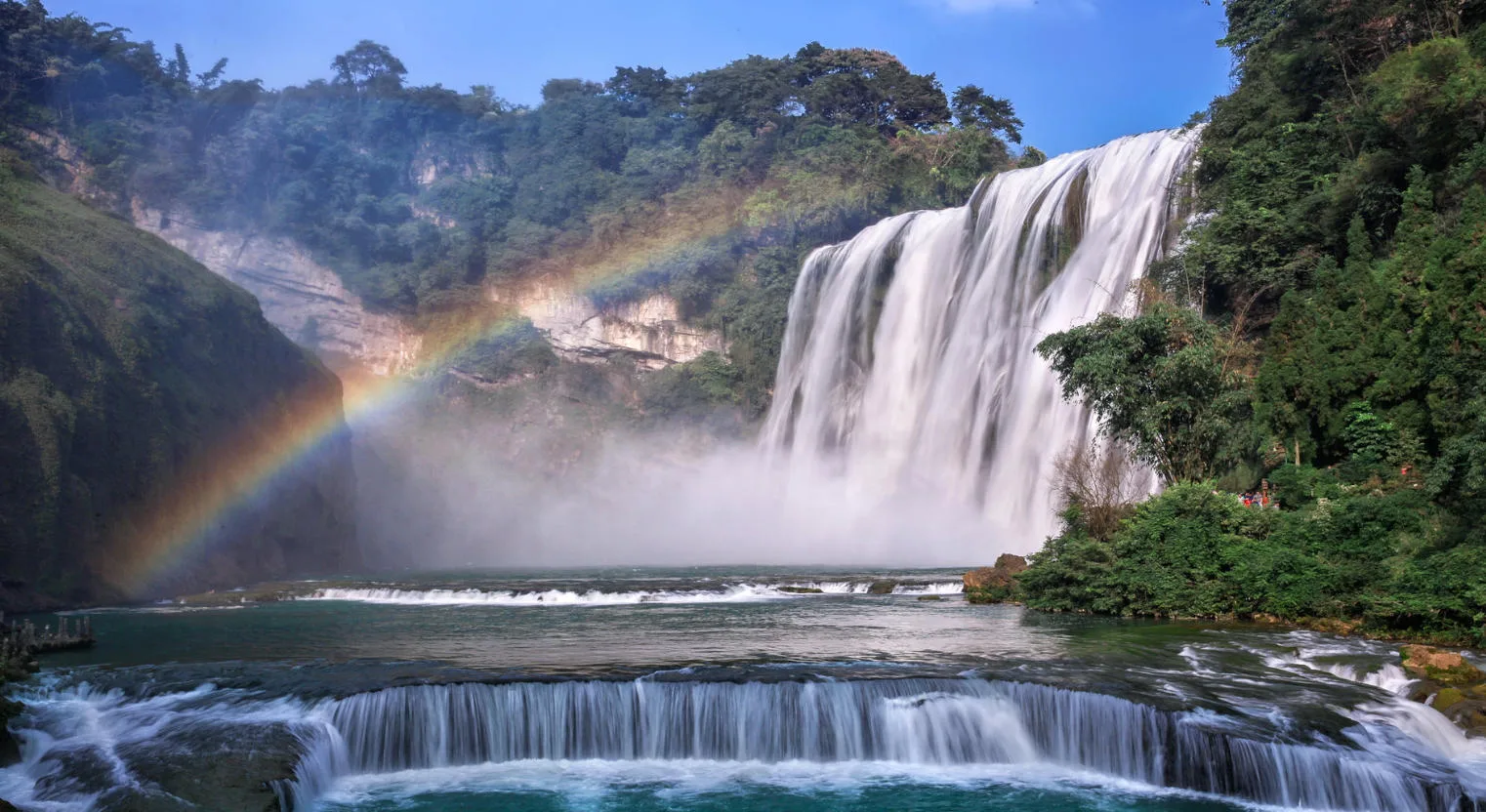
Located near Anshun, Huangguoshu Waterfall is one of Guizhou’s most iconic natural landmarks and one of the largest waterfall groups in Asia. During the rainy season, increased water flow makes the waterfall especially impressive. The main waterfall is 74 meters high and 81 meters wide, and visitors can even walk through the Water Curtain Cave behind the falling water.
Libo Karst Landscapes
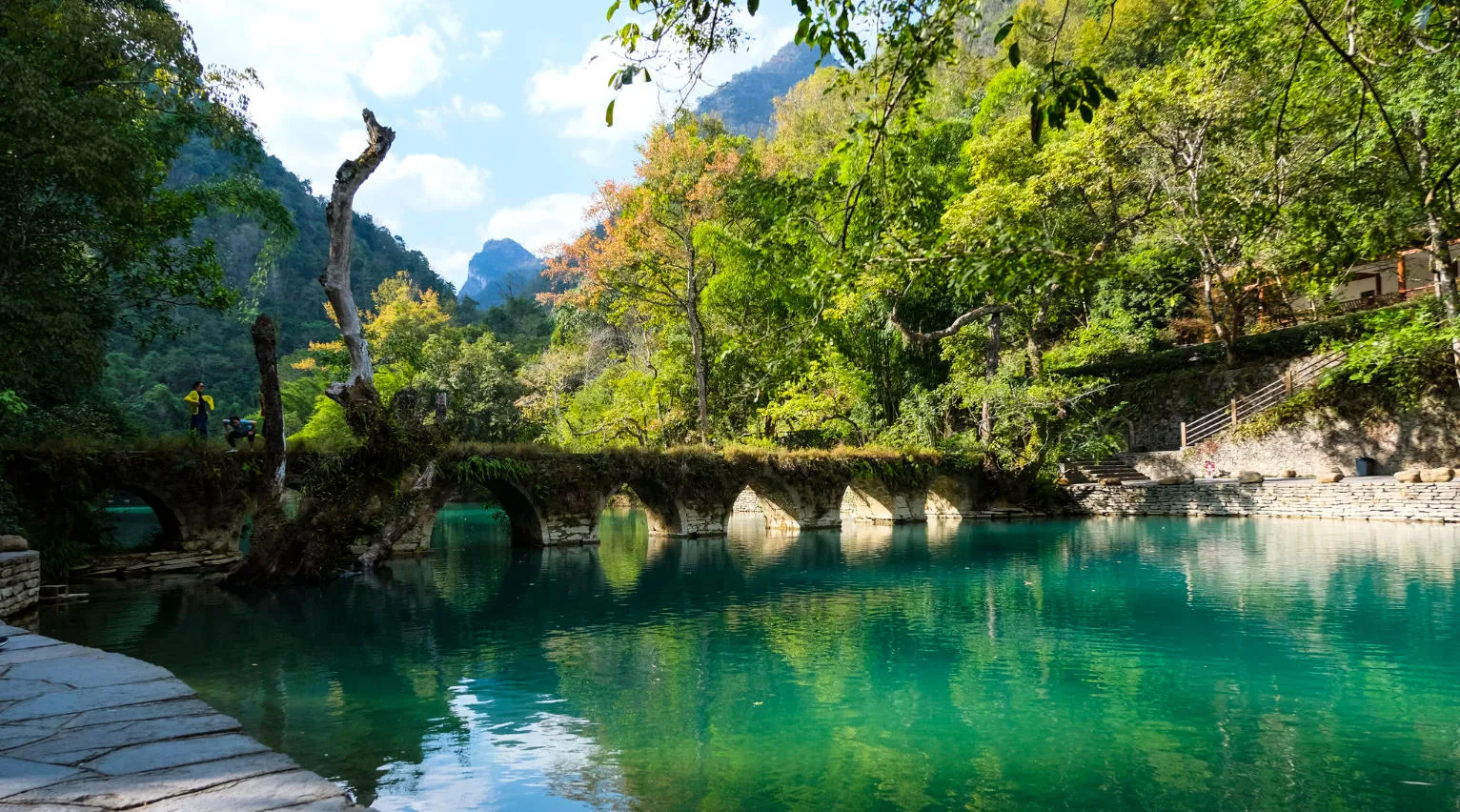
Located in southern Guizhou, Libo represents a different type of karst scenery. Clear rivers flow through green karst mountains covered with dense vegetation, creating a landscape where forests, water, and limestone formations blend together, with nearby karst caves and other attractions adding to the area’s geological variety. Visitors can explore the area along wooden walkways beside rivers and mountains, discovering the scenery at a slower pace, especially in places where the water looks like a green gem.
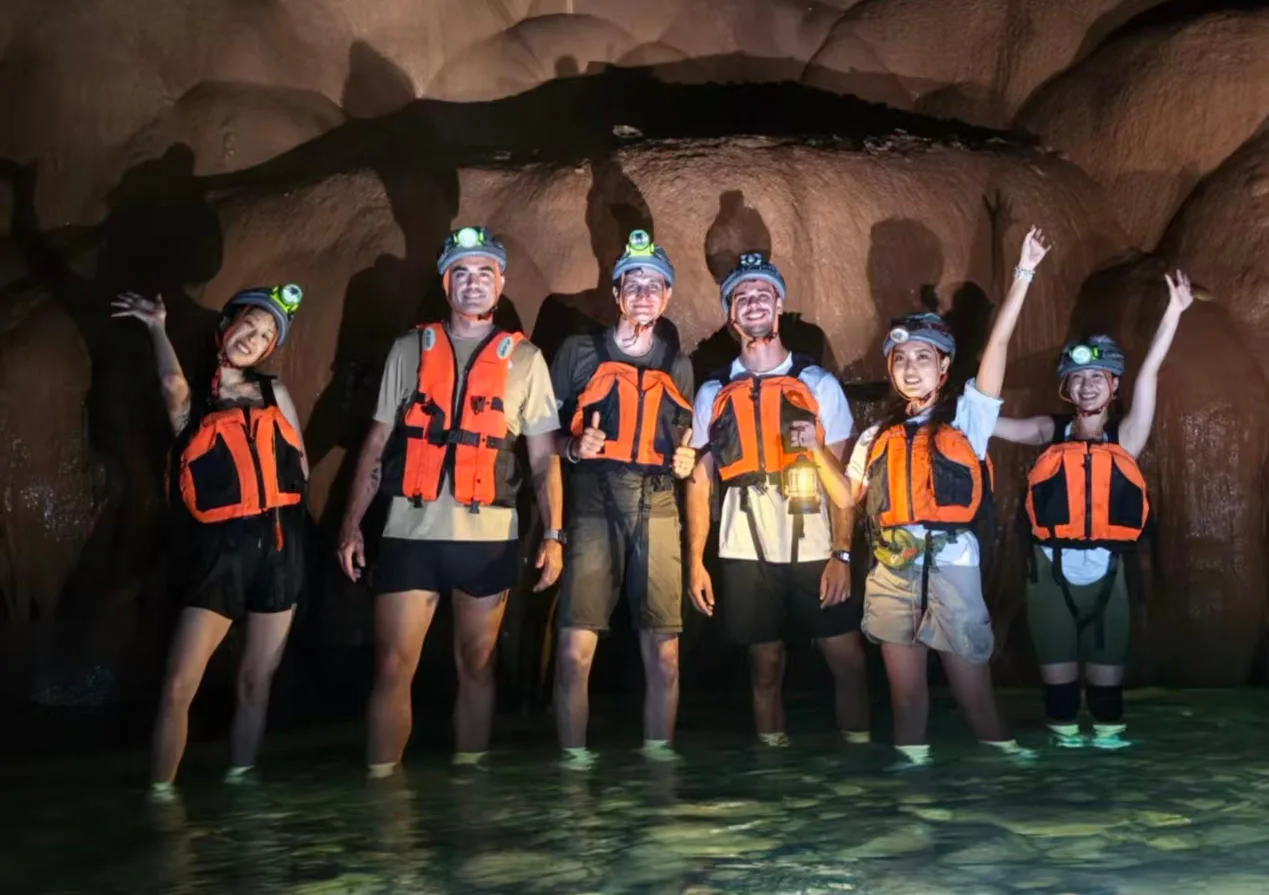
Exploring Guizhou’s Underground Caves
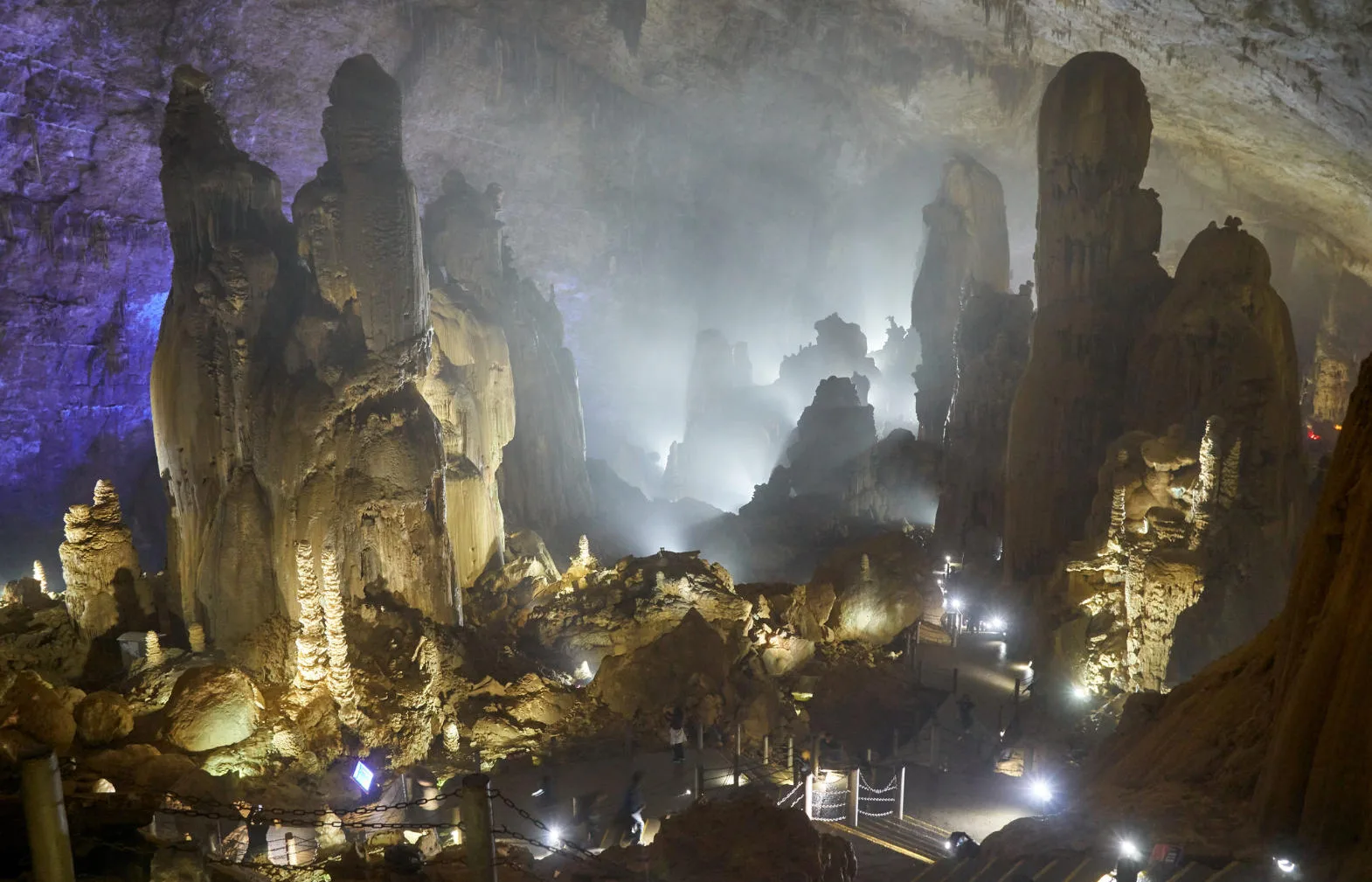
Thanks to its well-developed karst geology, Guizhou is home to numerous natural caves, making cave exploration another important outdoor experience in the province.
Among them, Zhijin Cave is one of the most famous. Recognized by China National Geographic as one of China’s most beautiful caves, it is known for its extraordinary variety of stalactite and stalagmite formations, and it contains 11 grand lobbies and 47 halls. Some chambers also feature stone curtains hanging from mineral-rich rock surfaces. Longgong Cave and Jiulong Cave are also worth exploring, with underground rivers as their defining feature. Visitors can travel by boat through these underground waterways and experience a different side of Guizhou’s karst world.
Temperatures inside caves remain cool throughout the year, so even summer visitors should bring a light jacket. Cave floors can also be slippery, making shoes with good grip essential. Some caves may temporarily close during the rainy season due to rising water levels.
River Adventures: Rafting and Paddleboarding

Guizhou’s mountains and rivers also create opportunities for outdoor activities in its many valleys and waterways. With steep river gradients and abundant summer rainfall, rafting routes combined with canyon scenery are especially popular during the warmer months. The Shamu River and Maling River are among the better-known rafting destinations, offering exciting journeys through mountain landscapes and fast-moving water.
For travelers looking for a slower-paced water experience, paddleboarding on calmer sections of mountain rivers offers another way to experience Guizhou’s nature. Drifting along clear streams surrounded by karst cliffs and dense forests reveals a quieter side of the province’s landscapes.
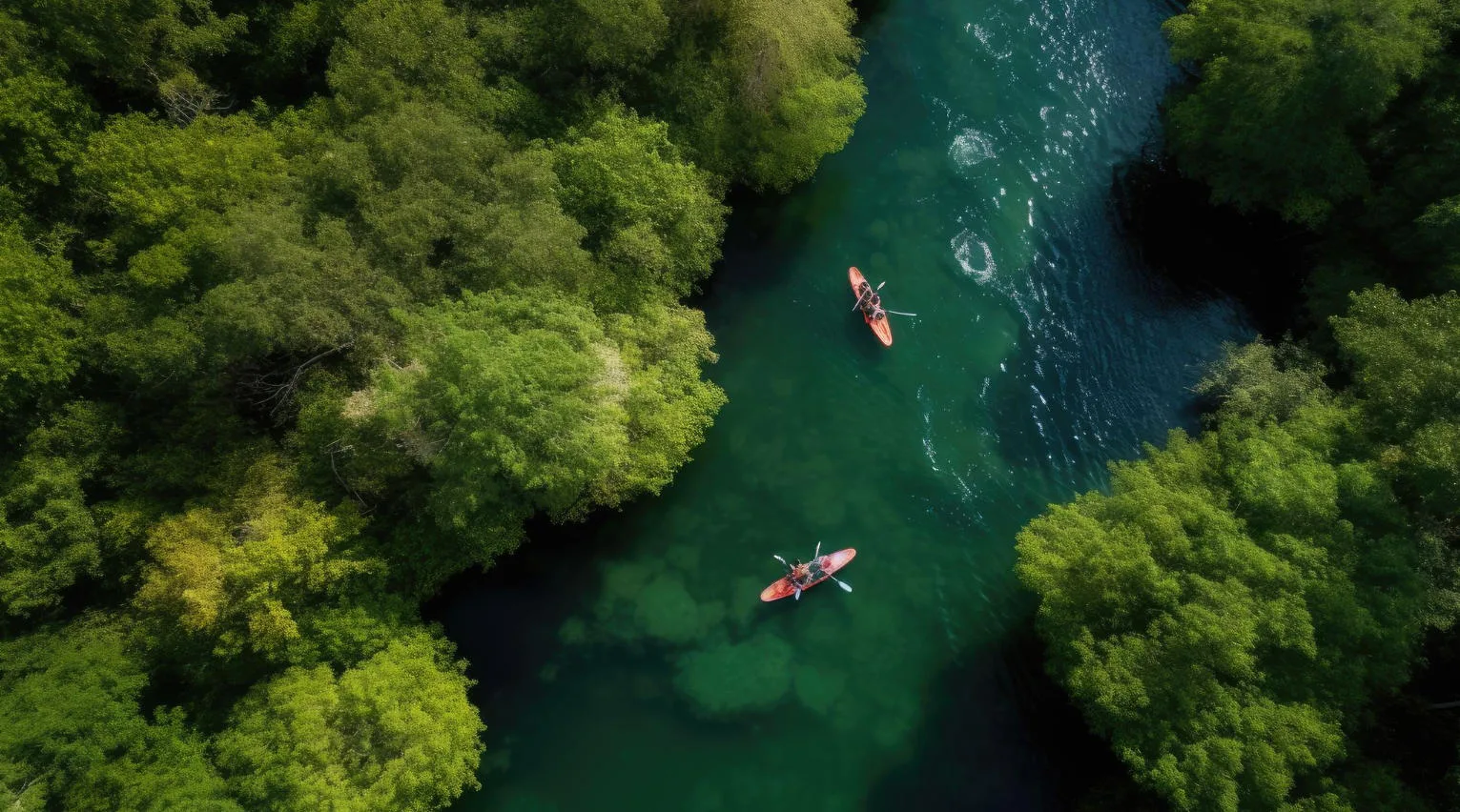
For travelers who enjoy nature but prefer not to undertake challenging hikes, Guizhou’s valleys, rivers, and water-based activities provide some of the most accessible and rewarding ways to explore this mountain region.
Speak to An Expert
Explore Guizhou with Eastogo
Start designing your China journey with our destination experts.
Make An InquiryGuizhou Rice Terraces and Scenic Landscapes
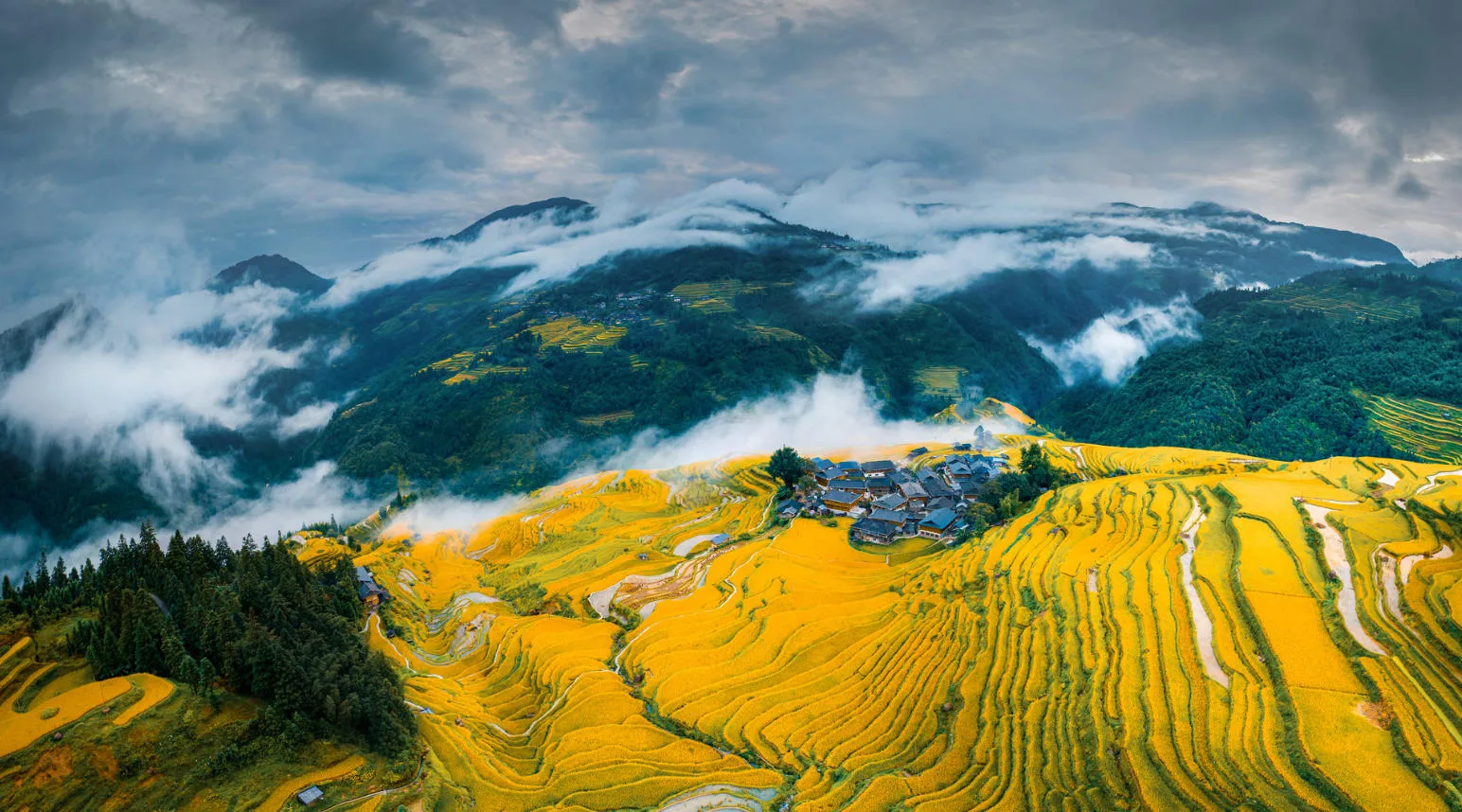
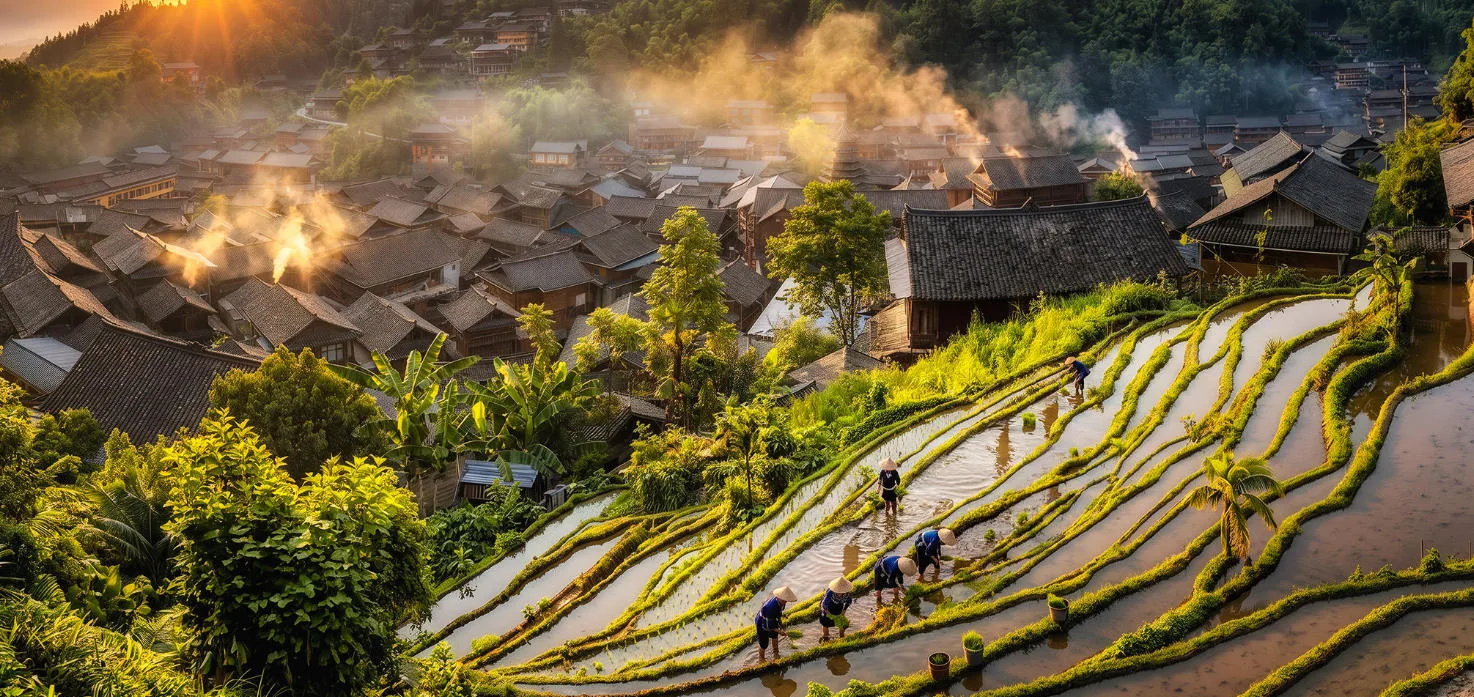
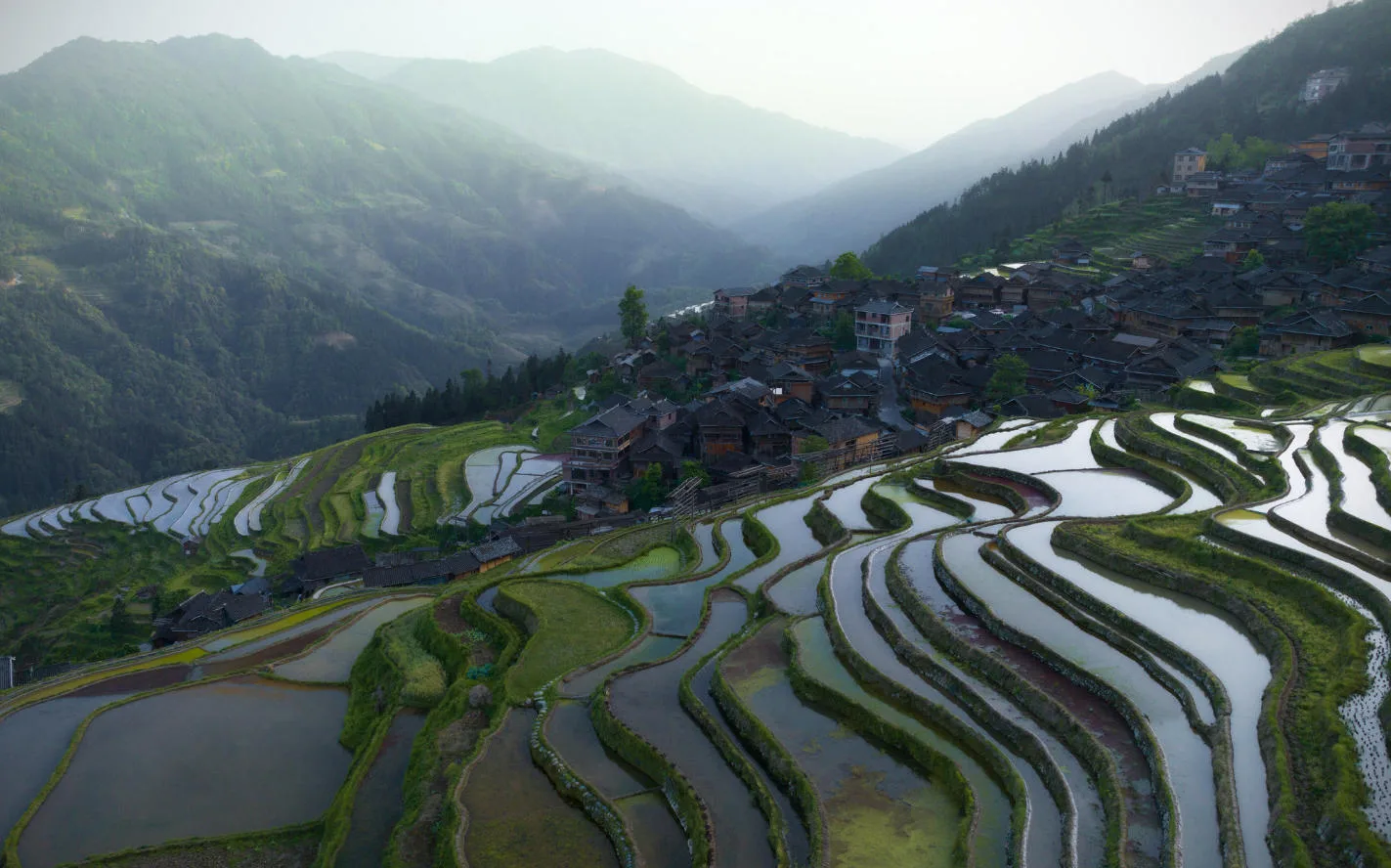
Spring, when the terraces are filled with water, and autumn, during the harvest season, are the best times to experience Guizhou’s rice terraces. These terraces are not simply scenic viewpoints; they are agricultural landscapes shaped over generations by Miao and Dong communities adapting to the mountainous environment. Each terrace region also reflects the traditions and lifestyles of the ethnic villages that surround them.
Jiabang Rice Terraces
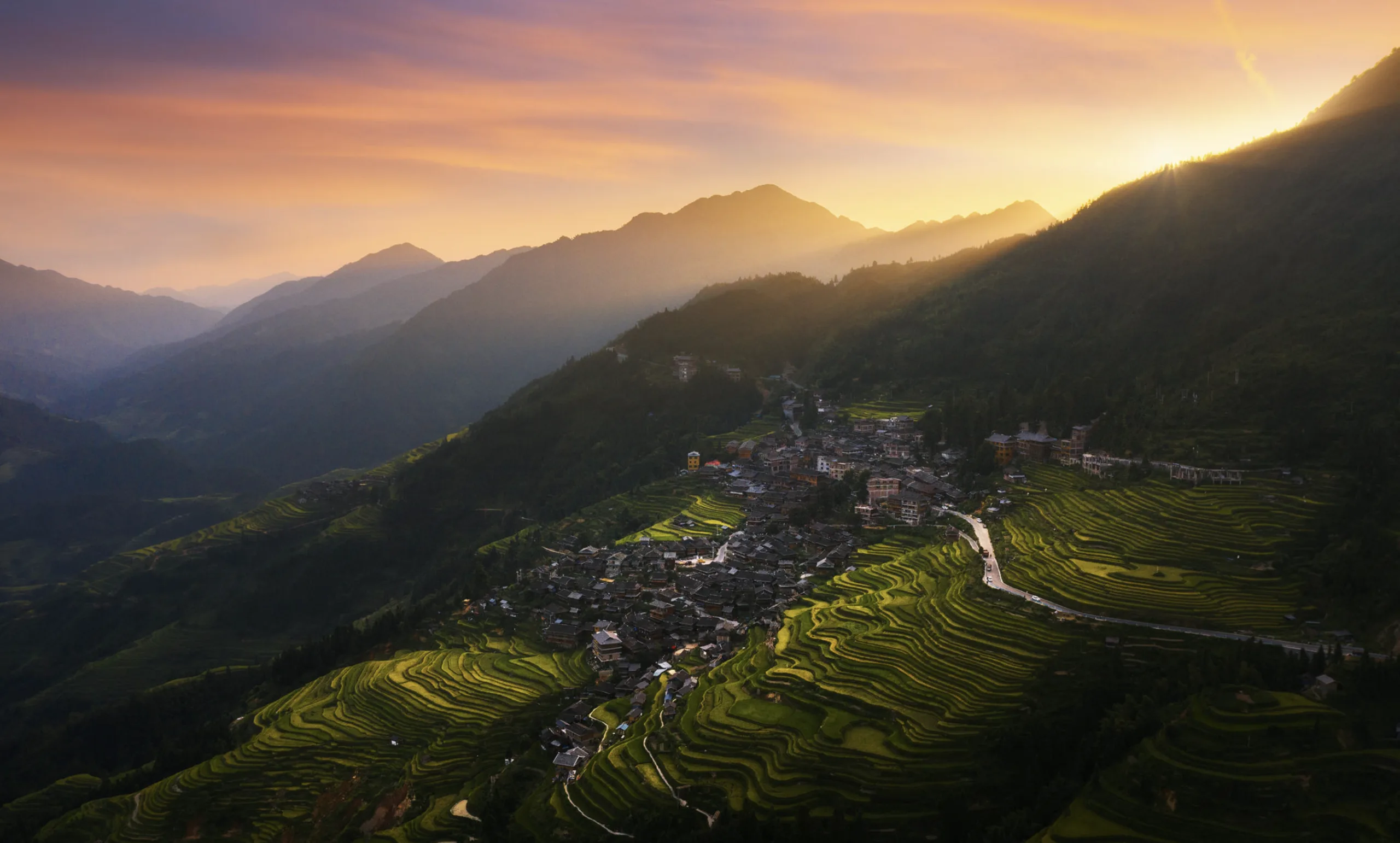
Located deep in the Moon Mountain area of Congjiang County, Jiabang Rice Terraces offer a different character from other terrace landscapes in Guizhou. The terraces here are narrow, densely layered, and arranged in elegant curves across the mountainsides, creating a distinctive landscape in one of the province’s more remote rural areas. Traditional Miao wooden houses are scattered among the terraces, while local farmers continue working in the fields as they have done for generations.
Tang’an Rice Terraces
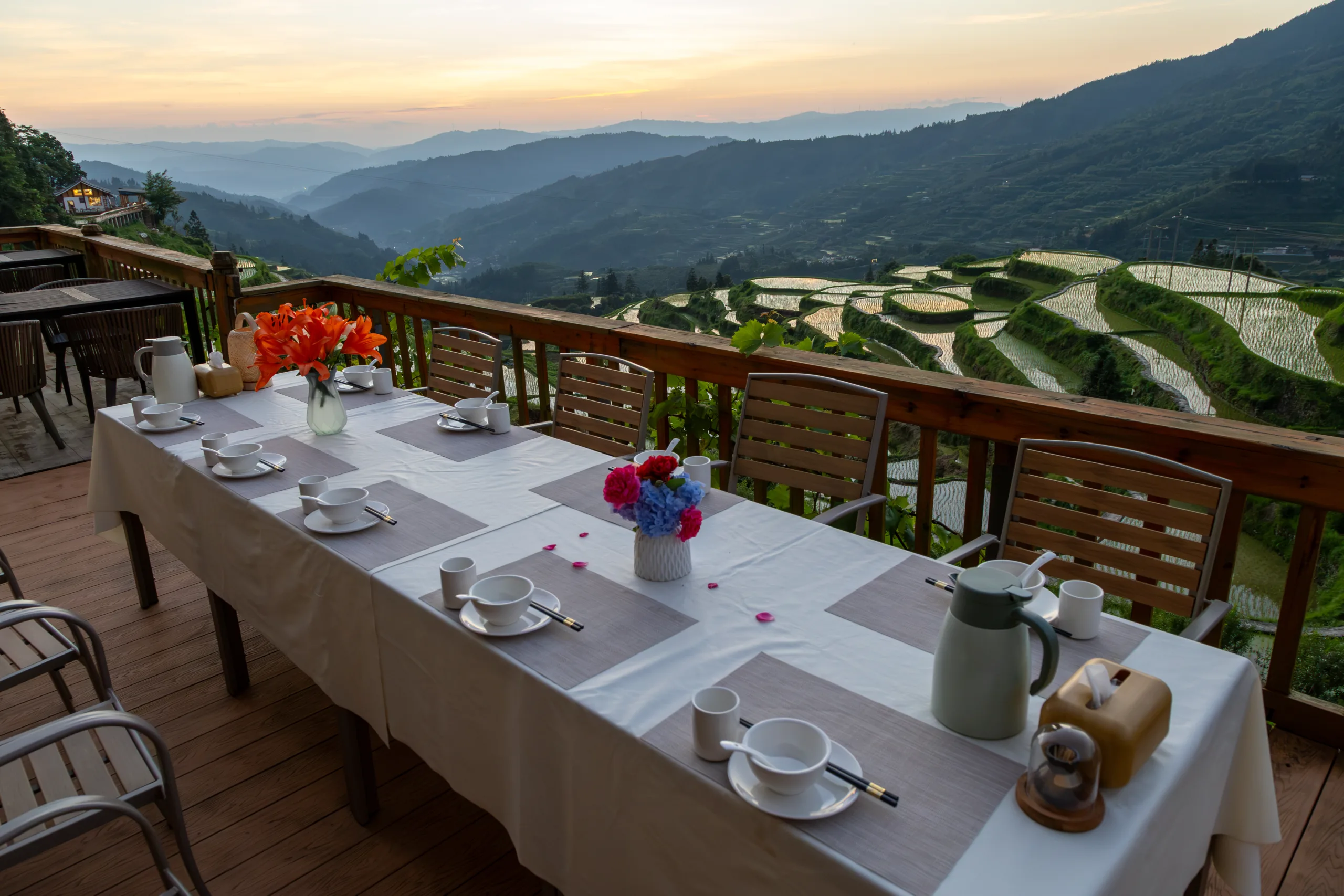
Located on the mountaintop above Zhaoxing Dong Village, Tang’an Rice Terraces are especially known for the connection between landscapes, Dong culture, and hiking routes. The trail from Zhaoxing Dong Village to Tang’an takes around 1.5 hours on foot, passing through Xiage Rice Terraces halfway up the mountain. Along the route, travelers can enjoy wide views over layered terraces and surrounding villages.
Baiyan Village
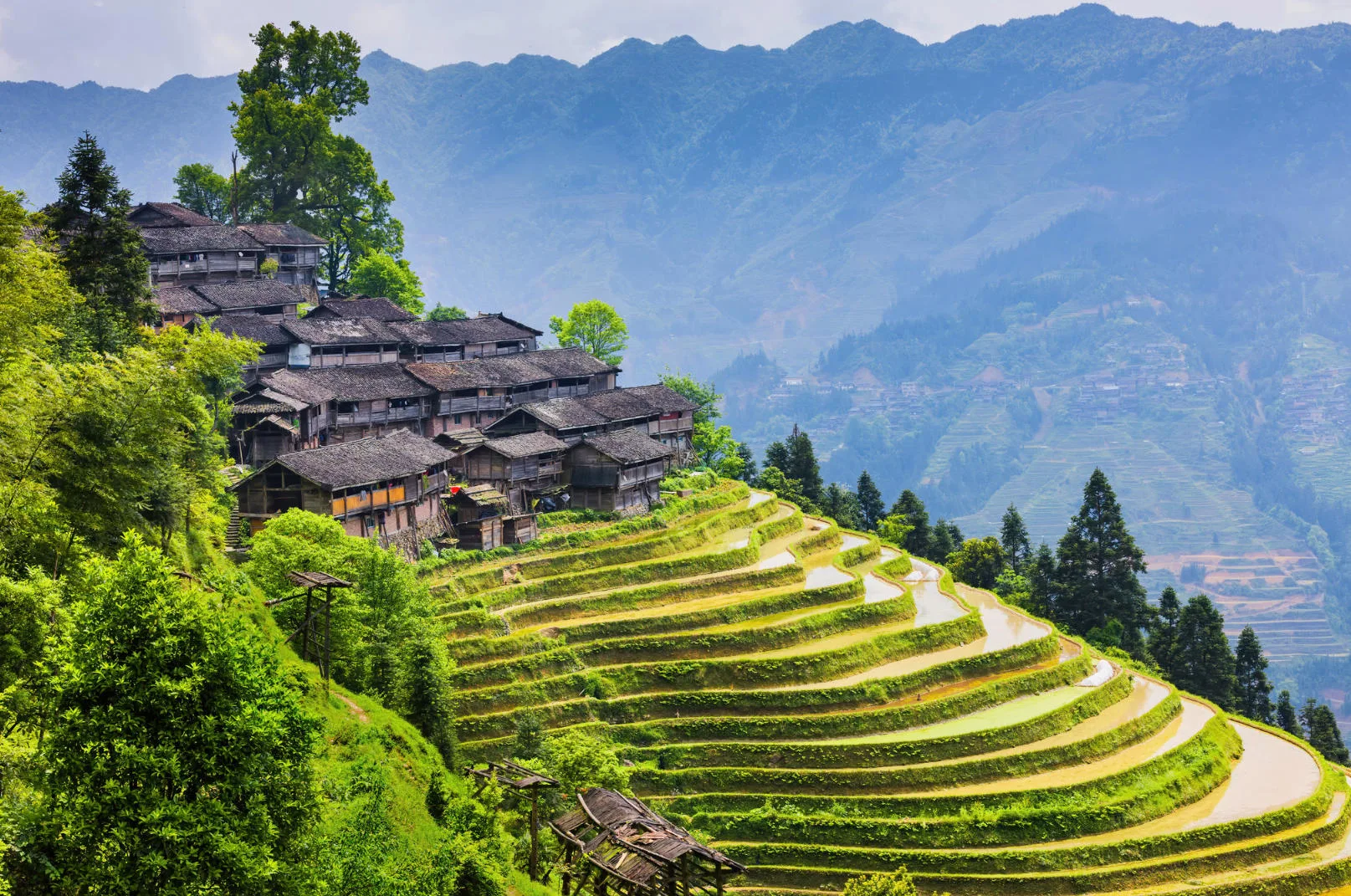
Located on the slopes of Leigong Mountain, Baiyan Village is a quieter destination with beautiful scenery and fewer visitors. Here, travelers can experience a more genuine side of mountain life, where local residents continue traditional farming and everyday routines. Several boutique guesthouses have been converted from old wooden stilt houses, offering a chance to wake up to views of rice terraces surrounded by morning mist.
Gaopo Rice Terraces
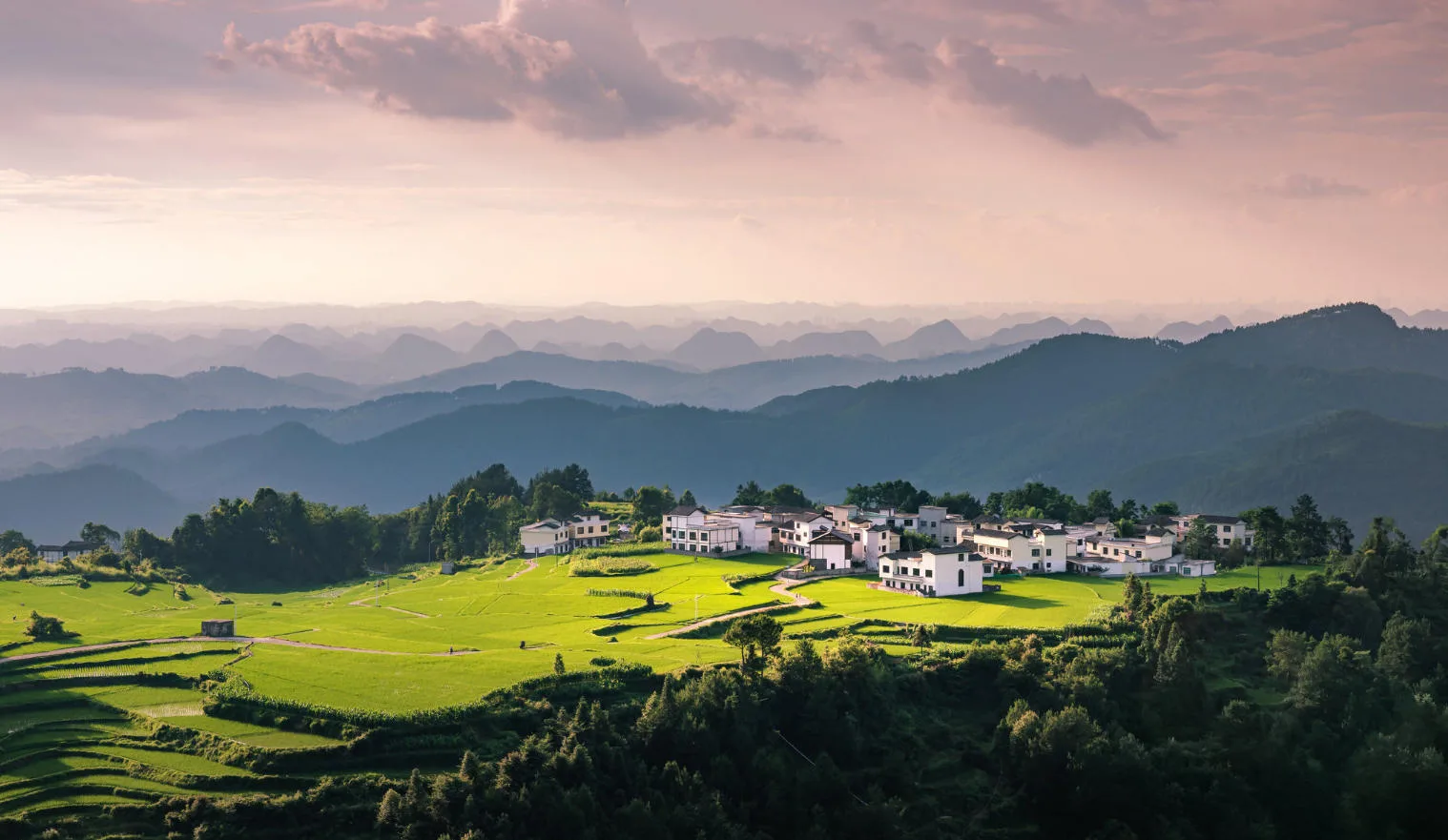
Located in Huaxi District near Guiyang, Gaopo Rice Terraces are among the most accessible terrace landscapes from the provincial capital. They are a good option for travelers passing through Guiyang with limited time who cannot travel deeper into Qiandongnan.
Mountain Villages and Ethnic Cultures
Guizhou’s mountains have not only created unique natural landscapes but also nurtured a rich diversity of ethnic cultures.
For many travelers, the most memorable experience in Guizhou is not reaching the top of a mountain, but encountering the communities that continue to live among the valleys, forests, and terraces.
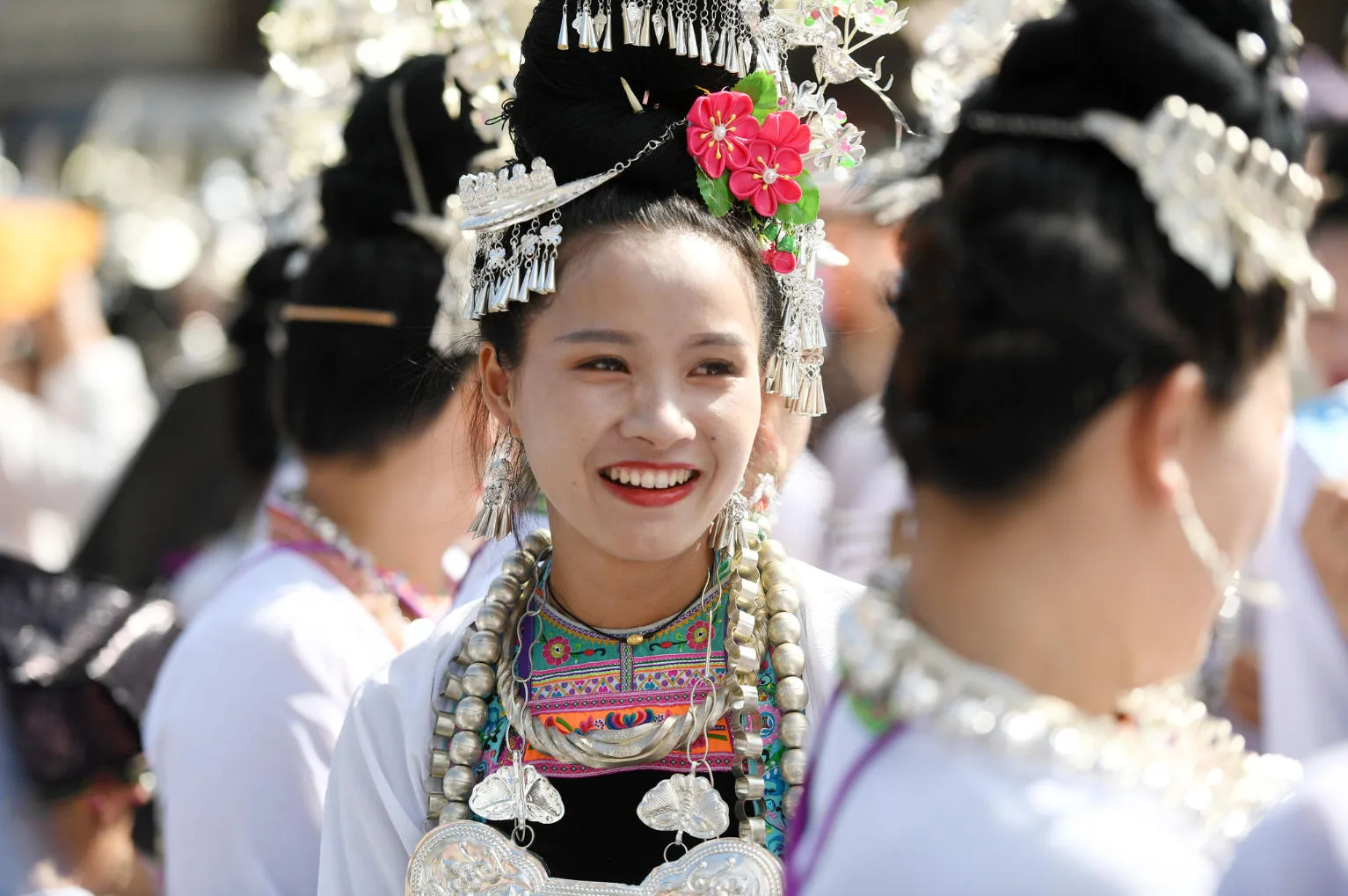
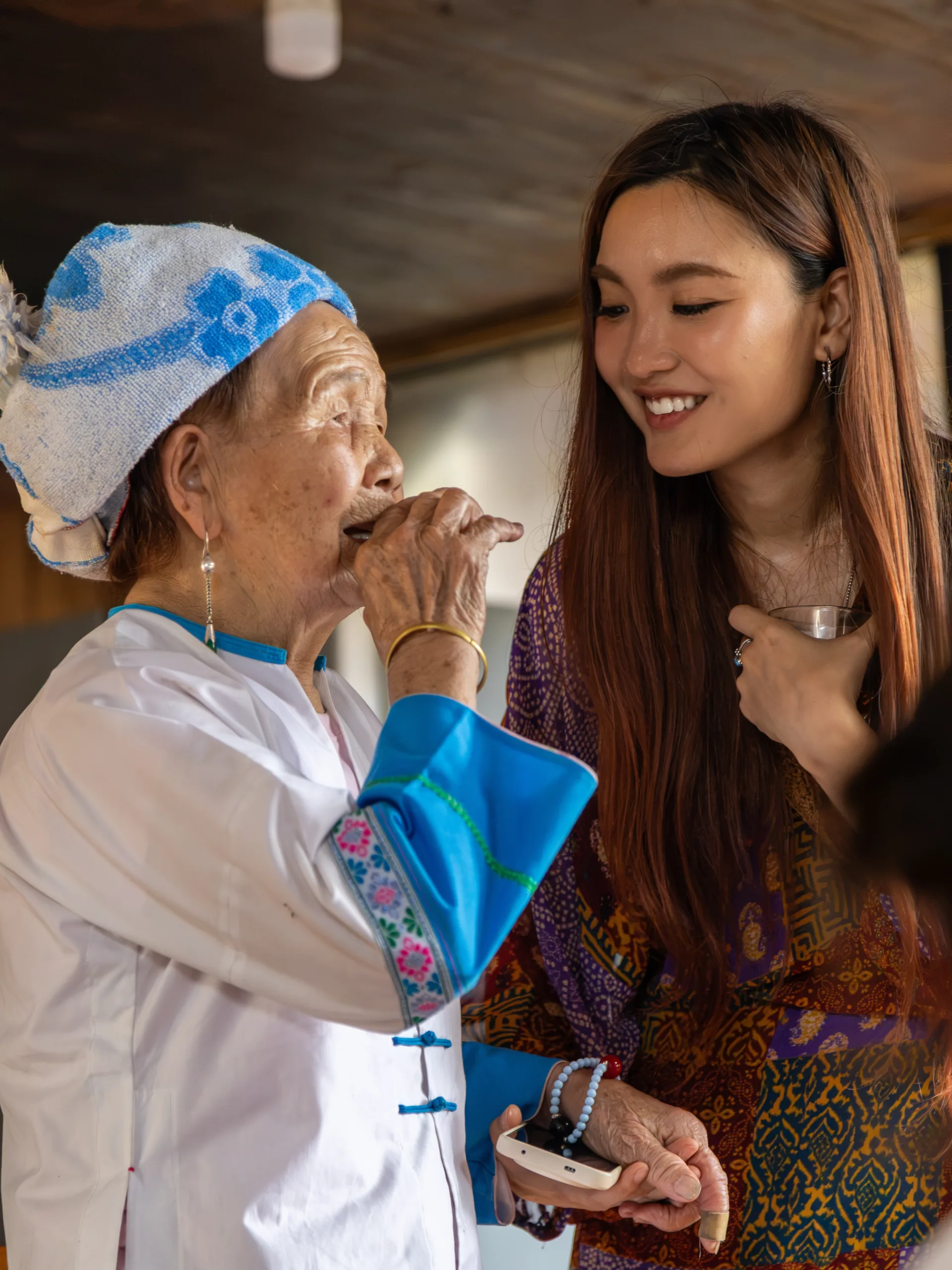
Across the mountain regions of Guizhou, many Miao, Dong, Buyi, Shui, and other ethnic communities have developed distinctive ways of life shaped by their surroundings. Living in relatively isolated mountain environments for generations, different communities have preserved unique architectural styles, traditional clothing, music, festivals, craftsmanship, and colorful ethnic customs.
For this reason, mountain travel in Guizhou is often about experiencing landscapes and village cultures together — exploring nature while gaining a deeper understanding of the people and traditions that have developed alongside these mountains.
Miao Villages
The Miao people are one of the most representative ethnic communities in Guizhou and one of the cultures travelers are most likely to encounter when exploring the province’s mountain regions in this part of the country. Living in mountainous environments for generations, Miao communities have developed distinctive architecture, traditions, and ways of life closely connected with the landscapes around them.
Xijiang Qianhu Miao Village
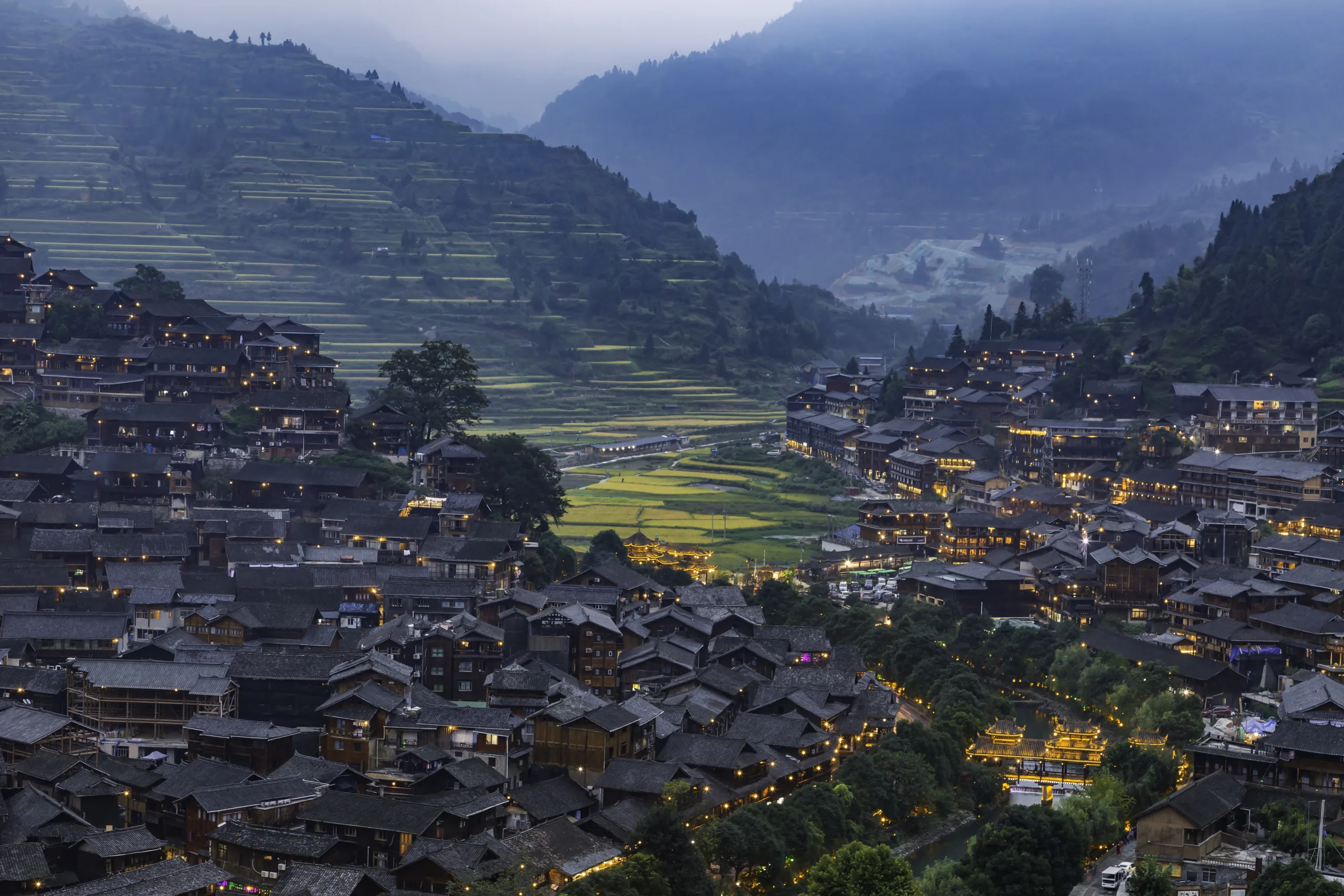
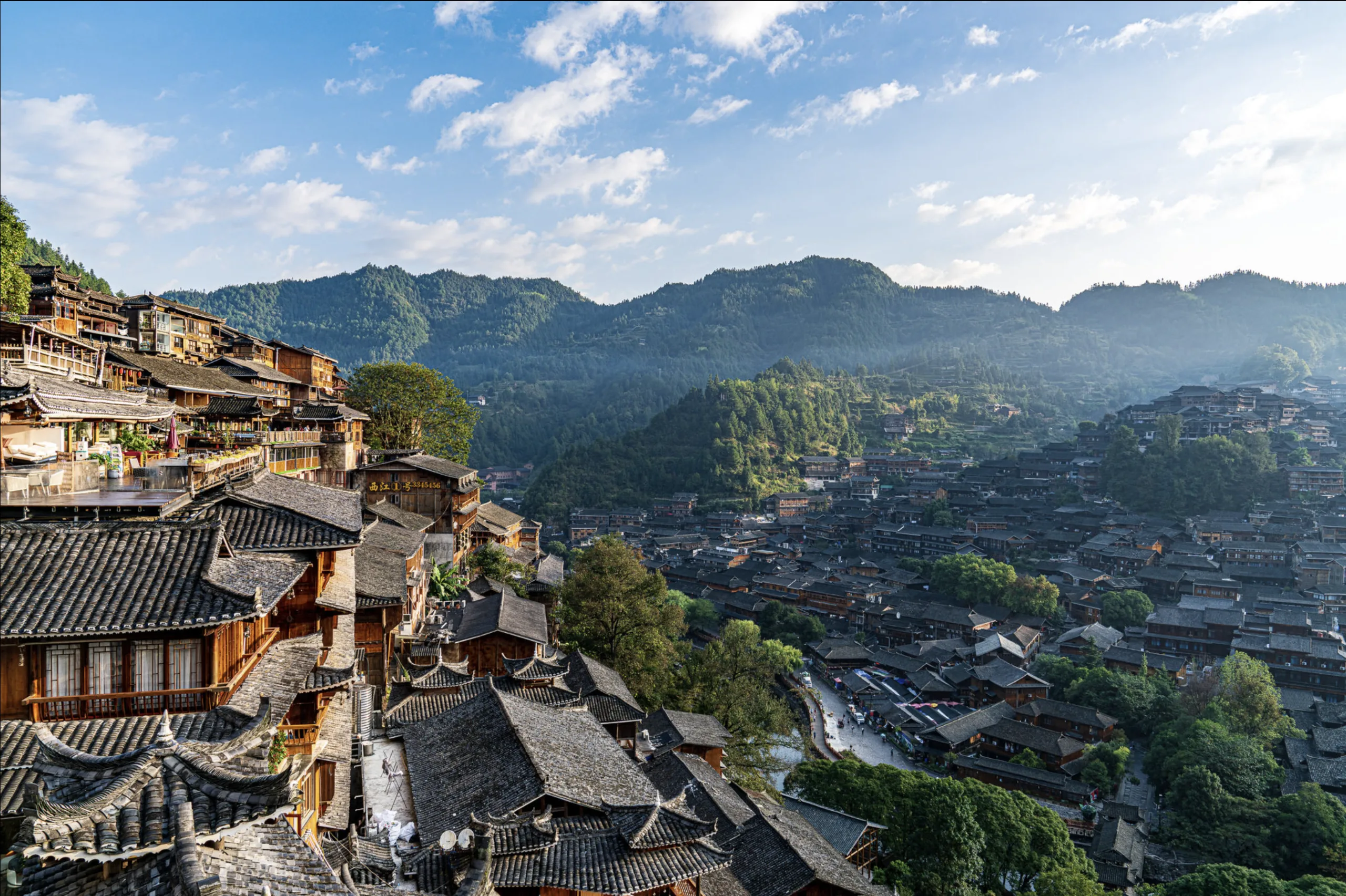
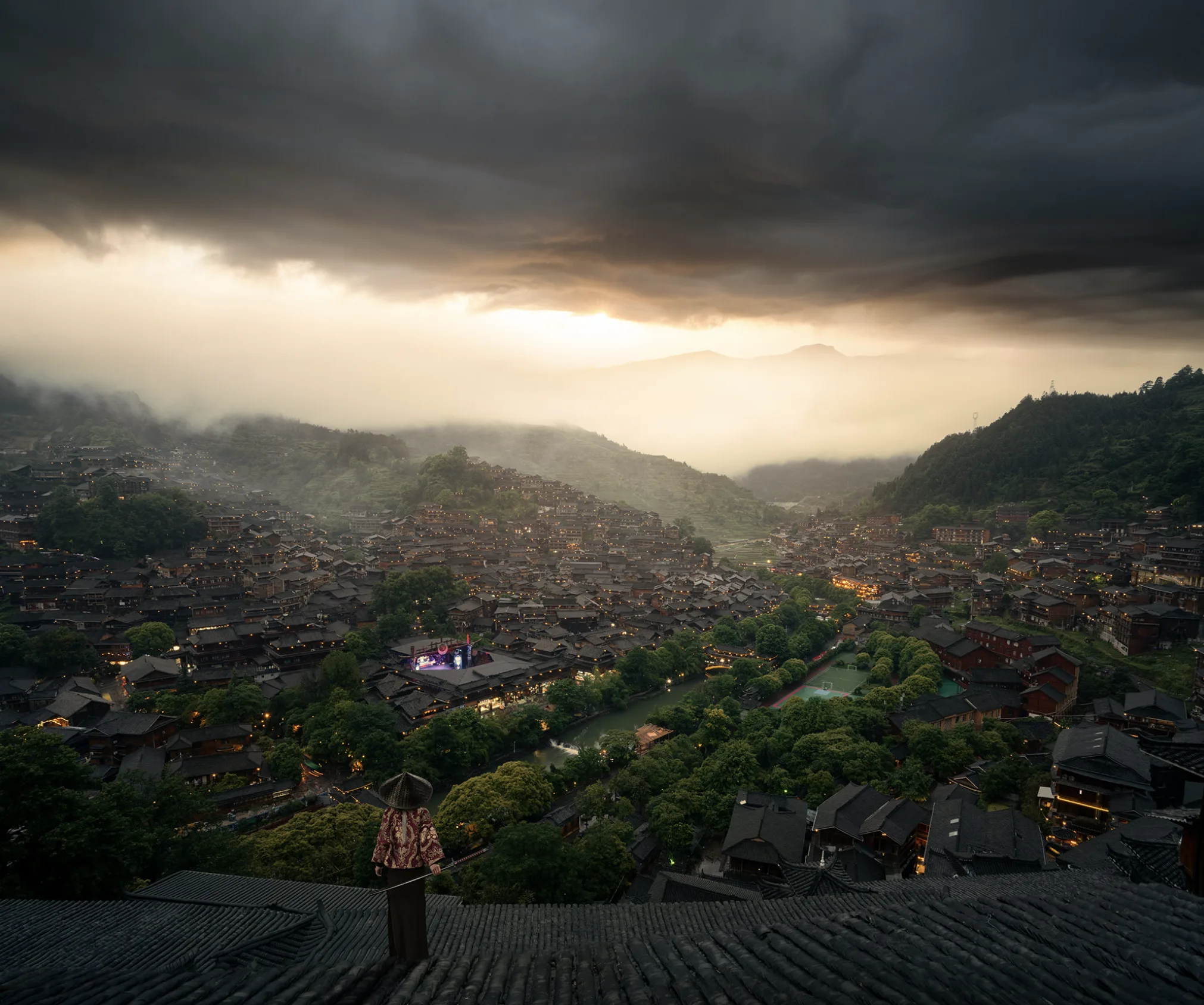
Xijiang Qianhu Miao Village, often included in routes as Xijiang Miao Village, is one of the largest Miao settlements in the world and one of Guizhou’s most iconic cultural destinations.
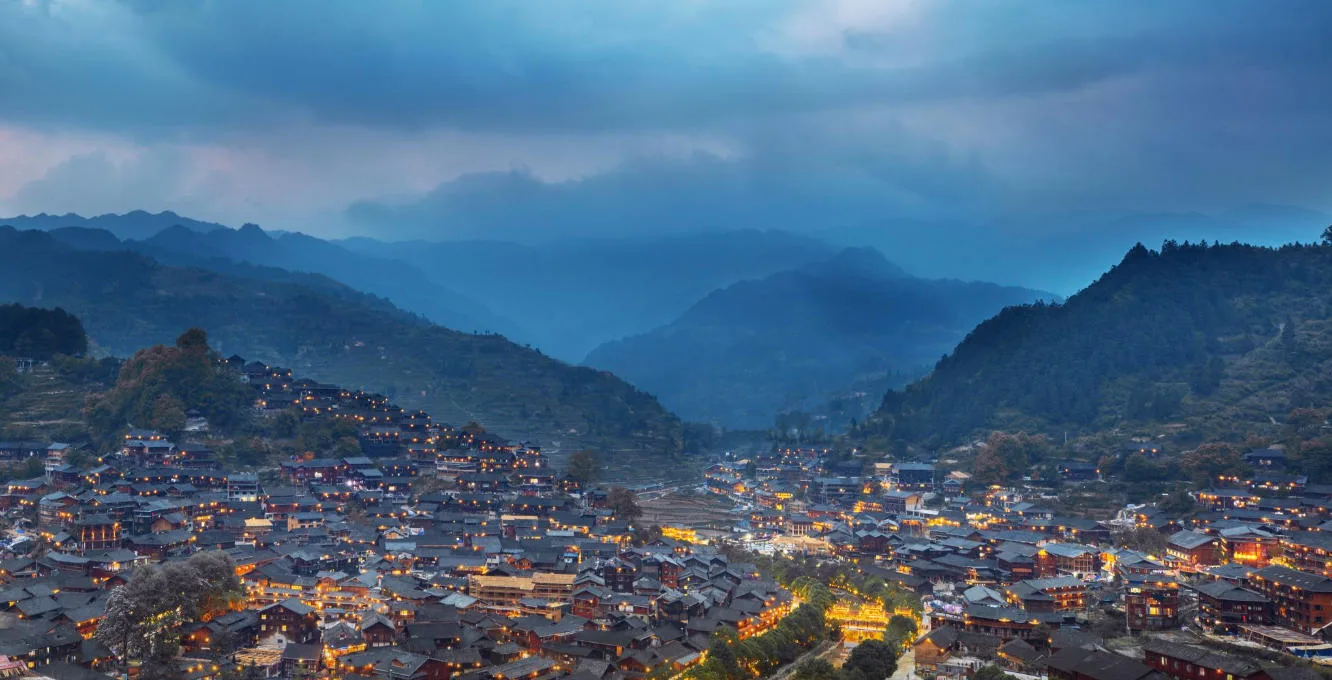
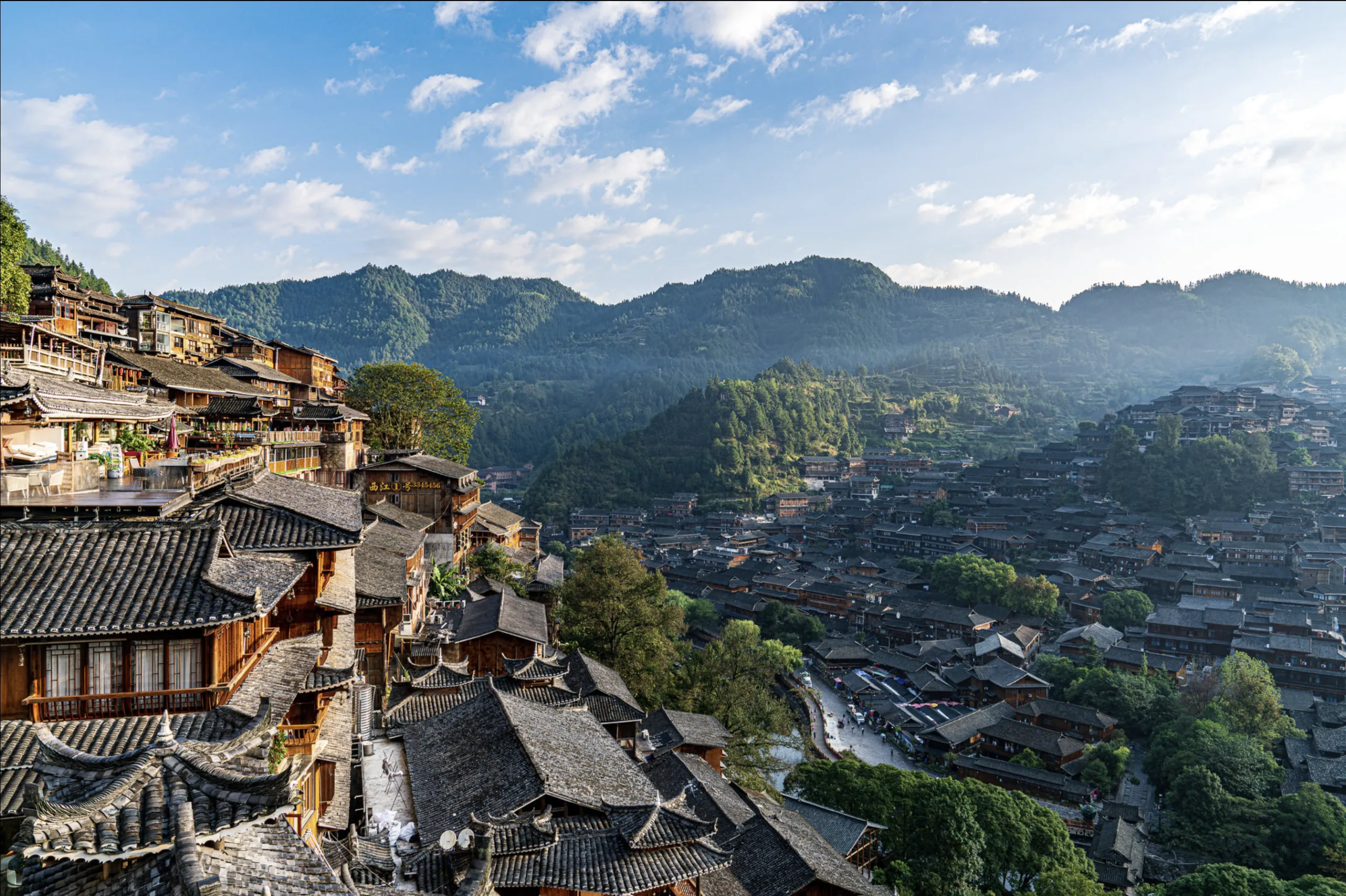
Its most recognizable feature is the thousands of traditional wooden stilt houses, known locally as Diaojiaolou, spreading across the mountainside, creating a spectacular valley view, especially when the village lights up at night. As an introduction to Miao culture, Xijiang Miao offers opportunities to experience colorful ethnic customs through traditional clothing, music, festivals, Miao cuisine such as long-table banquets, and crafts including batik and silverwork. Over 40% of Guizhou’s population belongs to ethnic minorities, and 55.5% of the province’s area is designated as autonomous regions for minorities.
However, Xijiang has also become one of Guizhou’s most popular tourist destinations. Travelers looking for a deeper connection with Miao communities can consider combining it with smaller villages such as Langde, Kongbai, and Rongjiang, where traditional village life remains more closely connected with everyday routines.
Basha Miao Village
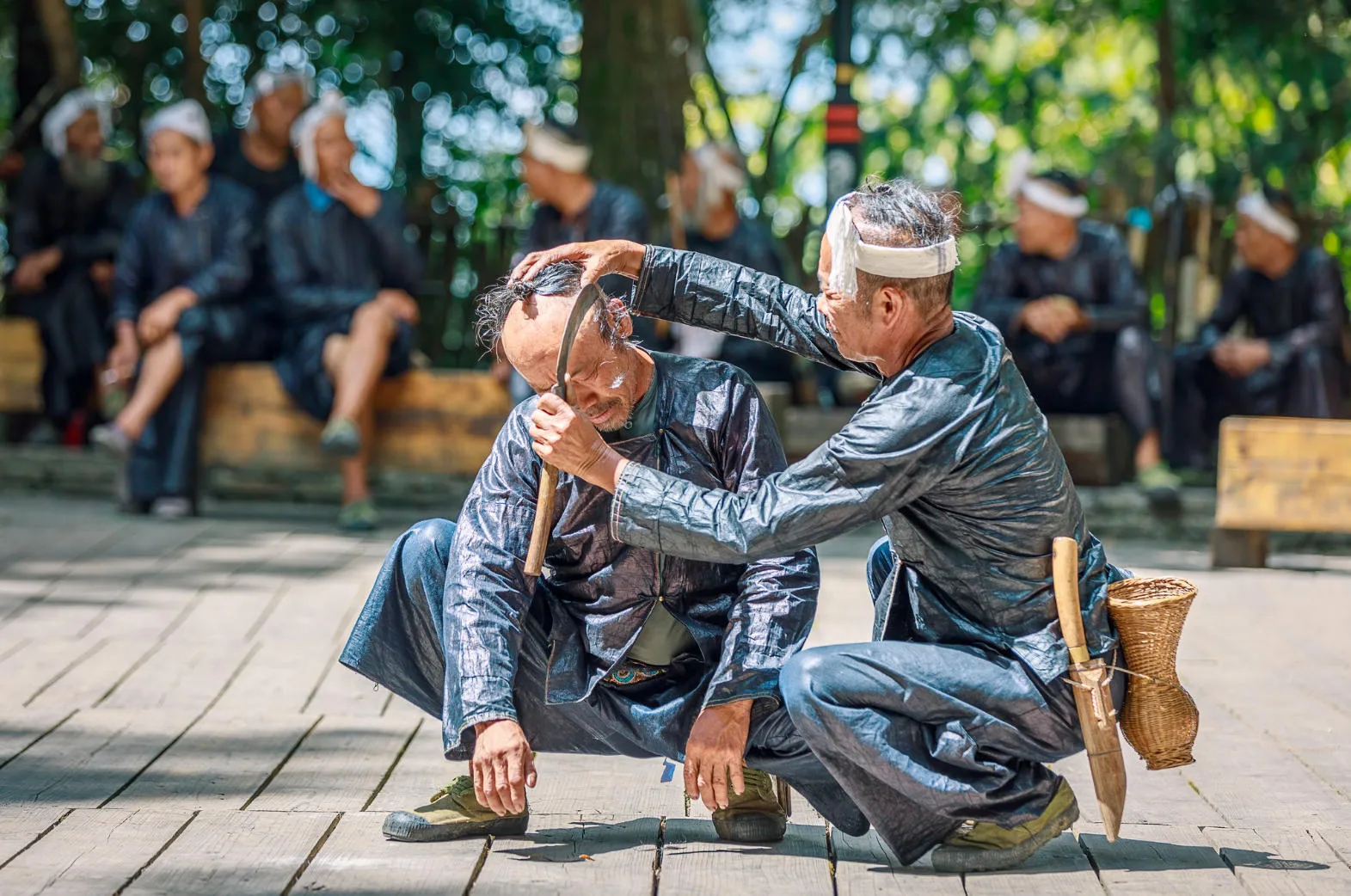
Located in Congjiang County, Basha Miao Village is one of Guizhou’s most distinctive Miao communities and is often known as the “last gunman tribe” in China. Men in the village still preserve traditional hairstyles, wearing their hair in a topknot and carrying long knives and traditional firearms as part of their cultural heritage.
The Basha people consider themselves descendants of Chiyou, an ancient figure in Chinese mythology, and have developed a unique forest-based cultural identity. Local beliefs emphasize the close relationship between trees and human life: families plant trees when children are born, and trees remain connected with people throughout their lives.
This deep connection between the community and the forest is one of the most distinctive aspects of Basha culture.
Dong Villages
The Dong people are mainly distributed across southeastern Guizhou. Unlike the Miao, whose cultural identity is often associated with traditional clothing and silver ornaments, the most iconic symbols of the dong ethnic group are drum towers, wind-and-rain bridges, and Dong Grand Songs.
Zhaoxing Dong Village
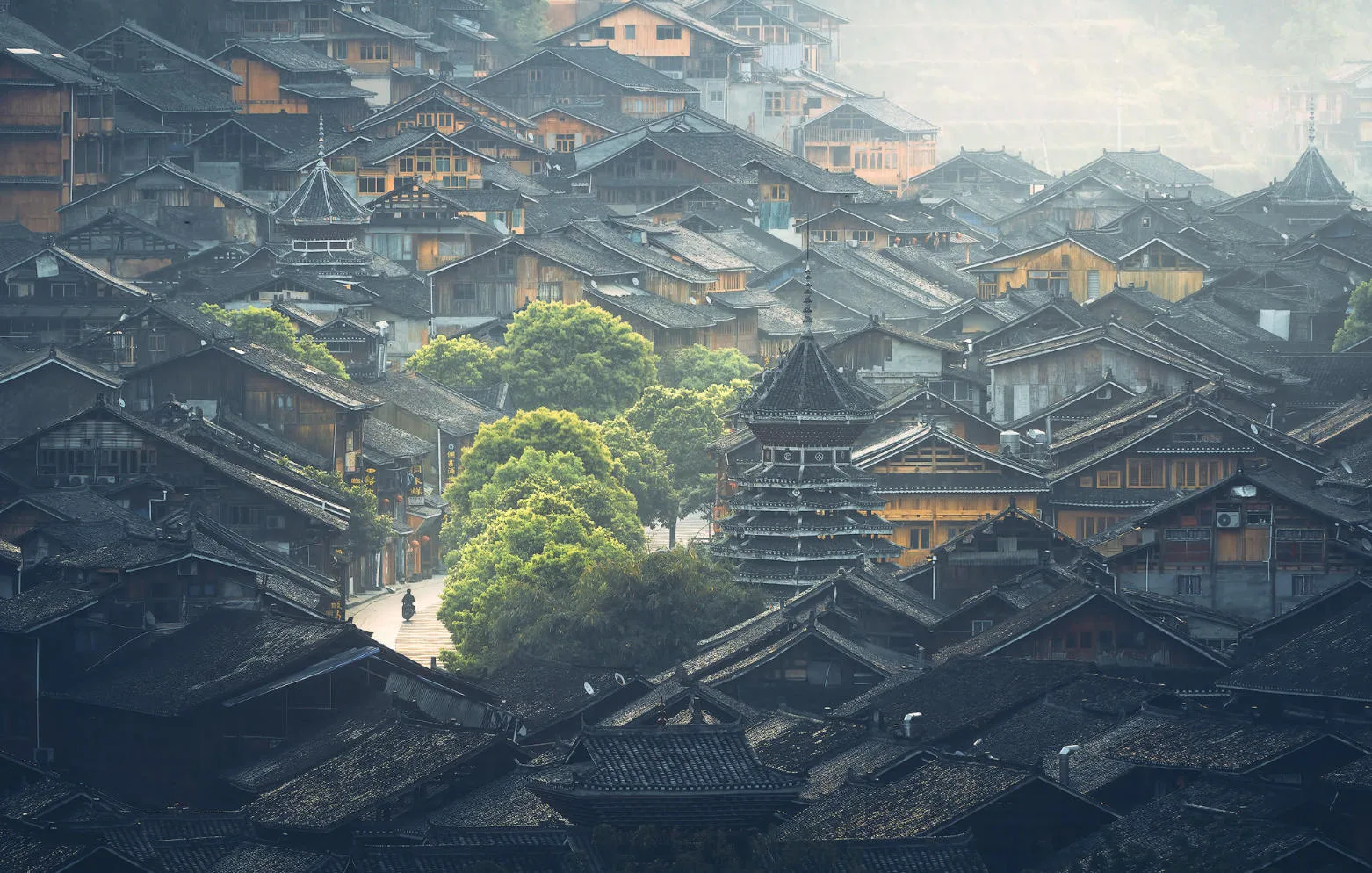
Zhaoxing Dong Village is one of the most famous Dong villages in Guizhou and an excellent introduction to Dong culture.
The village is best known for its five traditional drum towers arranged throughout the settlement, wooden wind-and-rain bridges crossing the streams, and the continued tradition of Dong Grand Songs. Travelers can wander through the village, explore traditional wooden architecture, participate in cultural experiences such as Dong textile crafts, and enjoy performances of Dong singing traditions. The village also serves as a starting point for hiking routes to Xiage Rice Terraces and Tang’an Rice Terraces, where mountain landscapes and village scenery unfold along the way.
Compared with more remote Dong villages, Zhaoxing has better accommodation and transportation facilities, making it a good choice for travelers experiencing Dong culture for the first time.
Huanggong Dong Village
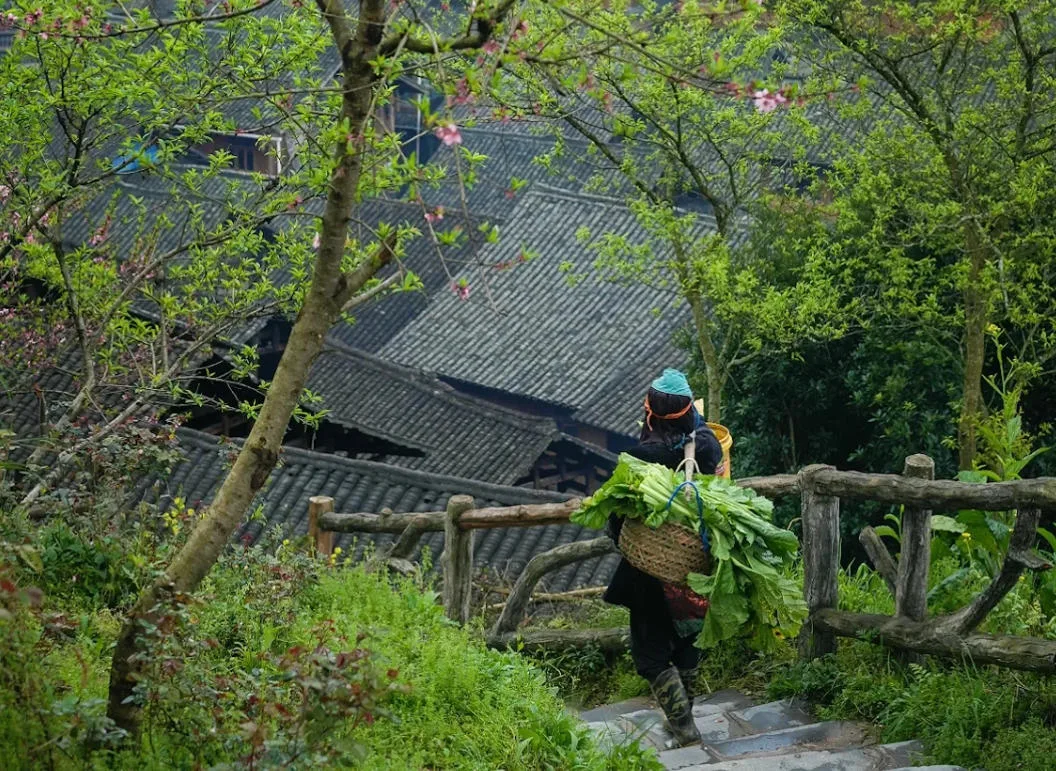
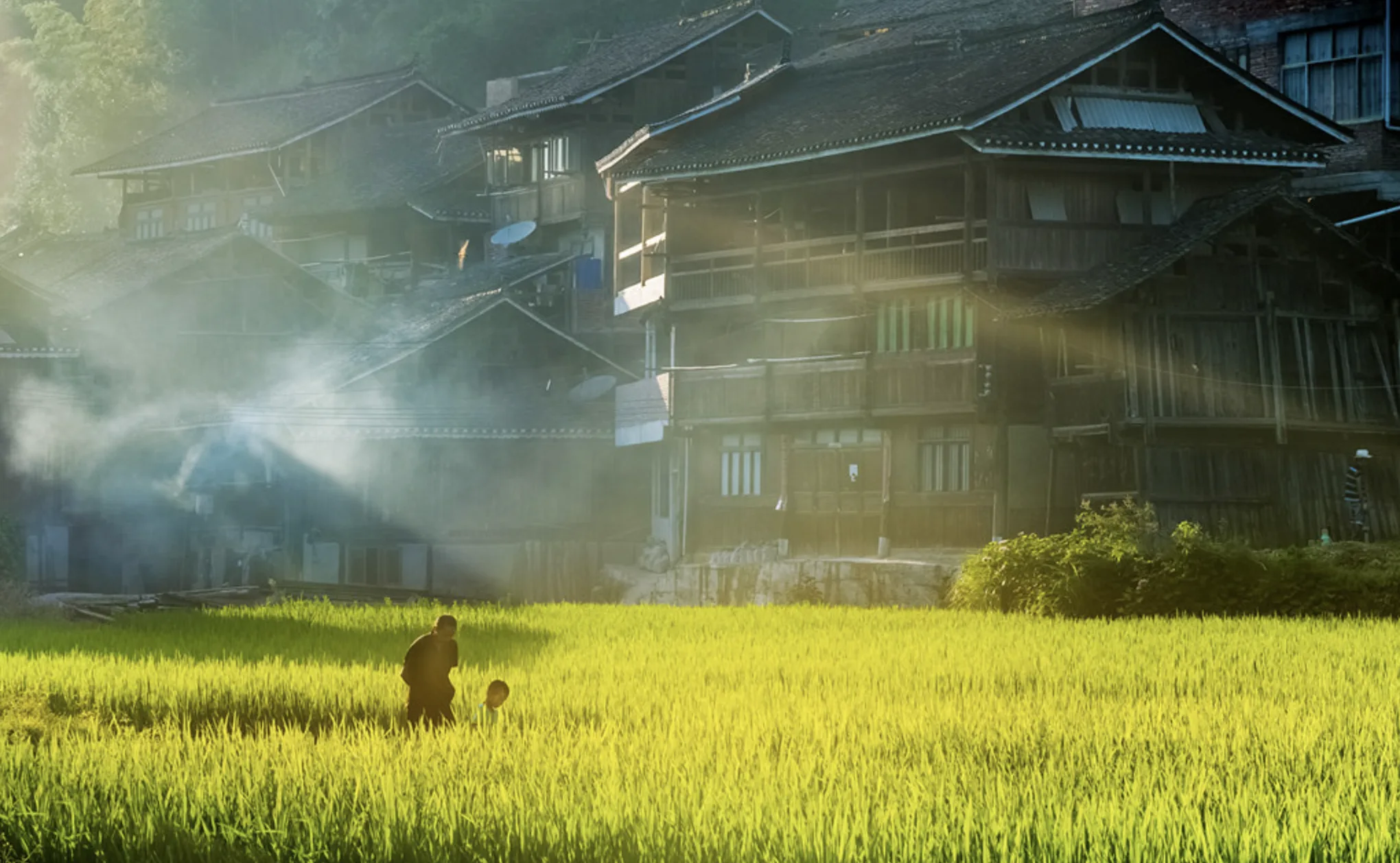
For travelers looking for a deeper and more everyday experience of Dong culture, Huanggong Dong Village is a better choice. With fewer visitors and limited commercialization, traditional culture here continues to exist as part of local life rather than as a staged attraction.
Visitors can experience a more traditional form of Dong Grand Songs, observe local craftsmanship, and gain a closer understanding of agricultural life in the mountains. For those combining Dong and Miao villages on the same route, Zaidang Dong Village is another worthwhile stop alongside better-known places such as Xijiang Miao Village, with Xijiang Miao remaining the best-known Miao destination and among the most culturally significant Miao villages in the country.
Ethnic Groups
Guizhou is home to a remarkable diversity of ethnic cultures, including the Miao, Dong, Buyi, Shui, Tujia, and Gelao communities. Each group has developed its own traditions, languages, architecture, crafts, and festivals shaped by the landscapes where they have lived for generations. Among Guizhou’s notable traditional performing arts is ground opera, widely regarded as a living fossil of ancient opera.
Different communities celebrate unique traditional festivals:
- Miao: Miao New Year, Lusheng Festival, Sisters’ Festival
- Dong: Dong New Year, Sama Festival, traditional singing gatherings
- Shui: Duanjie Festival
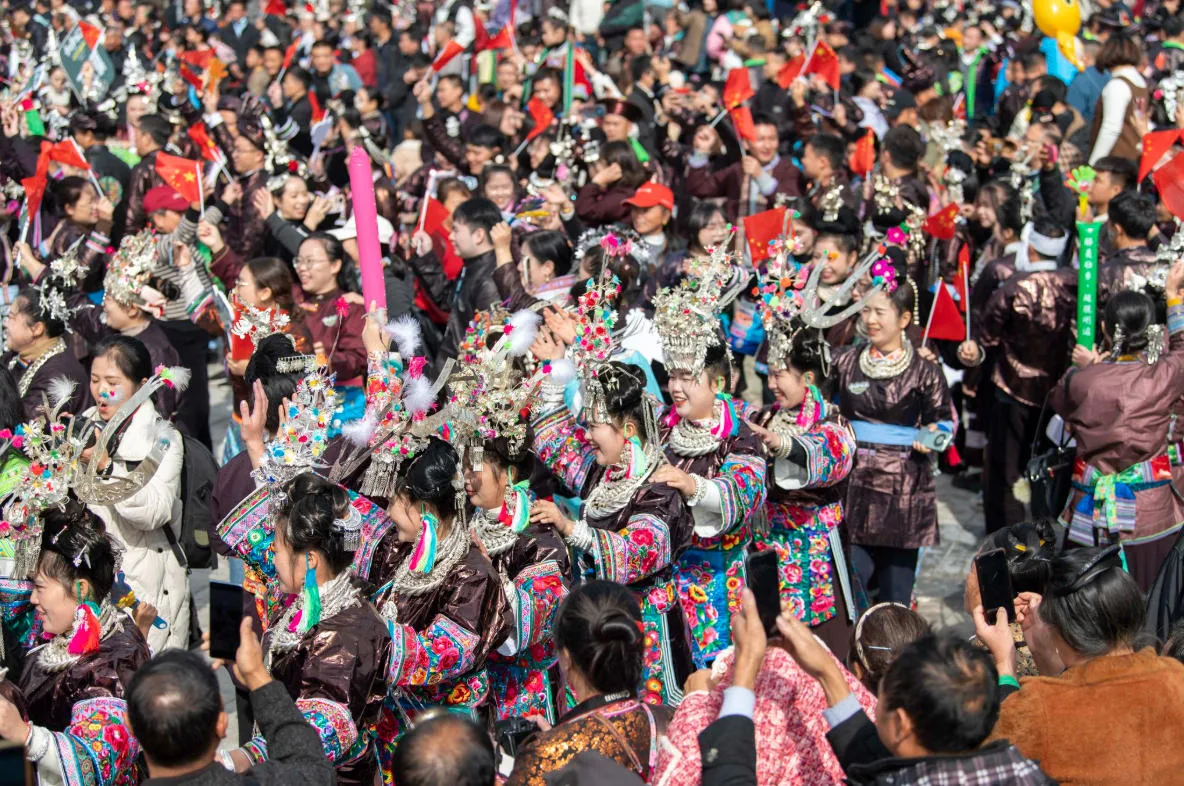
During festival periods, villages often come alive with residents wearing traditional clothing, collective singing and dancing, long-table banquets, and traditional competitions. However, it is important to note that festival dates can vary between villages according to the lunar calendar and local arrangements. These celebrations are not fixed tourist performances, so travelers hoping to experience authentic festivals should confirm dates through local sources in advance.
Best Places to Start a Guizhou Mountain Journey
Guizhou’s mountain areas are spread across a large region, and many villages and natural attractions are located far apart from each other. Choosing the right transportation hub based on your destination is therefore an important part of planning a Guizhou journey.
For most international travelers visiting Guizhou, China for the first time, Guiyang is the most convenient starting point. As Guiyang city, the capital Guiyang is the provincial capital and main transportation hub, with an international airport, high-speed railway connections, and transport links to major destinations across the province, including Kaili, Anshun, and Tongren; travelers heading onward to an ancient town or to revolutionary sites in Zunyi usually continue by road or rail from Guiyang, and it is also home to Jiaxiu Pavilion, a well-known historic landmark.
Depending on your travel route, the following high-speed railway stations are useful entry points:
- Kaili South Station: The main gateway to Qiandongnan Miao and Dong Autonomous Prefecture, ideal for routes visiting ethnic villages such as Xijiang, Langde, Zhaoxing, and Huanggang.
- Tongren Station: The most convenient access point for Fanjingshan.
- Anshun Station: A good base for exploring karst landscapes such as Huangguoshu Waterfall and Longgong Cave.
- Congjiang Station: Provides access to deeper areas of southeastern Guizhou, including Jiabang Rice Terraces, Basha Miao Village, and Huanggang Dong Village.
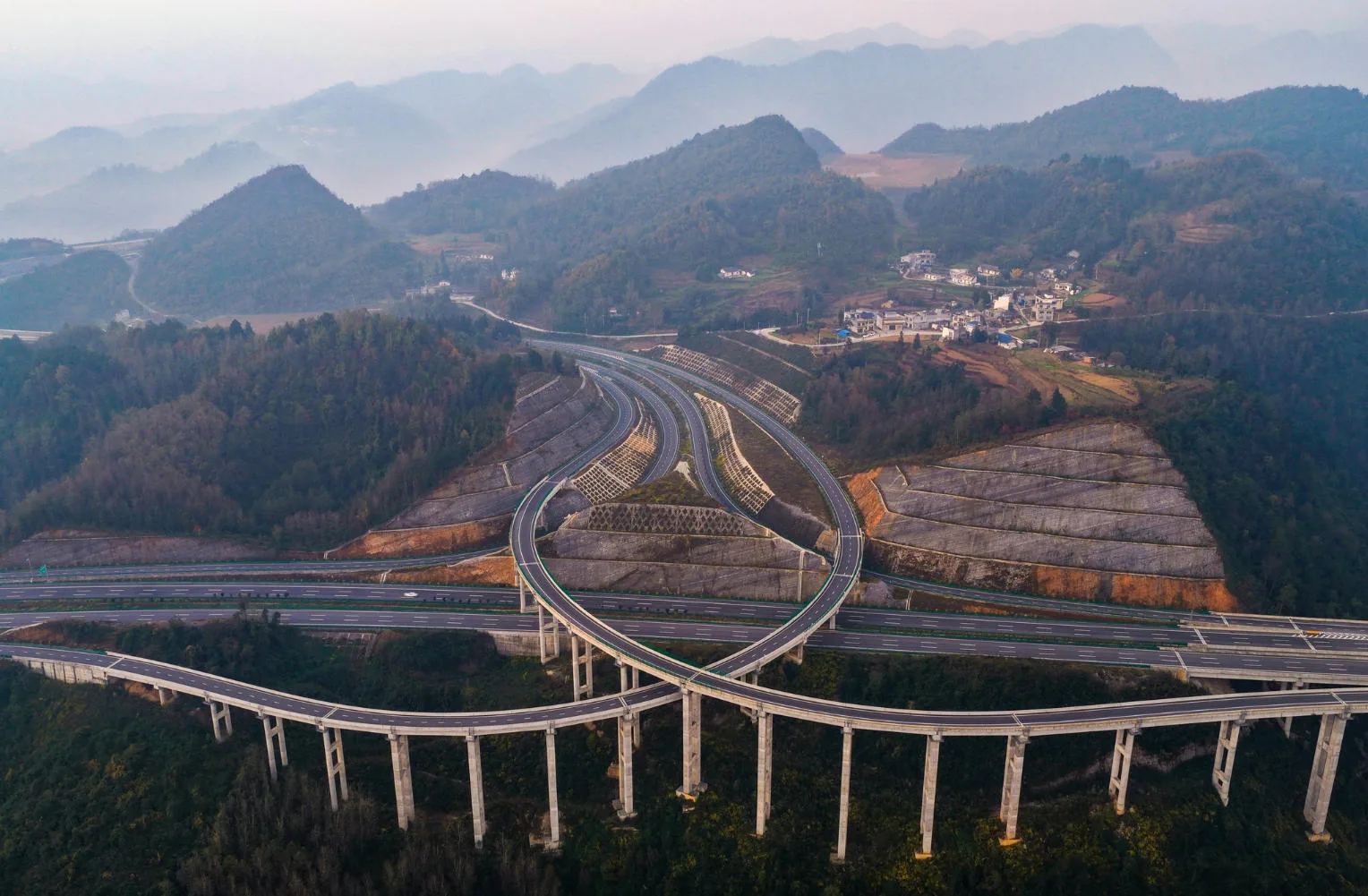
Guizhou’s high-speed railway network now connects most major cities, but reaching mountain villages and natural areas often still requires road transportation. Many destinations involve a final journey through winding mountain roads that cannot be easily covered by public transport. For deeper exploration of Guizhou, private vehicles and local drivers remain highly valuable, offering greater flexibility and access to more remote communities.
If you want a more detailed itinerary, we can tailor the route around either ethnic culture or natural wonders in Southeast Guizhou and nearby areas. You can book our 8-Day Guizhou Journey here. If you have more time and would like to combine Guizhou with Yunnan Province, you can also explore our 14-Day Guizhou & Yunnan Journey.
Practical Planning, Safety And Logistics
Proper preparation can make hiking in Guizhou’s mountains much more comfortable and enjoyable. Guizhou receives frequent rainfall, so a waterproof jacket or lightweight raincoat is essential. Most mountain trails are made of stone paths or dirt tracks, and a pair of hiking shoes with good grip is often more important than any other piece of equipment.
Insect repellent is recommended, especially in forested and humid areas. Mobile phone signals can be unreliable in remote mountain valleys, so downloading offline maps before entering more isolated areas is a good idea. Some nature reserves require advance reservations or entrance procedures, so travelers should confirm requirements before departure. Zunyi is also the access city for the Site of the Zunyi Conference, where Mao Zedong first gained control of the Red Army in 1935.
Medical facilities in mountain areas can be limited, and purchasing travel insurance that includes emergency medical evacuation is recommended. Hiking in Guizhou is generally moderate in difficulty and does not require professional mountaineering experience, but travelers should have a basic level of fitness and be comfortable walking on uneven terrain.
For longer routes, such as the western entrance hiking trail of Fanjingshan or traverses through the primitive forests of Maolan, hiring an experienced local guide familiar with the terrain is highly recommended.
Responsible Travel in Guizhou’s Mountain Communities

Guizhou’s ethnic villages are living communities, not tourist displays. When visiting, consider hiring a local guide who understands village customs and traditions.
Always ask for permission before photographing residents. Staying in locally run guesthouses and spending within the community helps support local livelihoods.
When hiking, take all waste with you, avoid fires and camping outside designated areas, do not pick wild plants, and avoid disturbing or feeding wildlife.
Explore Eastogo’s Guizhou Mountain Journeys
Guizhou’s mountain regions are spread across different areas, each with its own landscapes and cultural traditions. Our local guides understand the terrain, seasonal conditions, and hiking routes in each region, allowing us to adjust itineraries according to weather and local conditions.
Eastogo specializes in creating in-depth private journeys across southwest China, including Guizhou, Yunnan, Guangxi, Hunan, and Western Sichuan. We help travelers discover the cultures and landscapes that are often missed on standard routes. We can also design a Private Guizhou Tour around what sparks your curiosity.
Each journey is thoughtfully designed according to your interests, pace, and travel style, Whether you choose self-guided China tours or private & custom China tours, we help you explore China with greater comfort, confidence, and depth.
For more information, read our Guizhou Travel Guide: A Complete Guide to Culture, Nature and Hidden Villages.
If Guizhou speaks to your curiosity, we would be happy to help you create a journey that reflects your interests and the way you want to experience this remarkable region.