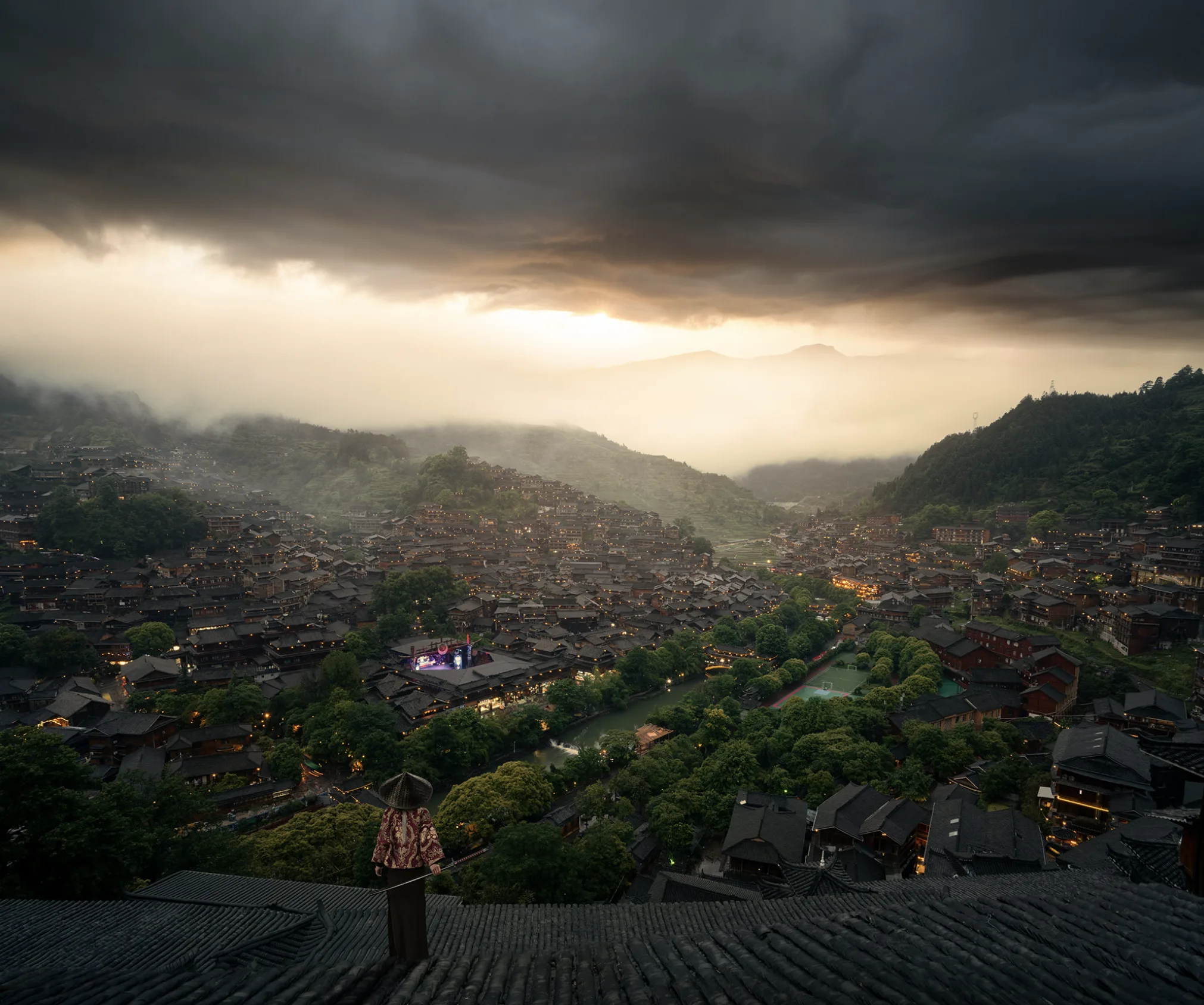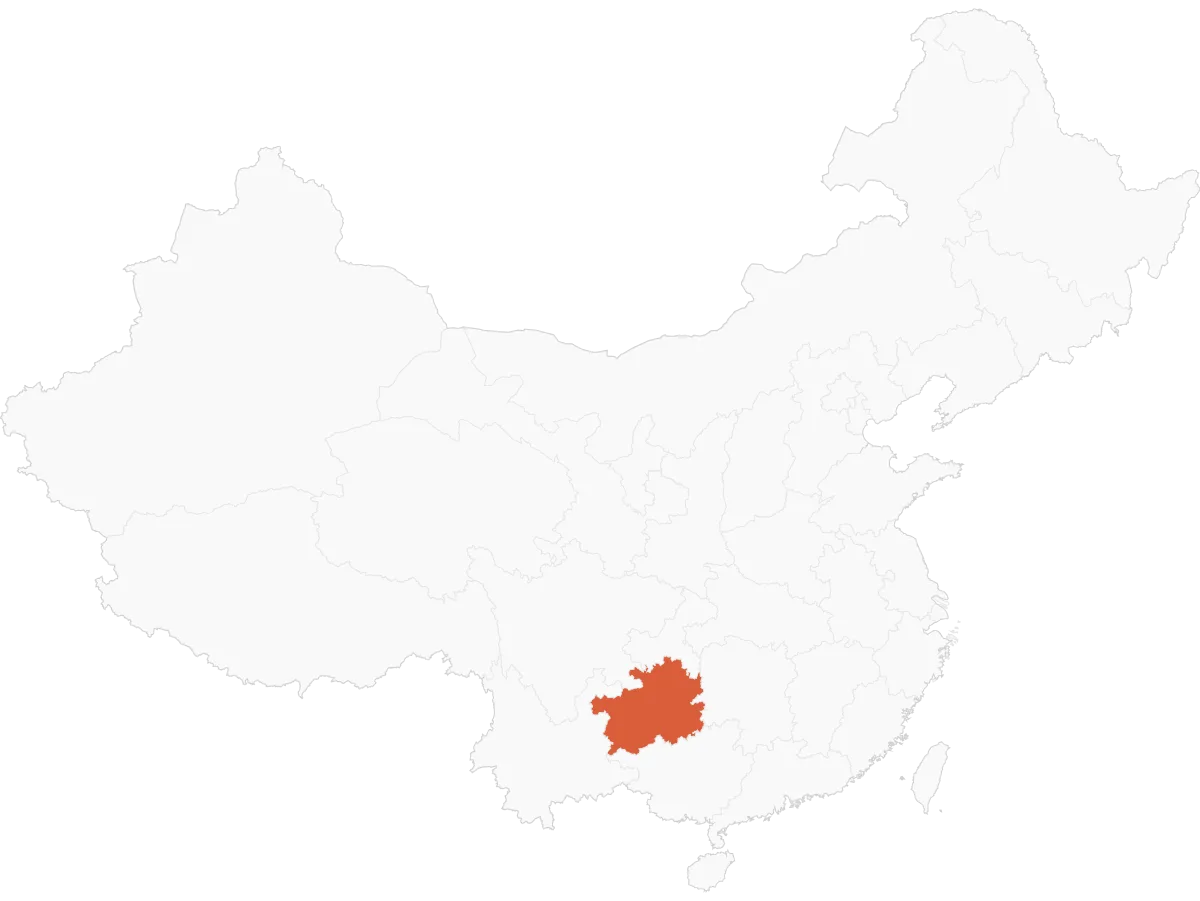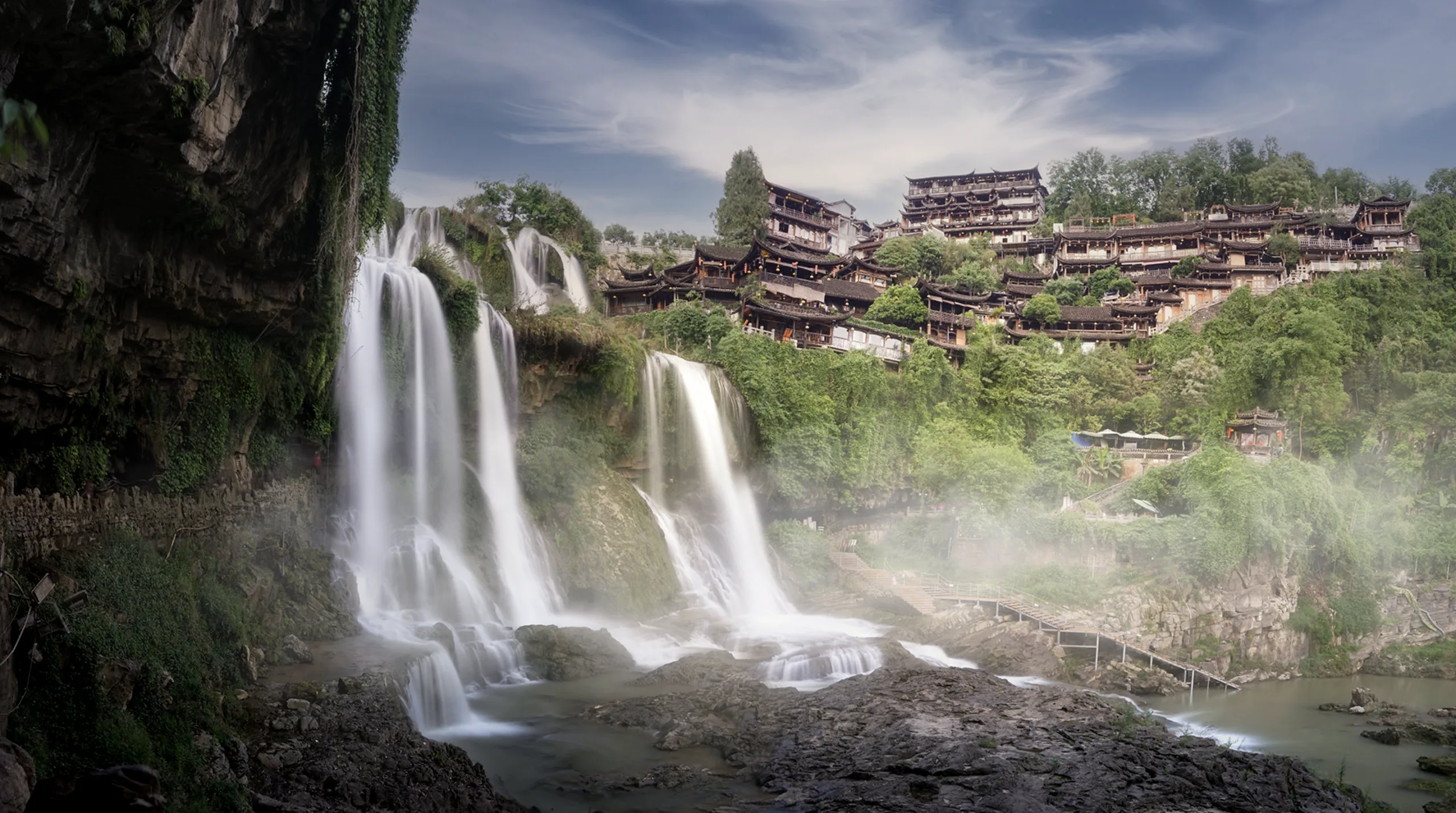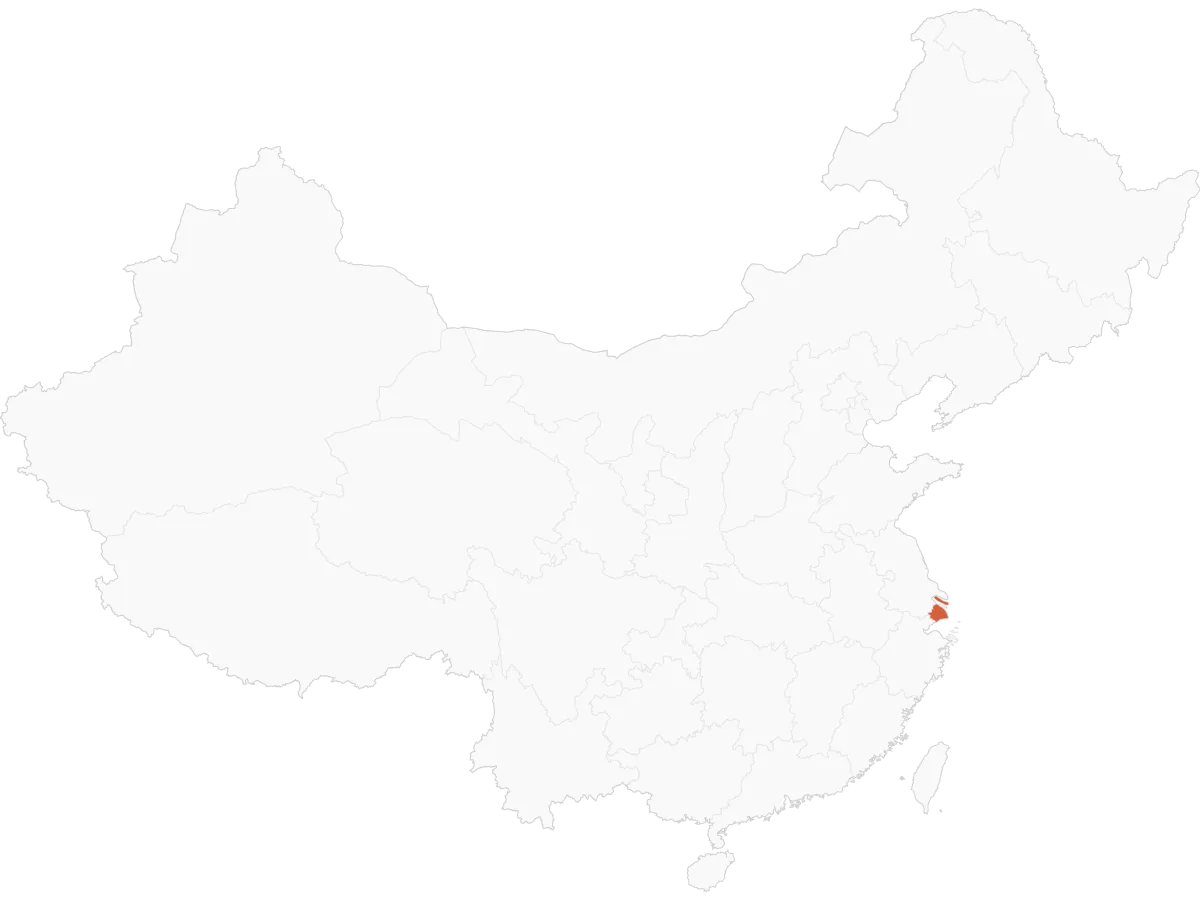
Zhaoxing Dong Village is a mountain-valley village in Liping County, Guizhou, where five drum towers, wind and rain bridges, and rows of wooden houses define the landscape. Together with Dong grand songs and a strong sense of community life, they make Zhaoxing one of the best places for culturally curious international travelers to begin understanding Dong culture in Guizhou.
As one of the earlier developed ethnic villages in the region, Zhaoxing now has well-established accommodation, dining, and transportation facilities, making it a comfortable choice for first-time visitors exploring Guizhou and looking for an immersive but accessible experience of village life, traditional crafts, music, and mountain scenery. This guide focuses on what to see in the village, when to go, how to get there, where to stay, walking routes, local food, festivals, nearby Dong villages, photography, and how Eastogo can help shape a more meaningful journey.
At the same time, Zhaoxing’s growing popularity means that it receives more visitors than many nearby villages. For travelers seeking a quieter and less commercialized experience, Huanggang Dong Village offers a deeper connection with Dong community life.
Why Visit Zhaoxing Dong Village? A Living Centre of Dong Culture
The name “Zhaoxing” means “the beginning” or “the first” in the Dong language, reflecting the belief that this was one of the earliest settlements established by the Dong people in the area. The village dates back to the southern song dynasty and has a history of more than 800 years. It is also widely regarded as one of Guizhou’s most beautiful ancient towns.
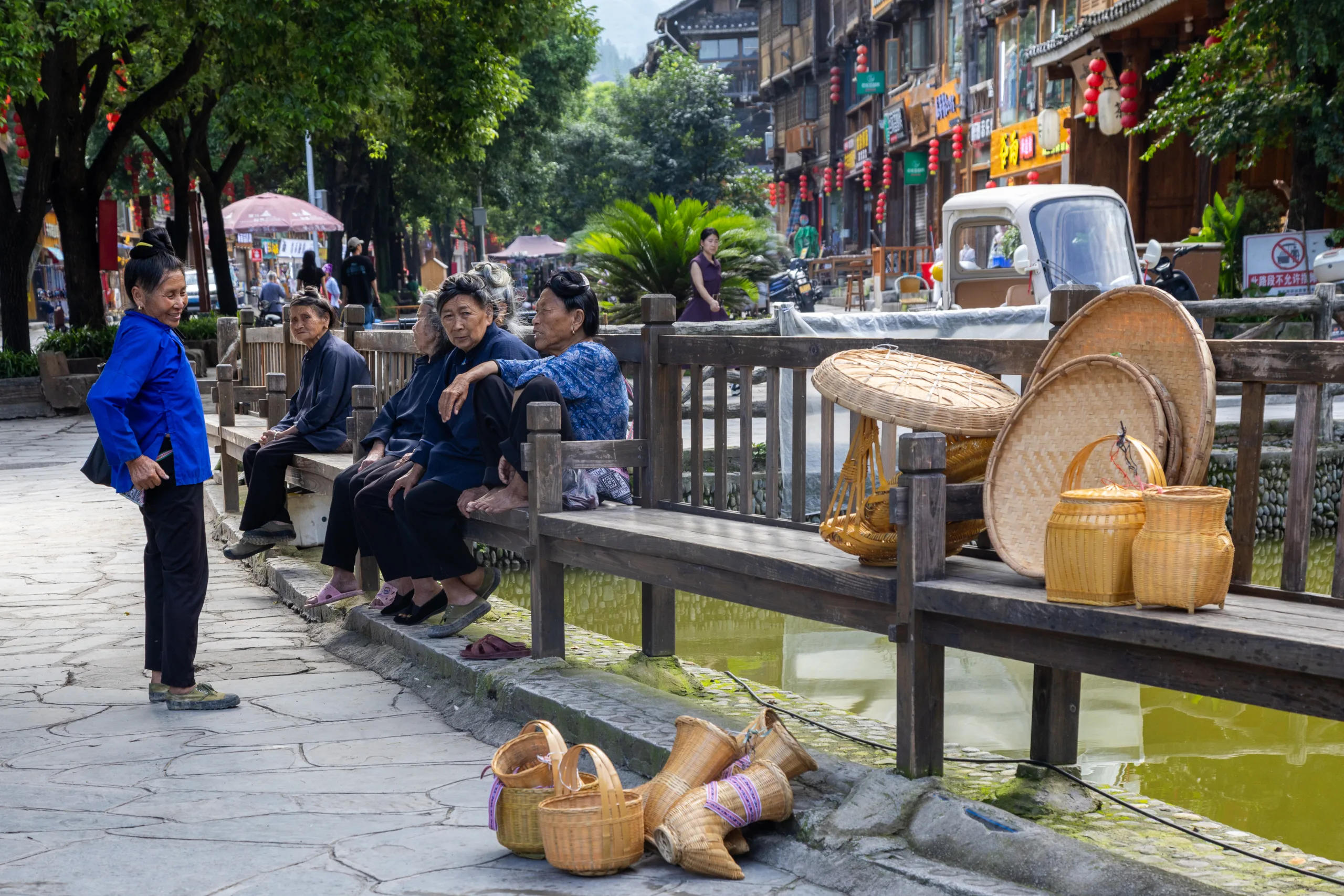
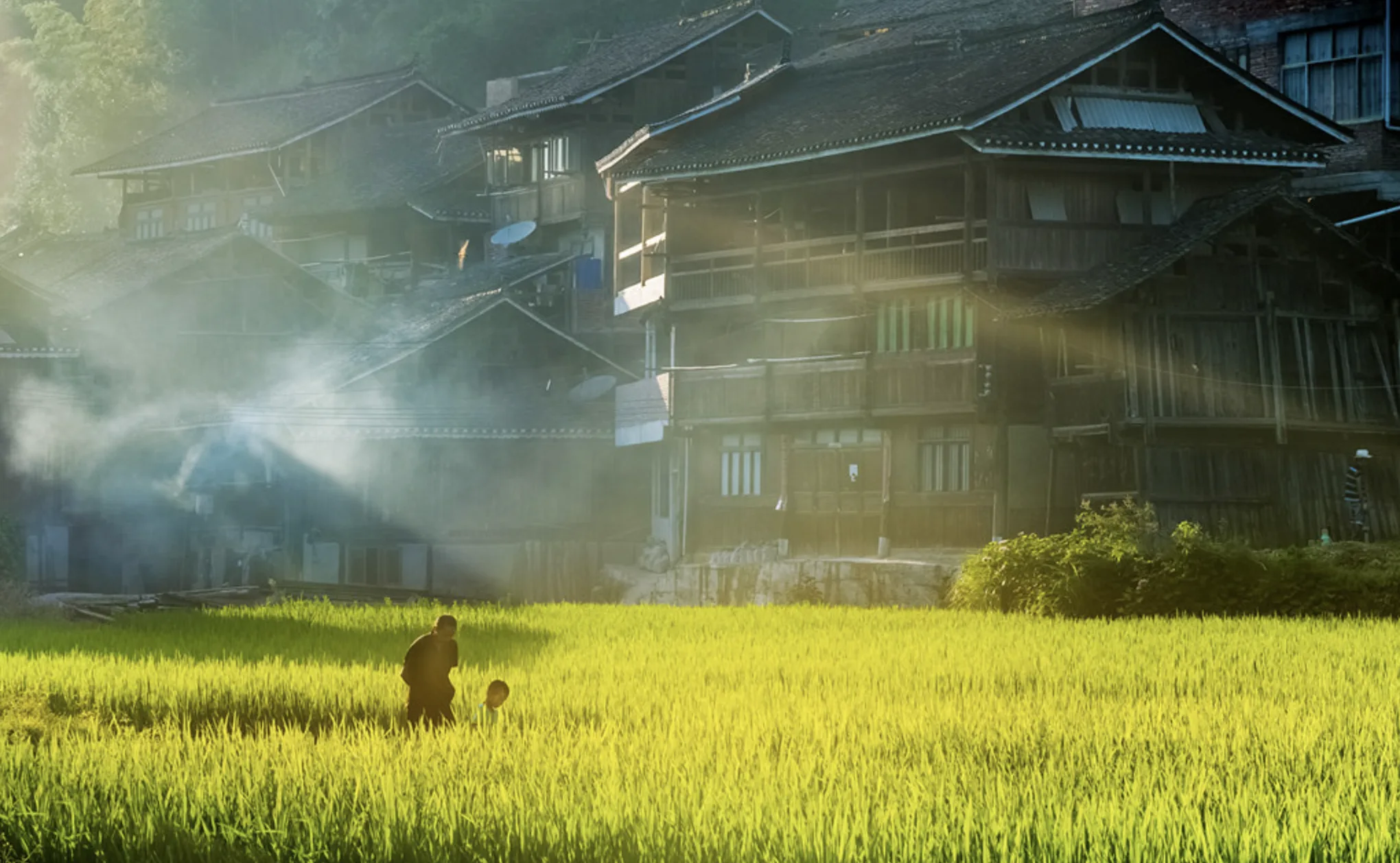
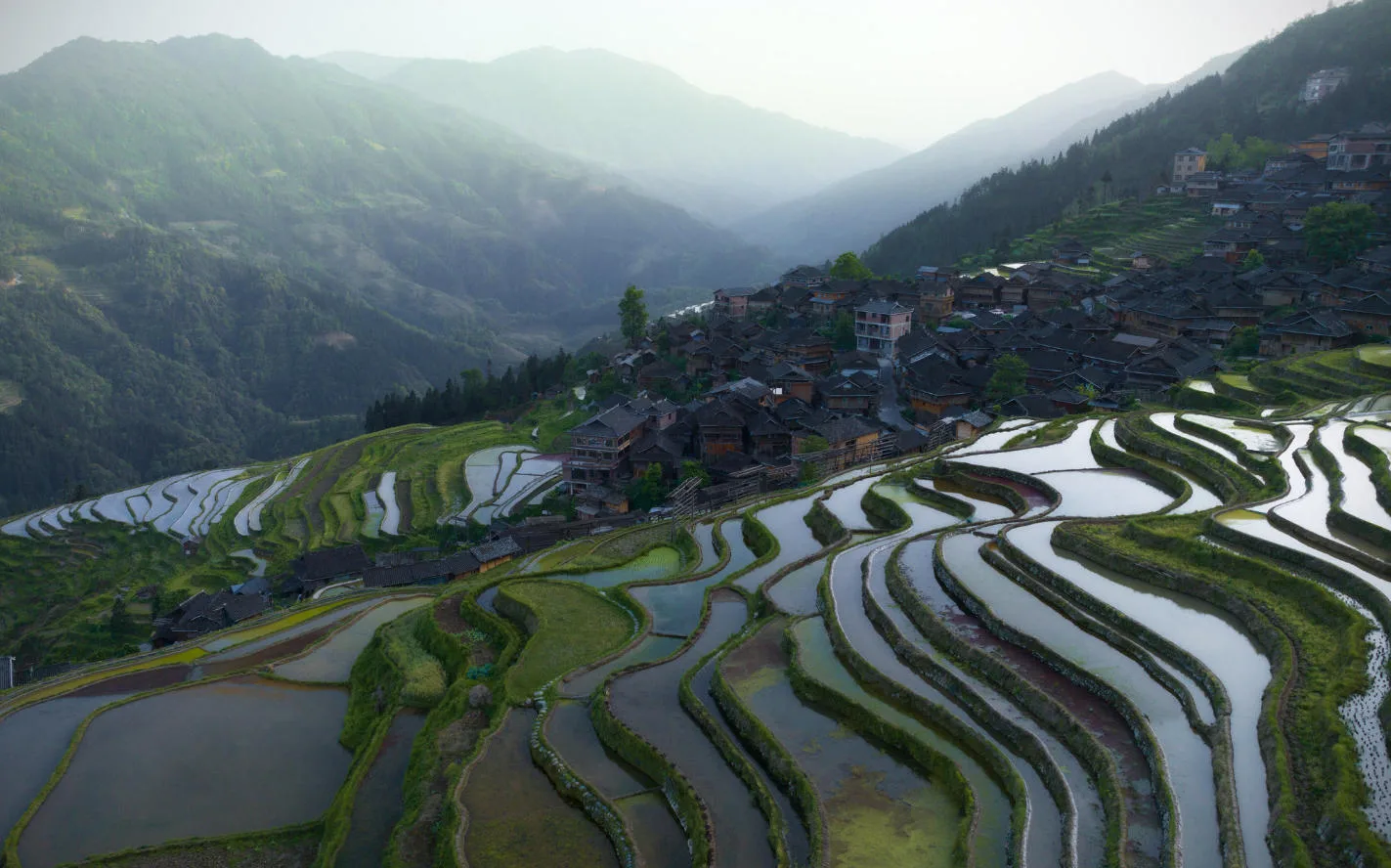
Zhaoxing sits in a long, narrow river valley surrounded by rice fields and bamboo forests. Home to more than 1,100 households, its five drum towers are spread from one end of the village to the other, with each one representing a Confucian virtue, and much of community life still revolves around them. What gives Zhaoxing its character is that it remains a living Dong community rather than simply a place for sightseeing. It has also been highlighted by National Geographic.
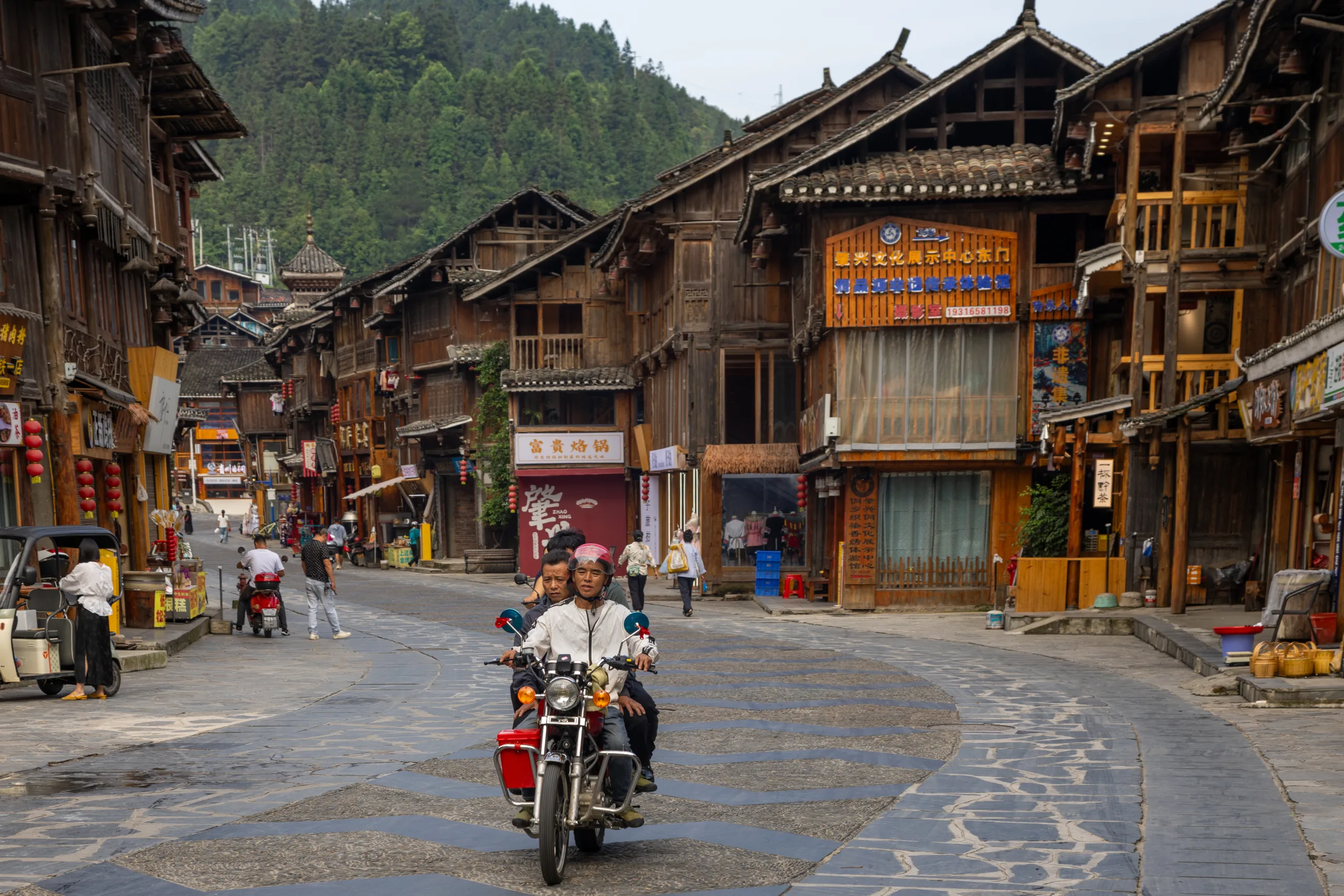
The main street is a flat, stone-paved pedestrian road, with well-developed facilities including ATMs, a clinic, pharmacies, restaurants, and accommodation. With few steep sections in the village center, Zhaoxing is also relatively easy to explore for travelers who prefer not to walk long distances.
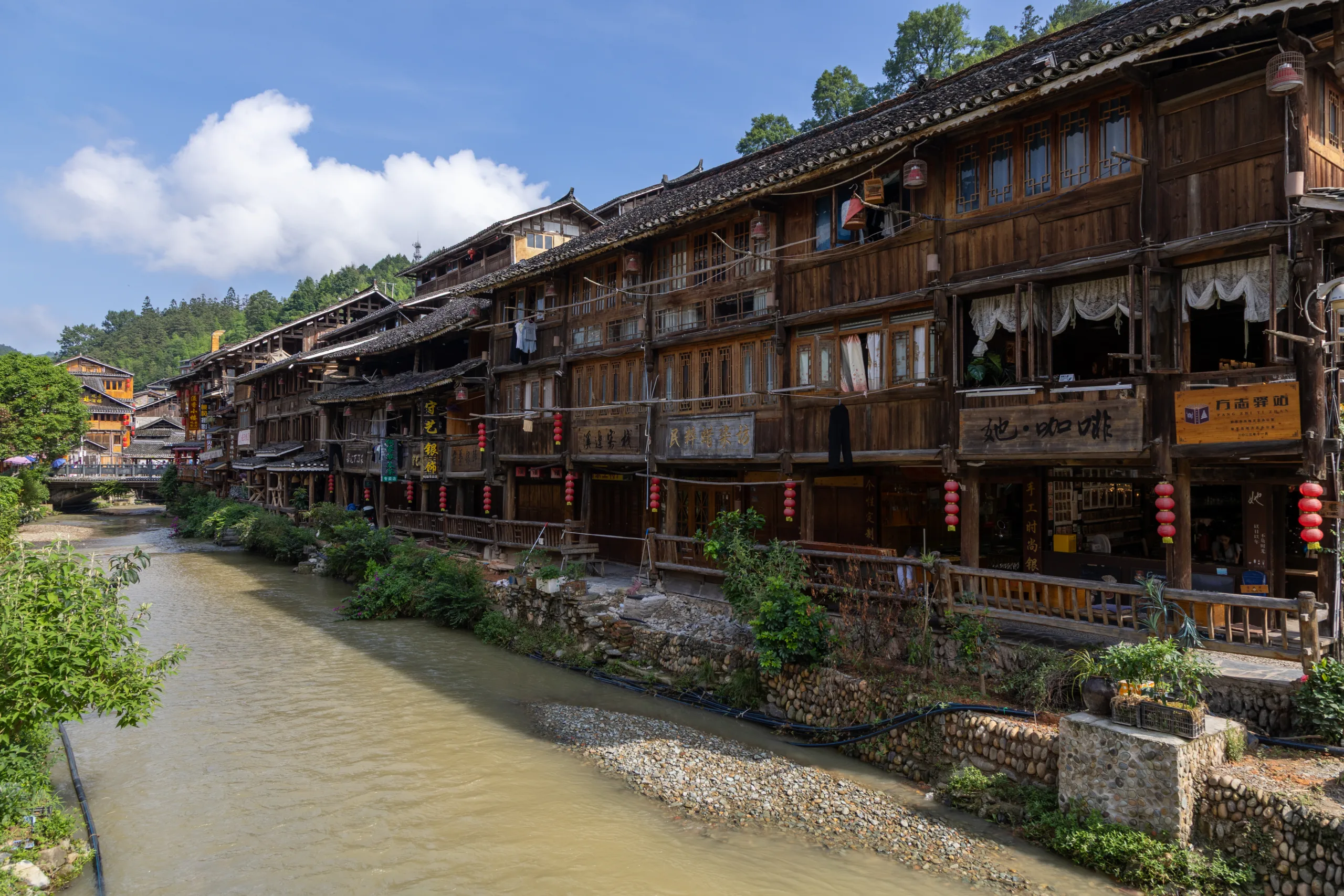
Zhaoxing is a pleasant place to simply wander. Riverside cafés and bars overlook the stream and drum towers, while small shops sell indigo cloth, embroidery, and textiles, many handmade by Dong women from the area.
In the evening, warm lights appear along the wooden houses beside the stream. Someone may be playing guitar in a bar while harmonies drift from a choir gathering in a drum tower. The two sounds mingle naturally across the valley, creating one of the most relaxed moments of the day in Zhaoxing.
Best Time to Visit Zhaoxing Dong Village
Zhaoxing can be visited year-round, with each season offering a different experience.

Spring (March–May)Spring is a good time to explore the village and nearby rice terraces. Once the terraces are filled with water, they reflect the sky and surrounding mountains, making this an especially rewarding season for photography.
Summer (June–August)The valleys around Zhaoxing are at their greenest in summer. This is also Guizhou’s rainy season, so keep an eye on the weather when visiting rice terraces or walking on mountain trails.
Autumn (September–November)Autumn is an excellent time to visit Zhaoxing. As the rice ripens, the surrounding terraces turn golden across the hillsides. It is also harvest season, when village life becomes particularly lively.
Winter (December–February)Winter sees the fewest visitors. Temperatures are cool rather than severe, generally around 4–10°C. If your visit coincides with Miao New Year or Dong New Year, villages come alive with celebrations that feel very different from New Year festivities in the cities.
For a deeper experience of Dong culture, it is worth checking the local festival calendar, especially for traditional Dong festivals such as Dong New Year and the Grain Rain Festival. Zhaoxing celebrates the Grain Rain Festival on April 20, with local Guyu Festival activities often held from April 19 to 21, when young Dong people carry small bamboo baskets from house to house collecting glutinous rice, which is then made into five-colored sticky rice and shared with the community. After the autumn harvest, some areas hold buffalo-fighting events, with crowds gathering along the riverbanks to watch two buffaloes meet horn to horn.
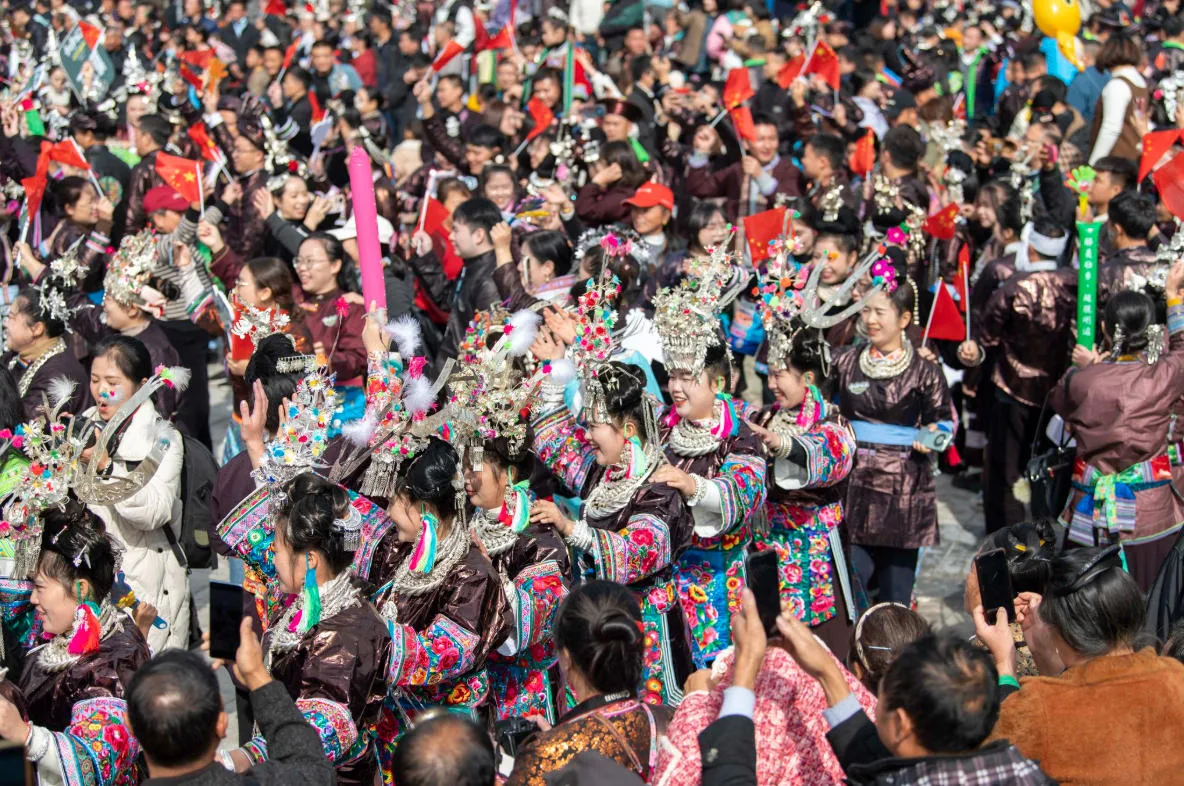
Dong New Year usually falls between late November and mid-December, bringing welcome wine ceremonies, long-table feasts, and communal singing and dancing. With music, food, and the whole village taking part, it is one of the liveliest times to experience Zhaoxing.
Try to avoid national holidays such as Golden Week, when visitor numbers rise sharply and accommodation prices increase.
How to Get to Zhaoxing Dong Village
The easiest way to reach Zhaoxing is by high-speed train to Congjiang Station. From the station, you can take a taxi or a direct shuttle to the village. Congjiang Railway Station is about 7 kilometers from the village, and high-speed trains from Guiyang take around 1.5 hours. Zhaoxing is 295 kilometers from Guiyang in Guizhou Province, so train schedules, shuttle departures, and local transport arrangements may change, and first-time international visitors may find it more convenient to arrange a transfer in advance.
Driving from Guiyang takes about 4 hours.
From Rongjiang, Zhaoxing is about a 1.5-hour drive by private car. The nearest airport is Qiandongnan Liping Airport, about 60 kilometers away, but rail is usually more convenient.

Where to Stay in Zhaoxing: Village Views and Local Guesthouses
Zhaoxing offers a range of accommodation options, from locally run guesthouses to boutique hotels, with most places concentrated along the village’s main areas and the surrounding hillsides. The three main areas to stay are near the west gate by the village entrance and main road, in the main street area, and near the east gate. Guesthouses in the main street area are convenient for restaurants and shops, but can be noisy at night, especially near bars that play music until late.
Hillside stays are generally more expensive but quieter, with views across the village rooftops and drum towers. A room with a terrace or balcony is worth considering — watching the morning mist rise over Zhaoxing is one of the pleasures of staying overnight. Many guesthouses here are run by friendly locals, and Creekside Inn is one recommended option if you want good views and family-friendly rooms.
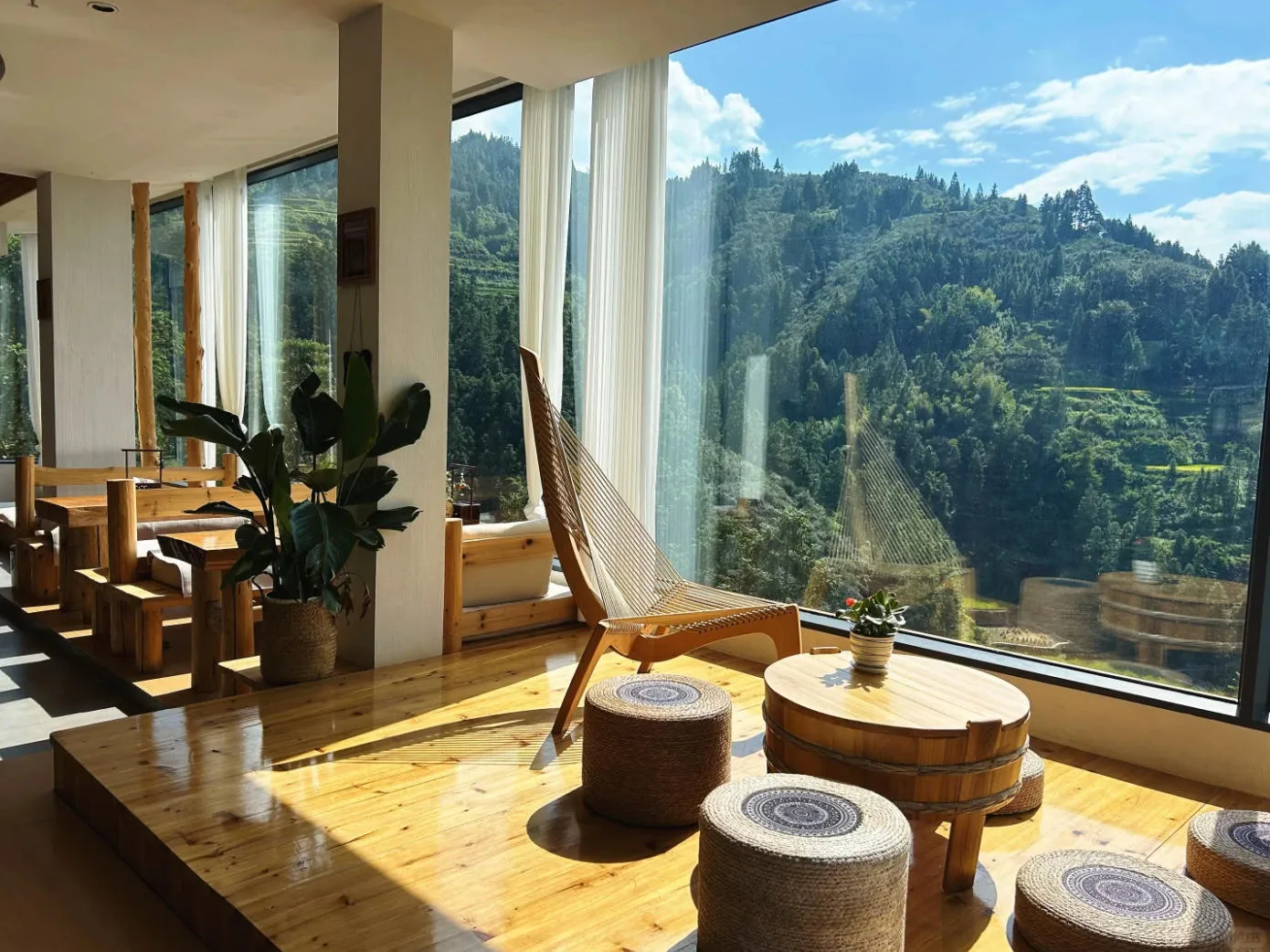
In the low season, standard guesthouses usually cost around RMB 200–400 per night. During peak periods such as the summer holidays, National Day, and Labor Day, the same room may rise to RMB 600–800 or more.
Most hotels and guesthouses in the village do not have elevators, so traveling with large or heavy luggage is best avoided.
Speak to An Expert
Starting Your Jounrney to Zhaoxing
Start designing your China journey with our destination experts.
Make An InquiryExploring Zhaoxing Village: Walking Routes and Local Experience
Zhaoxing’s main street is a stone-paved pedestrian road following the stream for about two kilometers, connecting all five drum towers. Free village maps are available at the ticket office and visitor center, marking the drum towers, wind and rain bridges, and main lanes.
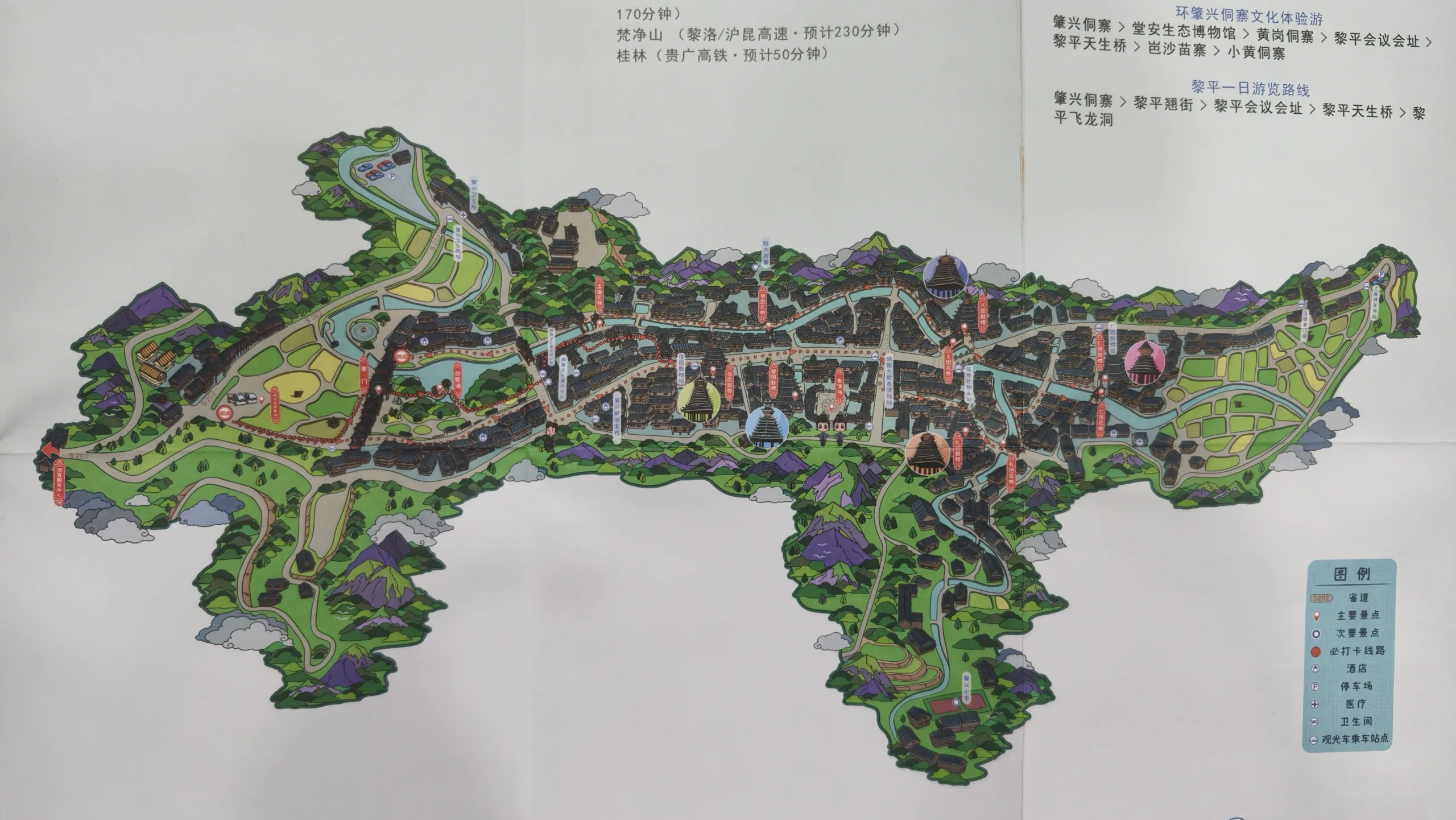
A good walking route is to follow the main street from one end of the village to the other, stopping at each drum tower along the way. Local paths also connect Zhaoxing Dong Village with nearby rice terraces and other Dong settlements. Rather than retracing your steps, head straight along the narrow path beside the water channels. This route passes the village’s wind and rain bridges, as well as small cafés, bars, and craft shops tucked into the lanes.
Along the way, try a local milk tea served in a small woven bamboo basket decorated with Guizhou-style silver ornaments. The basket is yours to keep after you finish the drink, making it a distinctive little souvenir from the region, especially on a streamside walk with the soft sound of flowing water nearby.

Five Drum Towers And Drum Tower Culture
The iconic five Drum Towers of Zhaoxing are the village’s most distinctive landmarks, each traditionally serving one of its five clans, and their collective significance has even been noted by Guinness World Records. In the past, they were places for festivals and singing, but also for discussing community matters, resting, and socializing. Unlike heritage buildings preserved mainly for sightseeing, Zhaoxing’s drum towers are still part of everyday community life.
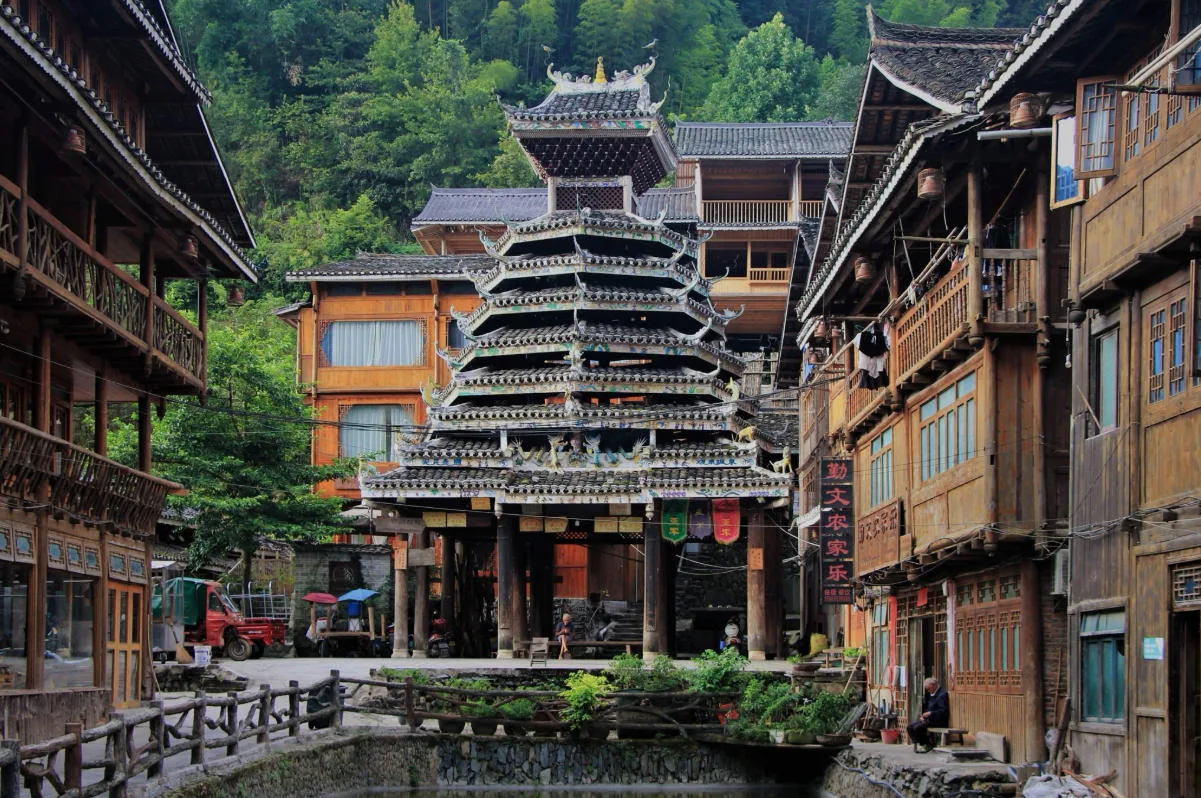
As you explore them, look closely at the intricate mortise-and-tenon joinery, the decorative details beneath the eaves, and the architectural differences between each tower. These are iconic drum towers at the heart of Dong communities.
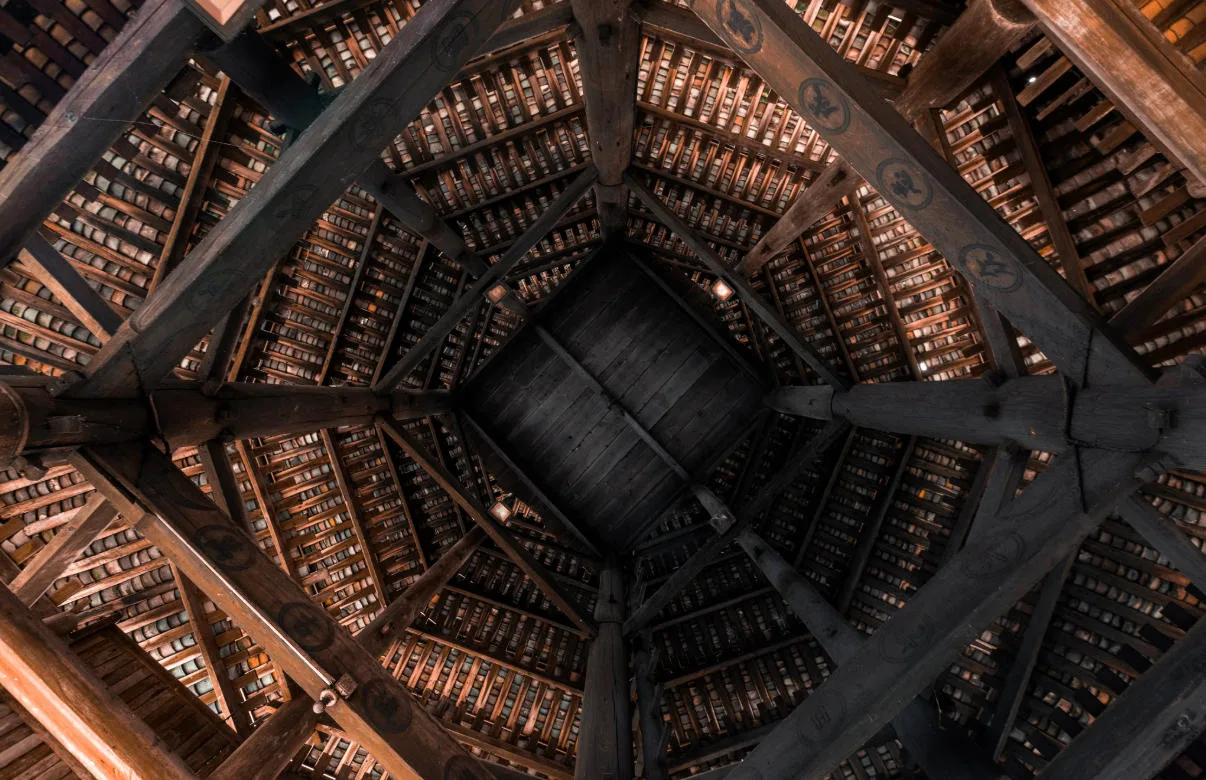
Evening is a particularly good time to visit. On some nights, villagers gather near the drum towers to sing Dong grand songs, which visitors can quietly enjoy without interrupting the gathering. That living tradition is part of why Zhaoxing is recognized for unesco intangible cultural heritage.
Rain Bridges (Wind-And-Rain Bridges)
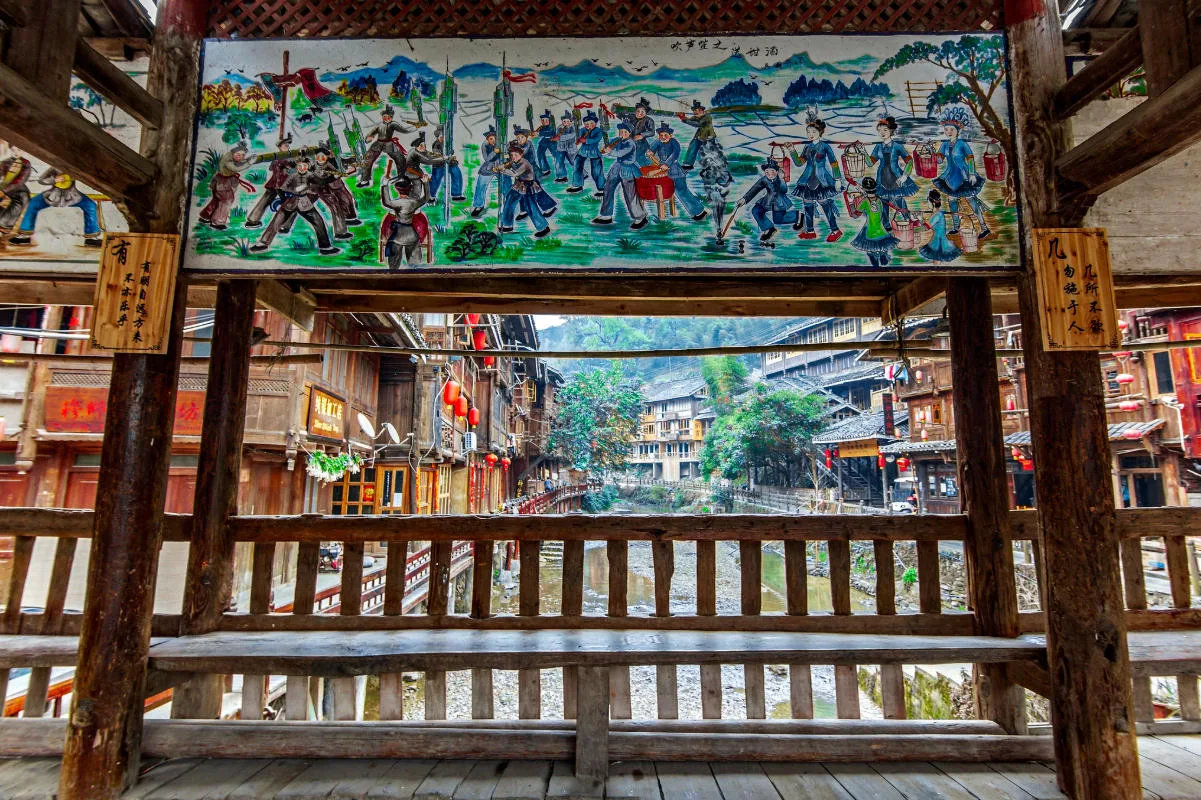
Wind and rain bridges are another defining feature of Dong villages, usually built across rivers at the entrance or edge of the settlement. Their covered structure includes pavilions, walkways, and benches, providing shelter while also carrying symbolic importance as guardians of the village. Painted beams and carved details often depict Dong legends and scenes of rural life, while the tiled roofs are a distinctive part of traditional Dong architecture.
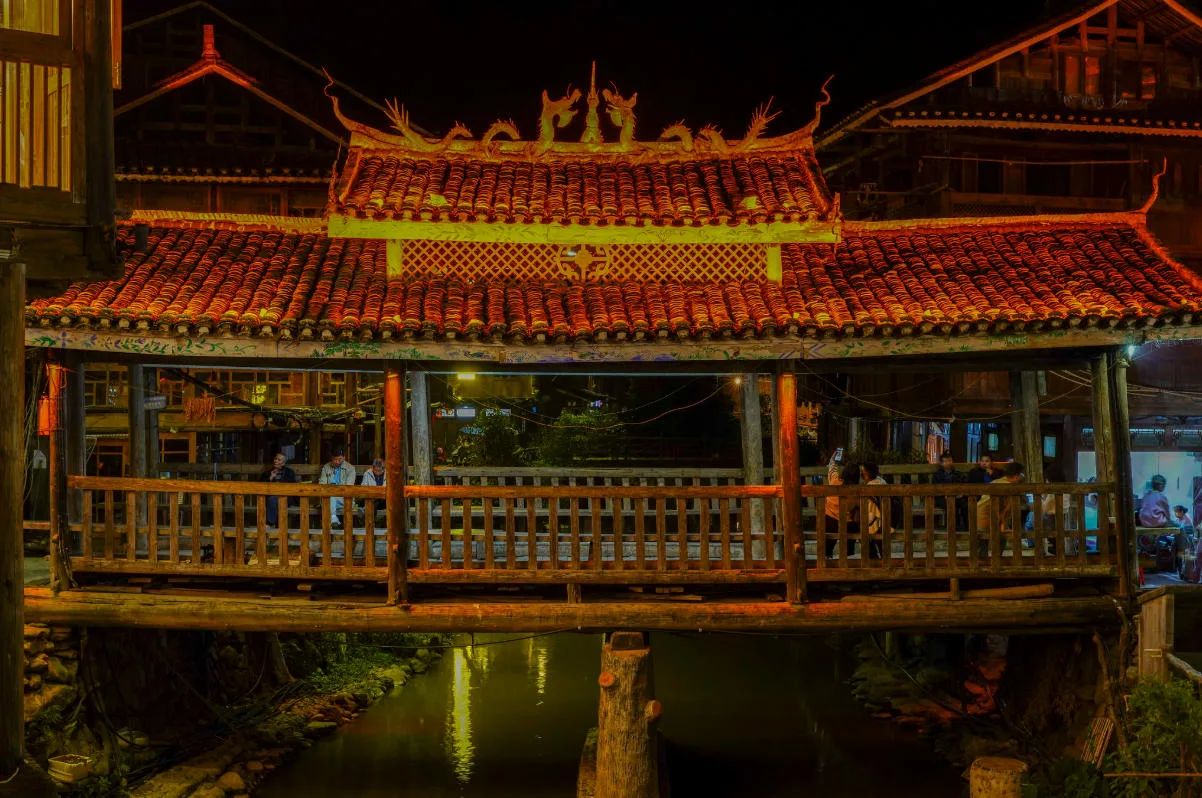
A light rainy day is one of the best times to experience these bridges. Villagers may sit beneath the covered walkway while rain falls overhead on the tiled roofs, the stream below sounding through the village and blending with distant singing.
Observation Deck And Panoramic View
The viewing platform sits on the hillside near the western entrance, about a ten-minute walk from the village gate; from the gate, you can head straight uphill to reach the observation deck in about ten minutes. Early in the morning, mist often lingers over the valley as the sun rises behind the eastern mountains, leaving the grey-tiled rooftops and drum towers partly hidden in the haze.
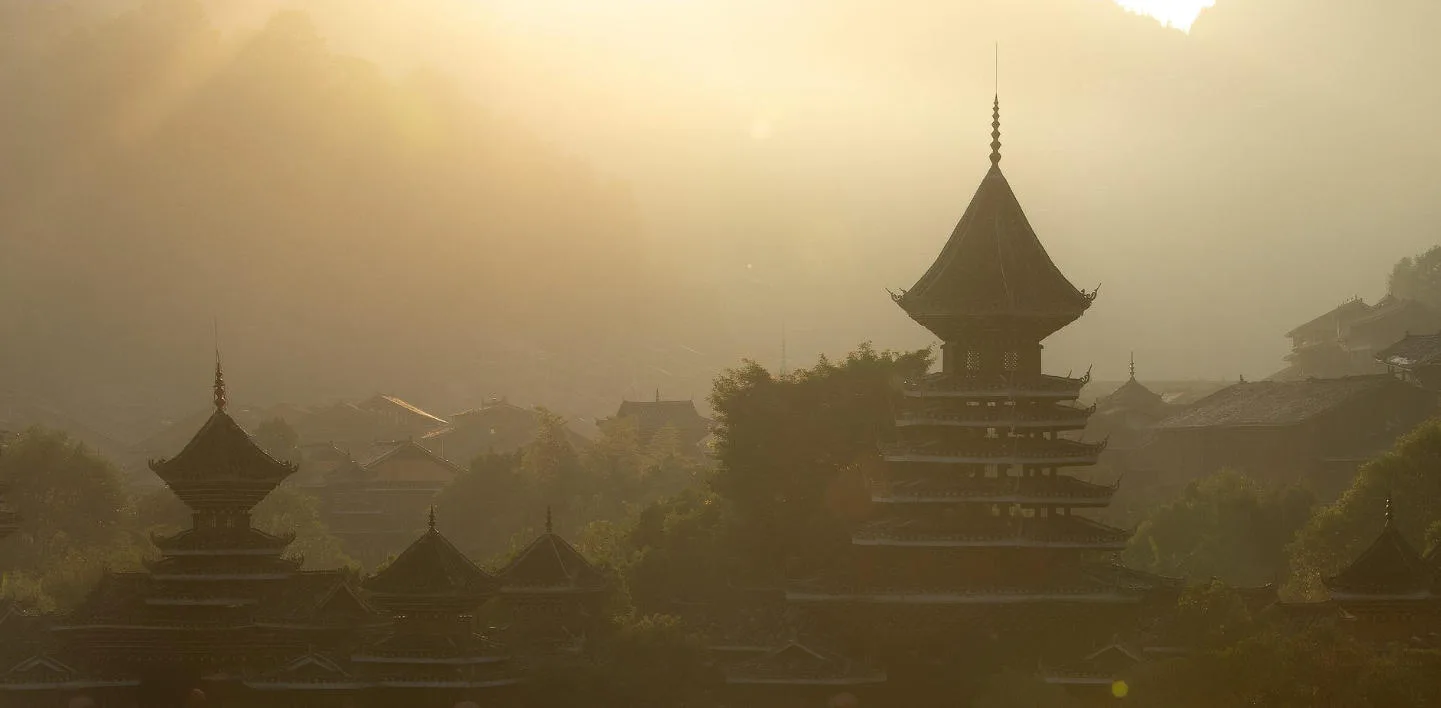
In the late afternoon and at sunset, warm light falls across the valley and catches the tops of the drum towers. If you stay in a hillside guesthouse, you may already have the same panoramic view from your room or balcony, without needing to walk to the viewing platform.
Experience Dong Batik
Dong batik is an important craft in Guizhou. Compared with the flowing curves often seen in Miao batik, Dong designs favor geometric patterns such as spirals, diamonds, and crosses. Similar motifs also appear in Dong brocade and embroidery, reflecting a strong preference for order and symmetry, and related textile traditions can also include tie dye. Some patterns are linked to old legends, while others are said to represent ancestral migration routes, giving each piece a deeper cultural meaning.
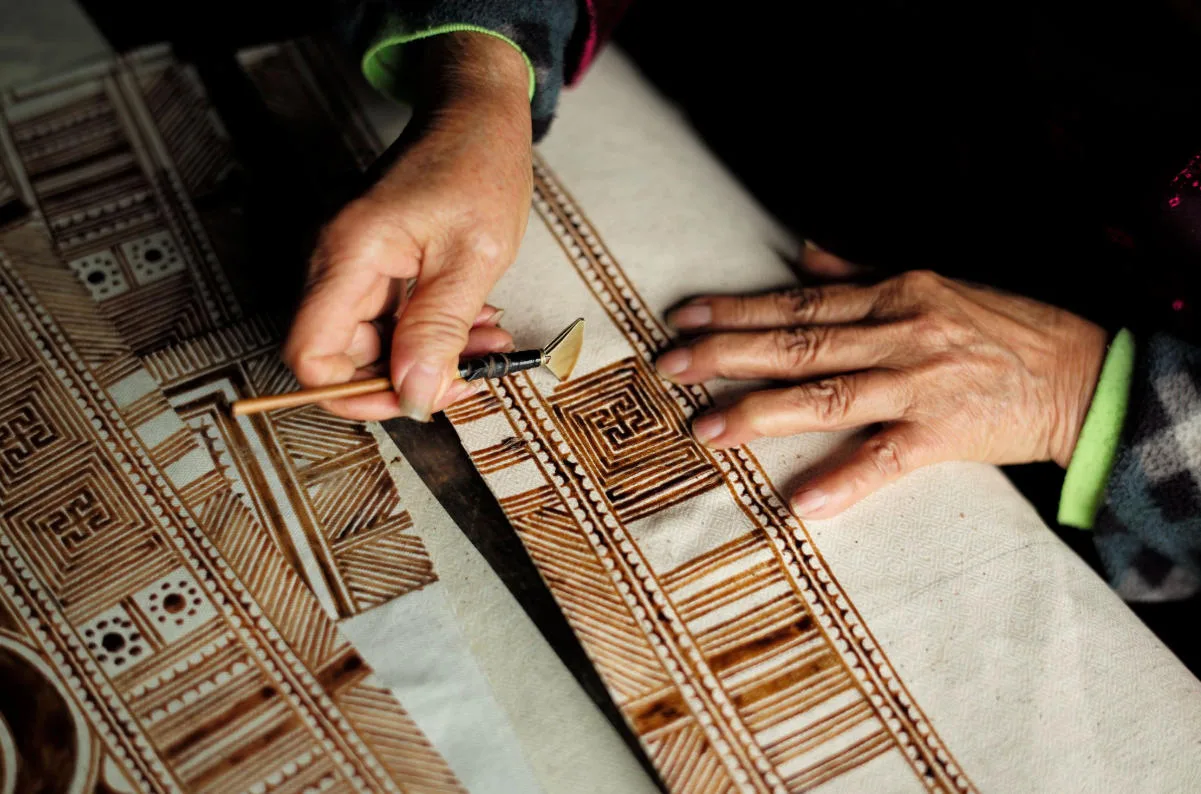
The process begins by drawing on cloth with melted wax, followed by repeated indigo dyeing. Areas covered with wax remain undyed, while the rest turns blue. From drawing and dyeing to removing the wax and drying the fabric, the process usually takes one to two hours.
In Zhaoxing and nearby villages, visitors can try the full process, from designing a pattern and applying the wax to dyeing and finishing the piece. Some workshops are led by local artisans, which keeps the focus on learning by doing. Making your own batik is a more personal way to understand the craft — and leaves you with something made by your own hands rather than simply bought from a shop.
Meet The Dong People And Grand Songs
I have listened to Dong grand songs many times, yet they are still difficult to describe in words. There are no conductor, but dozens — sometimes more than a hundred — voices come together naturally in rich, layered harmony.
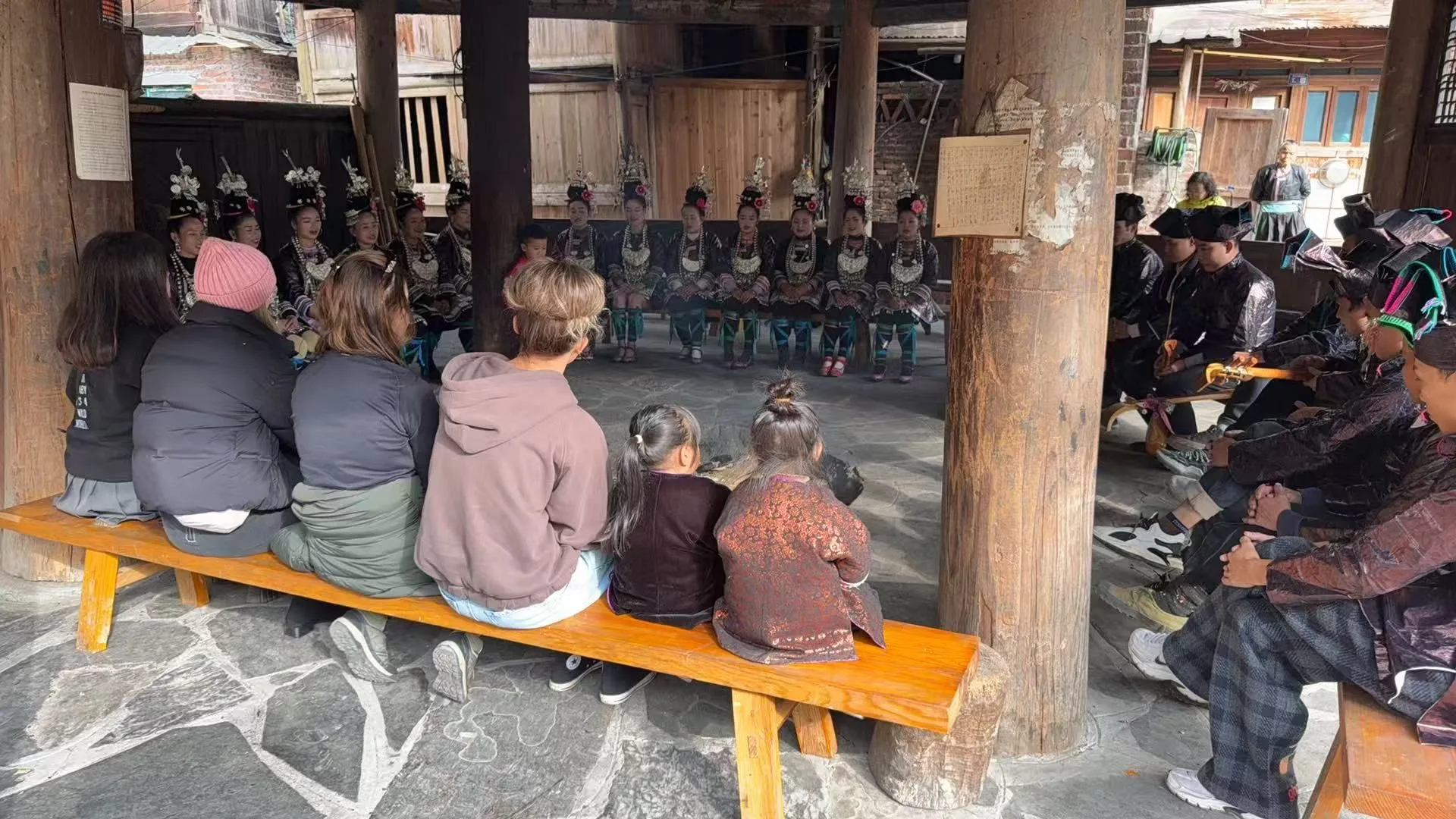
When the singing fills a drum tower, it feels like more than music. For the dong ethnic minority, these songs carry memories shared across generations, telling stories of love, nature, work, history, and everyday life. Grand Dong Songs are recognized as UNESCO Intangible Cultural Heritage. Even without understanding the Dong language, many travelers are moved by the emotion in the voices — direct, free, and full of life.
Zhaoxing has a scheduled Dong grand song performance each evening in the square in front of the drum tower, one of the village’s cultural performances. Visitors are often invited to join the communal dance. No experience is needed — simply take the hand of the person beside you and follow the rhythm. During festivals, the entire village may gather here in a lively celebration, offering a glimpse of the unique customs that still shape daily life.
Speak to An Expert
Explore Zhaoxing Dong Village with Eastogo
Start designing your China journey with our destination experts.
Make An InquiryBeyond Zhaoxing: Worth Visiting Villages and Experiences Nearby
Zhaoxing at the foot of the mountain, Xiage halfway up, and Tang’an Dong Village about 11 km away at the top form a natural walking route, with each stop offering something different; one popular option is the 8-km trail between them. The easiest way is to take a vehicle up to Tang’an first and walk downhill. Hiking up the winding mountain road takes around two to three hours, while the drive takes only about 30 minutes, leaving more time and energy for the villages and rice terraces.
Tang’an Dong Village:
Tang’an sits high above the valley and feels far more peaceful than Zhaoxing. The village itself is small, but the views are expansive, with terraced fields cascading down the slopes below. In spring, the water-filled fields reflect the sky; by autumn, the same hillsides turn golden with ripening rice.
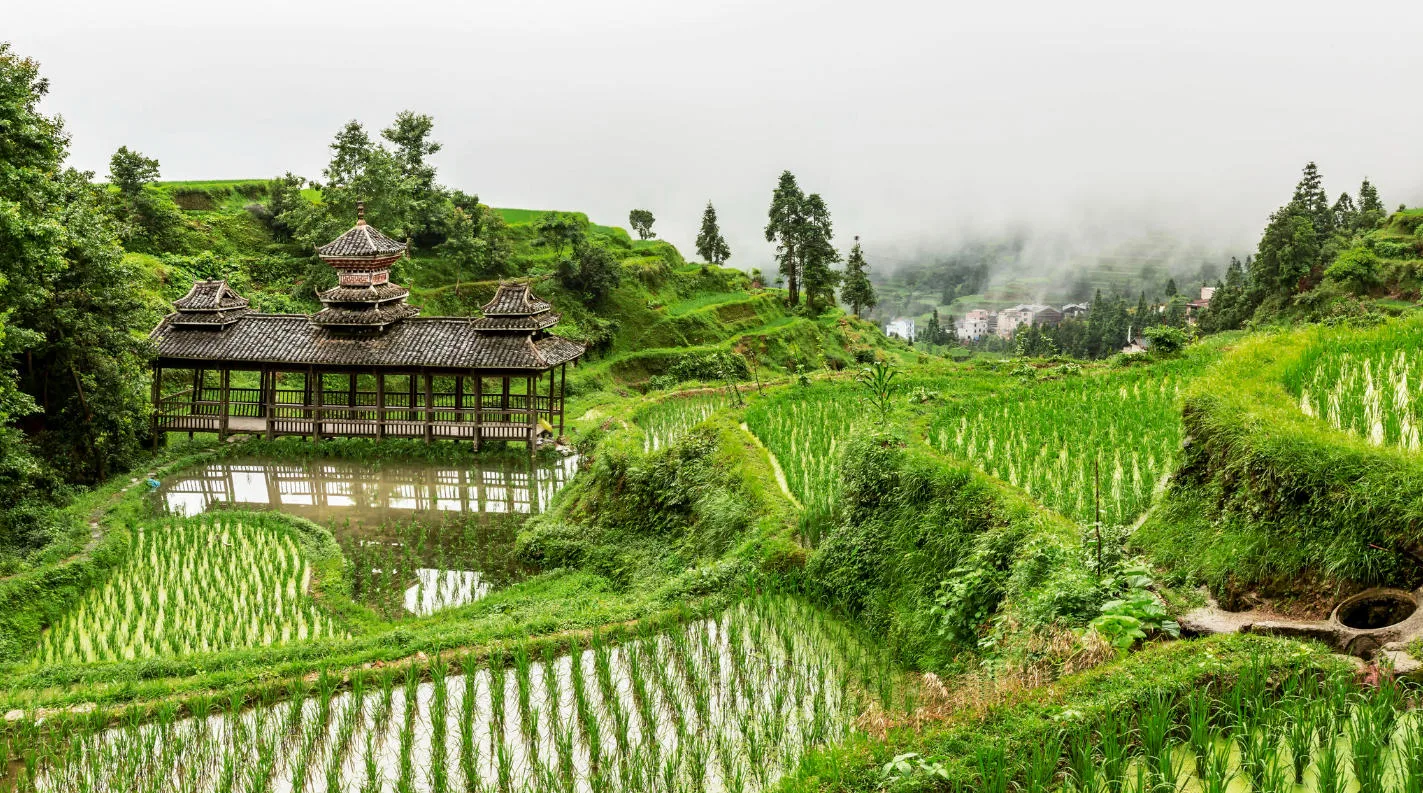
Life here unfolds at an unhurried pace. With fewer tourists, Tang’an feels like a hidden gem and a living museum of Dong village life. Farmers work in the terraces, elderly villagers gather beneath the drum tower to chat or play games, and children run along the stone lanes. The hand-built paths and steps, softened by moss between the stones, add to the village’s simple, lived-in character.
Xiage Rice Terraces:
From Tang’an, the downhill walk to Xiage takes about 30 minutes, passing rice terraces almost the entire way. Xiage is a small village, and a good place to pause is a café and batik workshop beside the fields. You can spend some time making a piece of Dong batik while looking out across the terraces.
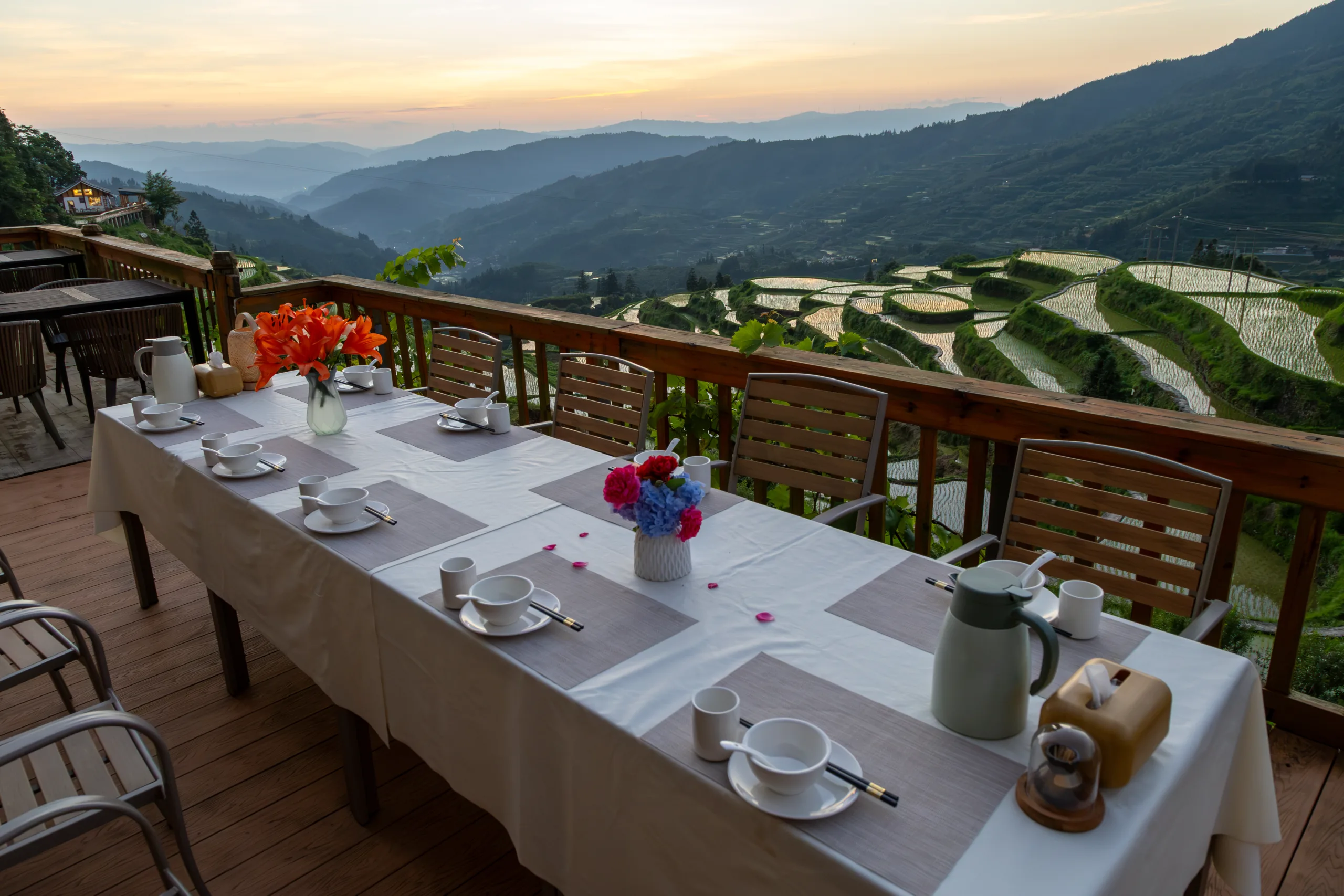
Try to stay for sunset. The terraces catch the golden evening light while cooking smoke begins to rise from the houses below. From Xiage, it takes around an hour to walk downhill to Zhaoxing, or about 20 minutes by car.
Huanggang Dong Village:
Huanggang Dong Village, about 32 km from Zhaoxing, offers a very different experience from Zhaoxing. Its five drum towers are older and more understated, and Dong grand songs remain closely tied to community life. Around dusk, you may hear choir rehearsals drifting out from the towers.
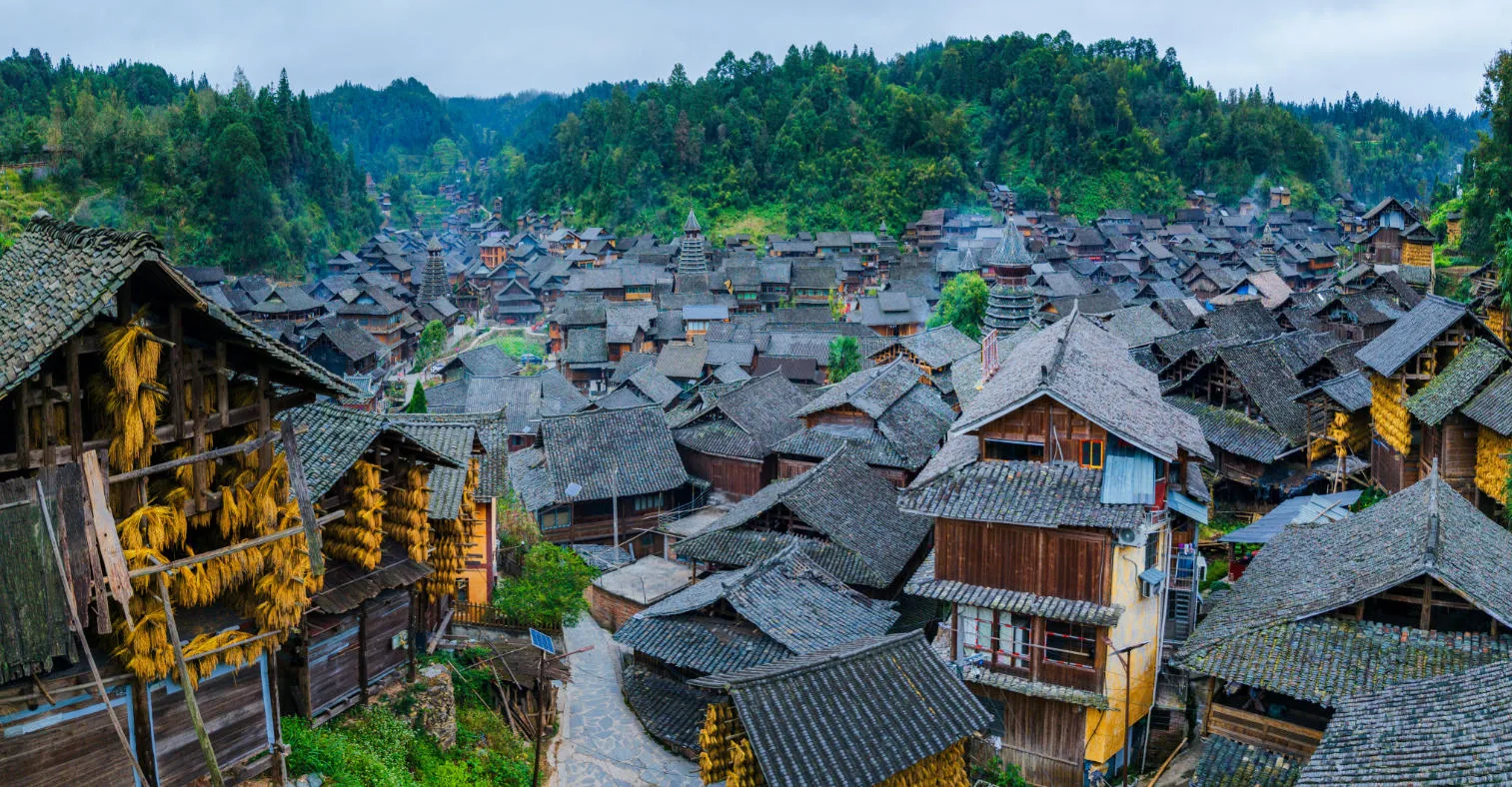
Daily scenes are simple: rice drying beside stone lanes, elderly villagers playing games beneath the drum towers, and women washing vegetables by the stream. Huanggang also continues the practice of raising carp in rice paddies. Visitors can sometimes wade into the fields to catch fish, which is then grilled beside the terraces and eaten with sticky rice and pickled vegetables.
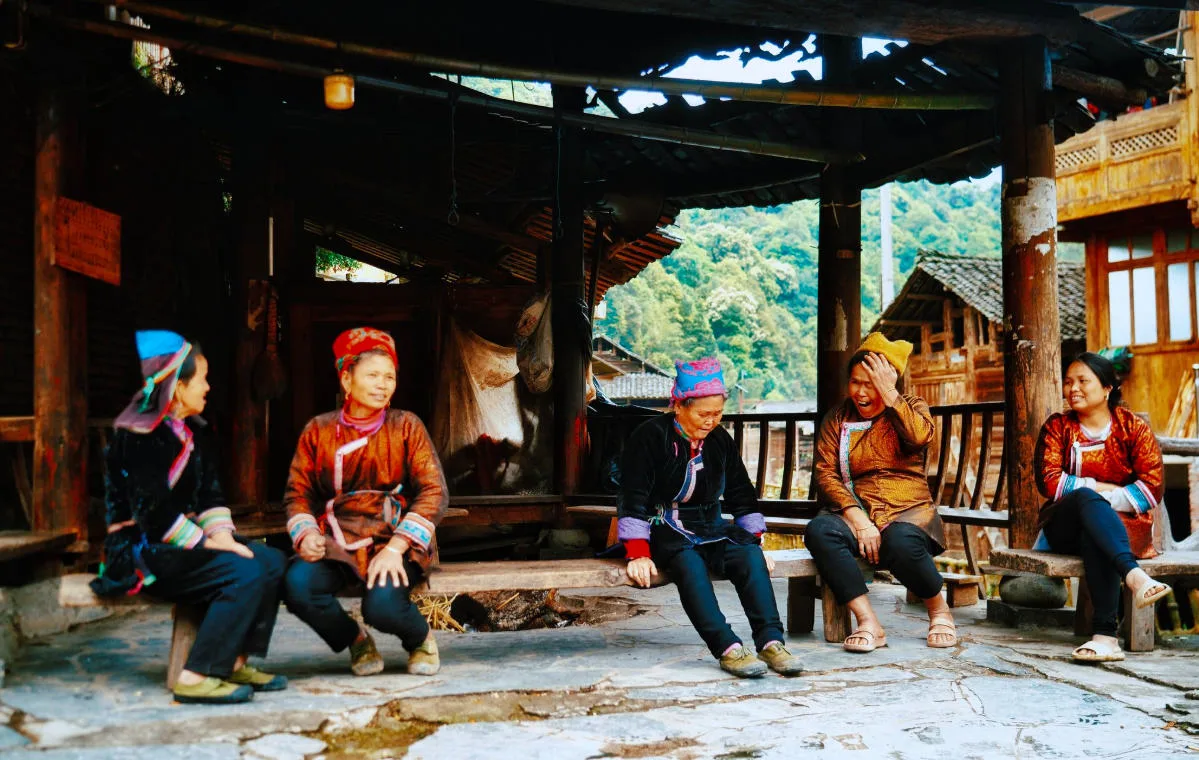
If Zhaoxing feels too busy, Huanggang offers a quieter glimpse of Dong village life. It works well as a day trip from Zhaoxing, though staying overnight allows more time for a more unforgettable experience of the village after day visitors have left. Other worthwhile excursions include the famous Basha Miao Village about 1 hour away, Jiabang Rice Terraces 3–4 hours away, Xijiang Qianhu Miao Village, the largest Miao village in China, and Qingyan Ancient Town; for a broader Guizhou itinerary, you could also pair these with Fanjingshan, a UNESCO World Heritage Site.
Practical Tips for Visiting Zhaoxing Dong Village
Zhaoxing is relatively easy to visit and works well as part of a wider cultural journey through Guizhou. As the village lies in a mountainous area, a little preparation can make the trip more comfortable.
For rice terrace and landscape photography:
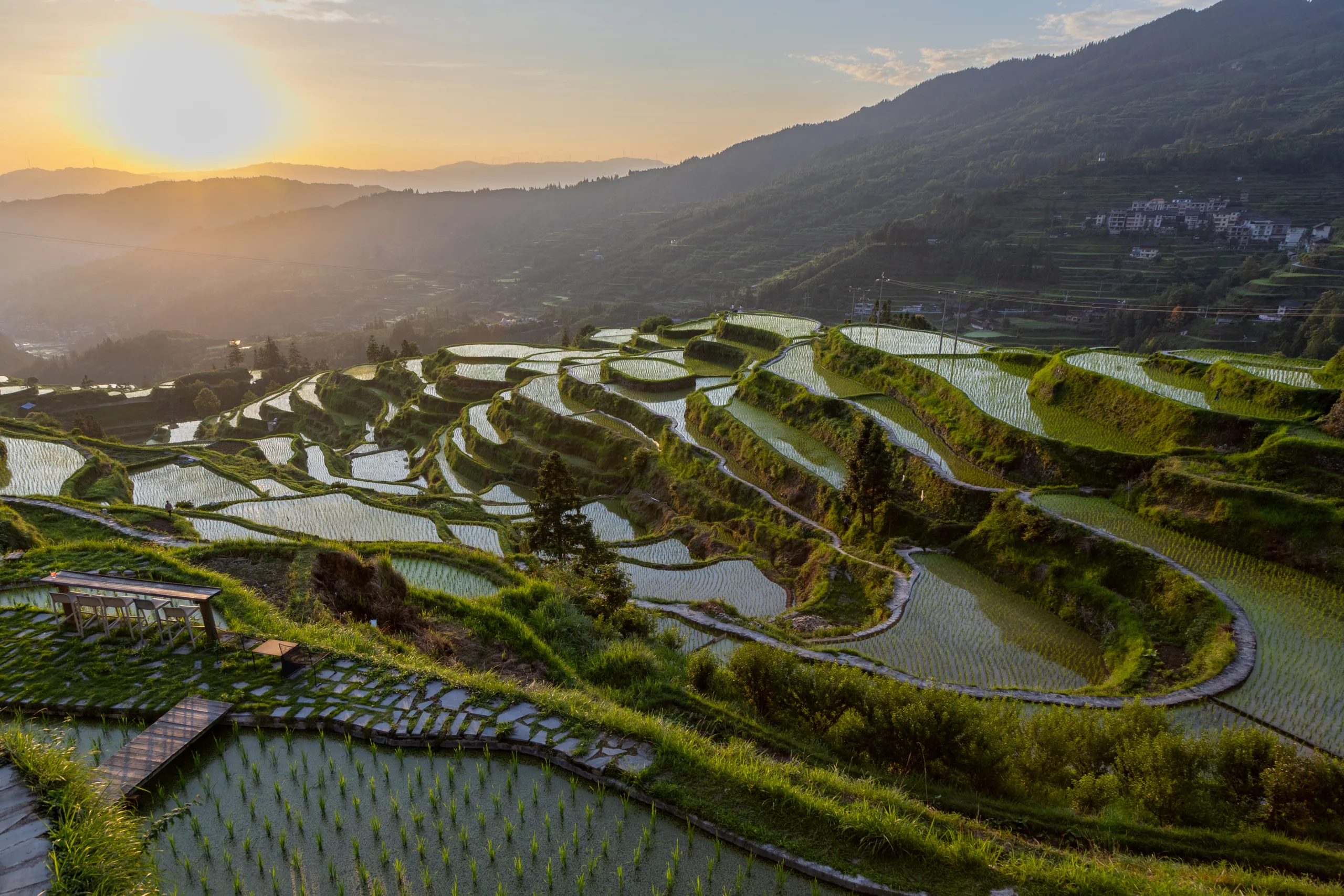
- April—May: The terraces are filled with water, reflecting the surrounding mountains and sky.
- September–November: The rice begins to ripen, turning the valleys golden and bringing a strong harvest atmosphere to the countryside.
Major Chinese public holidays, especially National Day Golden Week, are much busier. Accommodation prices rise and the village streets can fill with tourists, changing the village atmosphere, so avoid these periods if you prefer a quieter visit.
Mountain weather can change quickly, so it is useful to bring:
- A lightweight raincoat or waterproof jacket;
- Comfortable shoes with good grip;
- Sun protection;
- Insect repellent, especially in summer;
- A light layer for cooler mornings and evenings.
If you plan to hike around the Tang’an Rice Terraces, wear shoes suitable for longer walks and carry enough drinking water.
Photography Guide: Best Views and Photo Spots in Zhaoxing
In Zhaoxing Dong Village, the viewpoint is the classic place to photograph the traditional wooden Dong houses as a whole. Between 6:30 and 7:30 in the morning, the mist often still hangs in the valley, softening the light and leaving the drum towers half hidden in the haze. Each of the five drum towers has its own character, whether you photograph the upturned eaves from below or the older villagers chatting on the benches outside.
After dark, the village takes on a completely different mood. Warm light glows from inside the drum towers, falling onto the stone lanes and the surface of the stream. Along the water, the stilted wooden houses are outlined by rows of lanterns, with their reflections and the stream’s flowing water moving gently in the current.
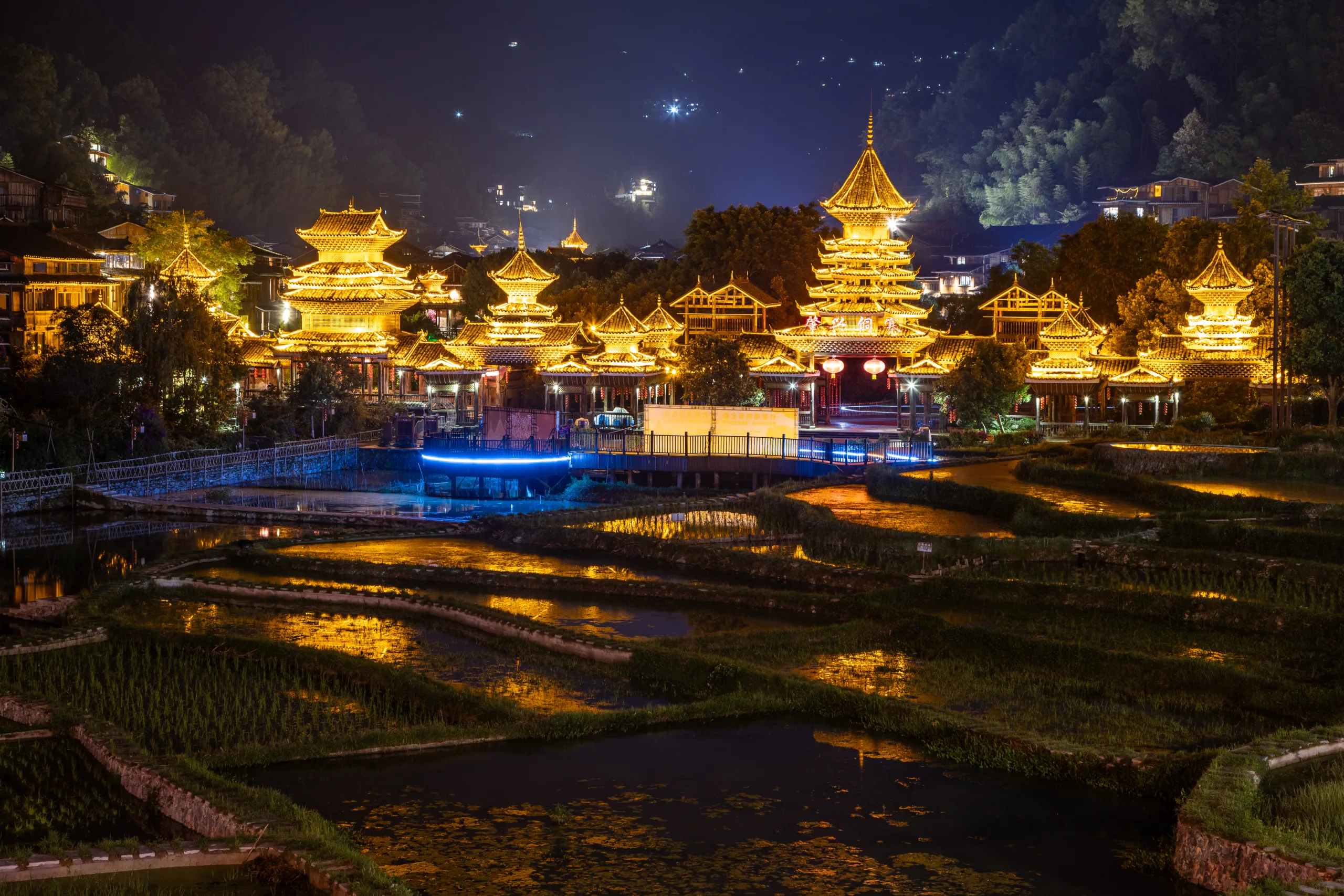
If time allows, it is also well worth going to the nearby Xiage Rice Terraces for sunset. Compared with the village architecture of Zhaoxing, the terraces show another side of Dong life, shaped by generations living closely with the mountains. In the evening, the last light falls across the layered terraces, the water reflects the changing sky, and the distant valley and villages come together in one of the area’s most beautiful views.
What to Eat in Zhaoxing Dong Village
A visit to Zhaoxing is also a chance to understand Dong life through authentic Dong cuisine. A few things are especially worth trying:
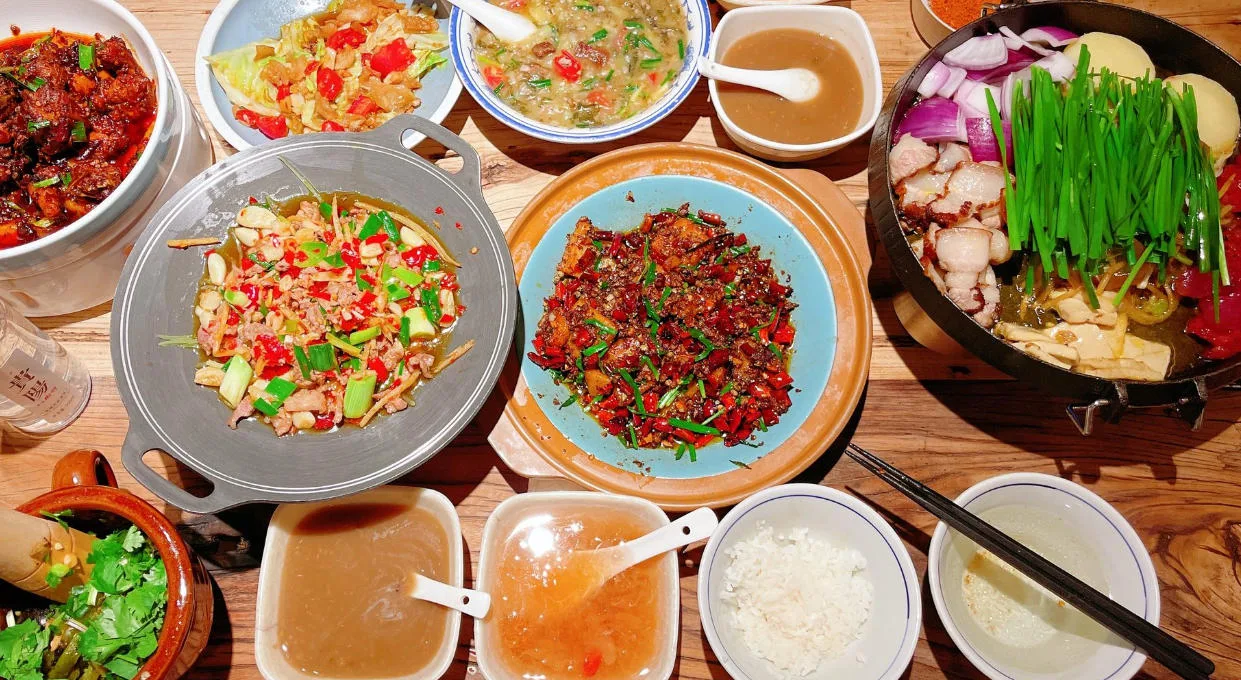
Sour Soup Fish: A local specialty dish in Zhaoxing, made with fresh fish in a bright, tangy broth. Dong sour soup is commonly made with pickled vegetables and chili peppers, giving the dish its distinctive flavor.
Dong Cured and Fermented Foods: Cured fish, smoked pork, and other preserved foods have long been part of Dong cooking, closely connected to older methods of storing food in mountain communities.
Glutinous Rice: Glutinous rice is a staple of Dong cuisine and appears everywhere from everyday meals to weddings and festival celebrations.
Bamboo Rice: Rice cooked inside bamboo tubes, a simple dish that carries the aroma of the bamboo itself.
Grilled Pork Skewers: Popular street food in Zhaoxing, often cooked fresh and eaten as a quick snack while walking through the village.
Dong Oil Tea: Dong oil tea is savory rather than sweet, made with tea leaves, fried rice, peanuts, and traditionally lard. It is often served to welcome guests. Several riverside restaurants in Zhaoxing have outdoor seating where you can dine overlooking the stream and drum towers.
For something more personal, some guesthouses and restaurants can arrange village-style dinners using seasonal ingredients. A few also offer meals overlooking the rice terraces, combining the landscape with a taste of rural life in Guizhou.
How Many Days Do You Need in Zhaoxing? Suggested Itineraries
If you are short on time, half a day is enough for a quick visit to Zhaoxing, especially if you are continuing to another destination the same day. For a slower and more immersive experience, plan at least a day and a half.
Day 1: Arrive in Zhaoxing → Explore the Village → Drum Towers & Dong Grand Songs
Arrive in the afternoon and spend some time wandering through the village and trying local food. In the evening, walk along the stream to enjoy the night views before watching a Dong grand song performance.
Day 2: Tang’an Dong Village → Xiage Rice Terraces → Batik & Sunset
Start with Zhaoxing’s morning market, then head up to Tang’an Dong Village. Walk downhill through the rice terraces to Xiage, where you can make your own Dong batik beside the fields and finish the day with dinner overlooking the terraces at sunset.
You can experience Zhaoxing as part of our 8-Day Guizhou Journey.
If you have more time and would like to combine Guizhou with Yunnan, explore our 14-Day Guizhou & Yunnan Journey.
If you are more interested in landscapes and hiking, discover more ways of exploring Guizhou’s mountains, hiking trails, and sacred peaks.
Explore Zhaoxing Dong Village with Eastogo
Although Zhaoxing is now relatively easy to reach, experiencing Dong culture in a meaningful way takes more than simply arriving at the village. It comes from understanding the place, spending time with the people who live there, and seeing how local traditions continue as part of everyday life.
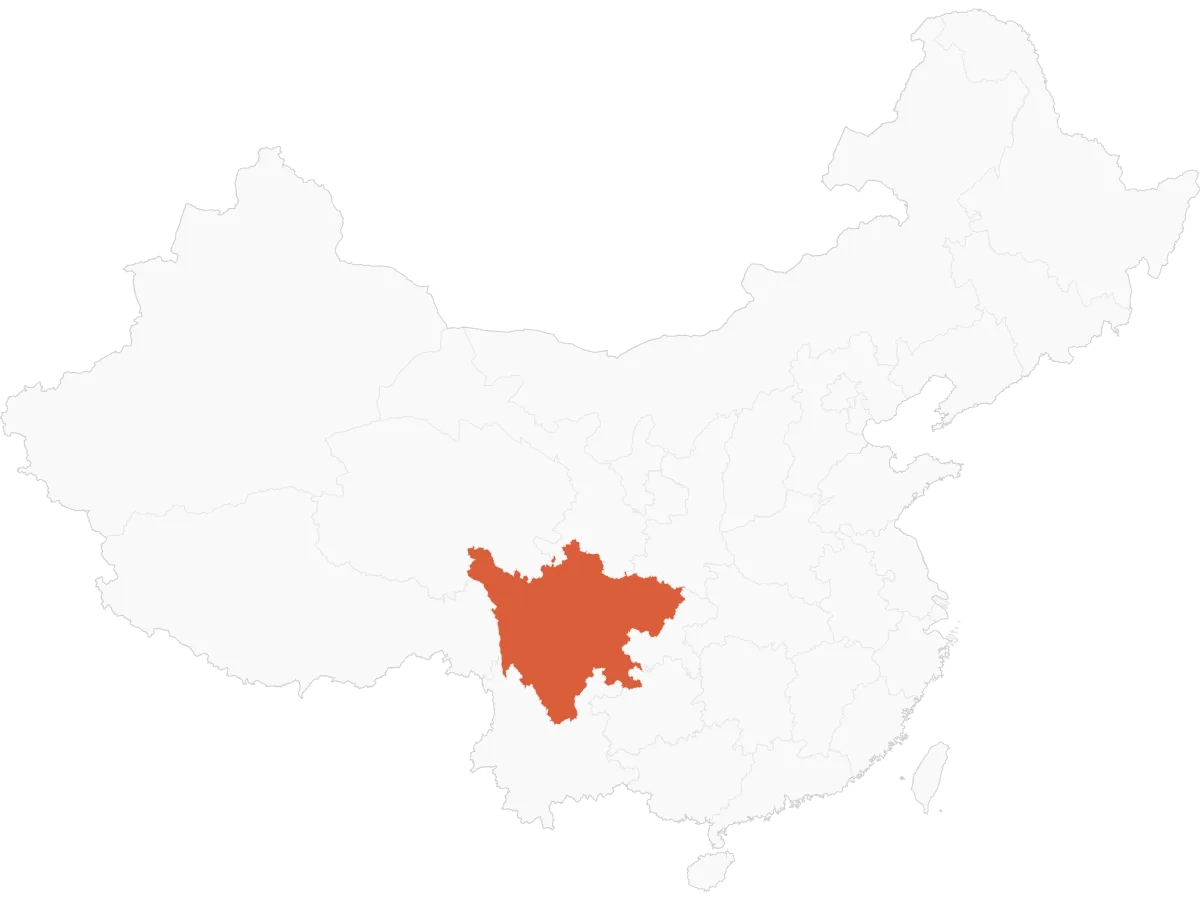
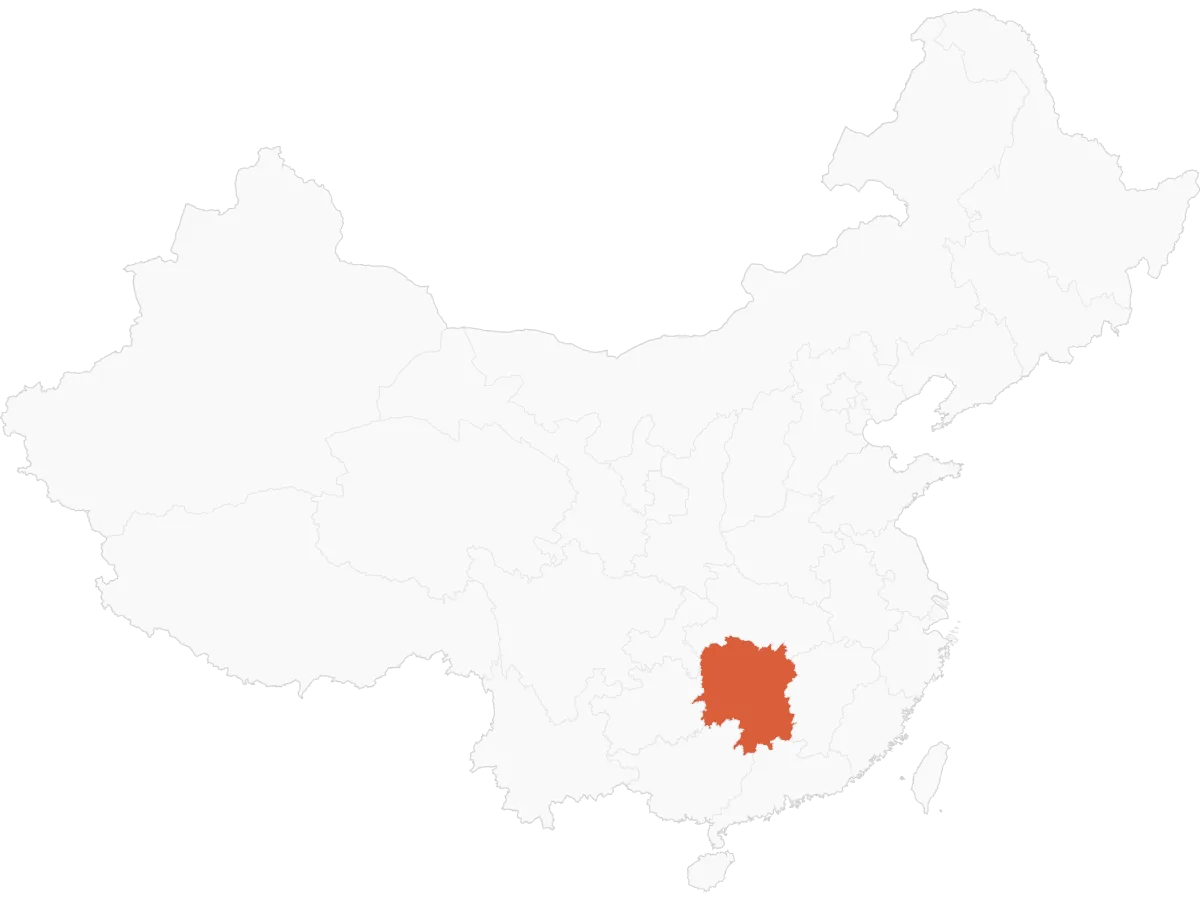
Eastogo specializes in creating in-depth private journeys across southwest China, including Guizhou、Yunnan、Guangxi、Hunan、and Western Sichuan. We help travelers go beyond the better-known sights and discover the people, landscapes, and ways of life that give each region its character. We can also design a Private Guizhou Tour around what sparks your curiosity.
Through long-term relationships with local drivers, guides, and communities, we can arrange village visits, cultural activities, and opportunities for more personal interaction with local people. For us, travel is not only about seeing beautiful places, but about gaining a deeper understanding of how people live and how their traditions continue today.
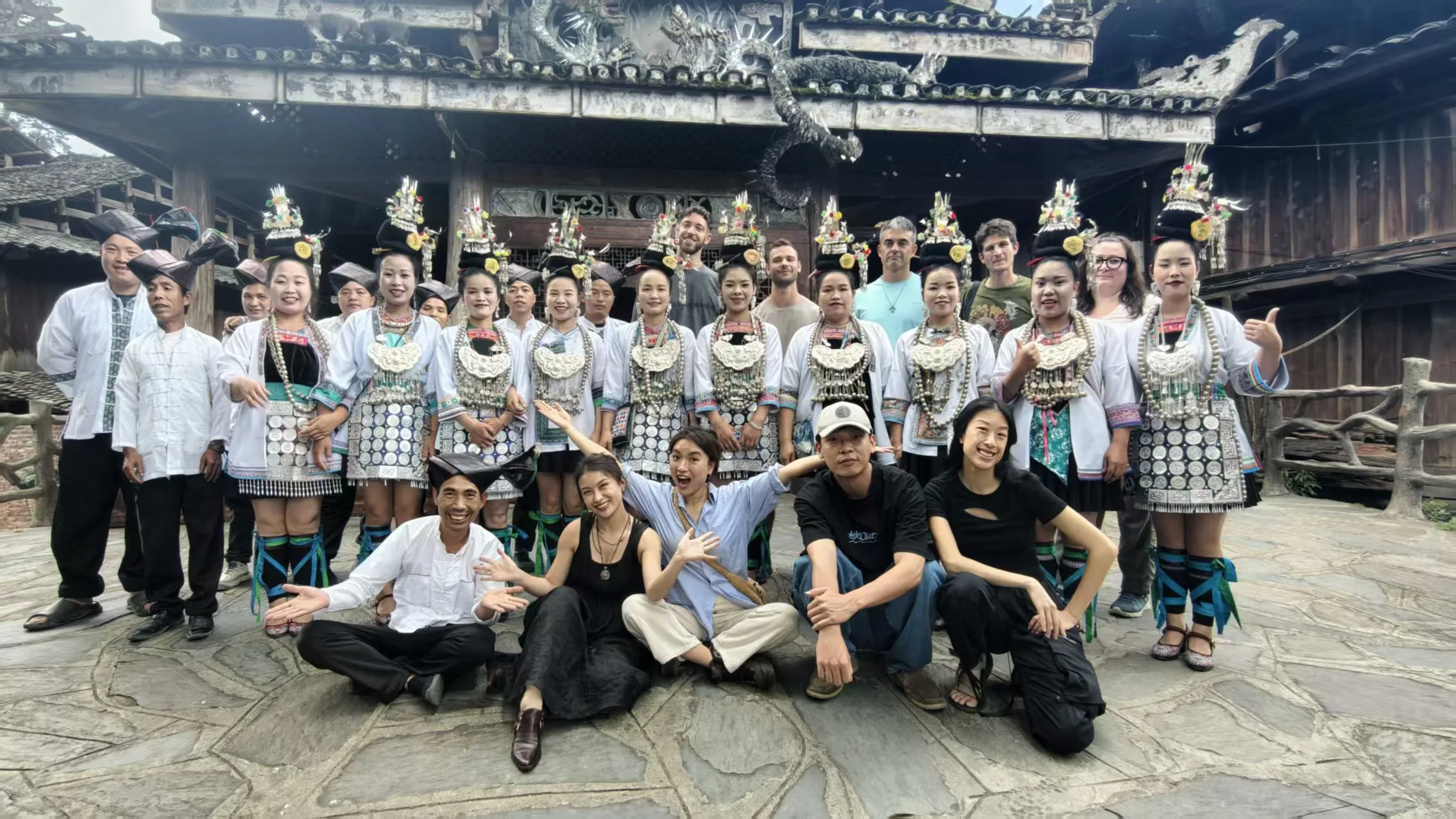
Each journey is designed around your interests, pace, and available time, while also considering transportation, weather, and the realities of traveling through mountainous areas. Whether you choose self-guided China tours or private & custom China tours, we help make traveling through Guizhou more comfortable, well planned, and rewarding.
For more information, read our Guizhou Travel Guide: A Complete Guide to Culture, Nature and Hidden Villages.
If Guizhou speaks to your curiosity, we would be happy to help you create a journey that reflects your interests and the way you want to experience this part of China.