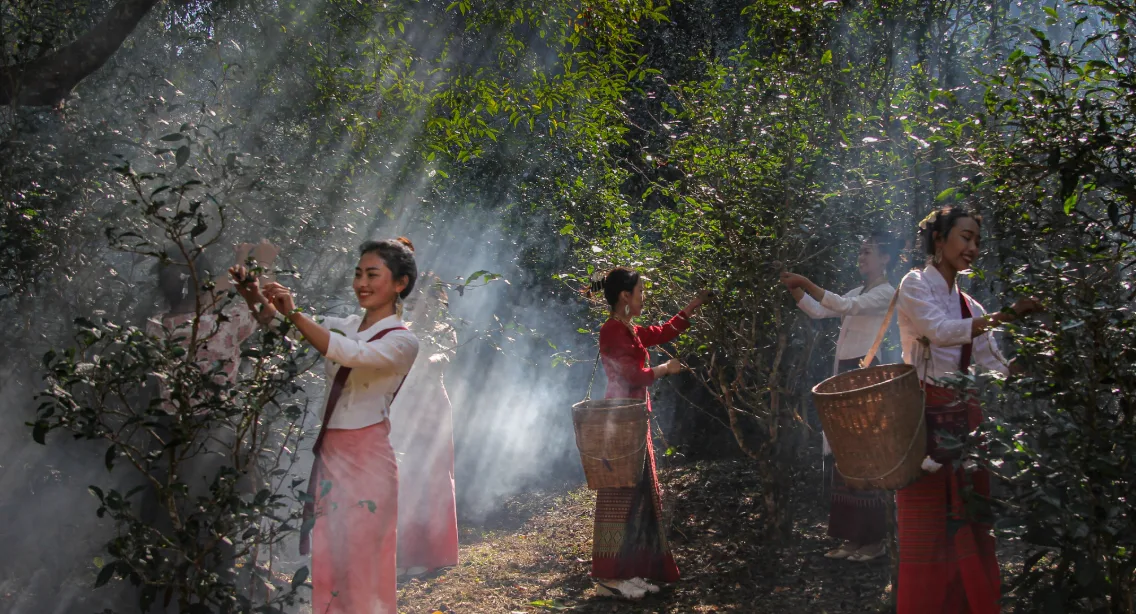
In the mountains of southwestern Yunnan, tea grows a little differently. Instead of being clipped into neat rows of low bushes, wild tea trees flourish beneath a canopy of tall forest trees, alongside mosses, ferns and other woodland plants. Each morning, mist rises from the valleys, veiling and revealing the ancient tea forests and the Bulang and Dai villages scattered across the hills. You can sit with a cup of tea on the terrace of a wooden house, watch the sea of clouds slowly dissolve, then wander into the forest to meet people whose families have grown tea here for generations.
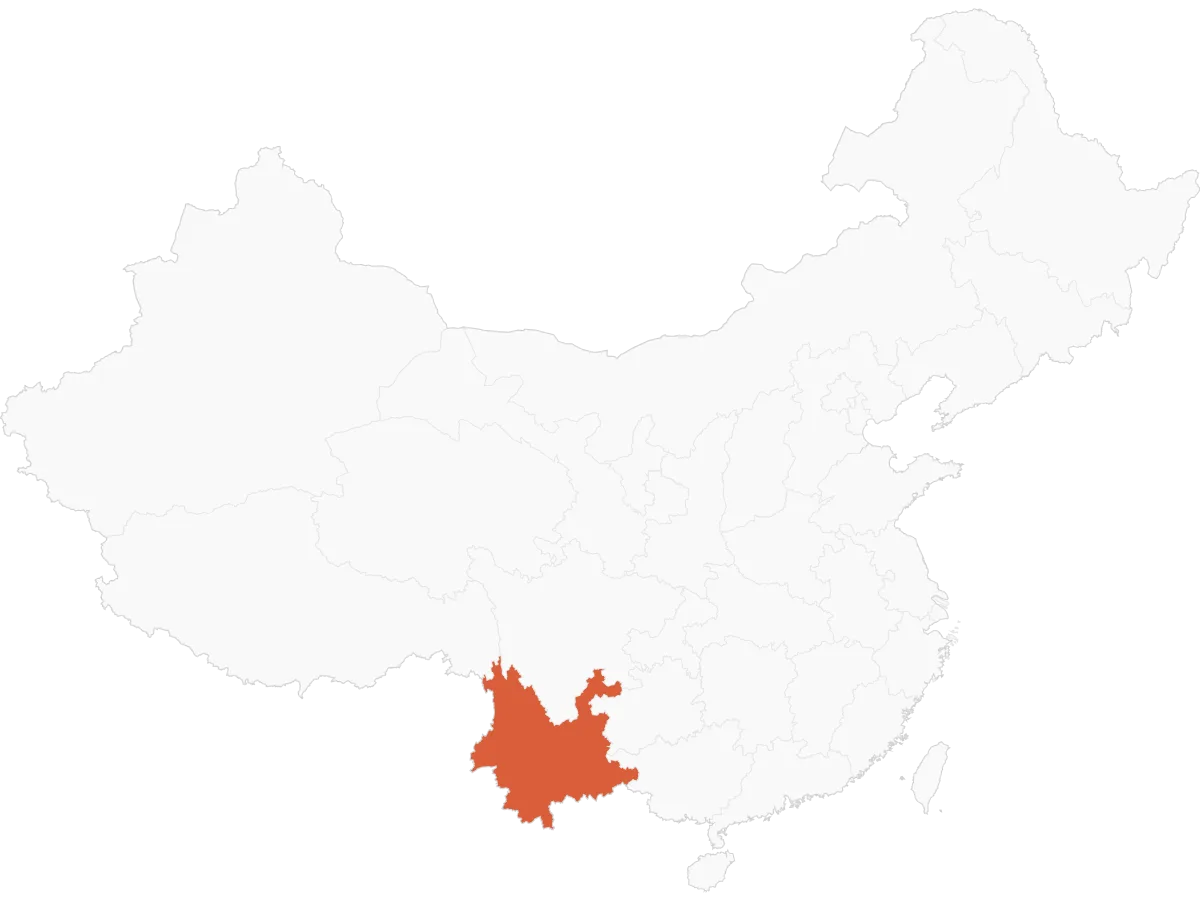
This is Jingmai Mountain (景迈山), in Lancang County, Pu’er, in China’s Yunnan Province. In 2023, the Cultural Landscape of Old Tea Forests of the Jingmai Mountain in Pu’er was inscribed on the UNESCO World Heritage List, becoming the world’s first cultural World Heritage site dedicated to tea. Yet this is no relic of a bygone way of life. Local people still harvest leaves in the forests and make tea, and tea remains woven into their beliefs, architecture and everyday routines.
You don’t need to know much about tea to find a reason to linger. Walk through the ancient tea forests, visit tea growers, try your hand at traditional tea-making, explore Bulang and Dai villages, or sample the local food. You might simply settle into a guesthouse for a few nights and watch the clouds drift below. Jingmai Mountain is a place for those drawn to nature, culture and a slower pace of travel, with growing options for international visitors who want to experience local life while enjoying a comfortable stay.
Best Places to Visit on Jingmai Mountain
Jingmai Mountain is not a single attraction with a fixed route. Its ancient tea forests and traditional villages are spread across the hills, each with its own character and setting. The best way to explore is to choose a few places that interest you and allow enough time to enjoy them.
Wengji Village
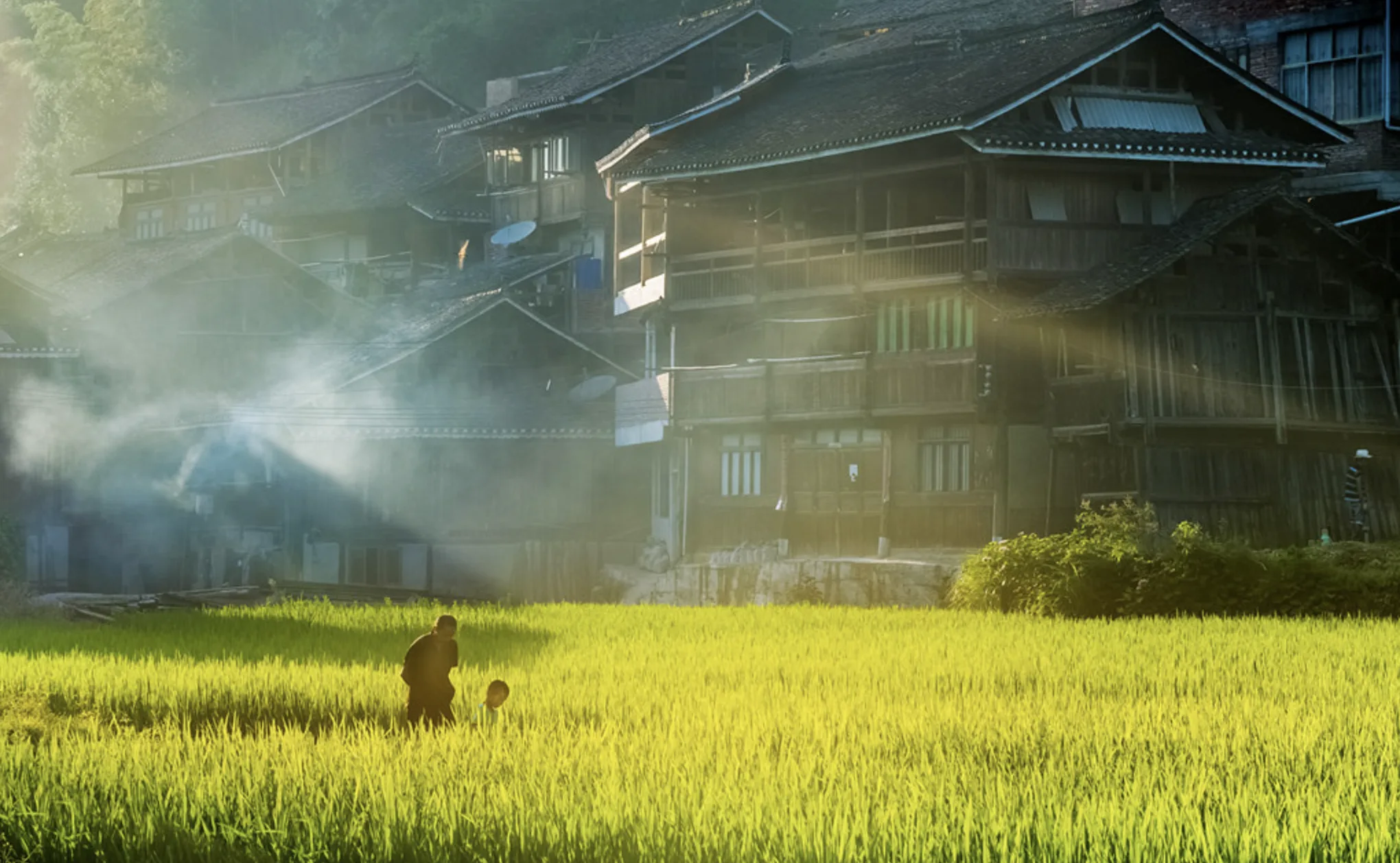
Wengji (翁基) is one of Jingmai Mountain’s most distinctive old Bulang villages. Stone paths lead past traditional wooden houses built into the hillside, with dark tiled roofs and wooden balconies. Temples nestle among the trees.
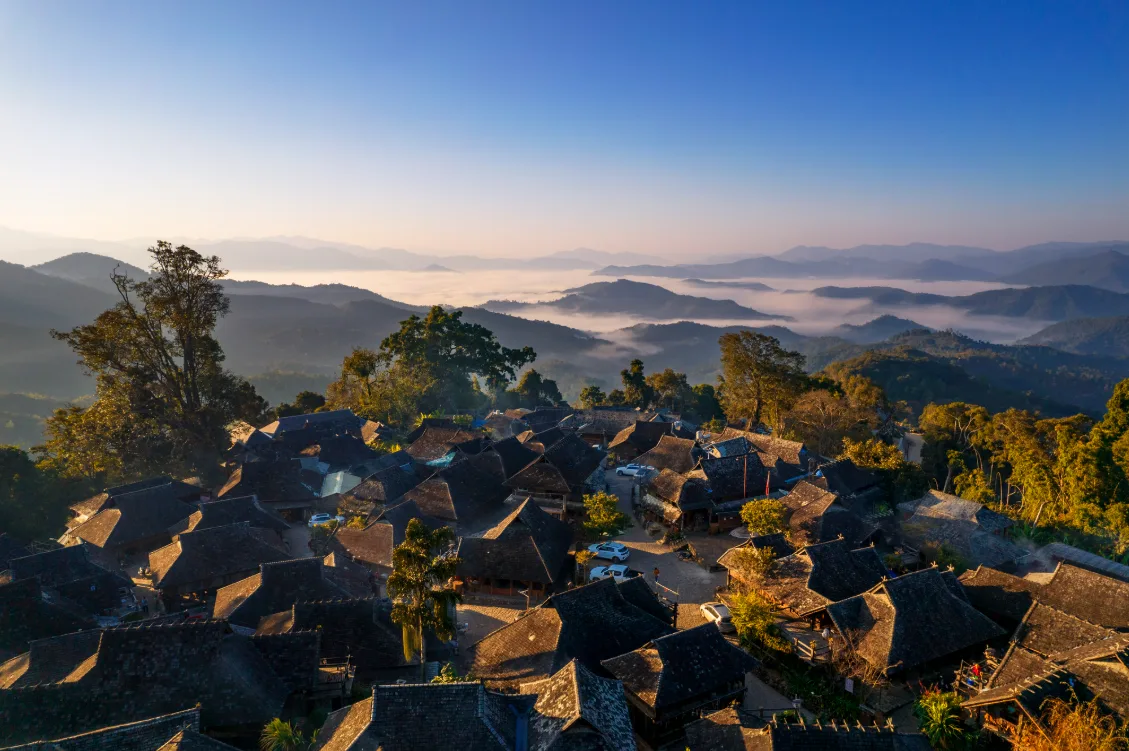
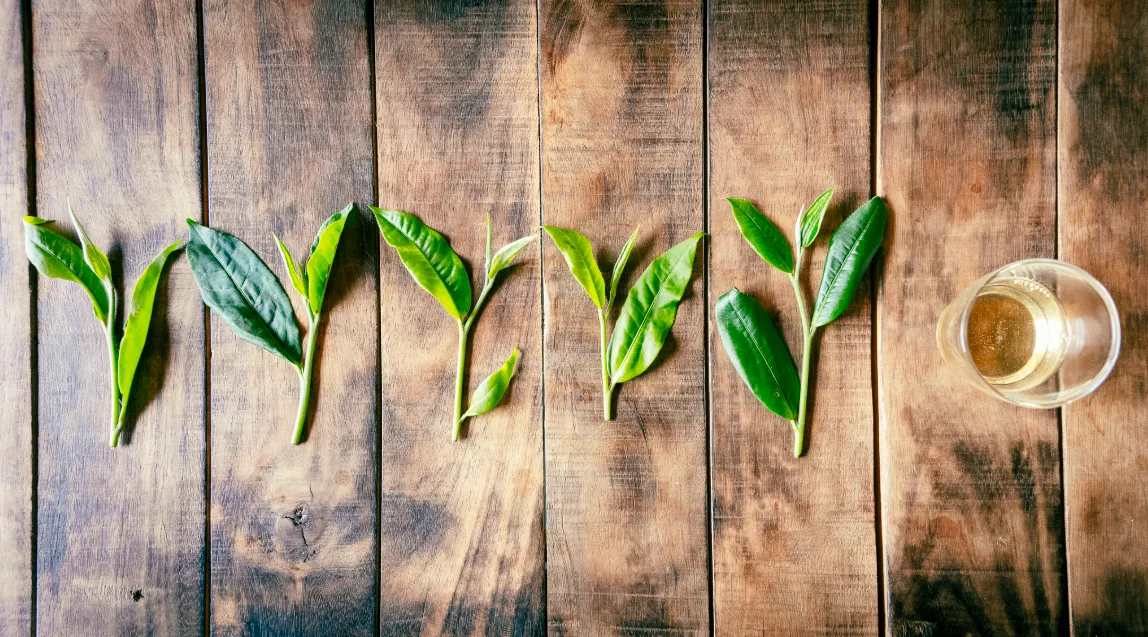
Look closely at the roof ridges of some Bulang homes, and you will notice decorations shaped like “one bud and two leaves,” a familiar image of a young tea shoot. For the Bulang, who have grown tea for generations, tea is both a livelihood and a treasured part of their ancestral heritage.
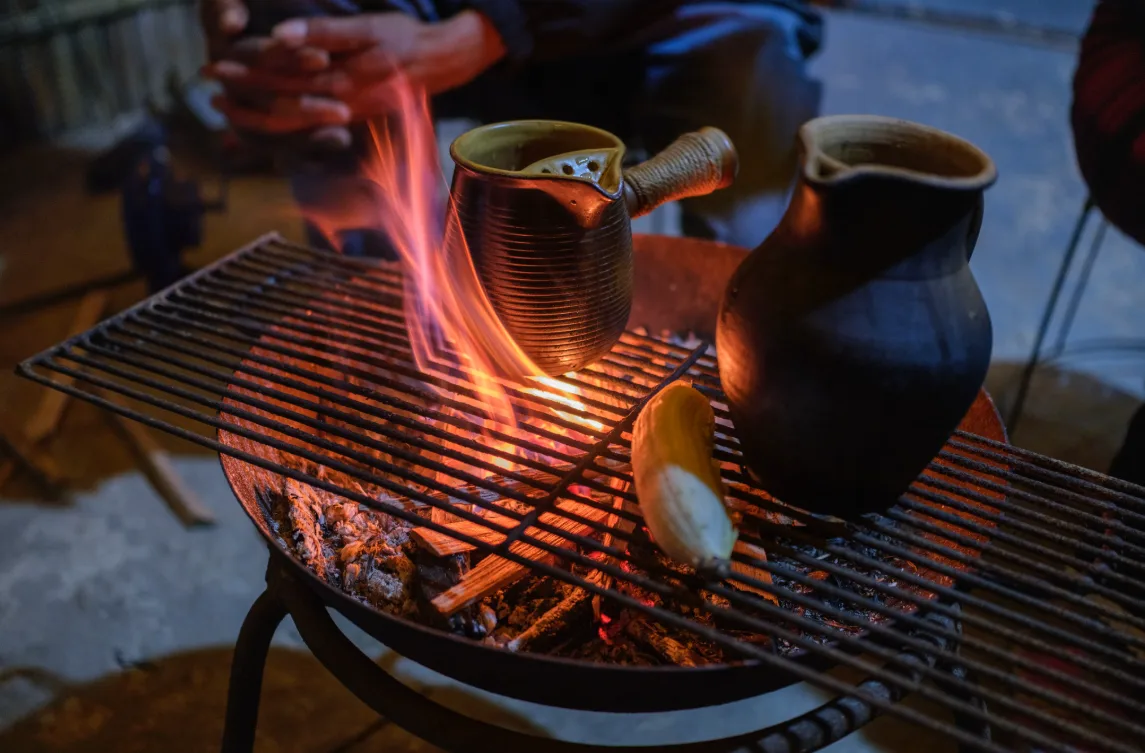
One of the most rewarding things to do in Wengji is to settle into a tea room run by a local grower. Your hosts may introduce teas they have made themselves and explain how the harvest season and processing methods shape their flavour. You can also learn about the Bulang tradition of roasting tea: leaves are gently heated in a small clay pot over charcoal until fragrant, then brewed with hot water.
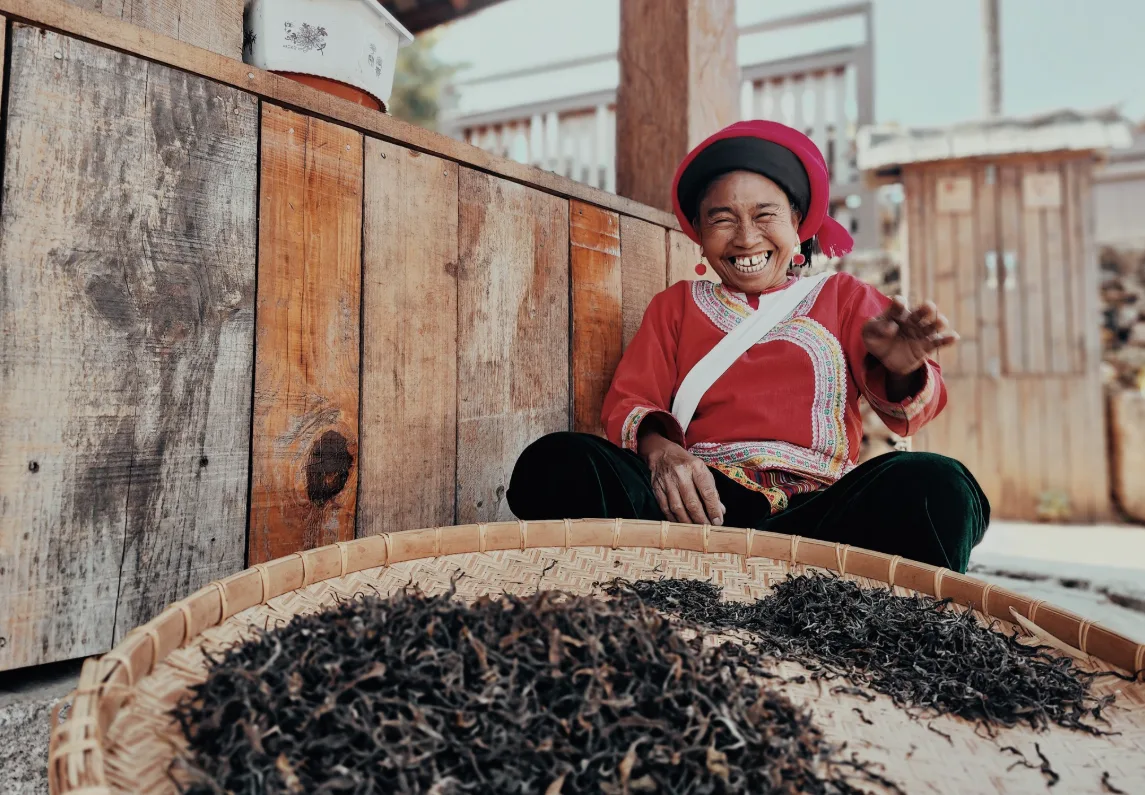
With its cluster of tea rooms, cafés and restaurants, Wengji is a convenient place to spend a few hours. Its growing reputation as part of a World Heritage site has also brought more guesthouses and shops catering to visitors, and holidays can be busy. Come in the morning or late afternoon, take your time and leave room for tea. Expect a village where tourism is now part of everyday life.
Speak to An Expert
Starting Your Jounrney to China
Start designing your China journey with our destination experts.
Make An InquiryNuogan Village
While Wengji is known for its Bulang tea culture, Nuogan ( also written Nuogang Village) stands out for its well-preserved Dai architecture.
From higher ground on the edge of the village, wooden houses appear closely gathered along the hillside, their dark brown roofs surrounded by forest. The whole village seems tucked away among the tea-covered mountains. Within it, narrow stone lanes link traditional homes, with banana plants and other tropical greenery growing beside courtyard walls.
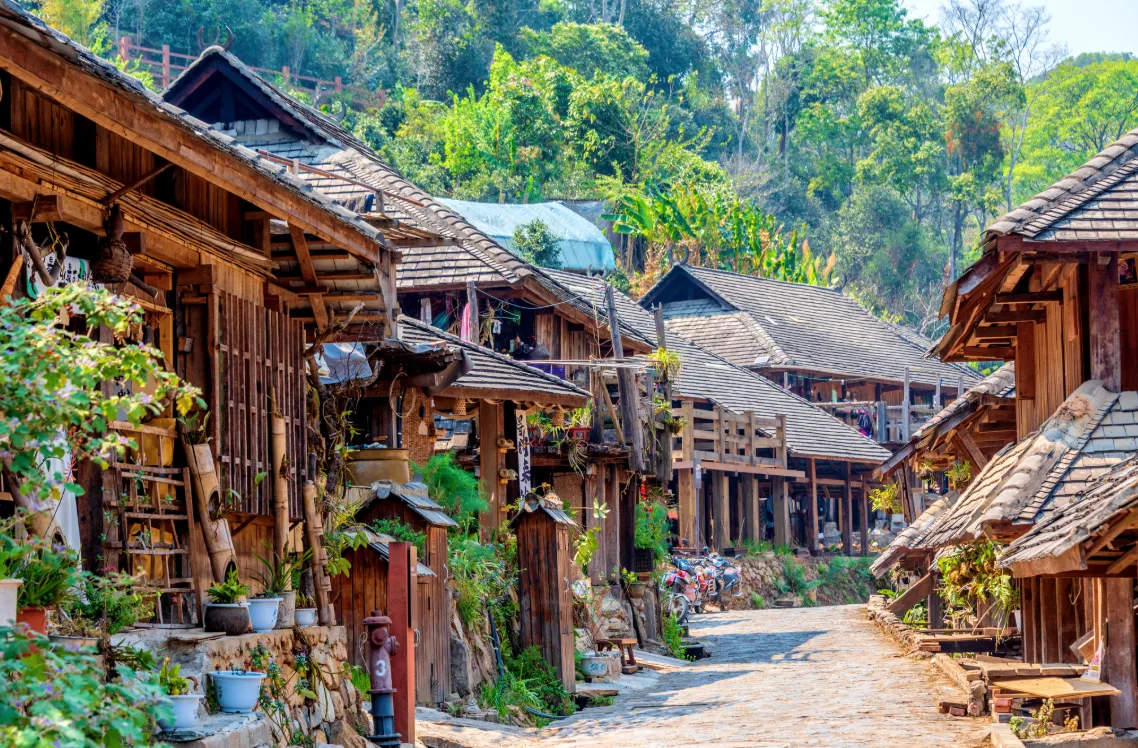
Nuogan’s Dai stilt houses differ from the Bulang homes in Wengji. Traditionally built from wood and bamboo, they have their main living quarters upstairs and steeply pitched roofs, some with horn-shaped ornaments along the ridges. The village also has Buddhist temples and tea rooms run by local Dai people.

There is little need for a packed itinerary here. Wander the lanes, take in the rooftops against the forest, then find a tea room or café where you can sit for a while.
Several thoughtfully designed shops and spaces have opened in Nuogan in recent years. Liting (里庭), for example, is a lovely place for an unhurried tea tasting, while Ganguan Shangxia (感官上下) brings local tea culture together with fragrances, handcrafted objects and contemporary design. These places offer a glimpse of how village life continues to evolve, as residents find new ways to live and work within a traditional setting.
If you have time, I also recommend staying for an evening stroll after most visitors have left. As the daytime bustle fades, the everyday rhythms of the mountain village become easier to sense.
Mangjing and Its Sacred Trees
Mangjing (芒景) is a good place to learn about the Bulang people’s (also written blang people) reverence for their tea ancestor. The Bulang people have cultivated tea for over 2,000 years. Alongside the Tea Ancestor Temple and traditional ceremonial sites, it is home to ancient trees that hold special significance for the community.
The Bulang honour Pa Aileng as the ancestor who guided their forebears in growing tea. For local people, the tea forests hold much more than a harvest: they carry ancestral teachings and a deep respect for nature.
Near Upper Mangjing Village stands the remarkable Bee King Tree (蜂王树), an immense old banyan with more than 70 natural beehives hanging throughout its canopy. The tree is a striking natural sight, and a testament to the local tradition of protecting ancient trees and the forests around them.
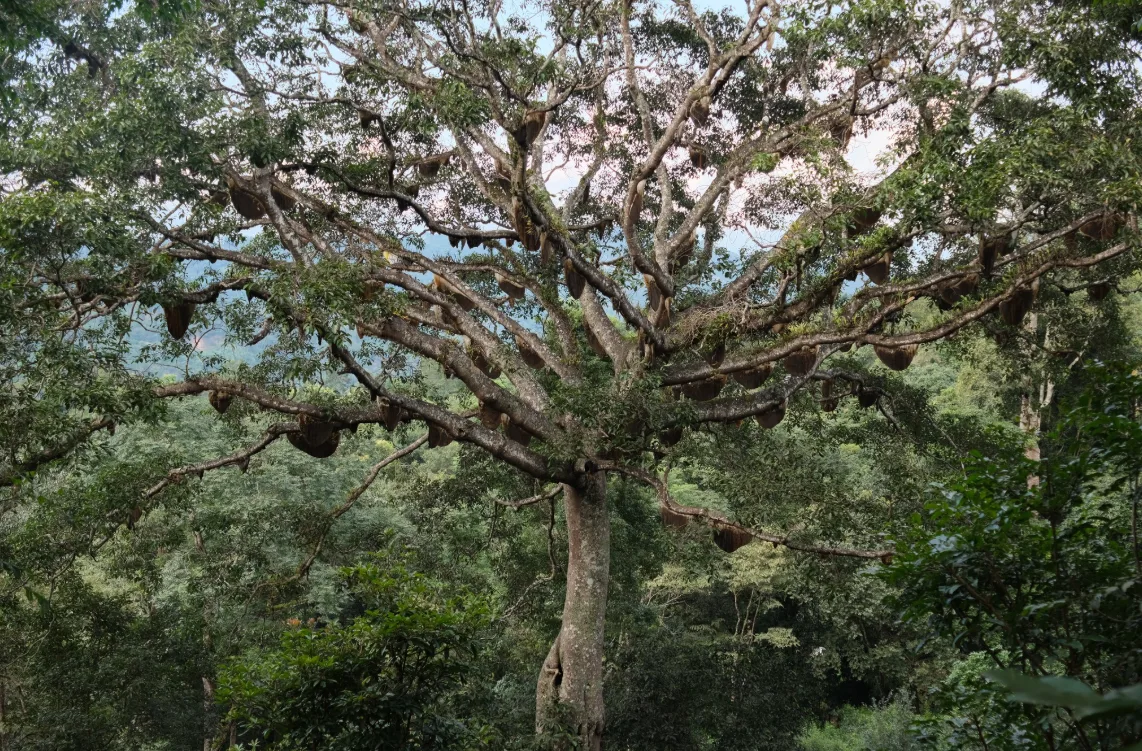
To protect the bee colonies, private tourist vehicles have been restricted from the relevant access roads since September 2026. Visitors must walk or take a shuttle, following local arrangements.
You can explore the Bee Tree alongside the Tea Ancestor Temple, the Princess Banyan and other nearby sites. Much of their interest lies in the beliefs and stories that surround them. A guide familiar with Bulang culture can help explain why an old tree or a small temple holds such an important place in local life.
Dapingzhang Old Tea Forest
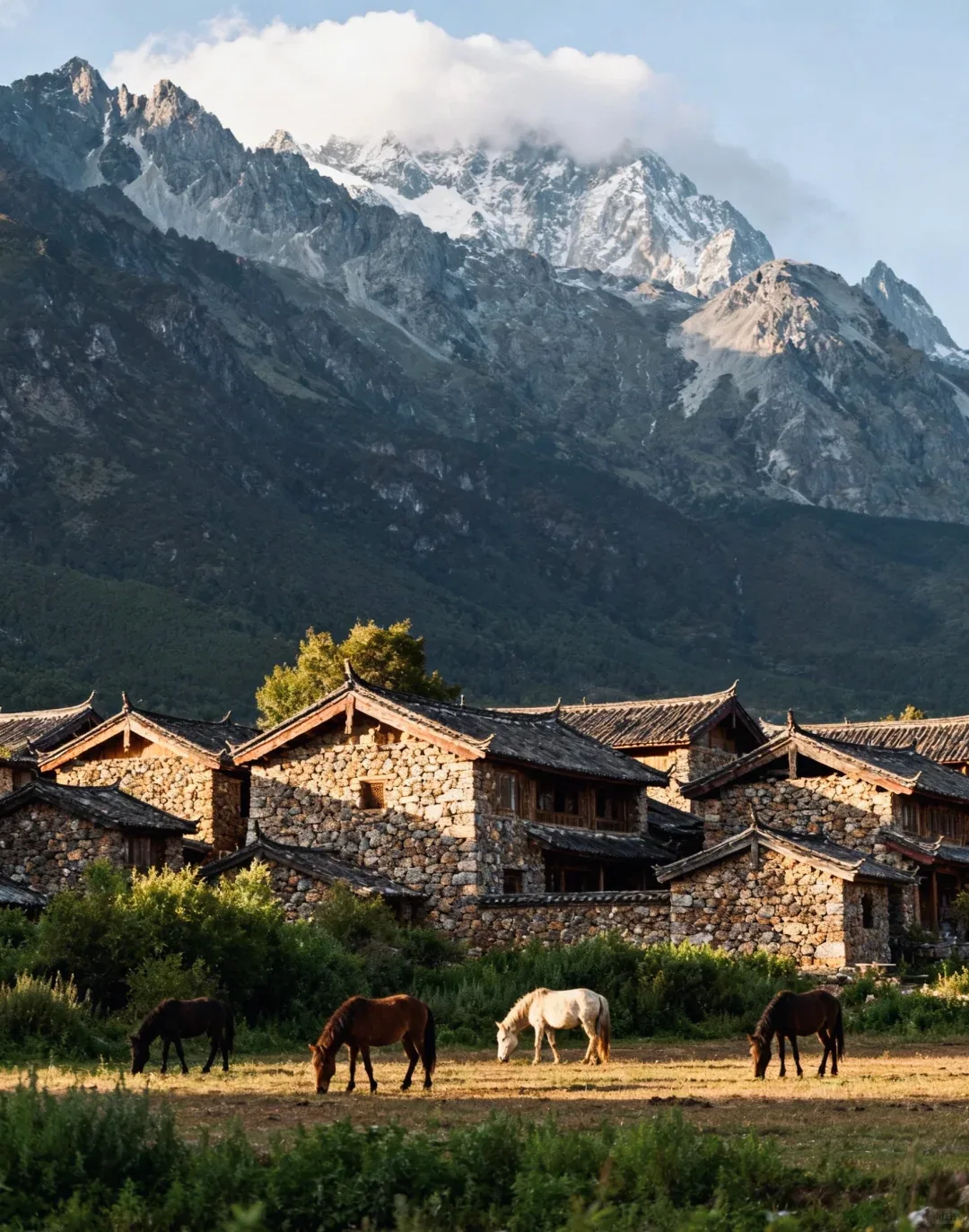
Dapingzhang Old Tea Forest (大平掌古茶林) is one of the best places to understand what makes Jingmai Mountain special.
The tea forest at Dapingzhang dates back more than 1,800 years. Step into the forest and you will find none of the neatly ordered rows of a conventional tea plantation. Tall trees form a canopy overhead, with tea trees growing among them, surrounded by ferns, mosses, fallen leaves and other woodland plants. Sunlight filters through the branches, and the tea-growing landscape feels much like a natural forest.
This traditional practice of growing tea beneath the forest canopy draws on ecological knowledge developed over generations by the Bulang and Dai. Tall trees shade the tea plants, fallen leaves enrich the soil, and tea grows alongside other species, allowing cultivation without clearing large areas of woodland.
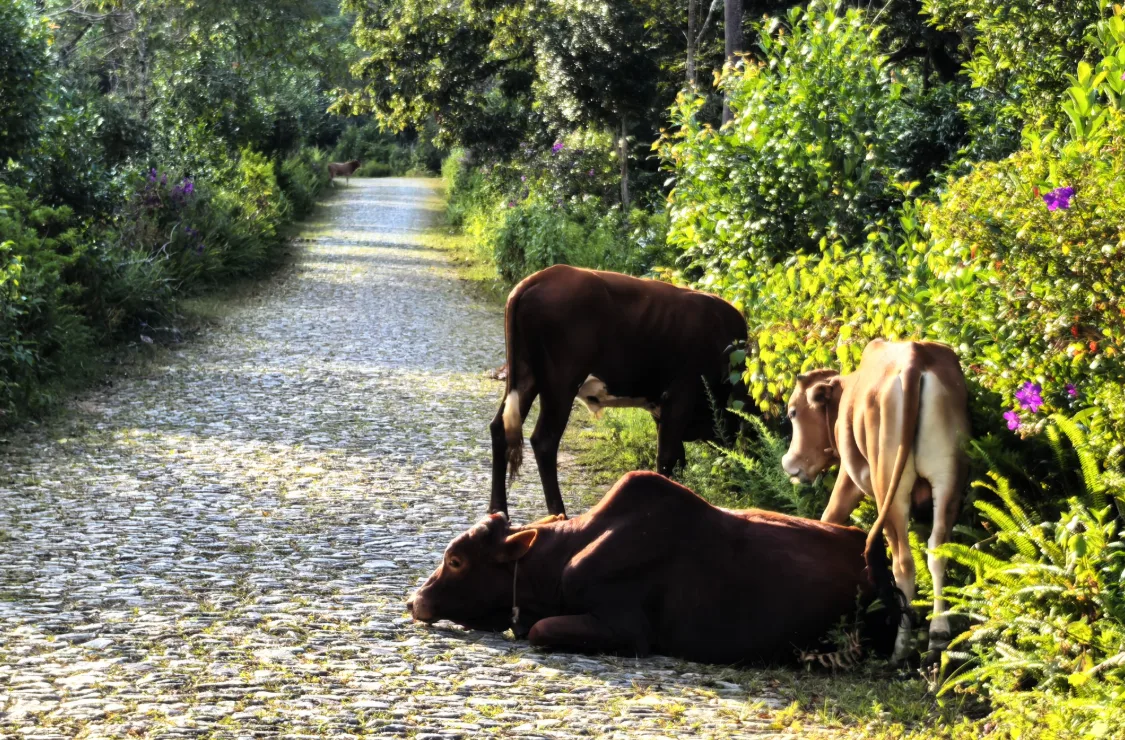
This relationship is central to Jingmai Mountain’s World Heritage status. Its ancient tea forests, traditional villages, forest conservation practices and enduring tea-growing traditions together form a living cultural landscape.
Allow time for a forest walk with a local guide. The age of the tea trees is only part of the story. Learning to recognise them, observing the life around them and discovering how local people tend and protect the forest can be far more revealing.
Some parts of the ancient tea forests are protected. Follow designated routes, stay out of areas closed to visitors and leave the tea leaves on the trees.
Jingmai Dazhai and Manghong
Jingmai Dazhai (景迈大寨) is a Dai village where you can visit the golden pagoda, Buddhist temples and nearby ancient tea forests. It makes a convenient stop on a visit to Dapingzhang, and you may not need to set aside much extra time for it.
Manghong (芒洪) is especially worth considering for its views and accommodation.
Set high on the mountain with open views, Manghong is a wonderful place to watch the sunrise, look out over a sea of clouds and take in the surrounding peaks. The scenery is especially beautiful in the early morning, when white clouds fill the valleys and distant mountains emerge above them. The village’s historic octagonal pagoda is also worth a stop.
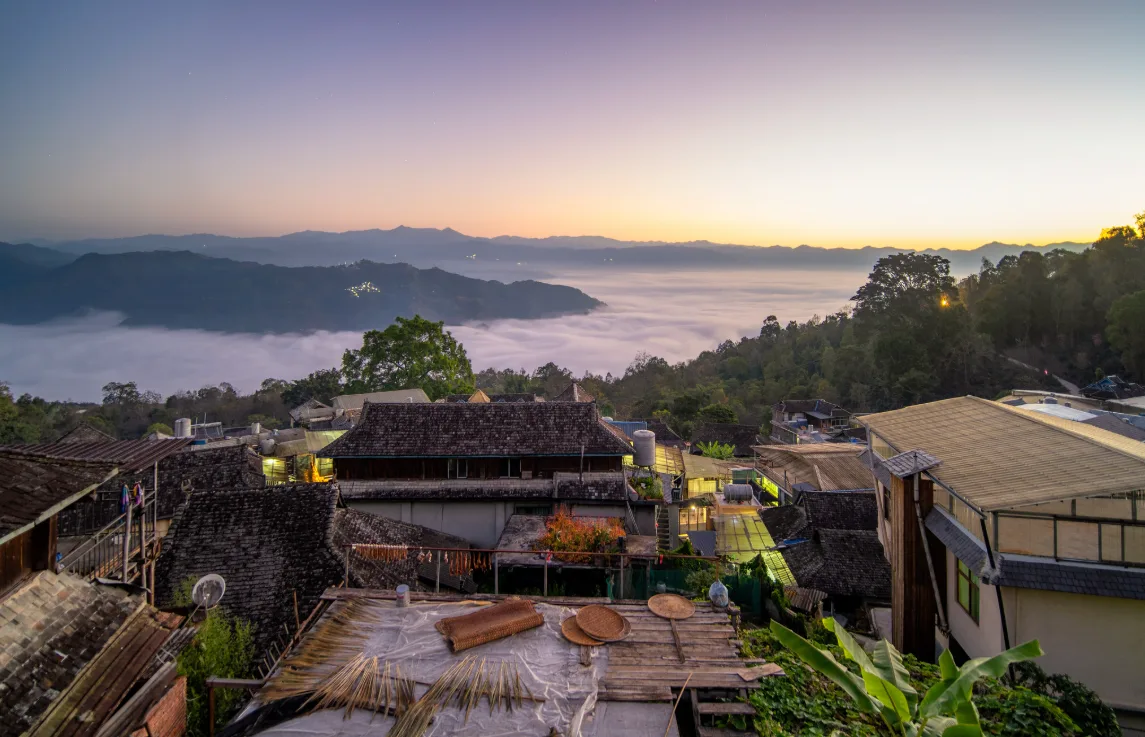
With fewer of the tea rooms and shops that draw visitors to Wengji and Nuogan, Manghong lends itself to an overnight stay, early mornings and the quiet pleasures of mountain life.
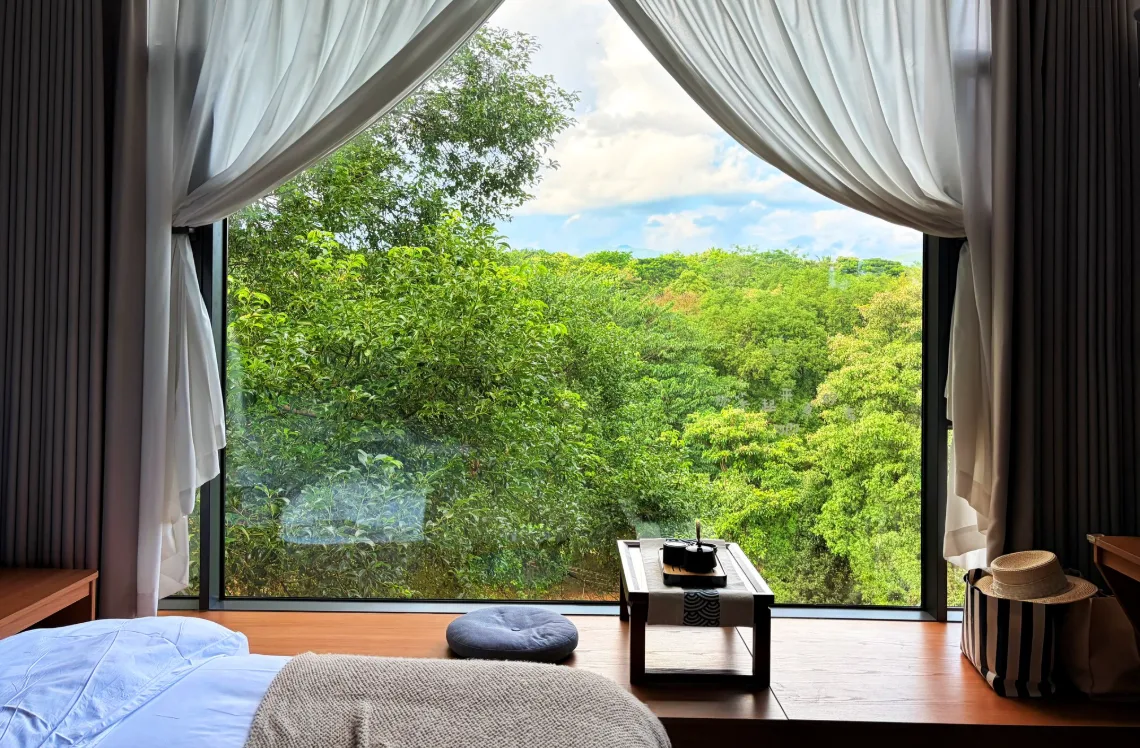
A sea of clouds depends on the weather, however, and is never guaranteed. If you hope to enjoy the view from your room, check which direction it actually faces and whether the property has a shared terrace with an unobstructed outlook.
Jingmai Pu-erh Tea: From Forest to Teacup
You don’t need to know much about pu-erh to enjoy exploring Jingmai Mountain’s tea culture.
Here, growers use traditional methods to cultivate tea beneath the forest canopy, in surroundings quite different from large terraced plantations. Jingmai’s raw pu-erh is often described as having floral and honeyed aromas, with a sweetness that lingers after each sip. Its flavour varies with the growing conditions, harvest season, processing methods and length of storage.
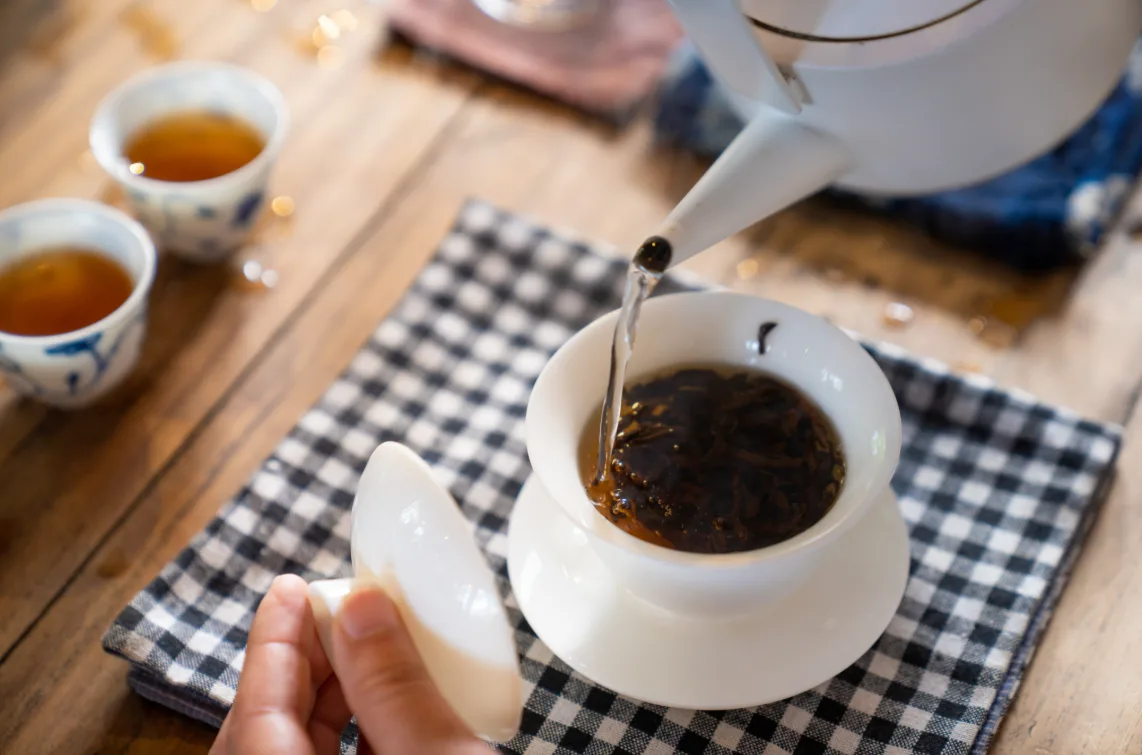
The best way to get to know Jingmai Pu-erh tea (pu’er tea) is to sit down at a grower’s table and taste a few varieties side by side.
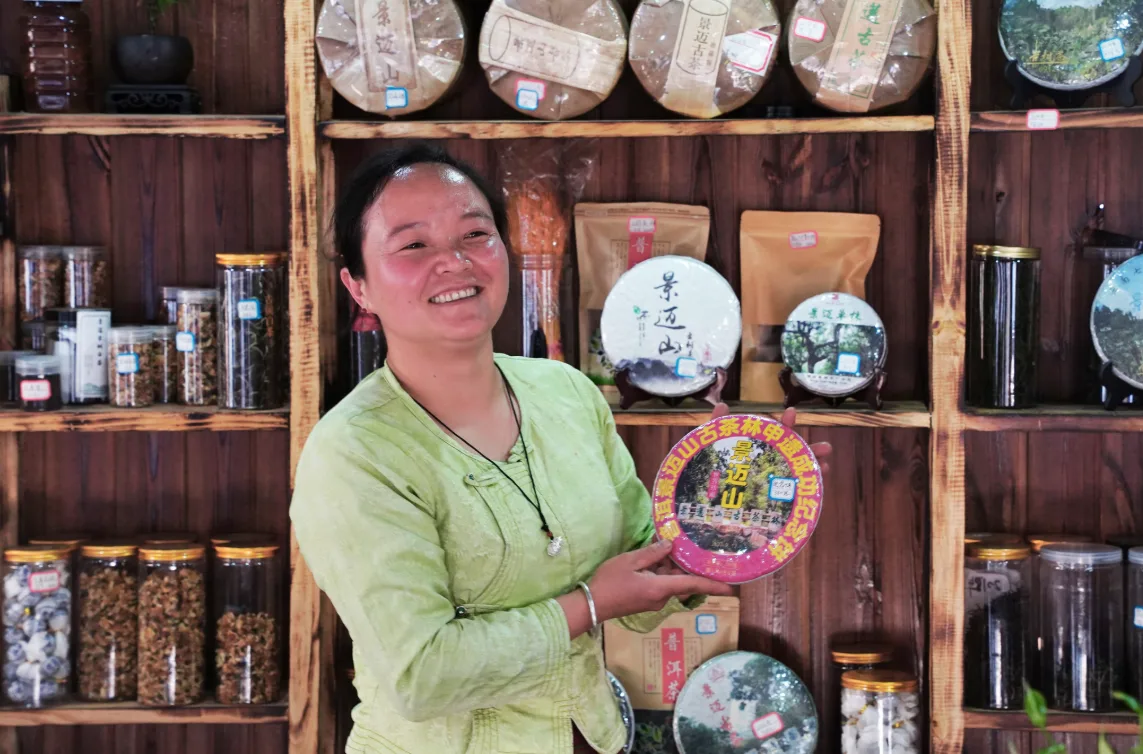
Teas from the same mountain can taste remarkably different. Some raw pu-erhs are distinctly bitter and astringent; others have fresher floral notes and a gentle sweetness. White teas, too, can vary greatly depending on how they are made. There is no single right answer when tasting tea. A higher price or a claim that the leaves come from exceptionally old trees does not necessarily mean you will enjoy it more.
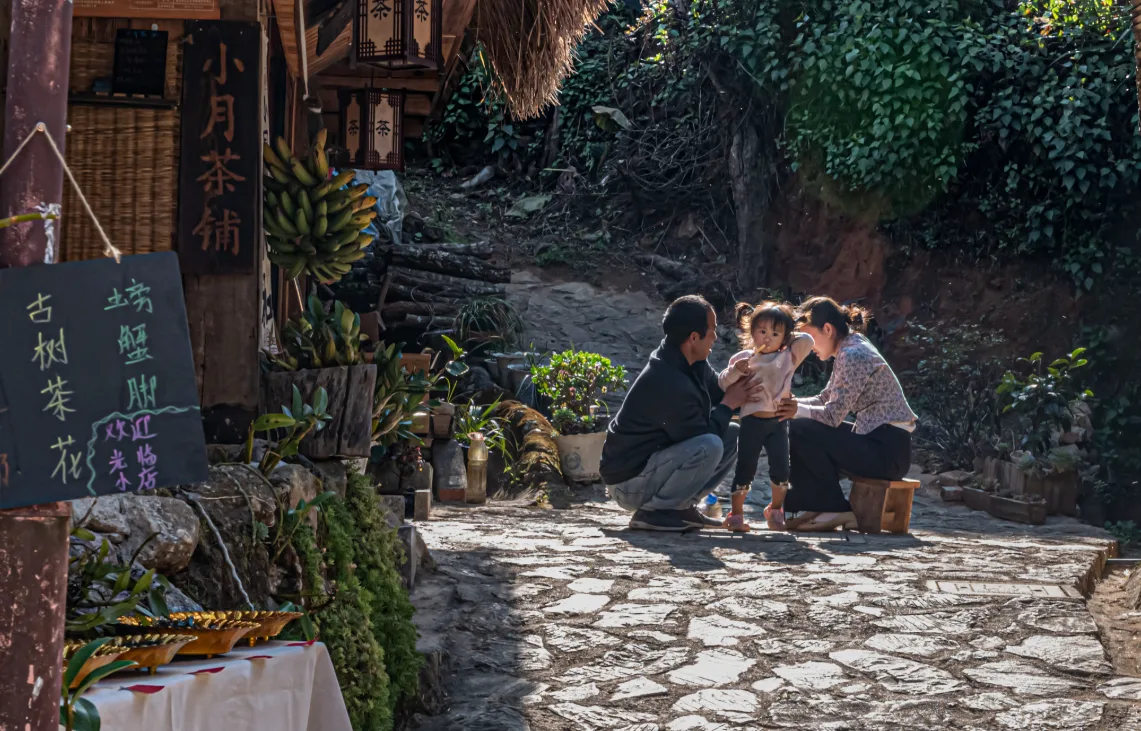
If you visit during the spring harvest, you may be able to join a local grower in a tea garden to learn how the leaves are picked. Fresh leaves are spread out to rest, heated in a pan to stop oxidation, rolled and dried in the sun. The result is the loose, sun-dried tea used to make pu-erh, which can then be steamed and pressed into cakes. Traditional tea-making takes experience, particularly when it comes to controlling the heat and knowing how quickly to turn the leaves in the pan. It is harder than it looks.
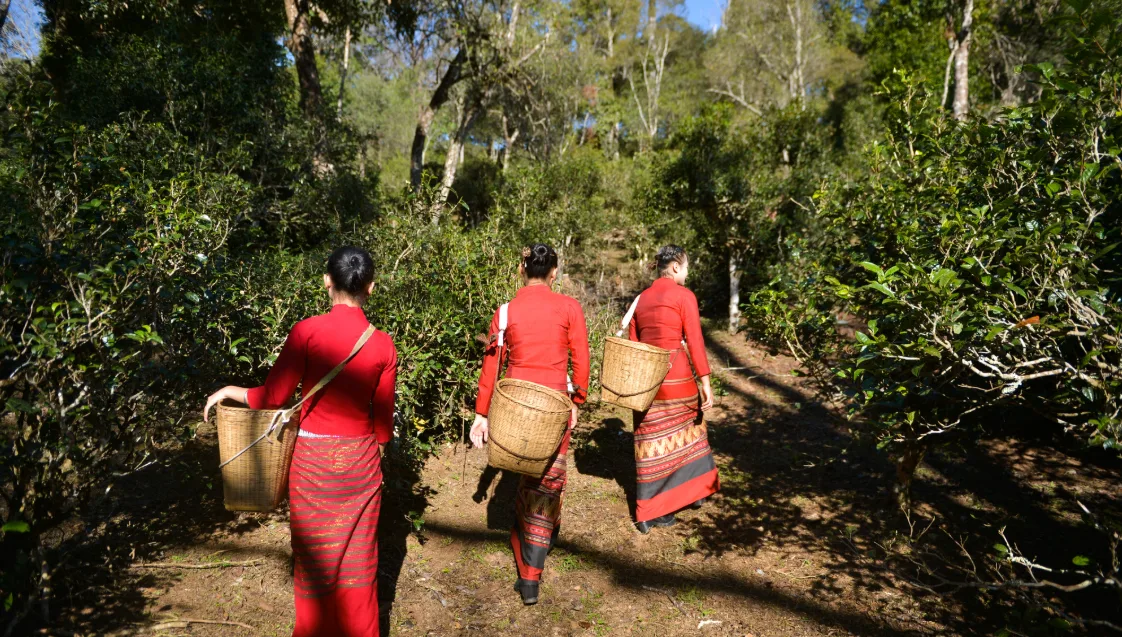
Workshops around Wengji offer an introduction to traditional tea-making. Depending on the season and the workshop, you may be able to try some of the steps yourself. When buying tea, taste it first, then ask which village it comes from, when it was harvested and how it was processed. Treat labels such as “ancient-tree tea” as a starting point for questions rather than a guarantee of quality.
Eastogo can introduce guests to local growers and arrange guided tastings and tea-making experiences. For international travellers new to Chinese tea culture, a local guide can explain the process from picking the leaves to brewing the finished tea.
Speak to An Expert
Explore Jingmai Mountain with Eastogo
Start designing your China journey with our destination experts.
Make An InquiryBulang and Dai Culture: Traditions Beyond Tea
Jingmai Mountain’s Bulang and Dai ethnic groups share a long history of growing tea, while each maintains its own traditions of architecture, faith and daily life.
The Blang hold Pa Aileng (帕哎冷), their tea ancestor, in particular reverence. According to a local story, he told his descendants that cattle and horses might be lost to disaster, and gold and silver would one day run out, but the old tea trees could sustain their children for generations to come.
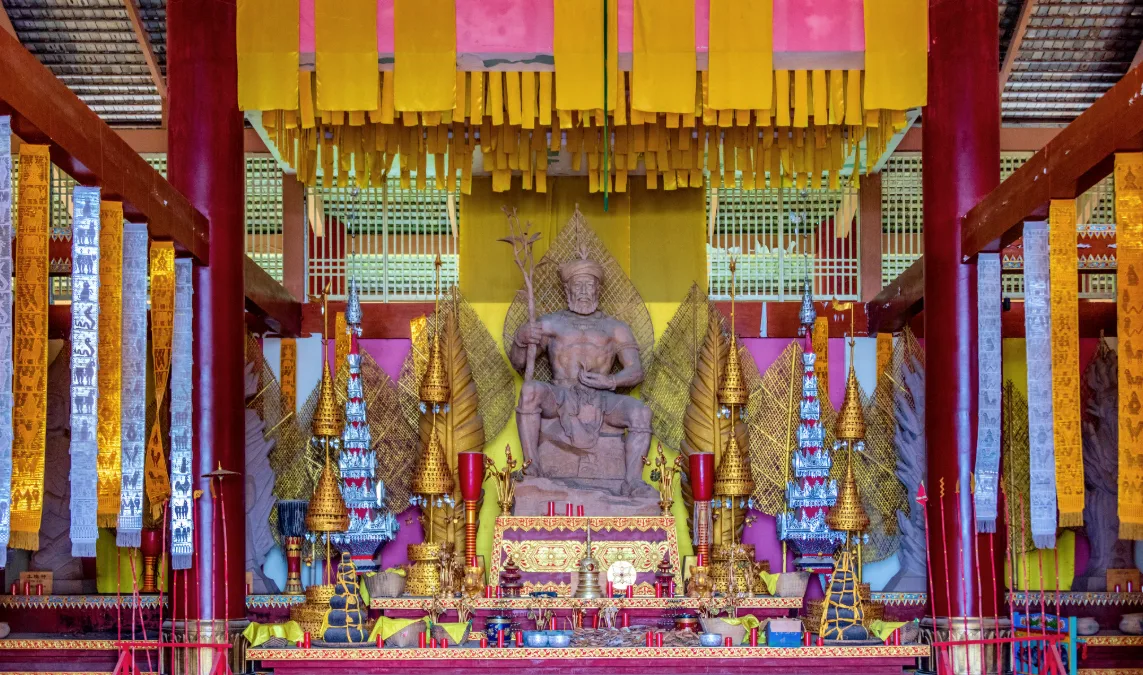
This helps explain why tea forests hold a significance in Blang culture that goes far beyond their economic value.
The Shankang Tea Ancestor Festival (山康茶祖节), held each April, offers an opportunity to experience this tradition. Local people dress in traditional clothing, pay homage to the tea ancestor and offer freshly harvested spring tea. Music, dance and communal celebrations bring people together.
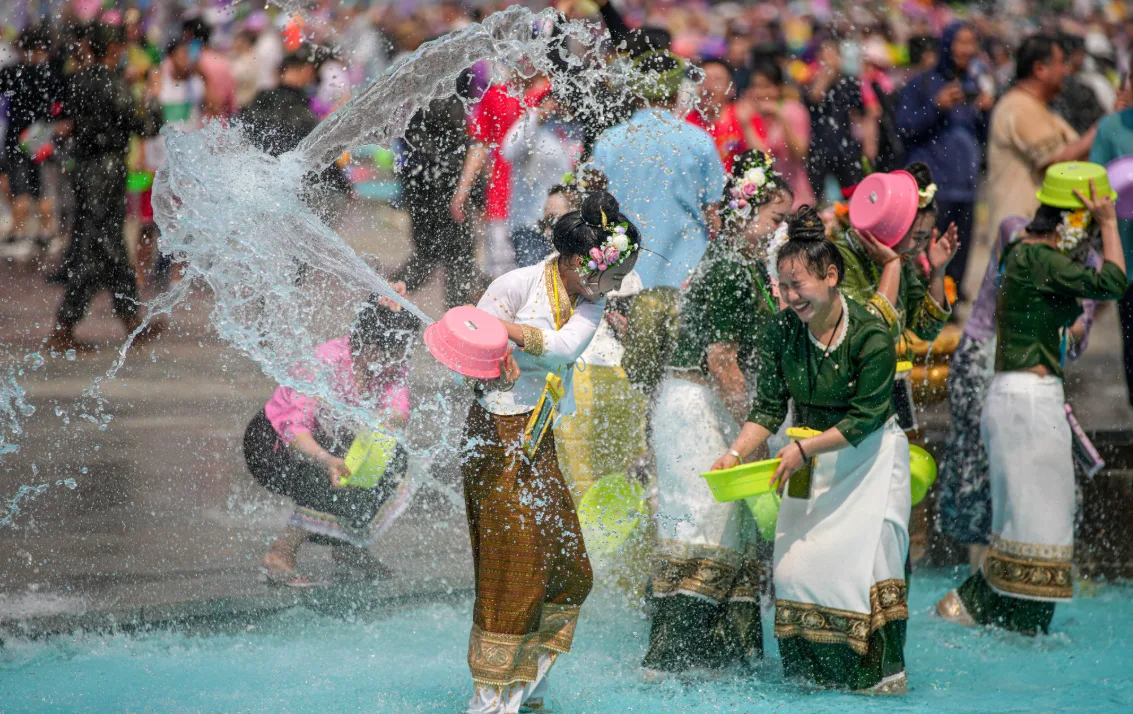
Dai communities maintain their own Theravada Buddhist traditions. Their temples and celebrations, including the Water Splashing Festival, add to the richness of cultural life on Jingmai Mountain.
These traditions are woven into everyday life, too. You can see them in the tea-bud ornaments on Wengji’s wooden rooftops, the way families prepare and share tea, the Buddhist temples in the villages and the care farmers give their tea forests.
A growing number of young people are also opening guesthouses, cafés and small craft shops, finding new ways to carry local culture forward and share it with visitors. Jingmai Mountain is a living community, continually adapting and changing.
If you are particularly interested in local culture, consider visiting villages and family homes with a local guide.
Best Time to Visit Jingmai Mountain
Jingmai features a subtropical highland monsoon climate with high humidity. It is a year-round destination, but each season offers a different experience.
Spring (March–May) is one of the most rewarding times to visit. Fresh buds appear on the ancient tea trees, growers are busy picking and processing leaves, and the scent of new tea fills the villages. April also brings the Bulang Shankang Tea Ancestor Festival and the Dai Water Splashing Festival, making it an especially good time to learn about local traditions. Growers are very busy during the spring harvest, so arrange home visits and tea-making experiences in advance.
Summer (May–August) turns the forests a deep, lush green, as rain and mist sweep across the tea-growing hills. There tend to be fewer visitors, though heavy rain can affect mountain roads and leave forest paths slippery. If you are hoping to photograph sunrises and cloud-filled valleys, the unsettled weather makes summer a less reliable choice.
Autumn (September–November) brings a gradual shift from the rainy season to drier weather. Some growers also harvest and process autumn tea during these months. By late autumn, conditions become particularly favourable for seeing a sea of clouds.

Winter (December–February) is especially appealing for photography and a leisurely stay. Clouds often gather in the valleys at dawn, while pink winter cherry blossoms brighten some of the hillsides. Early mornings and nights can be cold, so bring warm layers if you plan to watch the sunrise.
For tea culture, we especially recommend spring. If you would prefer to settle into a boutique guesthouse, wake to cloud-filled valleys and enjoy village life at a gentle pace, late autumn and winter are equally inviting.

Things to Do on Jingmai Mountain
Jingmai Mountain rewards travellers who take time to explore and get to know local people.
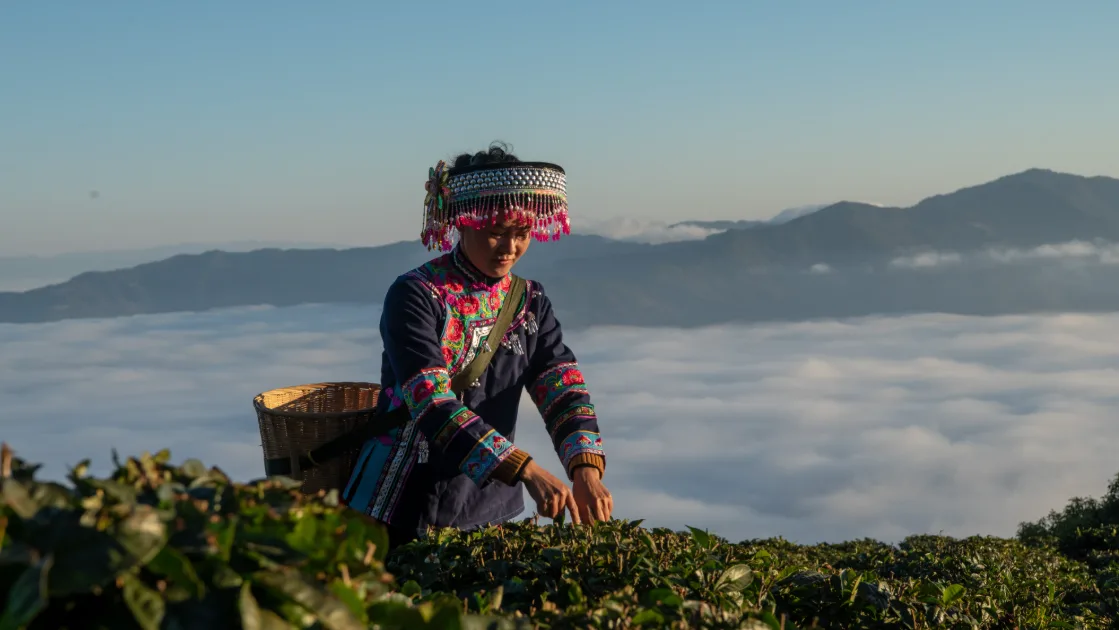
- Walk through the ancient tea forests: Follow trails open to visitors and discover how tea trees grow within the wider forest ecosystem.
- Visit tea growers for a tasting: Sit down in a family home to compare teas from different harvests, learn how processing affects their flavour and hear about the work of growing and making tea.
- Try traditional tea-making: Depending on the season and what your hosts can arrange, help pick, pan-heat or roll the leaves, or press tea into cakes.
- Try Bulang roasted tea: Gather around the hearth as leaves are roasted over charcoal in a small clay pot, then brewed.
- Explore traditional villages: Visit Wengji, Nuogan and Mangjing with a local guide to learn about their architecture, beliefs and daily life.
- Photograph the mountains and clouds: Watch for sunrise near Manghong, or photograph the evening light over the hills from a village terrace.
- Enjoy local food and cafés: Try Bulang and Dai specialities, then spend a leisurely afternoon in a tea room or café.
Eastogo can combine visits to tea growers, tea-making workshops, village tours and forest walks in a relaxed private itinerary tailored to your interests.
Speak to An Expert
Starting Your Jounrney to Jingmai Mountain
Start designing your China journey with our destination experts.
Make An InquiryAccommodation and Practical Travel Tips
Accommodation
Jingmai Mountain has a growing choice of boutique guesthouses and hotels with a focus on design, but the experience varies considerably from village to village. Start by thinking about how you would like to spend your time on the mountain.
Manghong (芒洪) is a good choice if sunrise, cloud-filled valleys and mountain views are high on your list. Some guesthouses have terraces overlooking the valleys or large picture windows, so you can enjoy the morning scenery without leaving the property. The atmosphere is generally relaxed, though rooms, views and facilities vary widely.
Wengji (翁基) has a greater concentration of tea rooms, restaurants and guesthouses, making it a good base for travellers interested in Bulang wooden architecture and village life. Sound carries easily through these timber buildings, however, and the stone paths and slopes can be difficult to navigate with large suitcases. During holidays, it is also worth arranging parking and help with luggage in advance.
Nuogan (糯干) suits travellers who want to stay in a traditional Dai village. It has several distinctive small guesthouses, including Taoran Nuogang Guesthouse (陶然糯岗民宿) and Nuogan Xiaozhu Guesthouse (糯干小筑民宿). The latter occupies a traditional Dai wooden house and has only a handful of rooms. Staying here gives you a chance to drink tea in a timber home and wake to the sounds of neighbours going about their morning routines.
Traditional wooden houses do have their limitations. Some rooms can be draughty and cold at night. Sound insulation, bathroom layouts and access may also differ from what you would expect at a conventional hotel. These stays are best suited to guests who appreciate the setting and are comfortable with the quirks of older buildings.
For more luxurious rooms and a wider range of services, consider an upscale property such as Bolian Resort & Spa Jingmai (景迈柏联酒店) near Huimin Town. Bear in mind the travel time between the hotel and the old villages higher on the mountain.
At Eastogo, we consider accommodation an important part of the trip. We look for places that combine comfort with local character, whether through their architecture, hosts or setting. For guests who prefer luxury hotels, we recommend suitable partner properties and arrange room upgrades and additional benefits where available.
Local Food, Teahouses and Cafés
Beyond drinking pu-erh, a visit to Jingmai Mountain is a chance to explore the distinctive flavours of Bulang and Dai cooking. Traditional Bulang foods include fermented tea leaves and sour fermented meat. Dai dishes often feature lemongrass, chillies, sour papaya and ingredients gathered from the surrounding hills. Look out for lemongrass-grilled chicken, grilled fish, pounded chicken feet, sticky rice and seasonal wild greens.
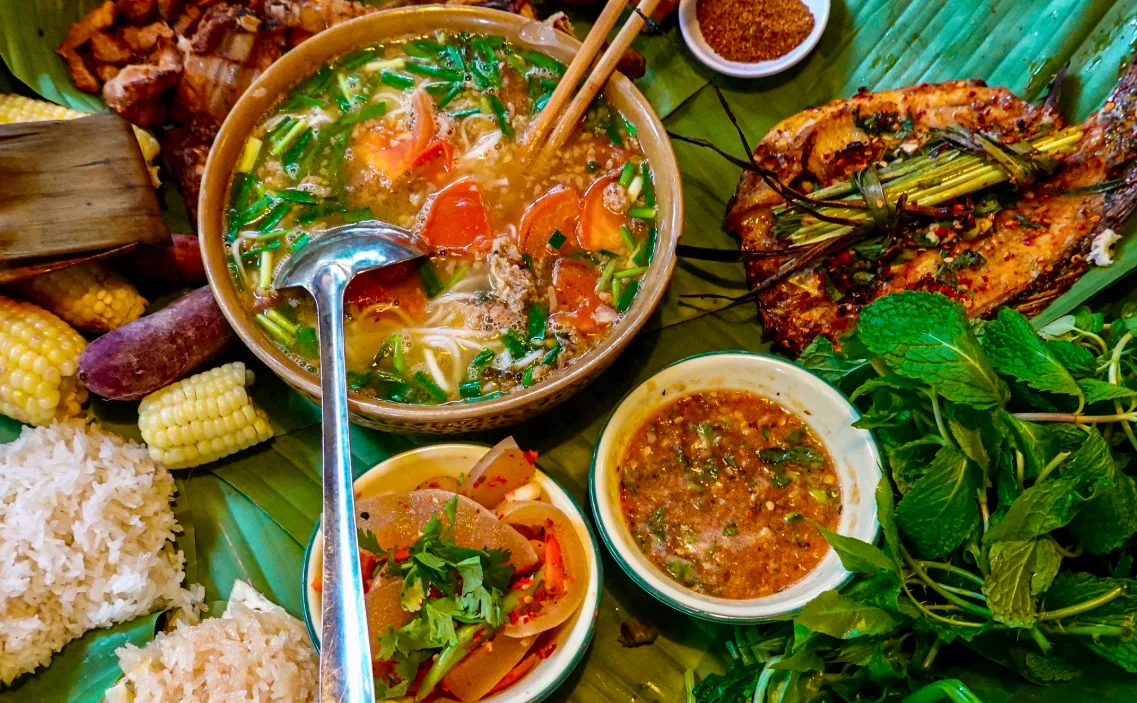
A meal featuring tea in several dishes is also worth trying. Leaves are used in salads, scrambled eggs and stir-fried meat, lending their fragrance, gentle bitterness and lingering sweetness to the food.
For a homestyle meal, try Blang Weidao Restaurant (布朗味道饭店) near Manghong, or one of the small restaurants serving Dai home cooking in Nuogan. Evening dining options can be limited in some villages, so check opening hours rather than waiting until dark to look for dinner.
Alongside its tea rooms, Jingmai Mountain now has plenty of cafés where you can linger over a coffee. In Nuogan, Liting (里庭) is a lovely spot for an afternoon tea tasting, while Ganguan Shangxia (感官上下) is a distinctive little shop combining local crafts and culture with contemporary design.
In Manghong, places such as Lürenjiao (旅人蕉) are ideal for a late-afternoon break. Find a seat facing the valley, order a drink and watch the sun sink behind the hills. It is one of the simplest pleasures of a stay on Jingmai Mountain.
Wengji also has cafés serving Yunnan-grown coffee in traditional wooden houses. Even if tea is not your passion, you can enjoy a cup brewed with beans from the province’s coffee-growing regions.
A beautiful terrace does not always guarantee excellent coffee, though, and some popular spots can be expensive. Choose according to what matters most to you: a knowledgeable grower for an informative tasting, a café that takes its brewing seriously for good coffee, or a comfortable seat with a view for sunset.
Small businesses in the mountains may keep irregular hours, and you may need to arrive early for the best seats at popular viewpoints. Eastogo can check opening times in advance and include suitable restaurants, teahouses and cafés in each day’s itinerary.
Mobile Signal, Payments and What to Pack
Mobile coverage is available in Jingmai Mountain’s main villages, and WeChat Pay and Alipay are widely accepted. Reception can be patchy in parts of the ancient tea forests and along remote mountain roads, so download offline maps before you arrive and carry a little cash in Chinese yuan.
Warm days can give way to cool evenings and mornings, so bring a warm jacket. During the rainy season, pack a waterproof jacket and walking shoes with good grip. Wear long trousers for forest walks, be prepared for insects and watch your footing on slippery paths.
Some mountain roads are winding, so plan ahead if you are prone to motion sickness. Pharmacies and other everyday amenities are limited in the traditional villages; bring any medicines you regularly use.
How to Get to Jingmai Mountain
Jingmai Mountain lies near Huimin Town in Lancang Lahu Autonomous County, within Pu’er, Yunnan. For international travellers, the most practical route is usually via Kunming, Pu’er or Xishuangbanna, followed by a road journey to the mountain.
From Kunming: Jingmai Mountain is 650 kilometers from Kunming. You can take a high-speed train to Pu’er and arrange a car for the onward journey.
From Pu’er city: A shuttle bus runs from Pu’er City to Jingmai Mountain, the drive usually takes around three to four hours, depending on road conditions and where you are staying on the mountain.

From Jinghong in Xishuangbanna, you can also reach Jingmai Mountain by road. This makes it easy to combine a visit with rainforest excursions, Dai temples and villages, and other highlights of Xishuangbanna.
Another option is Lancang Jingmai Airport in Lancang County, though routes and schedules can change, so check flights when planning your trip.
Public transport is available, with some buses and local shuttles connecting the main villages. However, timetables and waits between services can limit your flexibility. Arranging a local car in advance is usually more convenient, particularly if you want to visit tea-growing families, walk through the forests, photograph the sunrise and explore several villages.
You should also check entry registration requirements before travelling. In October 2025, Jingmai Mountain began trialling a free entry reservation system. Under the current rules, visitors and vehicles arriving from outside the area must be registered. If you have booked accommodation on the mountain, your hosts may be able to help register your vehicle. Visitors travelling on foreign passports can register at an on-site service point with valid identification.
All visitors enter through the Jingmai Bridge entrance. Some protected areas within the World Heritage site are closed to the public, and access restrictions also apply to parts of the ancient tea forests and certain ancient-tree sites. Follow the designated visitor routes.
Eastogo can confirm the latest reservation procedures and coordinate transport, accommodation and local guides to help your visit run smoothly.
Speak to An Expert
Starting Your Jounrney to China
Start designing your China journey with our destination experts.
Make An InquiryHow Many Days Do You Need on Jingmai Mountain?
Two days and one night are enough for an introduction to Jingmai Mountain and a few of its main villages. For travellers interested in tea culture and village life, we recommend three days and two nights. This gives you time to explore the ancient tea forests, linger over a pot of tea and talk with local people without rushing to the next stop.

Day 1 — Arrive and Explore Wengji Village
Travel from Pu’er or Xishuangbanna and take some time to rest at your hotel on arrival. Spend the afternoon exploring Wengji’s old village, admiring its Bulang wooden houses and Buddhist temples. Visit a local tea-growing family and sit down for a tasting. Towards evening, watch the sunset from a teahouse or café with a view in or around Wengji, then spend the night at a boutique guesthouse on the mountain.
Day 2 — Ancient Tea Forests and Dai Village Life
Weather permitting, head out early to see the sea of clouds near Manghong. After breakfast, follow the trails open to visitors in Dapingzhang Old Tea Forest and learn how tea is grown beneath the canopy, alongside other forest plants. Spend the afternoon exploring Nuogan’s lanes and Dai wooden houses. Stop at a tea room for a tasting, or relax in a café. In the evening, try some local dishes before returning to your guesthouse for a quiet night in the mountains.
Day 3 — Tea-Making and Bulang Cultural Traditions
Spend your third day learning more about the work of local tea growers. During the spring harvest, visits can be arranged to see how leaves are picked and processed using traditional methods. At other times of year, options include tastings, tea-making workshops or a chance to try Bulang hearth-roasted tea.
If you are particularly interested in local traditions, you can also visit sites in Mangjing associated with the Bulang tea ancestor and learn more about the community’s relationship with its tea forests. Leave Jingmai Mountain in the afternoon and continue to Pu’er or Xishuangbanna.
We recommend allowing this much time. Some villages are small enough to walk through quite quickly if you are simply looking at the buildings. But stopping for tea, talking with a family in their wooden home or waiting for clouds to gather in the valleys gives you a fuller experience of the mountain. These quiet moments often become the most memorable parts of a visit.
Combining Jingmai Mountain with Other Yunnan Destinations
Jingmai Mountain fits naturally into a wider journey through southern Yunnan. For international travellers visiting the province for the first time, combining it with other, more accessible destinations often makes more sense than travelling to the mountain alone.
Xishuangbanna + Jingmai Mountain
This is a particularly rewarding combination. Xishuangbanna offers tropical rainforests, Dai Buddhist temples, lively markets and distinctive regional food. Jingmai Mountain adds ancient tea forests, traditional villages and a quieter stay in the hills.
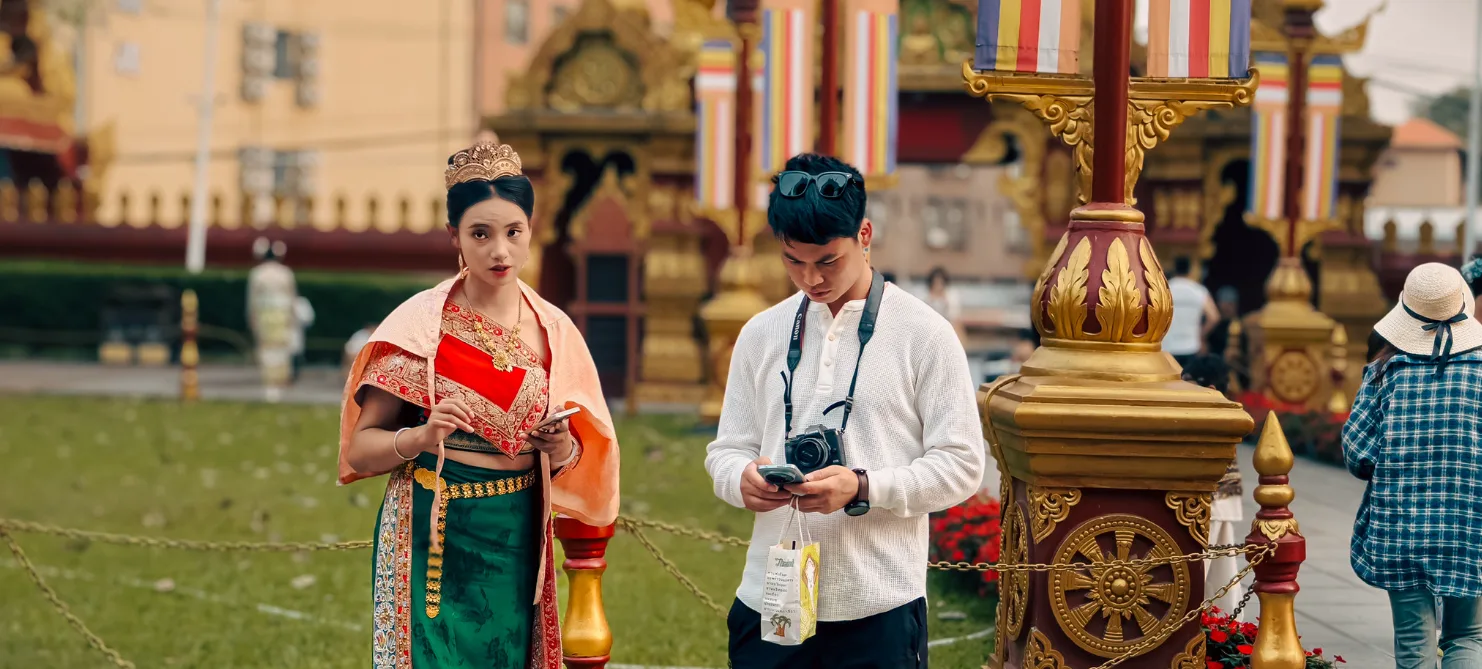
Pu’er + Jingmai Mountain
If you are especially interested in tea and coffee, begin in Pu’er to explore its contemporary tea culture, coffee estates and the history of the Ancient Tea Horse Road. Then continue to Jingmai Mountain to walk through ancient tea forests, meet growers and learn about traditional tea-making.
Kunming + Pu’er + Jingmai Mountain + Xishuangbanna
For a more extensive journey through southern Yunnan, start in Kunming and travel through Pu’er and Jingmai Mountain before finishing in Xishuangbanna. The route takes you from city streets and coffee estates to ancient tea forests, traditional villages and tropical rainforests, offering plenty of variety along the way.

kz-kant
Travellers interested in traditional music could also include Laodabao Village in the Lancang area. It is known for its Lahu musical traditions and offers another perspective on the region’s cultural life.
Eastogo can combine these destinations in a private itinerary tailored to your interests and the time available, with visits to tea growers, boutique accommodation and enough flexibility to linger when something catches your interest. You can also explore our Yunnan Private Tour for itinerary ideas, trip durations and pricing.
Frequently Asked Questions About Jingmai Mountain
Do You Need to Reserve Entry to Jingmai Mountain?
Jingmai Mountain currently has a free entry reservation system, with advance registration particularly important for vehicles arriving from outside the area. Under the current rules, foreign passport holders can register at an on-site service point. Check the latest procedures before setting out.
Can Visitors Pick Tea in the Ancient Tea Forests?
Visitors may not pick leaves from protected ancient tea trees without permission. If you would like to try tea picking, arrange it with a local grower in advance so you can take part in an approved tea garden during the appropriate season. Some tea-making and tea-cake pressing activities are available outside the harvest season.
Can You Visit Jingmai Mountain Without Speaking Chinese?
You can explore the main villages independently, though English-language services are limited and public transport offers little flexibility. A local guide who can interpret makes it easier to visit tea-growing families, learn about Bulang culture and ask questions when tasting or buying tea.
How Can You Buy Authentic Jingmai Pu-erh Tea?
Taste several teas first, then ask where each comes from, when it was harvested, what kind of leaves were used and how it was processed. An “ancient-tree tea” label or a high price alone does not establish quality. Buying from a trusted grower or merchant usually makes it easier to trace a tea’s origin.
Explore Jingmai Mountain with Eastogo
On Jingmai Mountain, tea is far more than a drink. An ancient tea tree can outlive generations. A tea forest sustains a village while holding its people’s reverence for their ancestors and the natural world. When the morning mist lifts, growers still head into the forest to pick leaves, fresh tea is still roasted over the family hearth, and travellers have a chance to sit at their tea tables and hear the stories of life in these ancient tea mountains today.
To me, this is what makes Jingmai Mountain worth experiencing. It is a World Heritage landscape where people continue to live, work and pass on their traditions. To spend time here is to discover more than a fine cup of tea. It is to get to know the people who make that tea special, and the forests and villages they have cared for across generations.
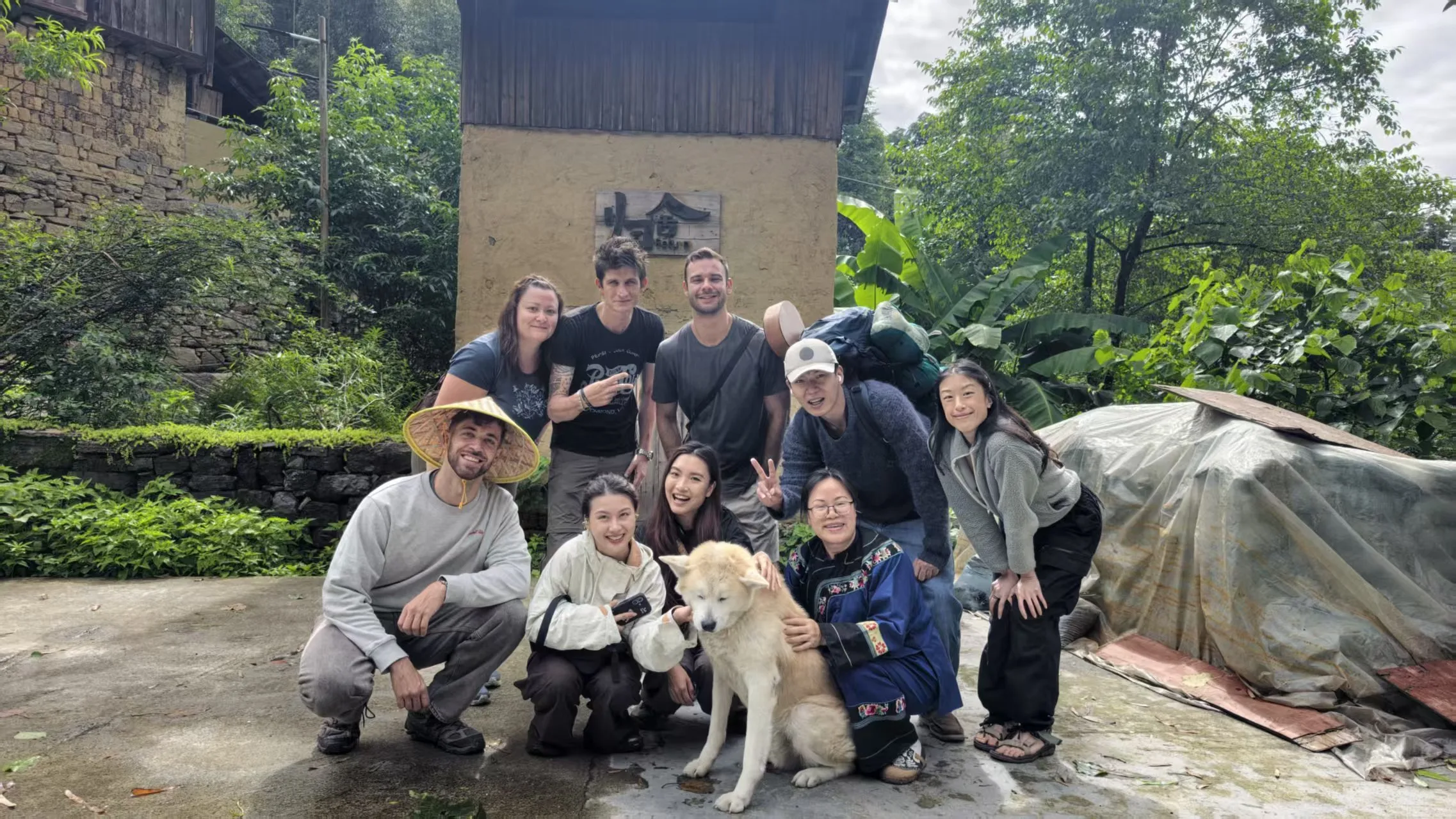
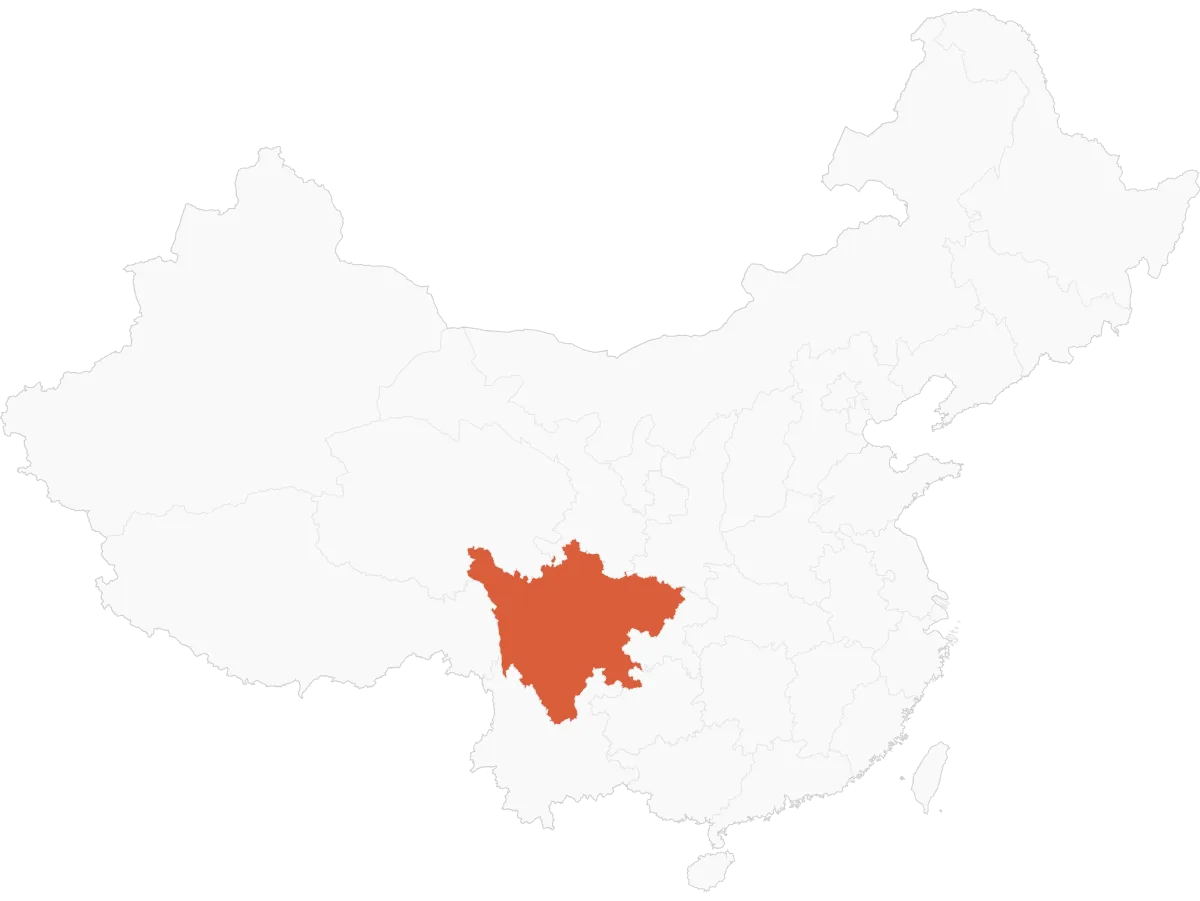
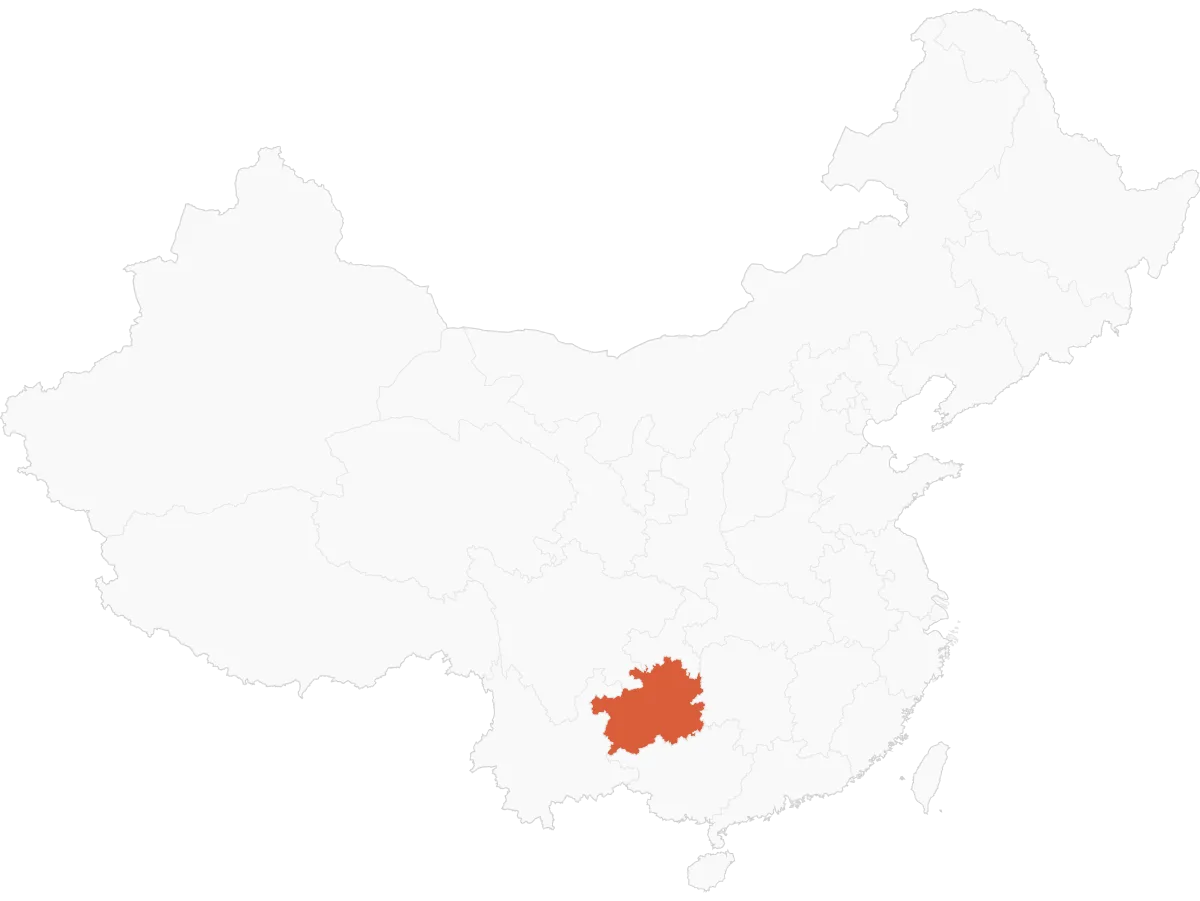
Eastogo specializes in in-depth private journeys across southwest China, including Western Sichuan, Guizhou, Yunnan, Guangxi, and Hunan. Through our long-standing relationships with local guides, drivers, and communities, we bring travelers closer to the landscapes, cultures, and everyday lives that make each destination unique.
Whether you prefer self-guided China tours or private & custom China tours, we design journeys around your interests, pace, and travel style, taking care of the practical details so you can explore with confidence.
For more travel inspiration, explore our Complete Yunnan Travel Guide. You can also take a look at our 7-Day Yunnan Tour: Ethnic Cultures & Snow Mountains or Yunnan Private Tour for itinerary ideas, trip durations, and pricing.
If Jingmai Mountain speaks to your curiosity, we’d be delighted to help you experience this remarkable region in your own way.