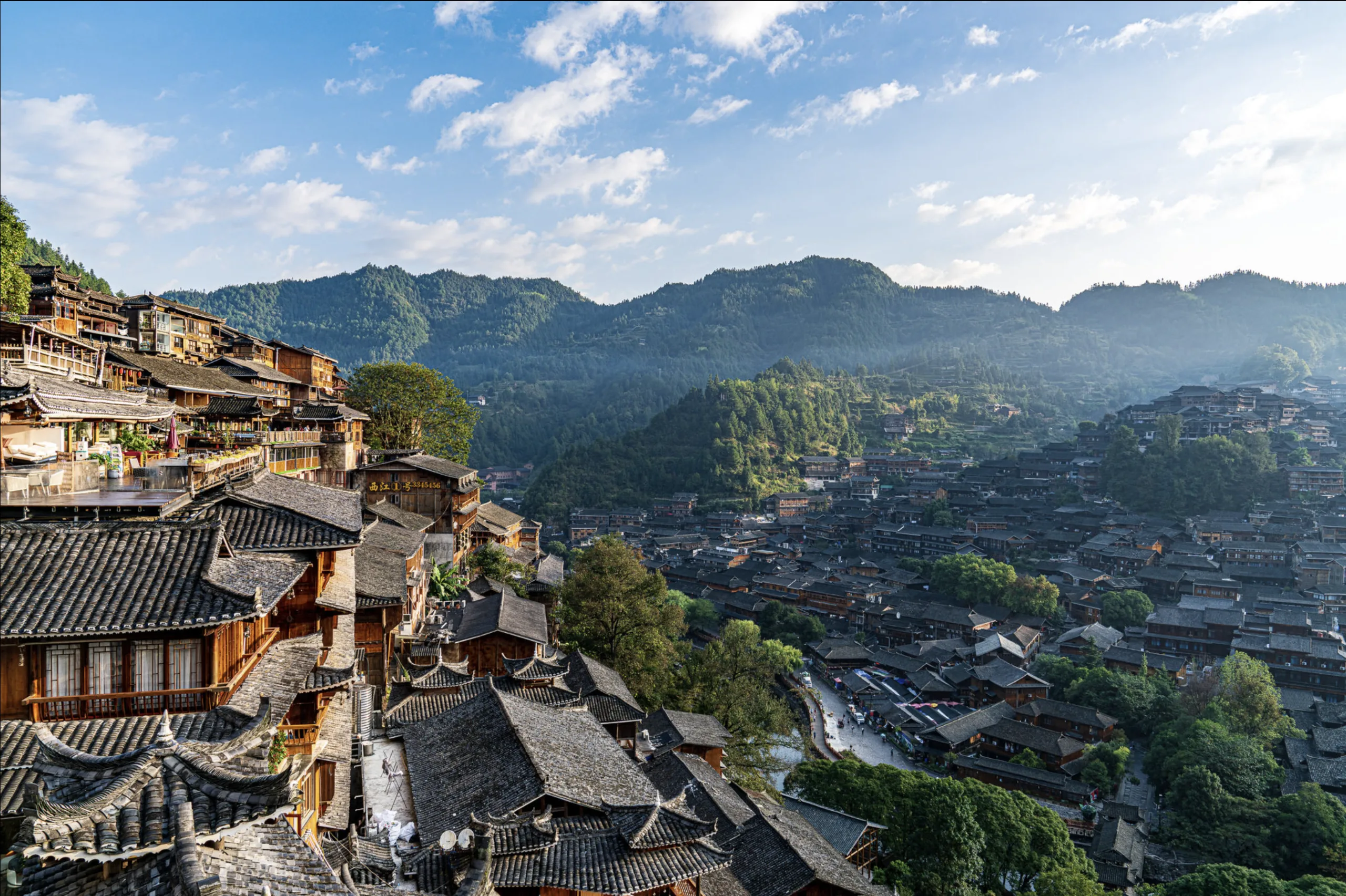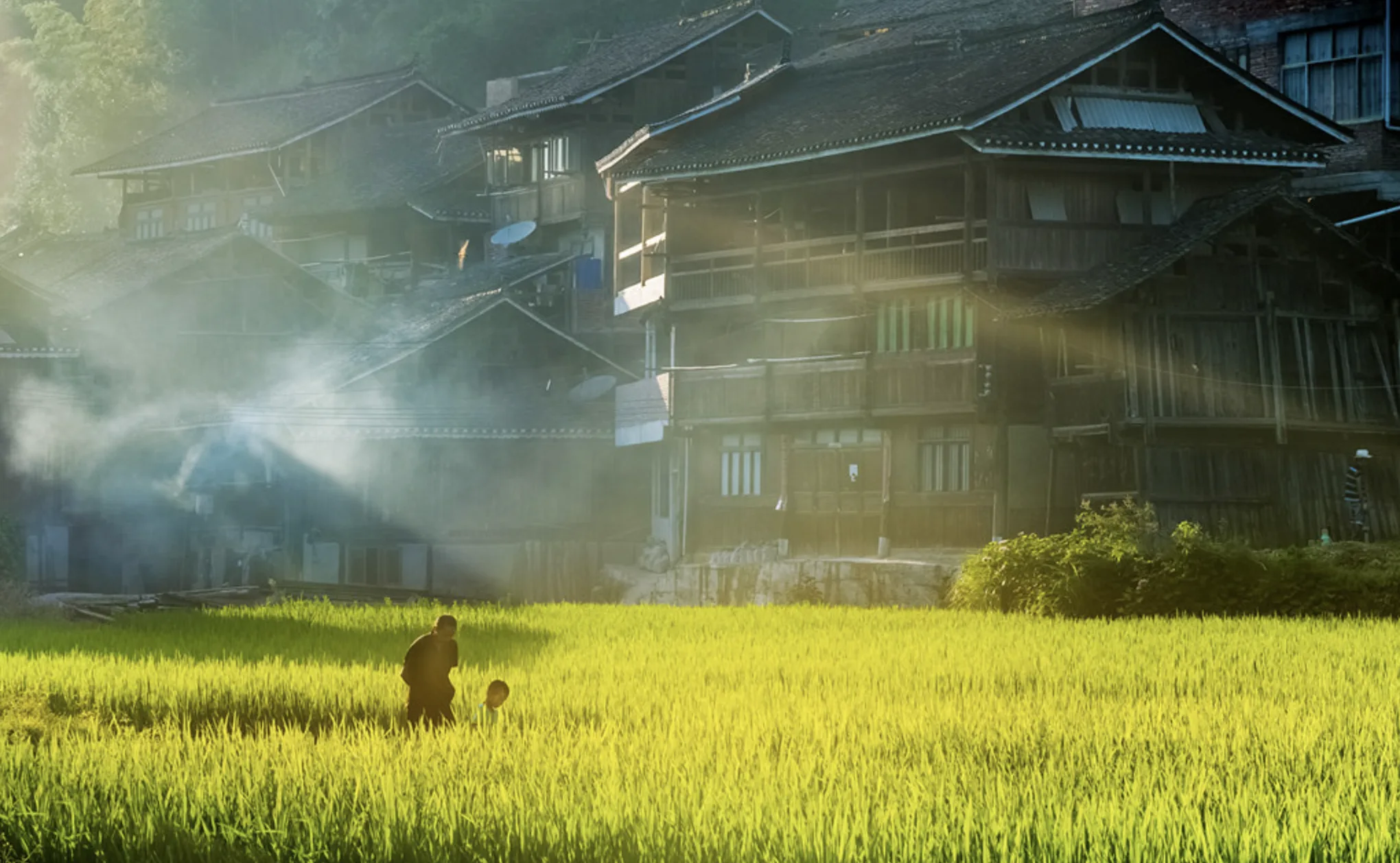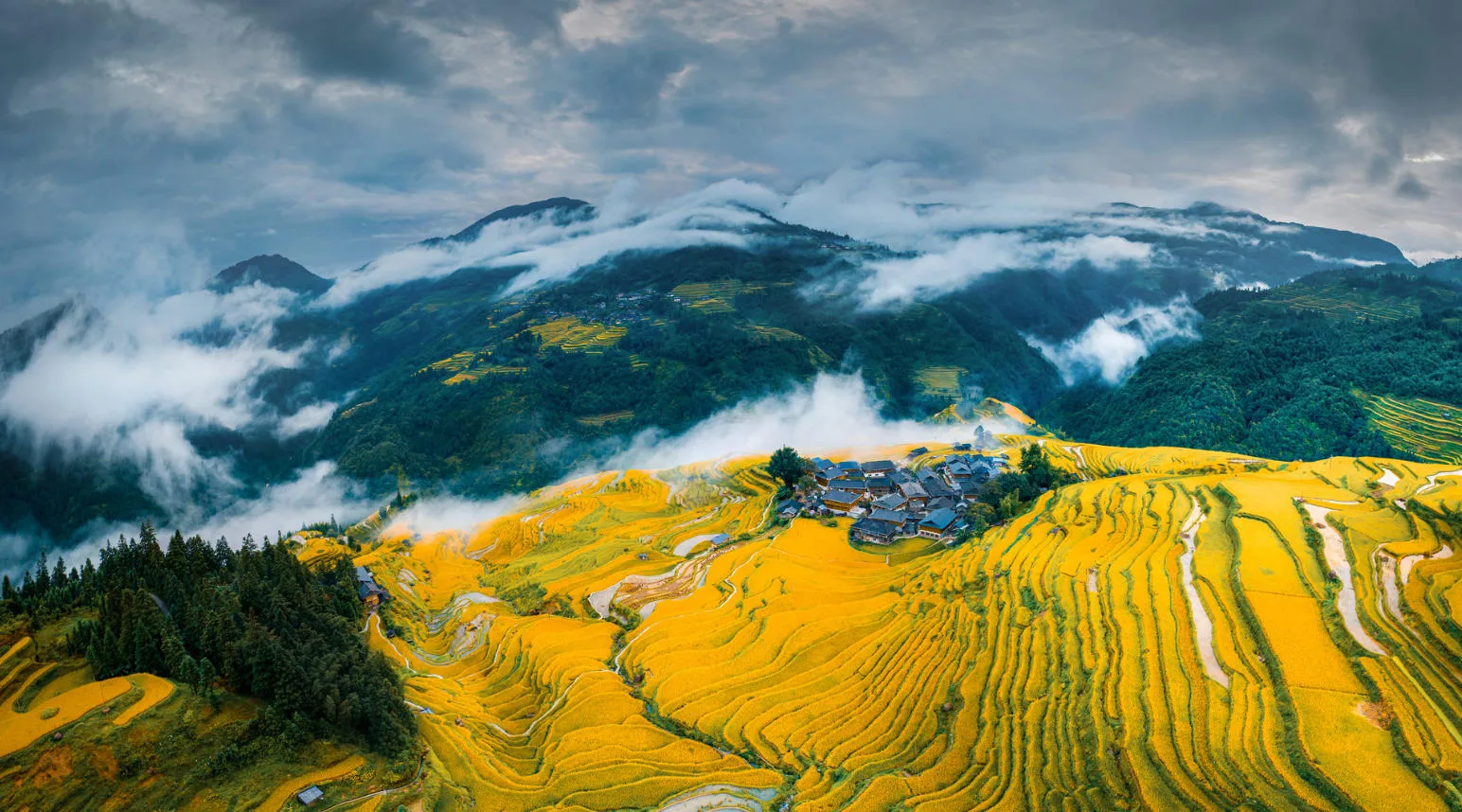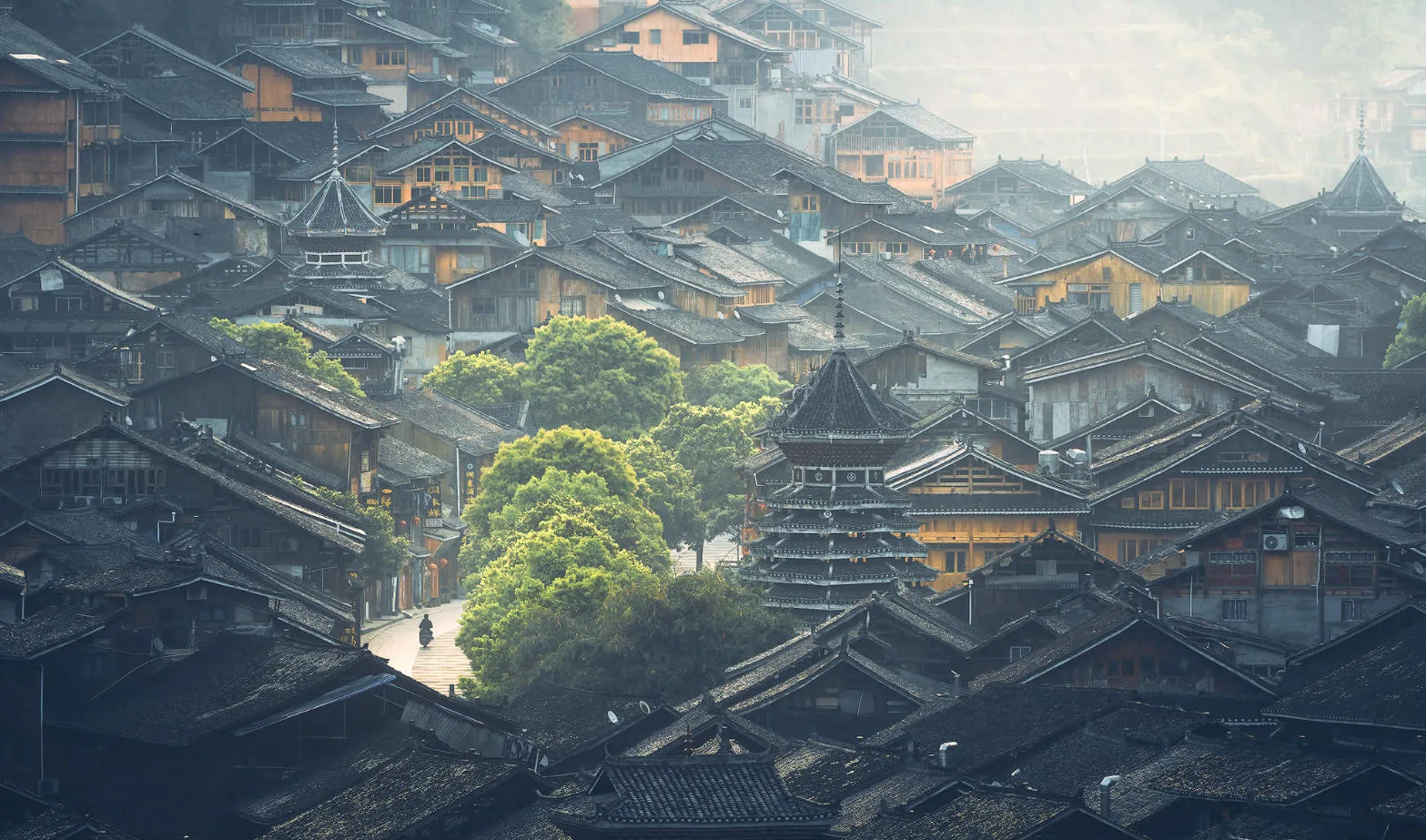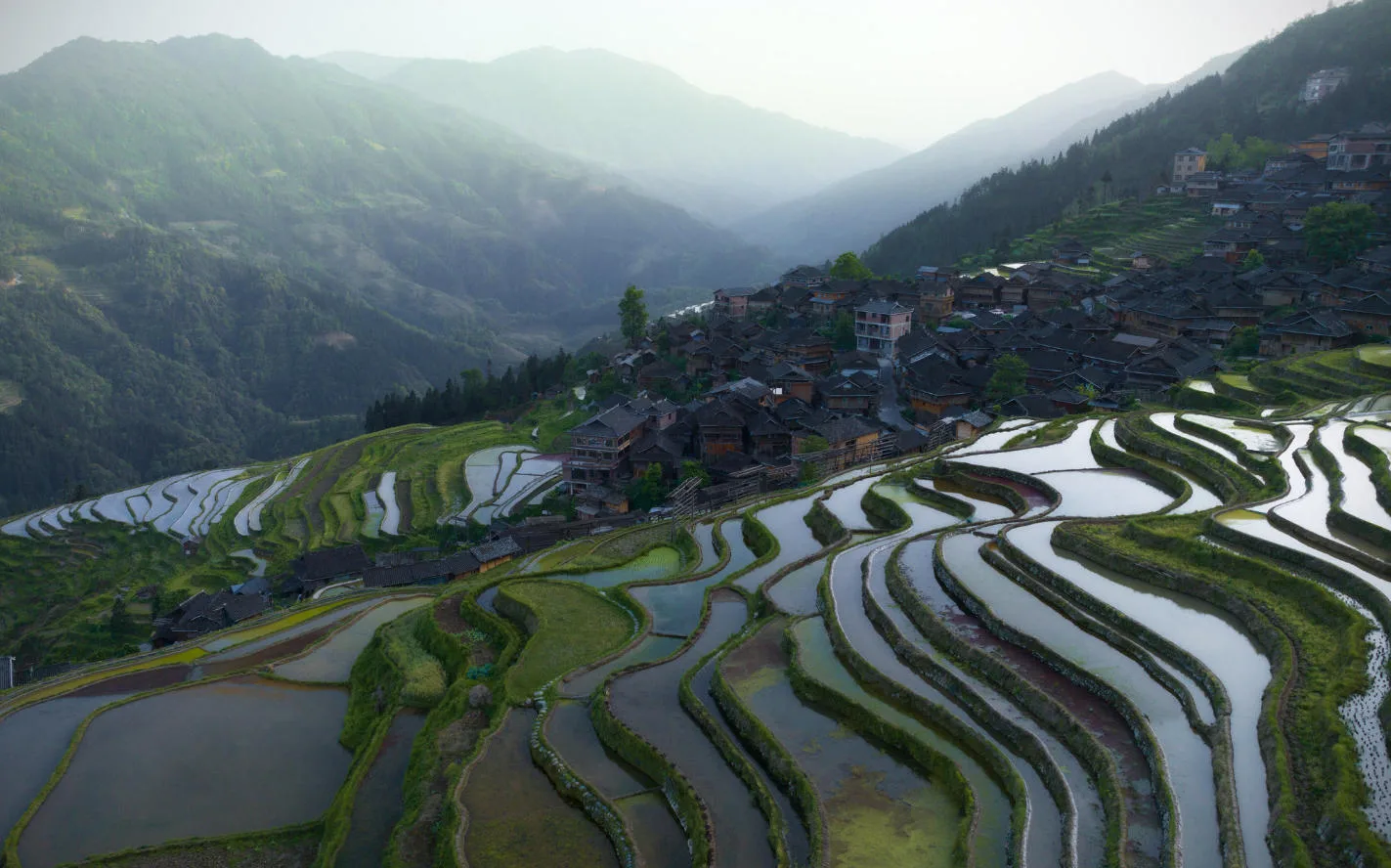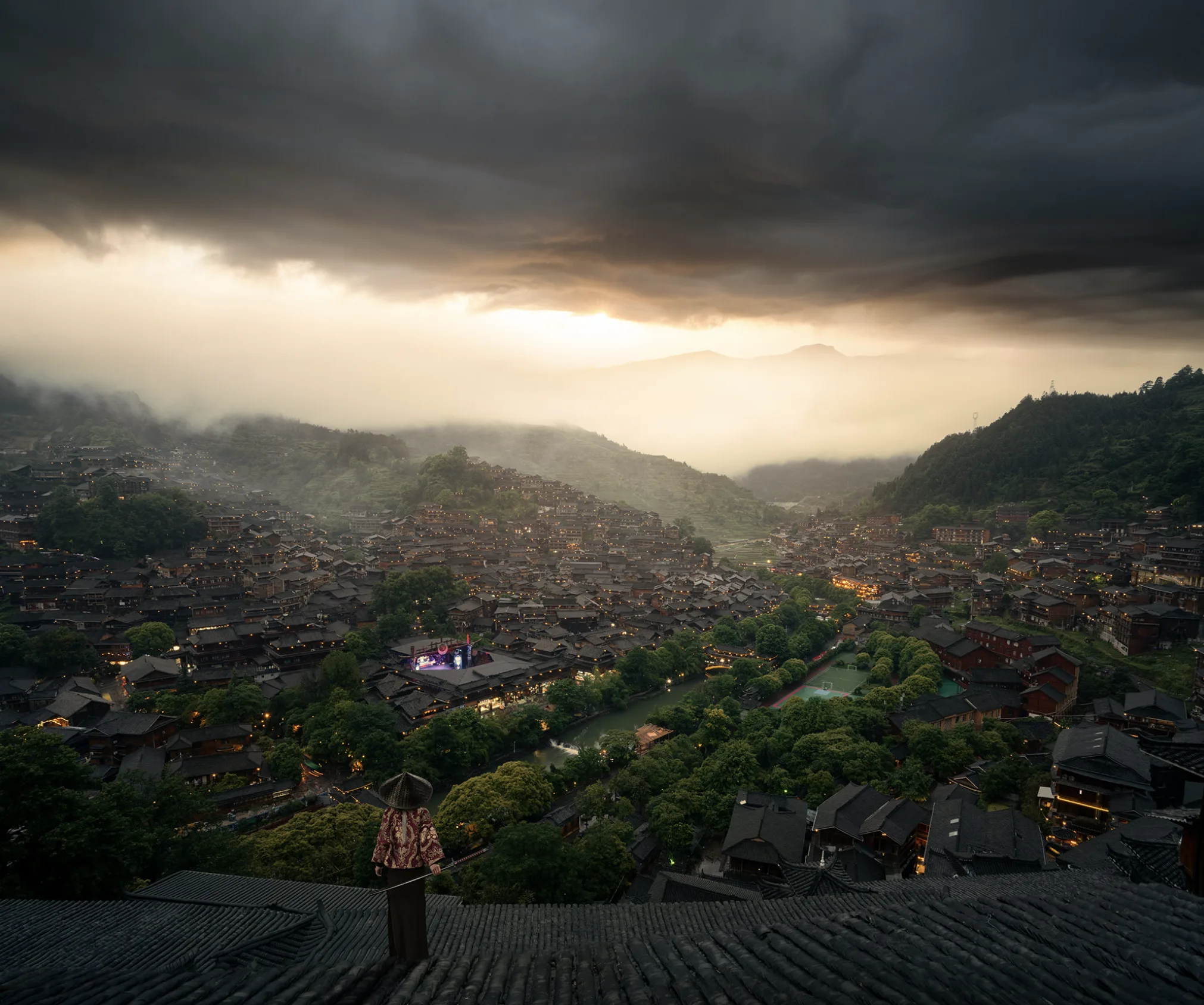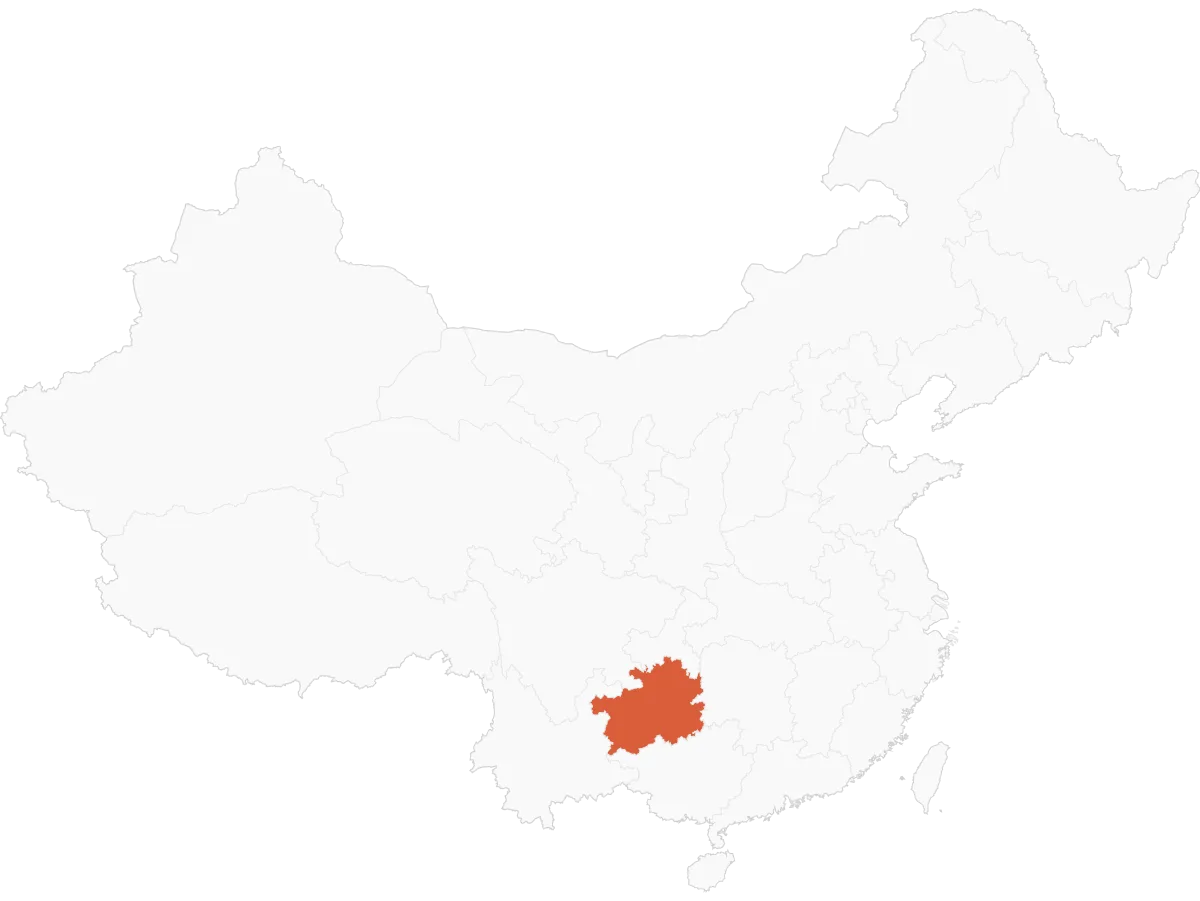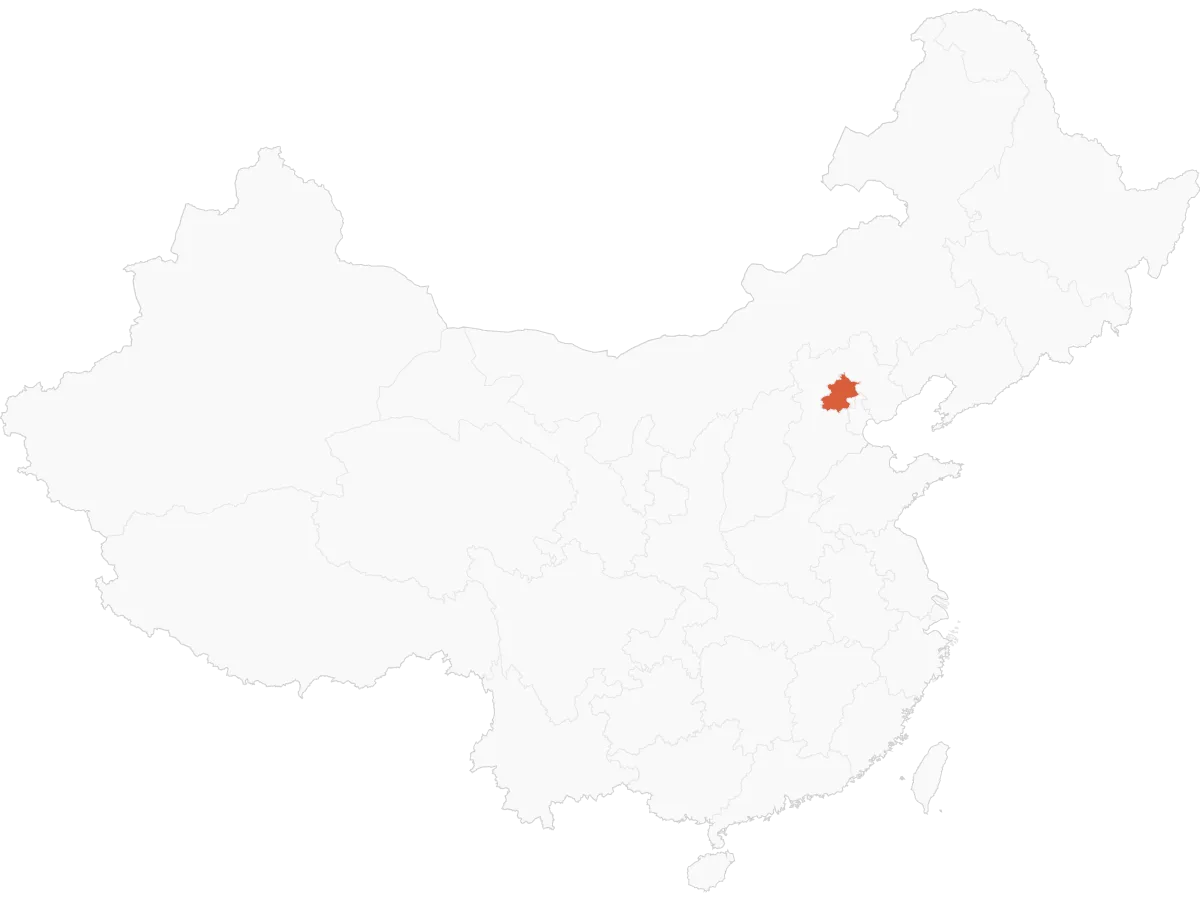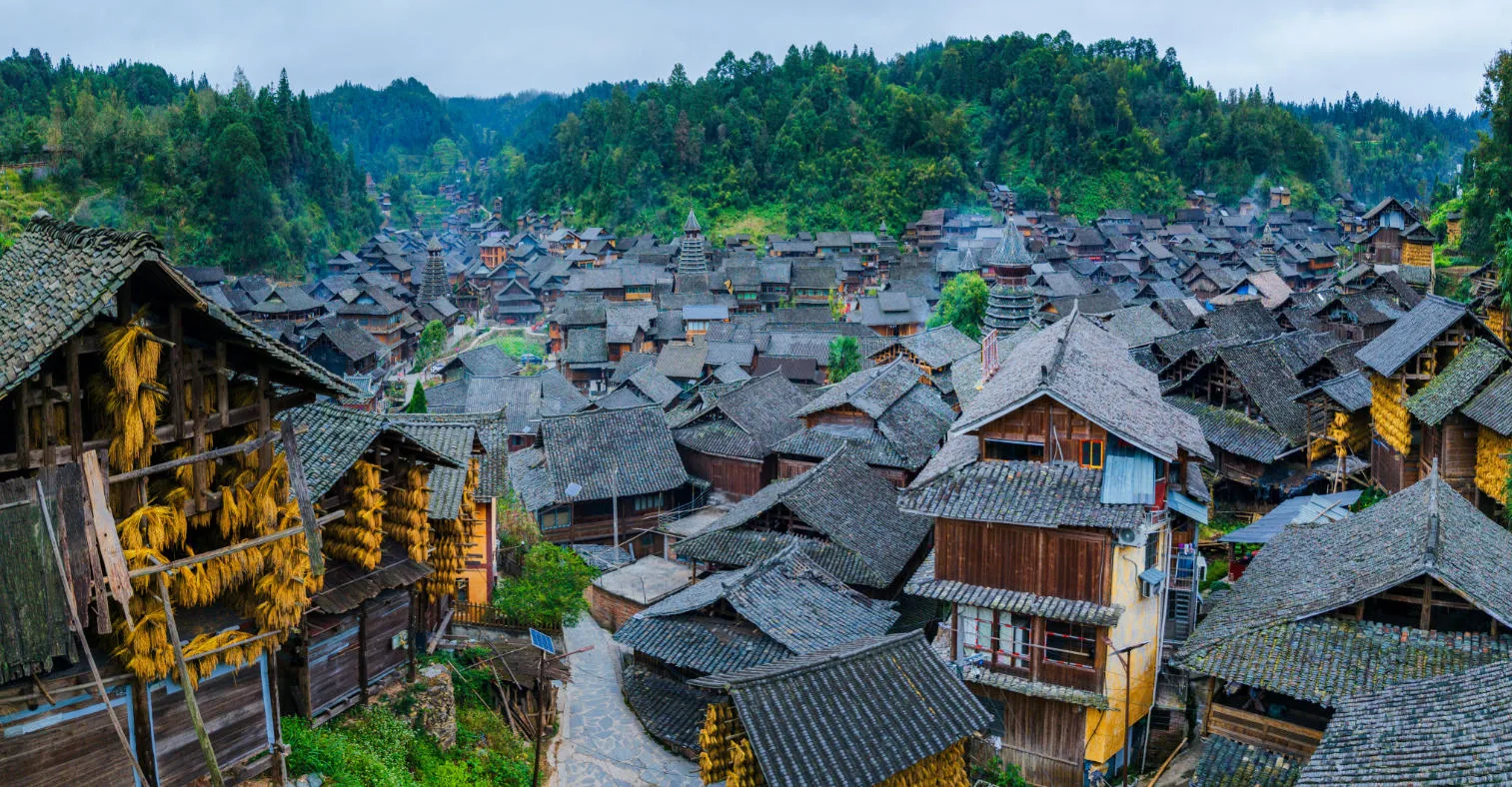
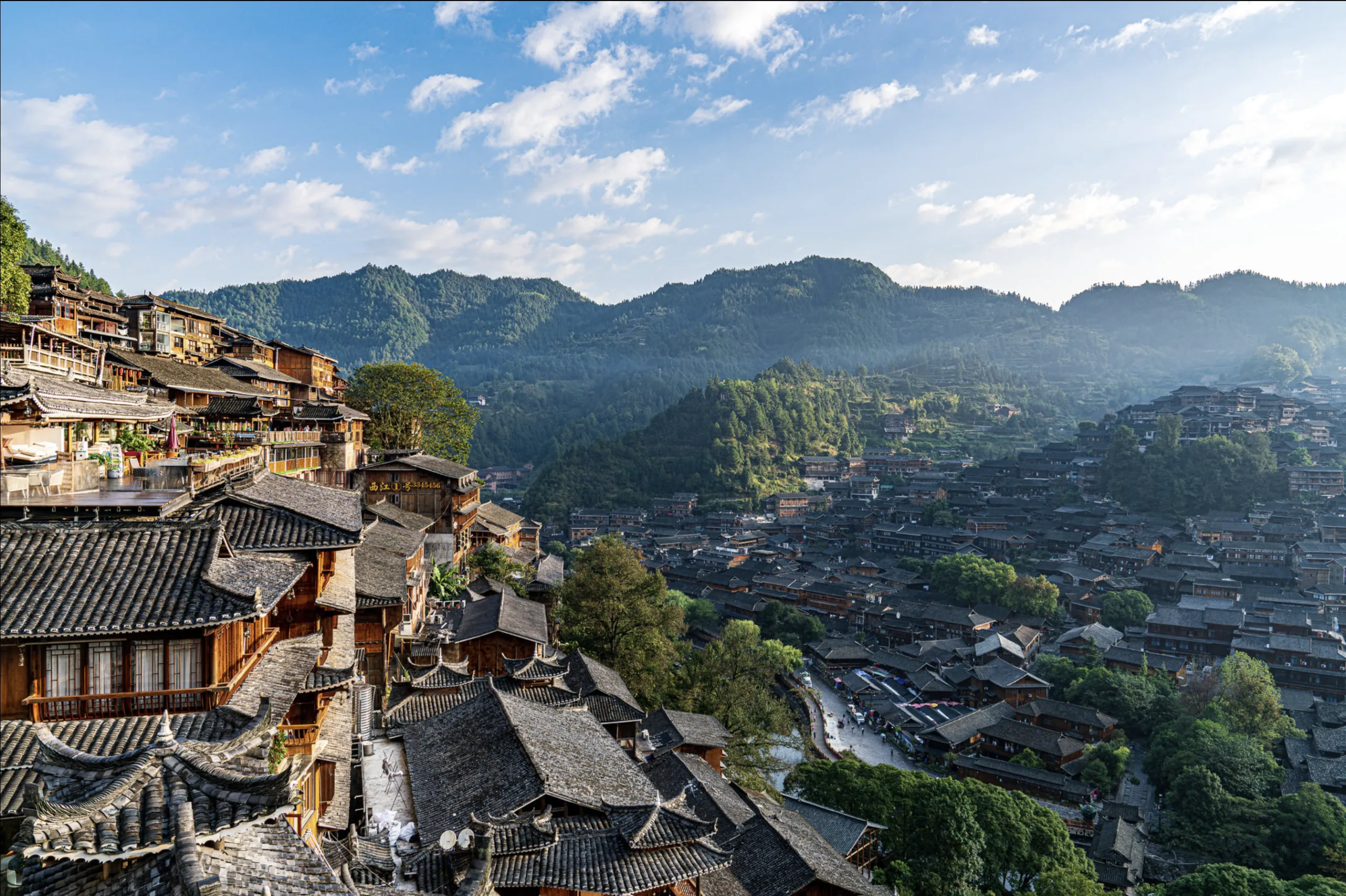
Huanggang Dong Village lies deep in the mountains of Liping County, Guizhou. Yet it sees very few visitors. Five drum towers rise among old wooden houses and traditional granaries, Dong grand songs are still sung as part of daily life, and in the evening, cooking smoke drifts slowly up through the valley.
If you prefer places that feel less commercial and want to experience the rhythms of everyday Dong life, Huanggang is well worth the detour. It is not far from Zhaoxing Dong Village, making the two easy to combine in one trip.
This guide covers the practical details of visiting Huanggang, from transportation and accommodation to village experiences, along with suggestions for planning a slower, more in-depth stay.
Why Visit Huanggang Dong Village? A Living Example of Dong Culture
Huanggang Dong Village is one of Guizhou’s better-preserved Dong settlements. Drum towers, wind and rain bridges, wooden stilt houses, and Dong grand songs are all part of the village, but what makes Huanggang special is that they remain woven into everyday life.
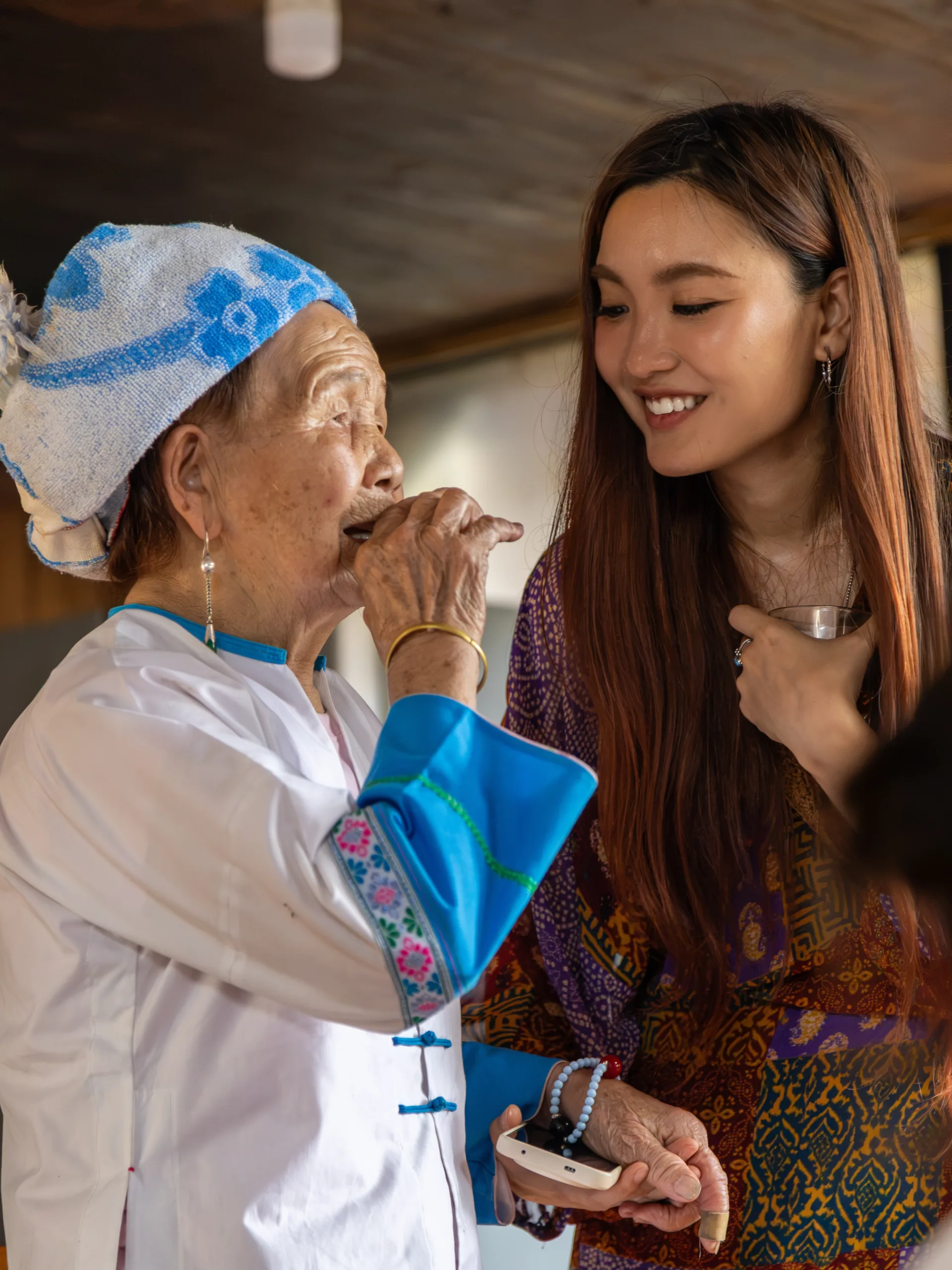
Elderly villagers gather around fires beneath the drum towers, families thresh and dry rice in open courtyards, children run along the stone lanes, and women embroider under the eaves. Somewhere nearby, you may hear a choir rehearsing Dong grand songs.
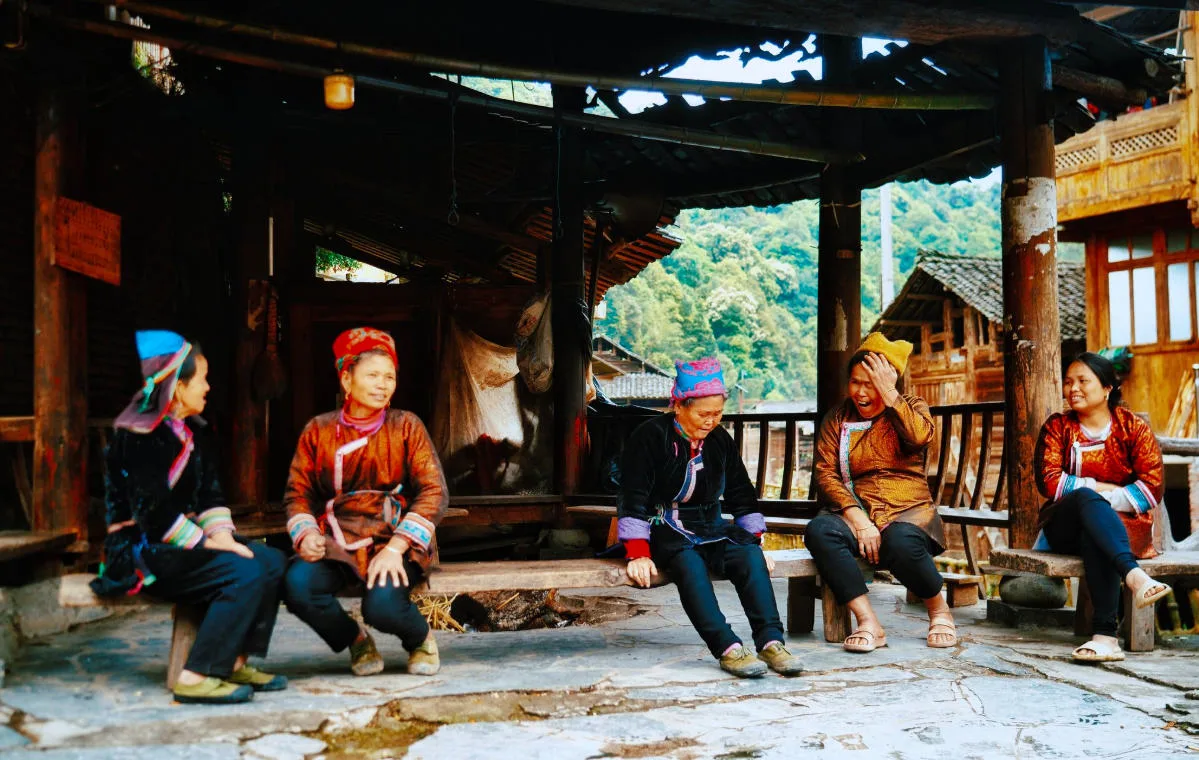
Huanggang has five drum towers, each serving as a shared gathering place for one of the village clans. Rice fields and bamboo forests surround the settlement, while stone paths connect its different neighborhoods. Villagers can still be seen working in the fields wearing the glossy indigo clothing characteristic of the Dong people.
Slow down as you walk through Huanggang, and these small scenes gradually come together into a quiet picture of rural life in Guizhou.
Best Time to Visit Huanggang Dong Village
Huanggang offers a different experience in every season. In spring, the rice terraces are filled with water, reflecting the sky and the outlines of the drum towers like mirrors. In summer, green rice fields ripple in the wind, while cicadas and frogs fill the paths with sound. The mountain air is cooler, though mosquitoes are common, so insect repellent is useful.
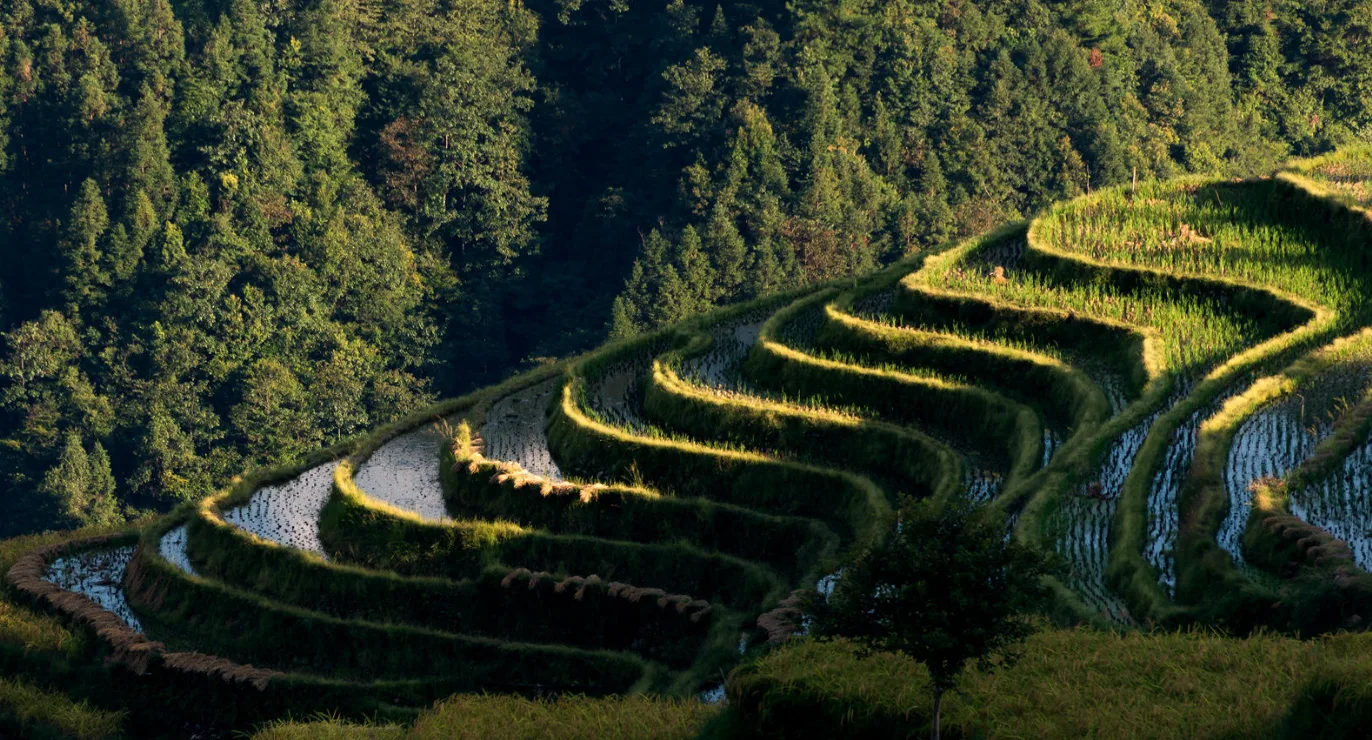
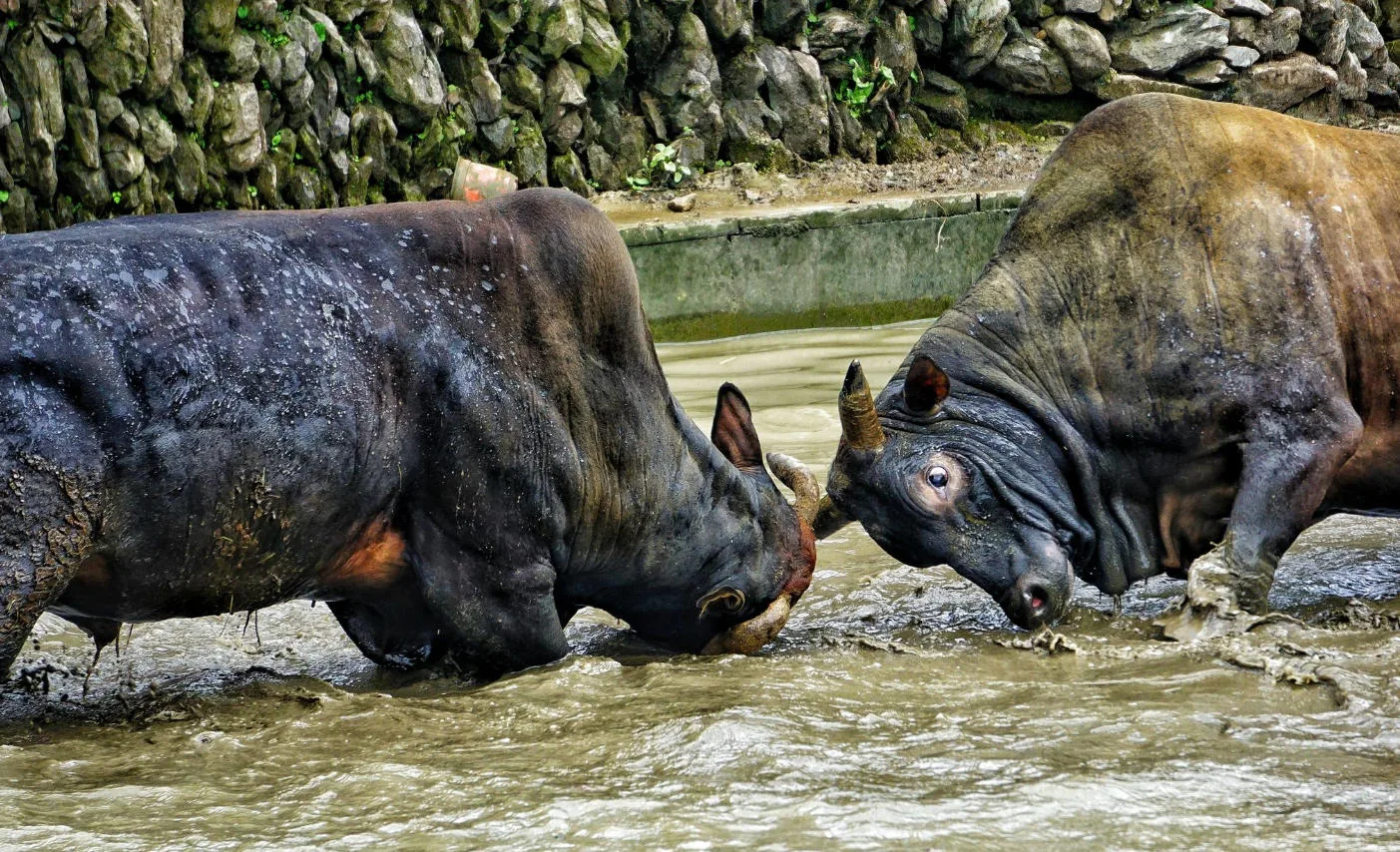
Autumn brings the harvest. Families help one another cut the rice, bundles of grain dry along the field edges, and the whole village becomes busy with work. Once the harvest is over, some families bring their water buffaloes to the riverbank for competitions, drawing crowds from across the village.
Winter is the quietest season for visitors, but choir rehearsals become more frequent as the New Year approaches. Each drum tower has its own singing group, and rehearsals may continue throughout the day.
Festivals:
Dong New Year
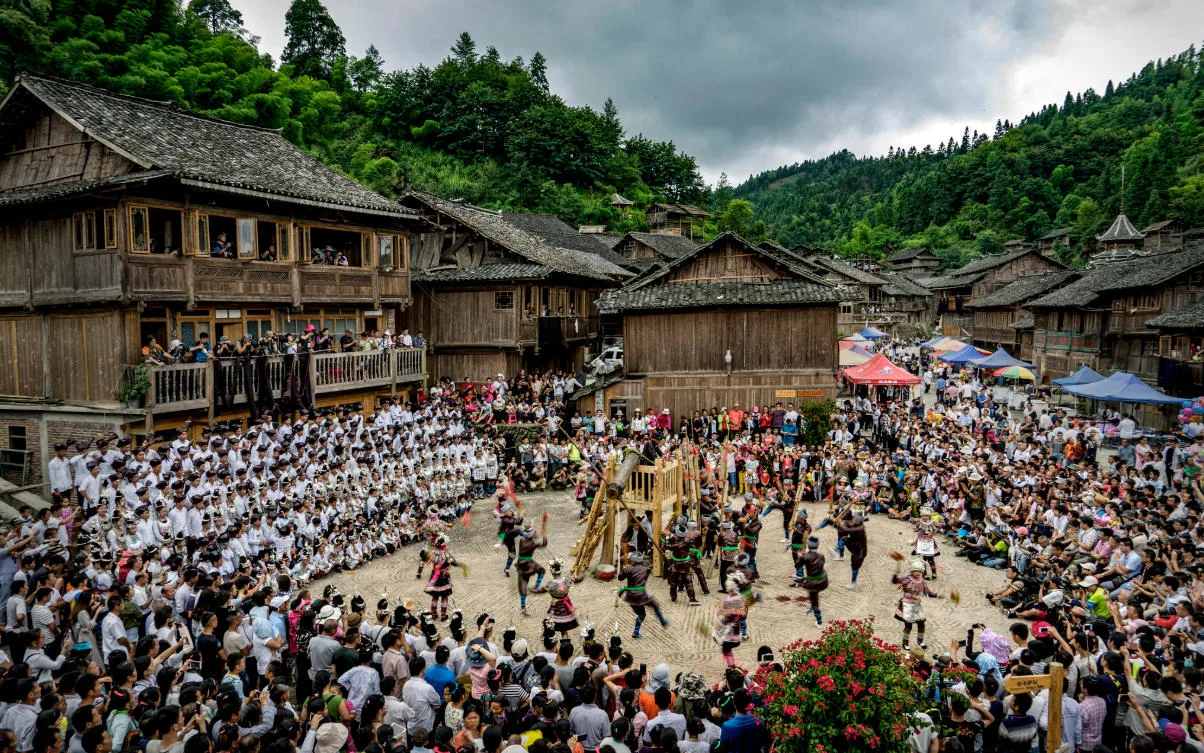
Usually held between late November and mid-December, Dong New Year is the largest annual celebration in the village. Welcome wine ceremonies, long-table feasts, communal singing and dancing, and Dong opera bring the whole community together in festive dress. Dates vary from village to village and are often decided locally, so it is best to confirm the schedule in advance with a guide or guesthouse.

Hantian Festival
One of Huanggang’s oldest and most distinctive rituals, the Hantian Festival is usually held around July. Village elders and ritual specialists lead ceremonies in front of the drum tower to pray for favorable weather and a good harvest. One of the most striking moments comes when the ritual leader climbs to the upper level of the drum tower and calls out toward the sky, reporting on the village and asking for blessings for the year ahead.
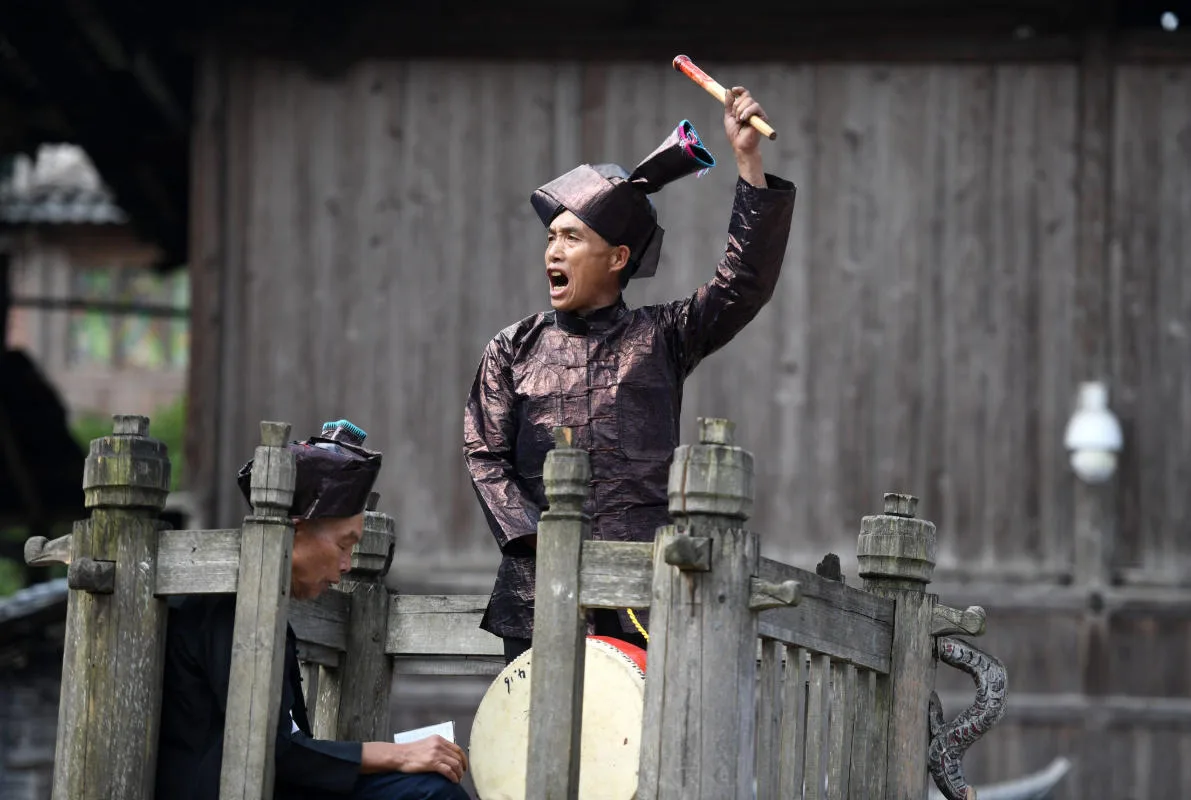
Dong grand songs, communal dancing, and long-table feasts are also part of the celebration. Arriving the day before is recommended, as some ceremonies begin early in the morning. Accommodation is limited and should be booked well in advance.
Buffalo Fighting Festival
Huanggang’s buffalo fighting events are usually held between August and October, with exact dates decided according to the farming calendar and weather. On the day of the event, owners from nearby villages bring carefully raised water buffaloes to compete on the riverbank. The animals meet horn to horn while villagers crowd along the banks to cheer. The winning buffalo may be honored locally as a “sacred bull,” reflecting the importance of buffaloes in Dong village life.
Other Tips:
Morning and late afternoon offer the best light for walking and photography around Huanggang’s lanes and drum towers. During the rainy season, especially from June to July, mountain roads can become muddy and some sections may be affected by landslides, so it is worth checking road conditions before setting out.
Speak to An Expert
Starting Your Jounrney to Huanggang Dong Village
Start designing your China journey with our destination experts.
Make An InquiryHow To Get To Huanggang Dong Village
Huanggang is not served by direct public transport, so the easiest way to reach the village is by private car from Zhaoxing, about a one-hour drive. You can also arrange a direct transfer from Congjiang Railway Station, which takes around 1.5 hours.
The mountain roads are narrow and winding, and can become muddy or slippery during the rainy season. For first-time international visitors traveling through Guizhou’s mountain areas, a local driver who knows the roads well is a good choice and also gives you more flexibility to stop along the way.
Where to Stay: Huanggang or Zhaoxing?
If you want to experience Huanggang properly, staying overnight in the village is well worth considering.
In recent years, several guesthouses have been converted from old wooden granaries, keeping the traditional Dong-style exteriors while adding modern comforts inside. Some rooms have private bathrooms. Once day visitors leave in the evening, the village becomes remarkably quiet, with little more than insects outside and singing drifting from a distant drum tower. In the morning, mist rises slowly from the valley, leaving the drum towers half hidden in the haze — a side of Huanggang that is difficult to experience on a day trip from Zhaoxing.
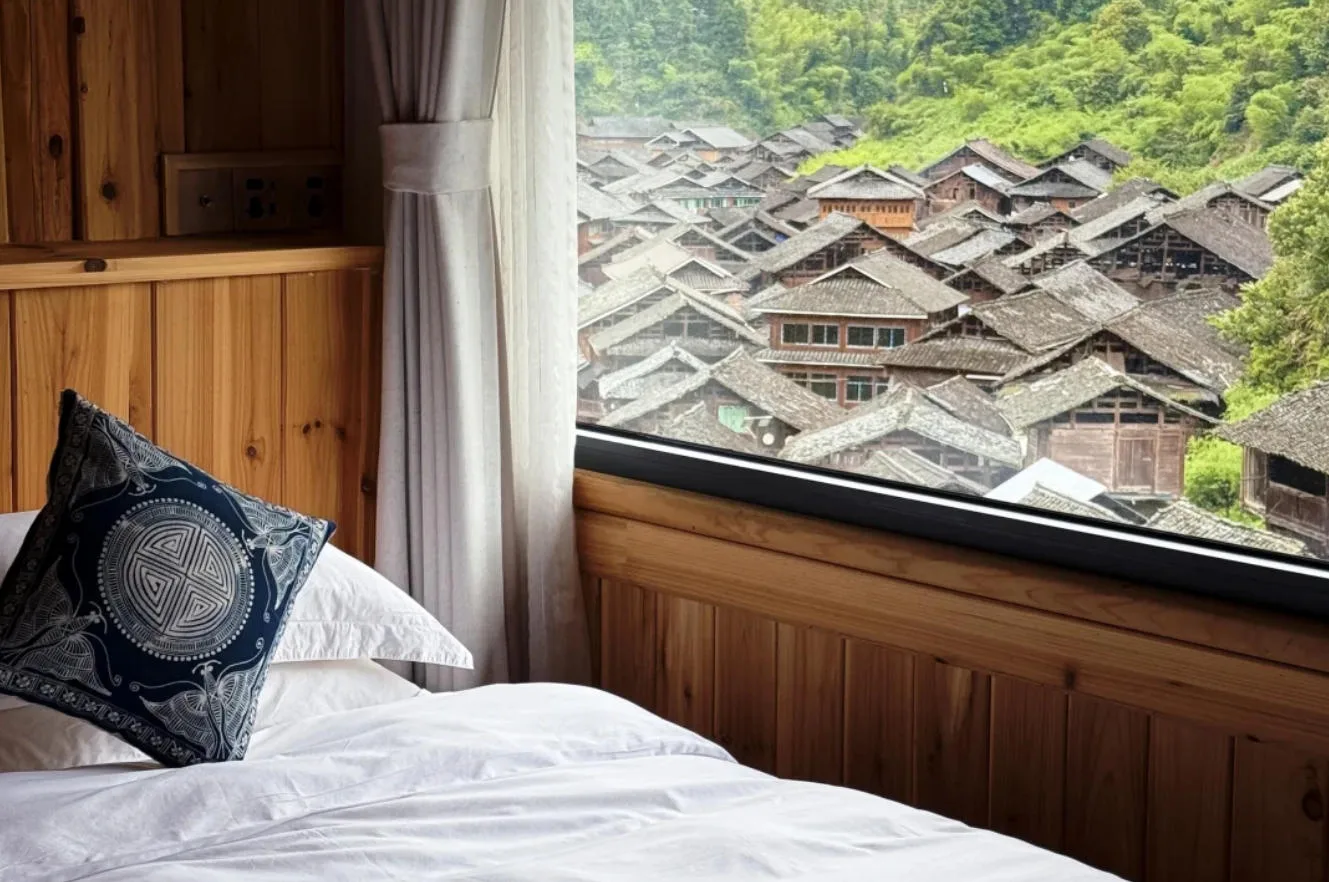
If comfort and convenience are more important, or you need easy access to ATMs, pharmacies, and other services, staying in Zhaoxing Dong Village is the better option. Zhaoxing has a much wider choice of accommodation and everyday facilities, while Huanggang is still only about an hour away by car.
Exploring Huanggang Village: Walking Routes and Highlights
Once you enter Huanggang, it is useful to take a photo of the village map. The settlement is compact and easy to explore, and once you have walked the main road running through the center, you will know what to expect.
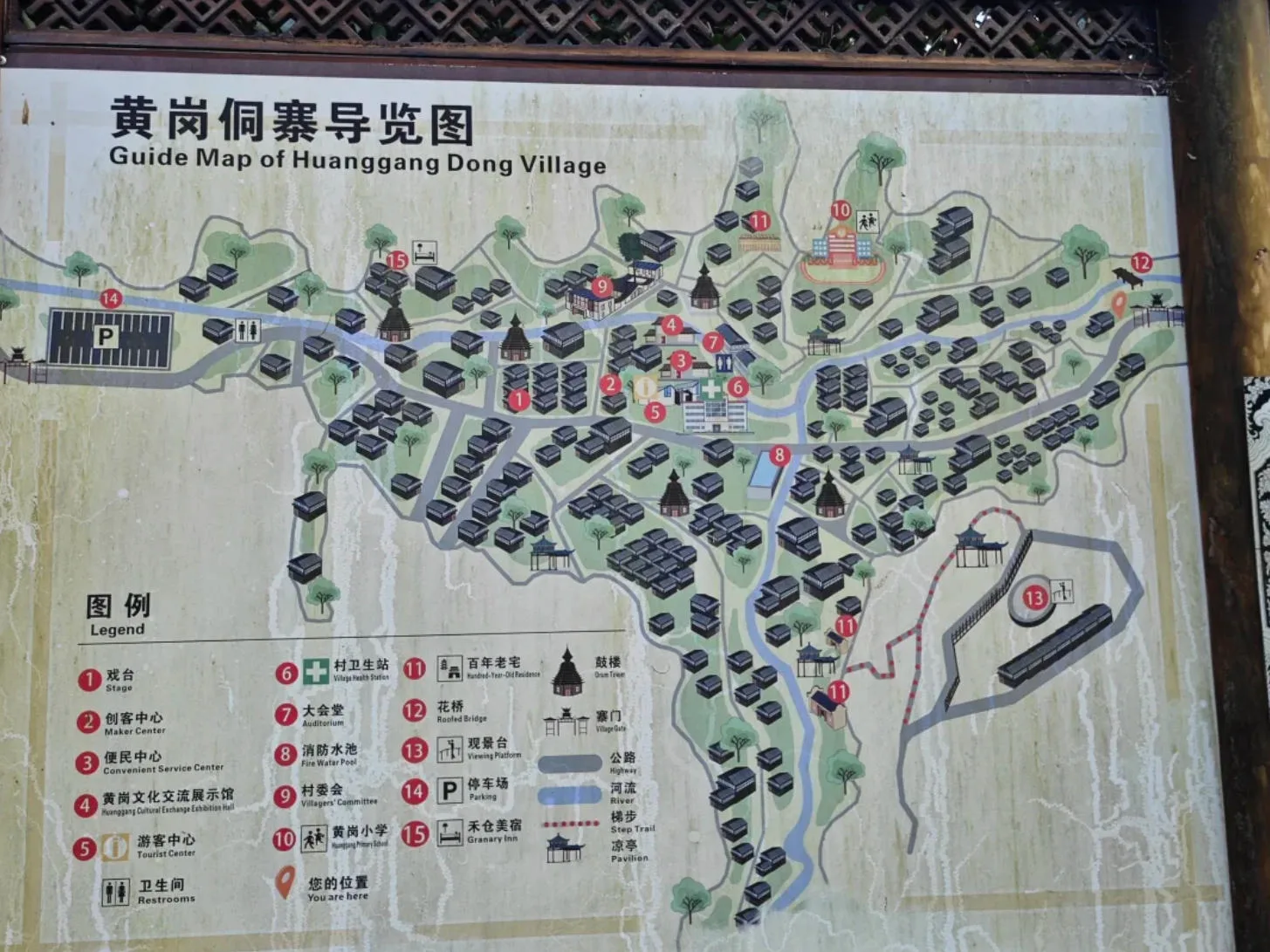
Most basic services are found along this road, while smaller lanes lead between Dong family homes. Huanggang is located in a small valley in the wider Qiandongnan Miao and Dong Autonomous Prefecture, and a short ride from larger towns brings you into a place that still feels largely untouched.
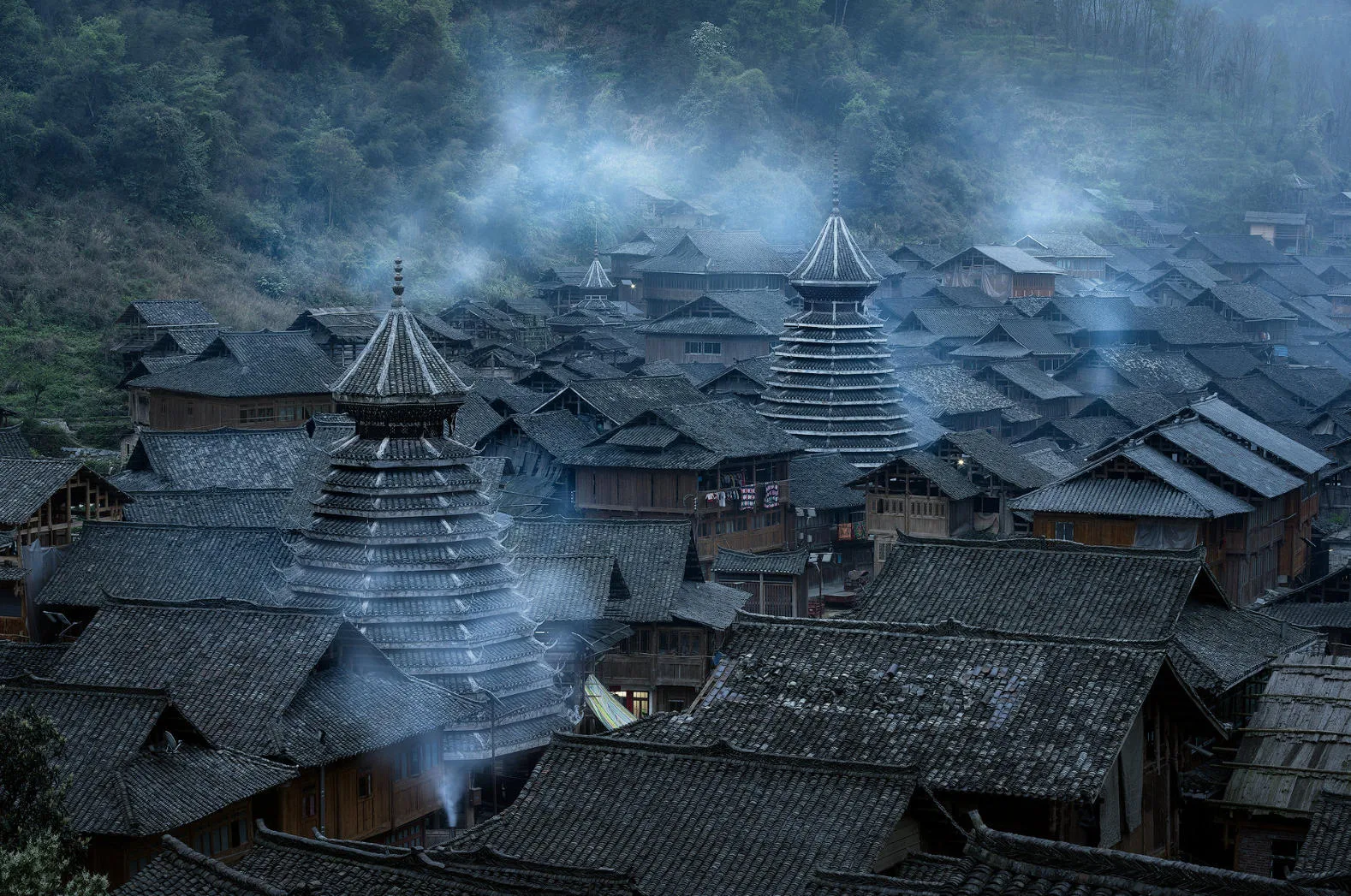
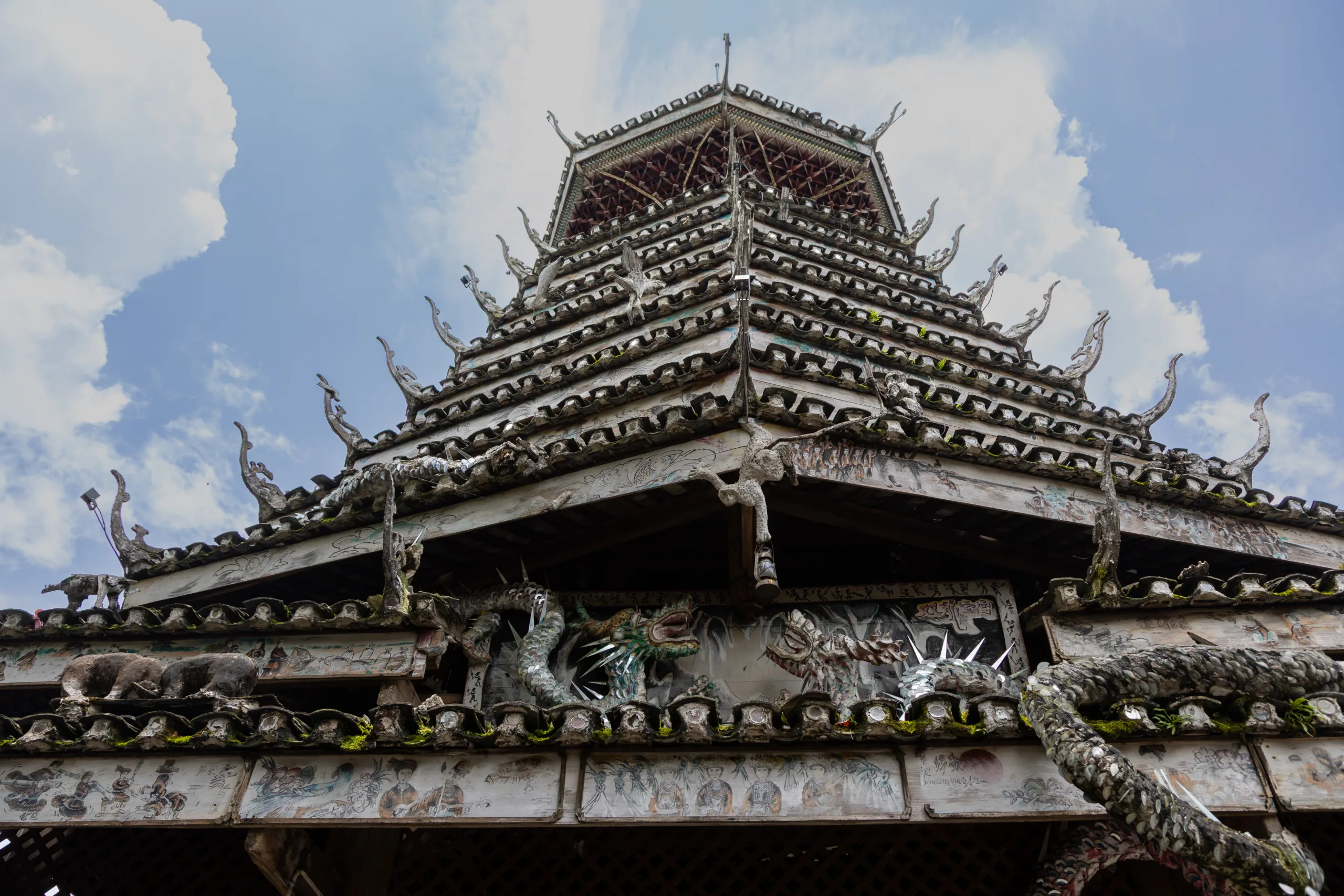
A good route is to start from the village entrance and follow the main road while looking for Huanggang’s five drum towers. Each has its own story. One keeps an old wooden drum believed to hold the beliefs of generations of Dong ancestors. Another was destroyed by fire around fifty years ago and later rebuilt by a Zhangmoshi, a Dong master builder who recreated the structure without architectural drawings, relying instead on experience and memory; its layered joinery and carved details are especially impressive, and in some villages these towers can rise as high as 13 stories. One drum tower is used for choir rehearsals and was also a place where young people traditionally met through love songs. Another is used for festival banquets during Dong festivals, while one has become a favorite gathering place for the village elders and local students.
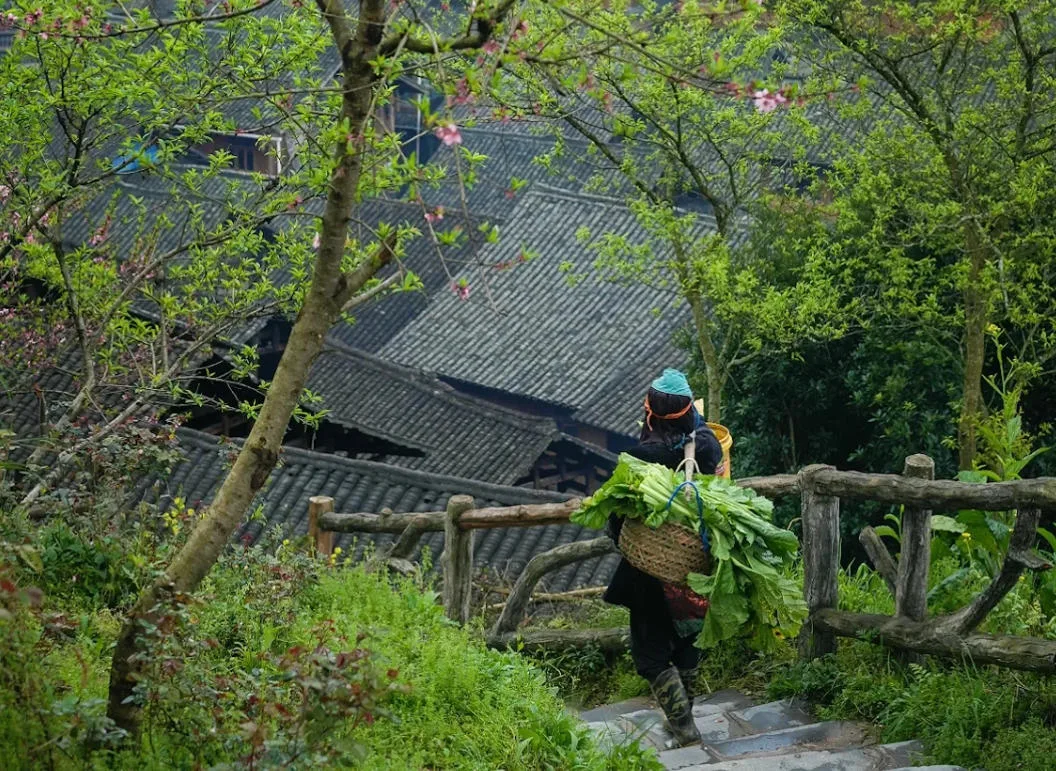
Another rewarding way to explore Huanggang is to follow its water channels. Dong villages developed closely around water, and these paths take you past family courtyards and everyday scenes: water buffaloes resting in ponds with only their heads above the surface, ducks crossing lotus ponds, villagers returning from the fields with shoulder poles after daily chores, and children running out to meet them. The fields also reflect local customs through a traditional Rice-Fish-Duck agroecosystem that supports sustainable farming practices. Courtyards are bright with roses, canna lilies, and hibiscus, while colorful quilts and woven fabrics dry in the sun.
Modern conveniences are limited in Huanggang, yet a quiet sense of contentment can be felt throughout the village — in the care people give to their homes, in the way neighbors gather, and in the preserved Dong minority lifestyle that still shapes everyday life. That same joy in life finds its voice in Dong grand songs, where it is sung together, felt together, and passed from one generation to the next.
Things to Do in Huanggang Dong Village
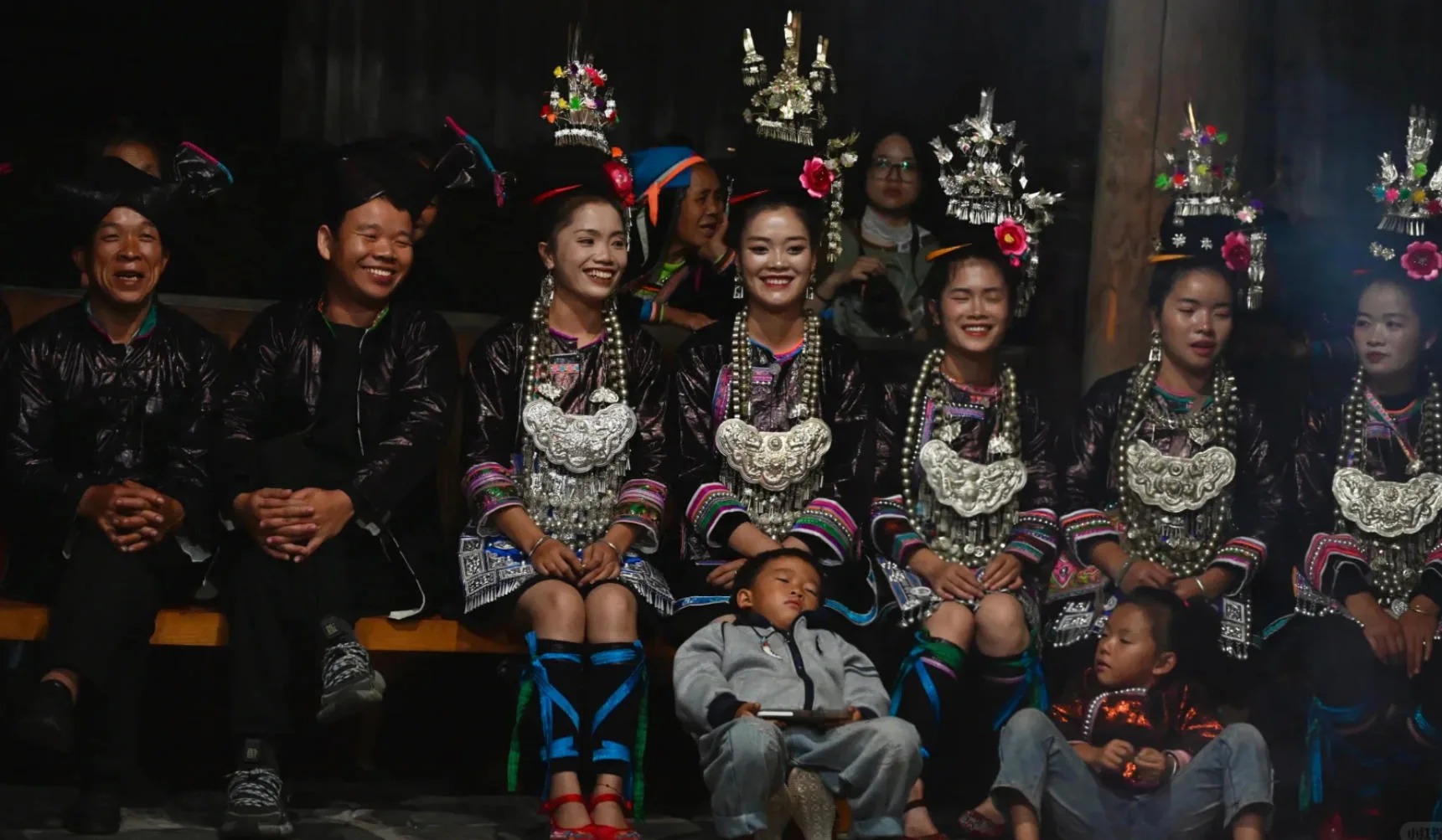
If the timing is right, you may have the chance to hear a performance of Dong grand songs inside one of Huanggang’s drum towers. In Huanggang Dong Village, the Male Voice Grand Song is a polyphonic a cappella tradition unique to the community. These songs are not simply music for performance or display, and the tradition is also recognized as UNESCO Intangible Cultural Heritage. They are part of daily life, passed down through the community for generations. People sing while working, sing in courtship, and sing during festivals. They sing of mountains and rivers, flowers and birds, old legends, and the history of their ancestors’ migration. When villagers of different ages sit together and raise their voices in unaccompanied harmony, expressing their feelings for nature, for life, and for one another, many travelers find themselves deeply moved. There is something profoundly touching about these unpolished voices rising from the valley, carrying a quiet love for the land and for everyday life.
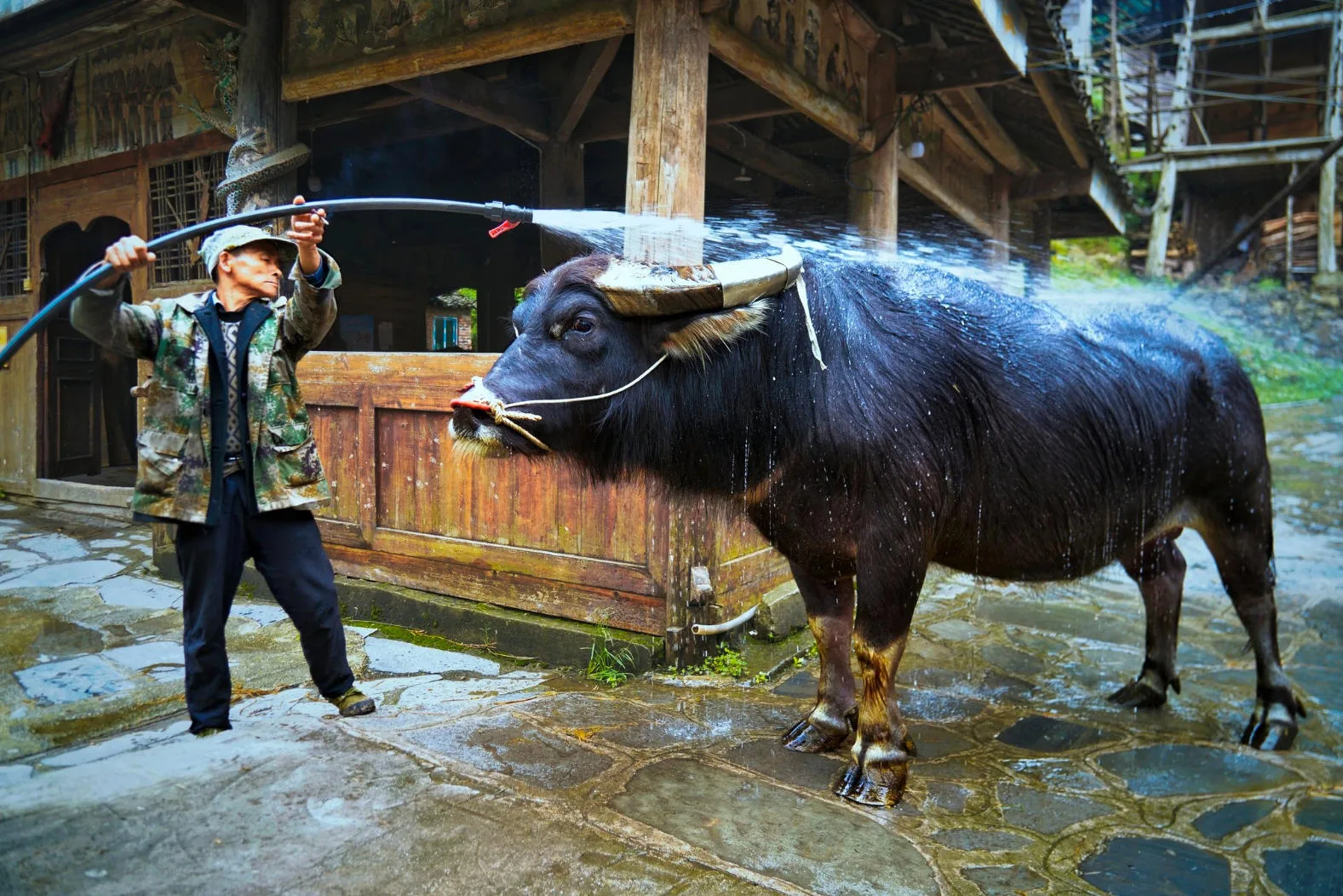
Beyond listening to Dong grand songs, you can also walk through the village, visit its five old drum towers, and look for the “sacred buffalo” treasured by the community. These details offer a closer understanding of the Dong relationship with nature and with village life.
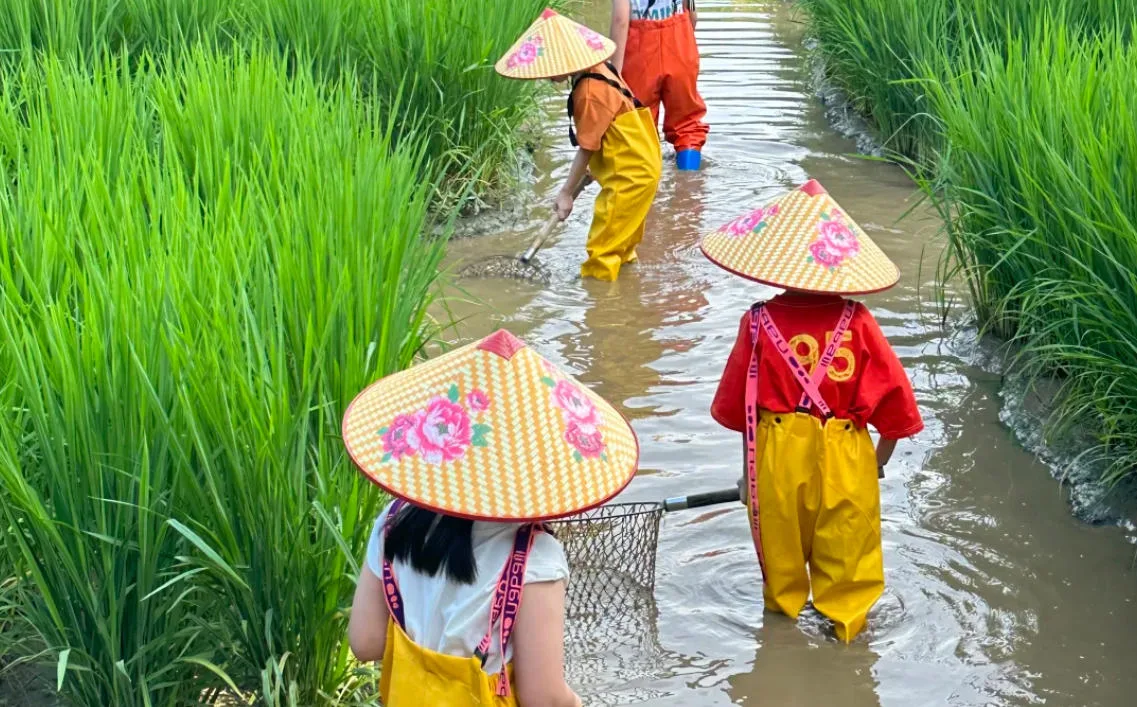
For travelers who want a more immersive experience, we can also arrange activities that bring you closer to everyday life in the village. You might visit a local family to watch elders spinning and weaving cloth, and learn how Dong clothing is made. Or you may join simple farm activities such as cutting grass to feed cattle, catching fish in the rice fields, or helping with the harvest, which can also reveal the customs and beliefs that shape household and seasonal work. Through these ordinary moments, it becomes much easier to understand the quiet charm of Huanggang as a living community, not just a place to visit.
Speak to An Expert
Explore Huanggang Dong Village with Eastogo
Start designing your China journey with our destination experts.
Make An InquiryPractical Tips for Visiting Huanggang Dong Village
Huanggang is a mountain village, so a little preparation will make your visit more comfortable:
- Carry some cash, as small shops and village businesses may not accept international bank cards.
- Wear comfortable shoes with good grip, as many paths are paved with stone and include slopes.
- Bring insect repellent in summer, as mosquitoes can be common in Guizhou’s mountain areas.
- Download an offline map in advance, as mobile signal may be unstable in some remote areas.
Huanggang is still a living village where people go about their daily lives, rather than a dedicated tourist attraction, so expect limited tourist facilities and a quieter, more local experience. Ask for permission before entering private homes, and always respect residents’ wishes when taking photographs.
Visiting Huanggang from Zhaoxing: Suggested Itineraries
If you are short on time, half a day is enough for a first visit to Huanggang. Leave Zhaoxing in the morning for the short 30 km ride to the village, walk through the settlement, and enjoy a home-style Dong lunch with a local family before returning to Zhaoxing or continuing to Congjiang Railway Station.
A full-day visit allows for a slower experience. Start from Zhaoxing or Congjiang in the morning, and after you have walked in from the main road or village entrance, explore the compact village and have lunch locally. In the afternoon, walk through the rice fields or join villagers in catching fish from the paddies. Around sunset, listen to Dong grand song rehearsals near the drum towers before either staying overnight in Huanggang or returning to Zhaoxing.
For photographers, an early start is highly recommended. Leaving Zhaoxing between 6:00 and 7:00 allows you to arrive while the morning mist still lingers, when the village can feel especially untouched. The soft light creates beautiful scenes of rice terraces and drum towers appearing through the haze.
You can experience Huanggang as part of our 8-Day Guizhou Journey.
If you enjoy nature and hiking, discover more through Exploring Guizhou’s mountains, hiking trails and sacred peaks.
If you have a longer travel schedule and would like to combine Guizhou with Yunnan, explore our 14-Day Guizhou & Yunnan Journey.
Responsible Travel For Guizhou Province Dong Villages
What makes Huanggang special is that it remains a living community, not simply a destination for visitors. When traveling here, a few thoughtful choices can help keep it that way:
- Choose experiences led by local guides or village families.
- When buying handicrafts, purchase directly from the people who make them whenever possible.
- Ask permission before entering private homes or photographing residents.
- In smaller villages that receive very few visitors, avoid publicly sharing overly specific location details that could bring unwanted attention to residential areas.
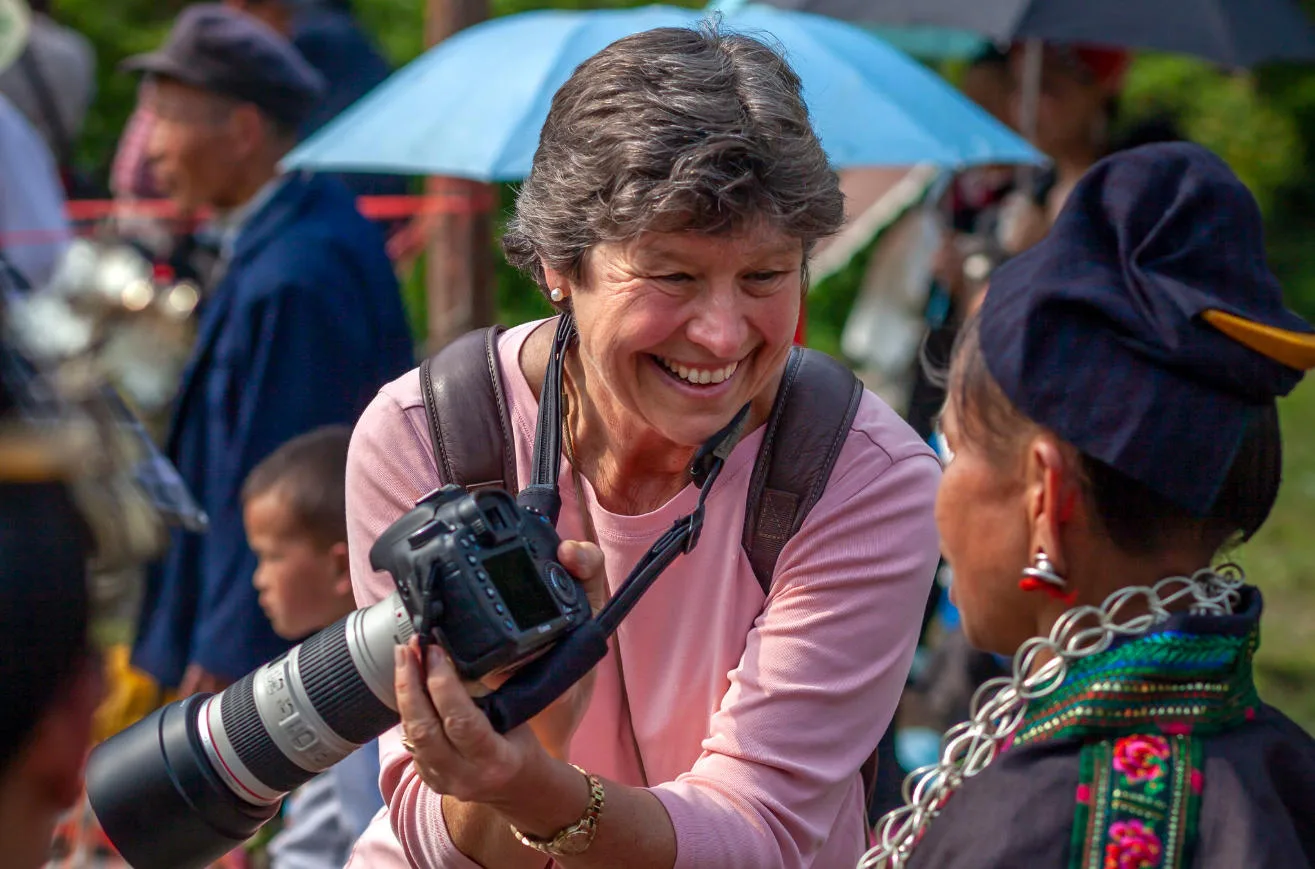
Respecting the community is not only about preserving Dong traditions. It also allows travel to remain a genuine exchange between visitors and the people who live here.
How Eastogo Can Help You Visit Huanggang Dong Village
Huanggang is not a place to rush through. Experiencing Dong culture here takes thoughtful planning, enough time, and opportunities to connect with the people who call the village home.
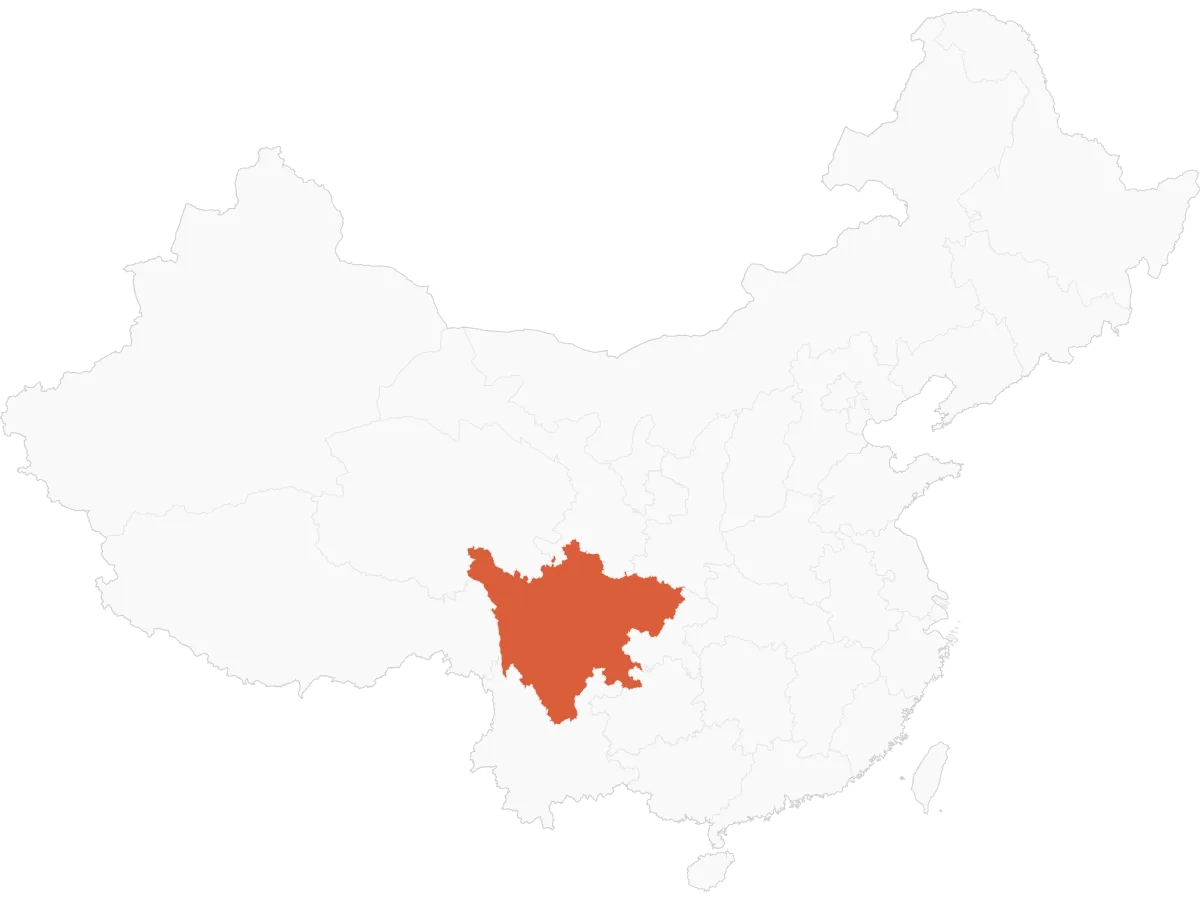
Eastogo specializes in creating in-depth private journeys across southwest and southern China, including Guizhou、Yunnan、Guangxi、Hunan、and Western Sichuan. We help travelers go beyond the better-known sights to discover the cultures, landscapes, and communities that give each region its character. We can also design a Private Guizhou Tour around what sparks your curiosity.
Through long-term relationships with local drivers, guides, and communities, we can arrange village visits, cultural experiences, and more meaningful exchanges with local people. These connections open the door to parts of everyday life that most visitors would otherwise miss, allowing travel to become more than sightseeing — it becomes a way to better understand how people live.
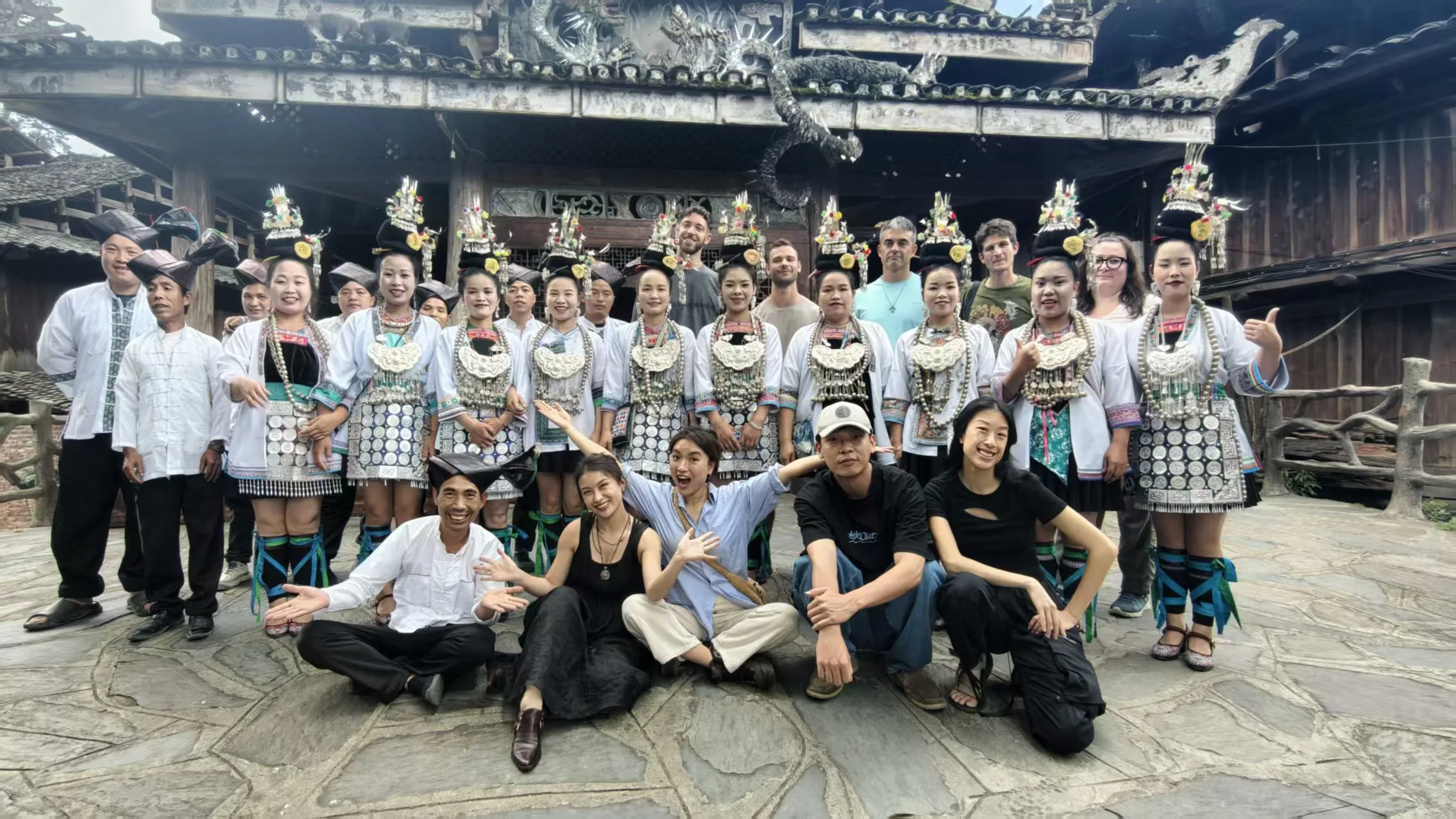
Each journey is designed around your interests, pace, and available time, while also considering transportation, weather, and the realities of traveling through mountainous regions. Whether you choose self-guided China tours or private & custom China tours, we help make your journey through Guizhou more comfortable, well planned, and rewarding.
For more information, read our Guizhou Travel Guide: A Complete Guide to Culture, Nature and Hidden Villages.
If you are curious to explore Guizhou beyond the familiar routes, we would be happy to help you create a journey shaped around your interests and the way you want to experience the region.