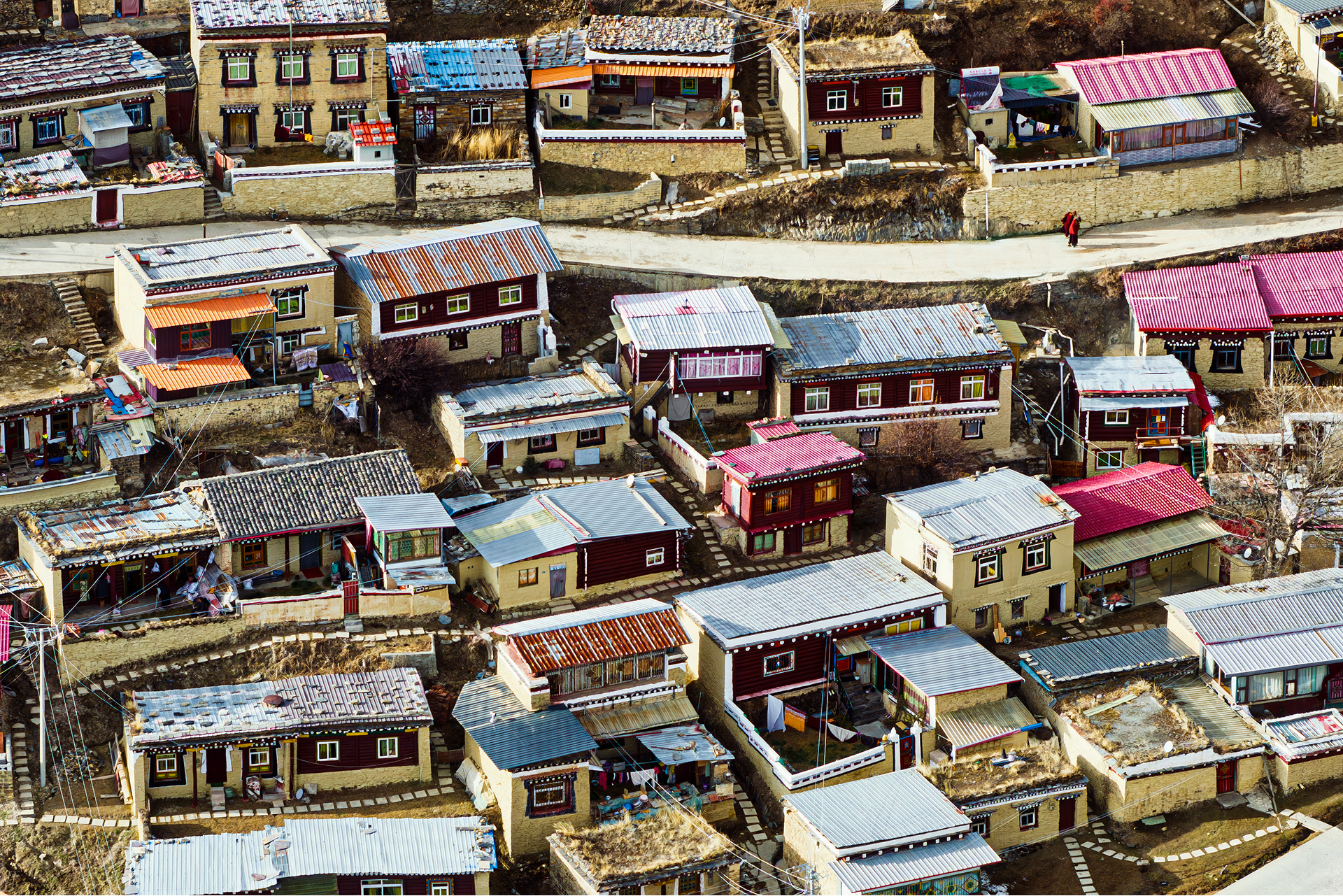
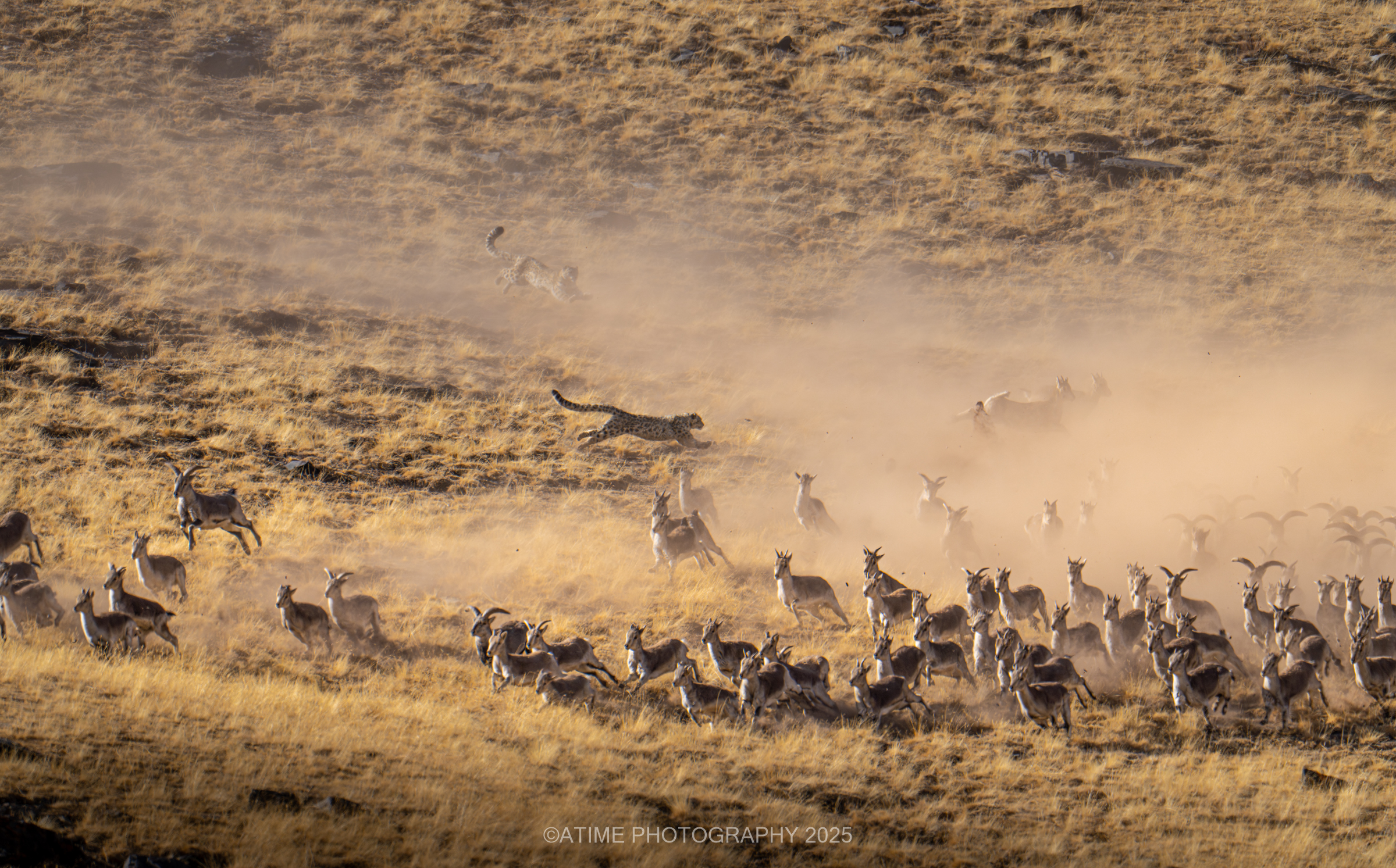
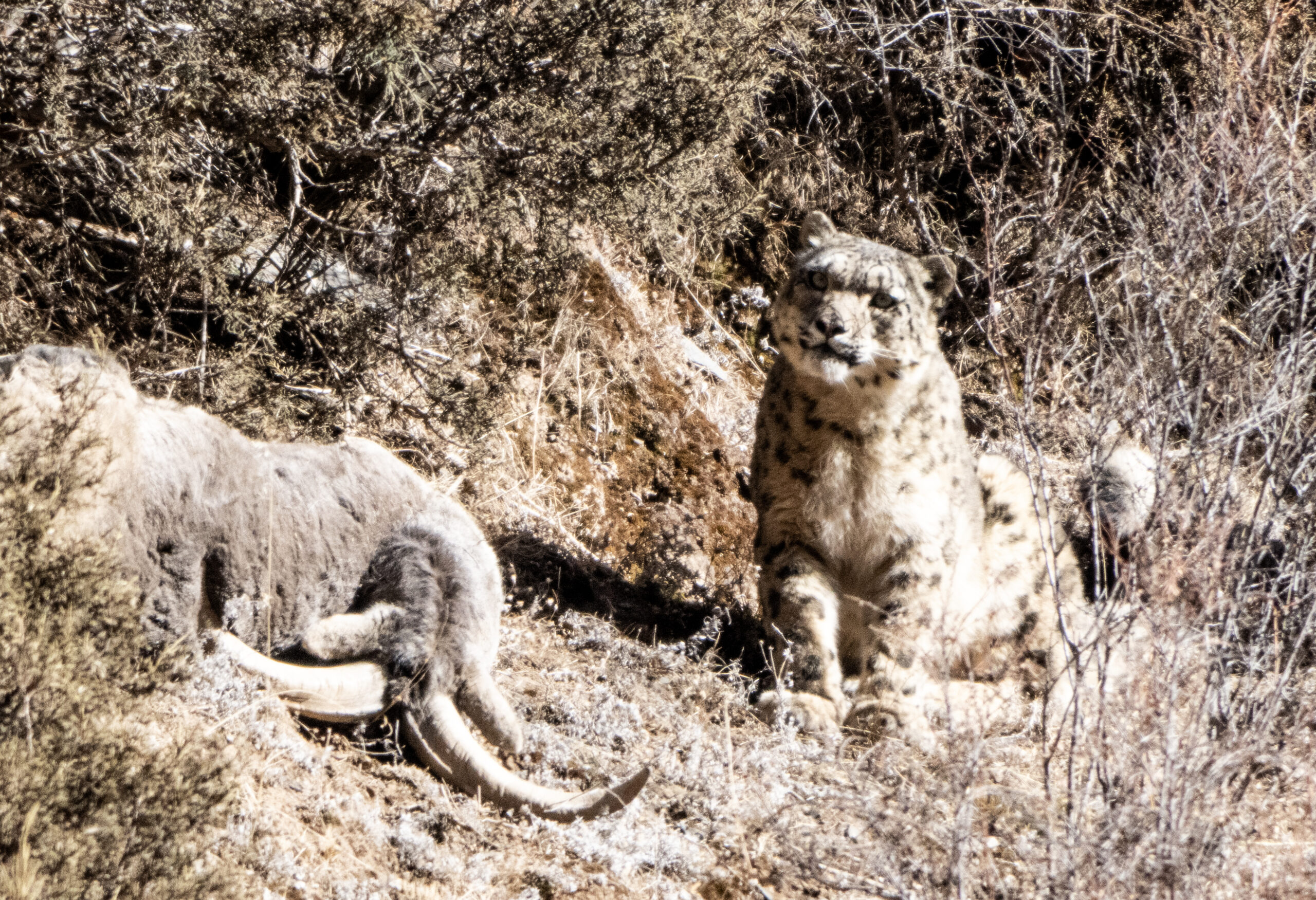
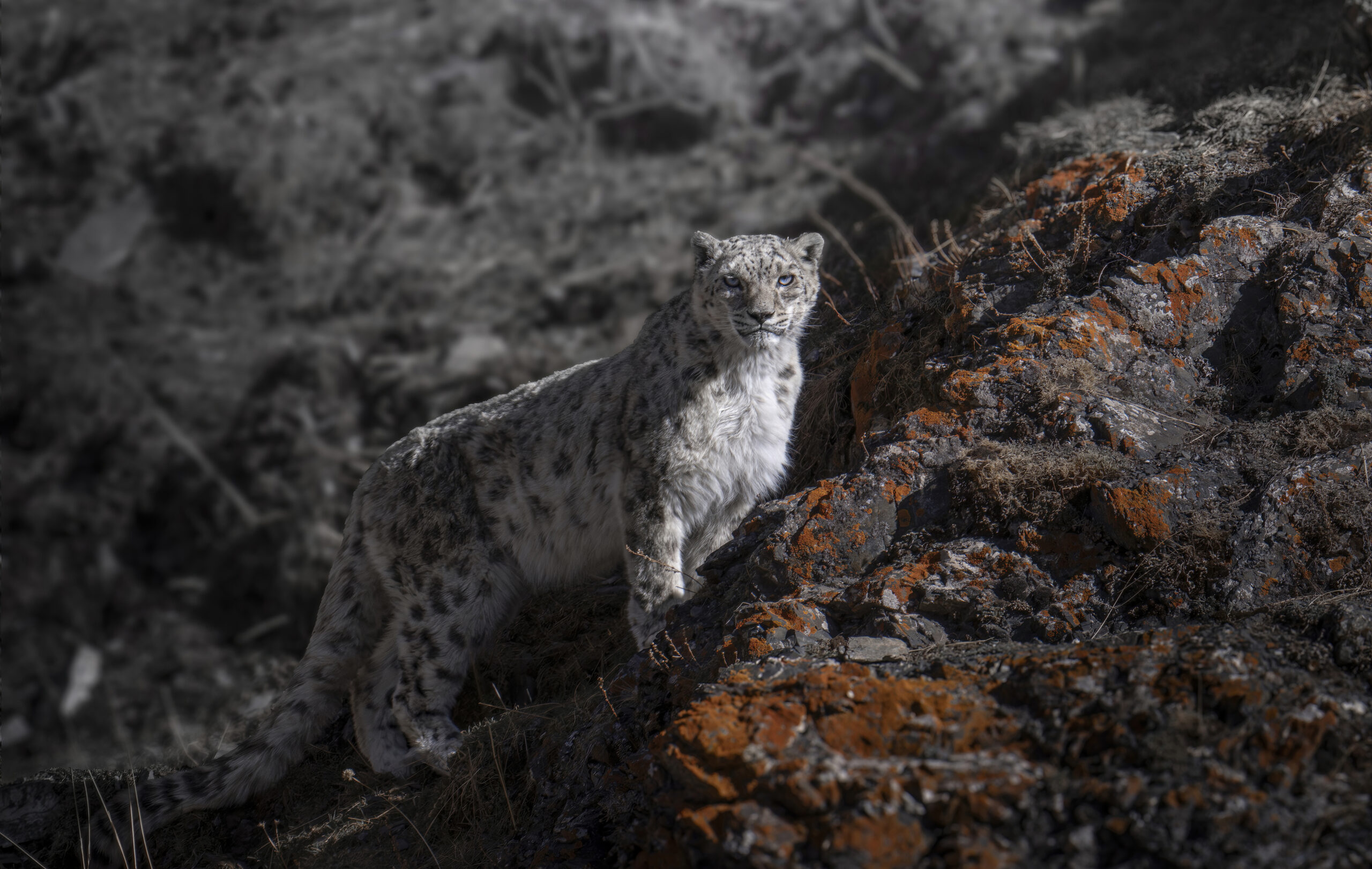
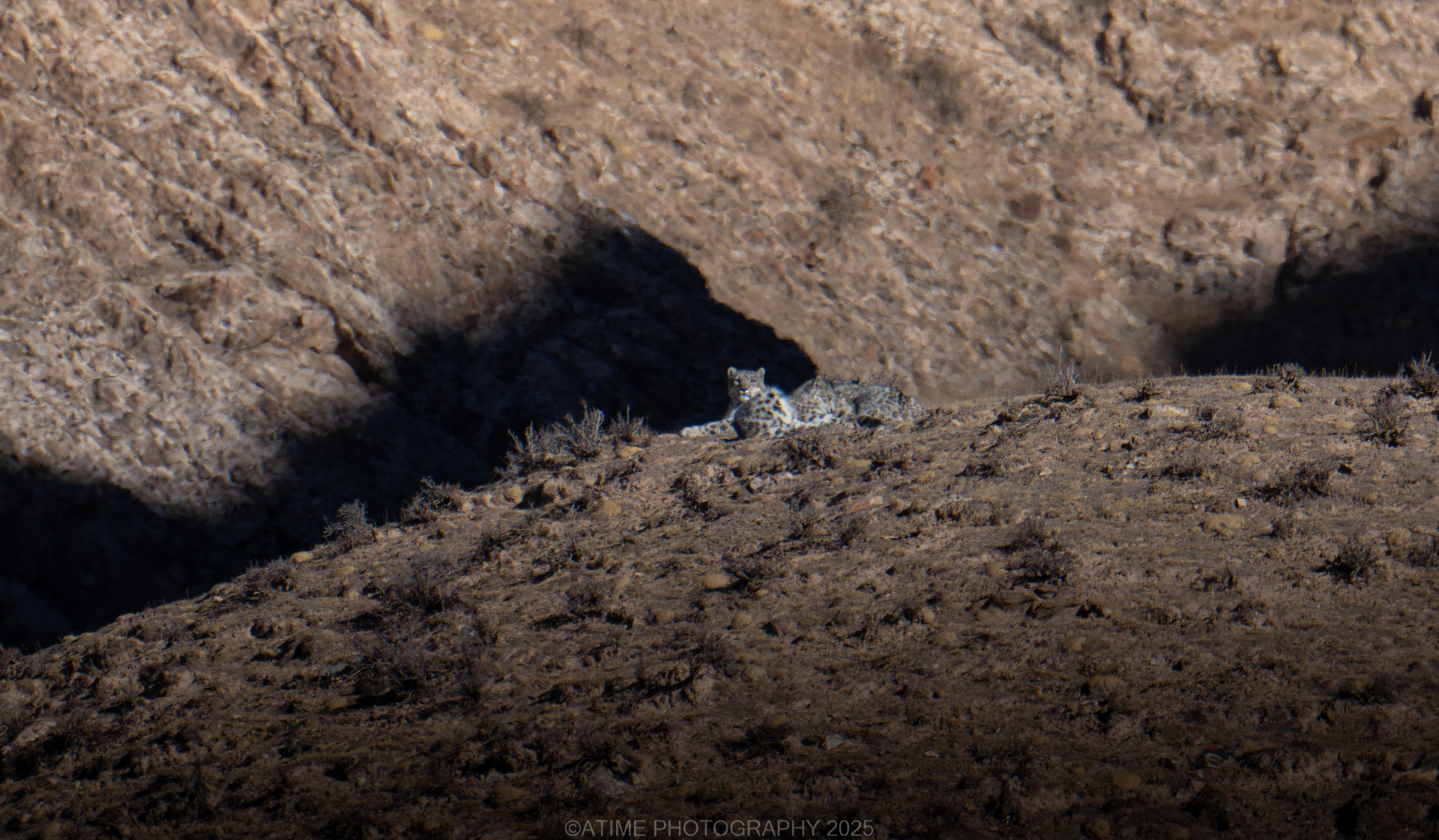
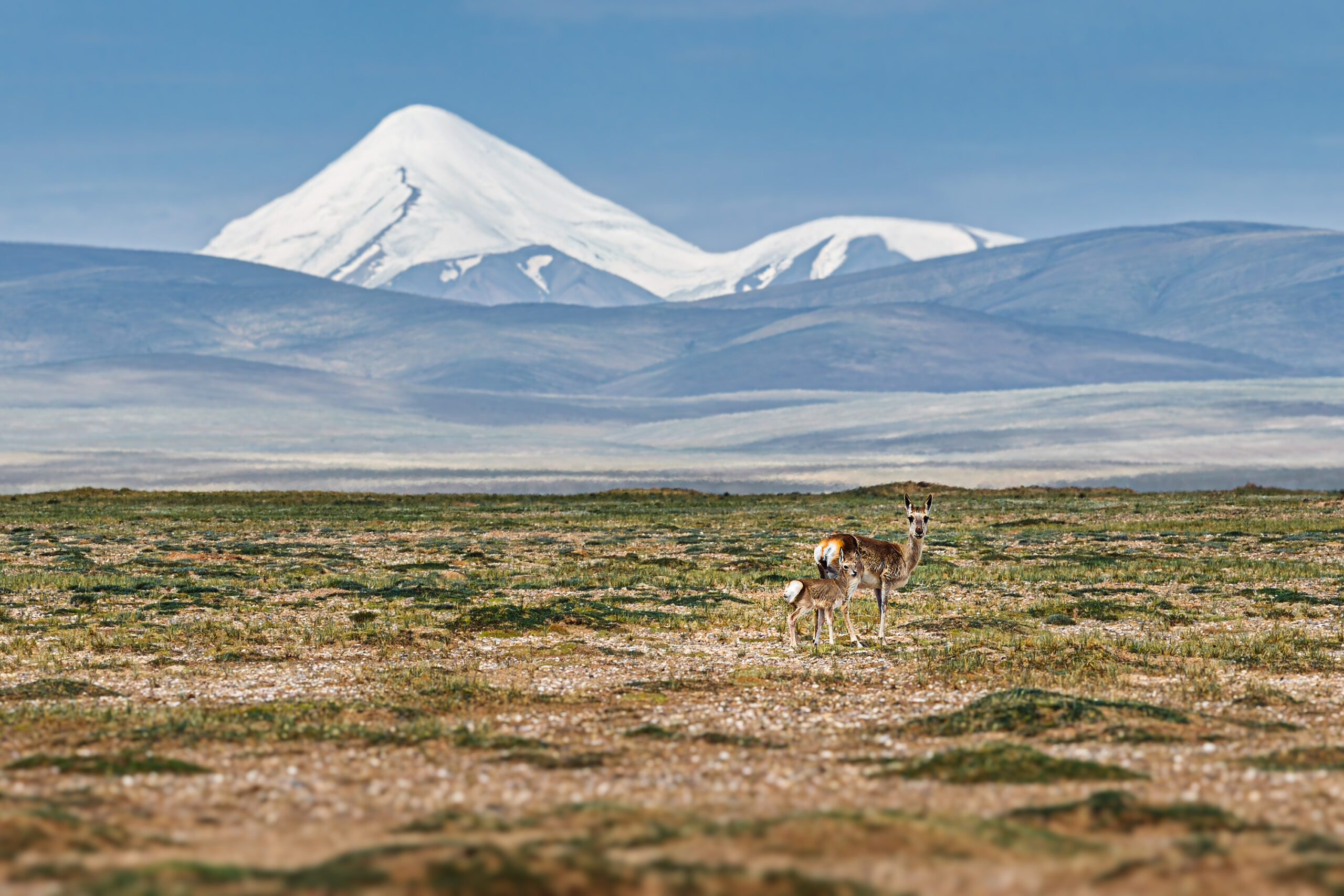
From wild blue sheep, Siberian ibex, and argali to domestic yaks and goats, ungulates make up much of the snow leopard’s diet. These animals survive in some of the harshest high-altitude landscapes on Earth—terrain that can seem almost uninhabitable to humans.
Yet snow leopards are built for exactly this world. How does a predator adapted to steep cliffs and thin air manage to catch prey that are themselves remarkably agile climbers? And beyond the hunt itself, how does this predator–prey relationship shape mountain ecosystems, local communities, and the wider world?
This guide explores the snow leopard’s diet, hunting strategies, and the food web linking this elusive big cat to the landscapes and communities around it.
What Do Snow Leopards Eat?
Snow leopards feed primarily on wild ungulates, but the species they rely on varies considerably across their range. In areas where snow leopard habitat overlaps with pastoral land, domestic yaks, goats, and sheep can also become part of their diet, creating a long-standing source of human-wildlife conflict.
Researchers study snow leopard feeding ecology through a combination of direct observation, information from local communities, analysis of prey remains in stomach contents or scat, and camera-trap monitoring.[1]
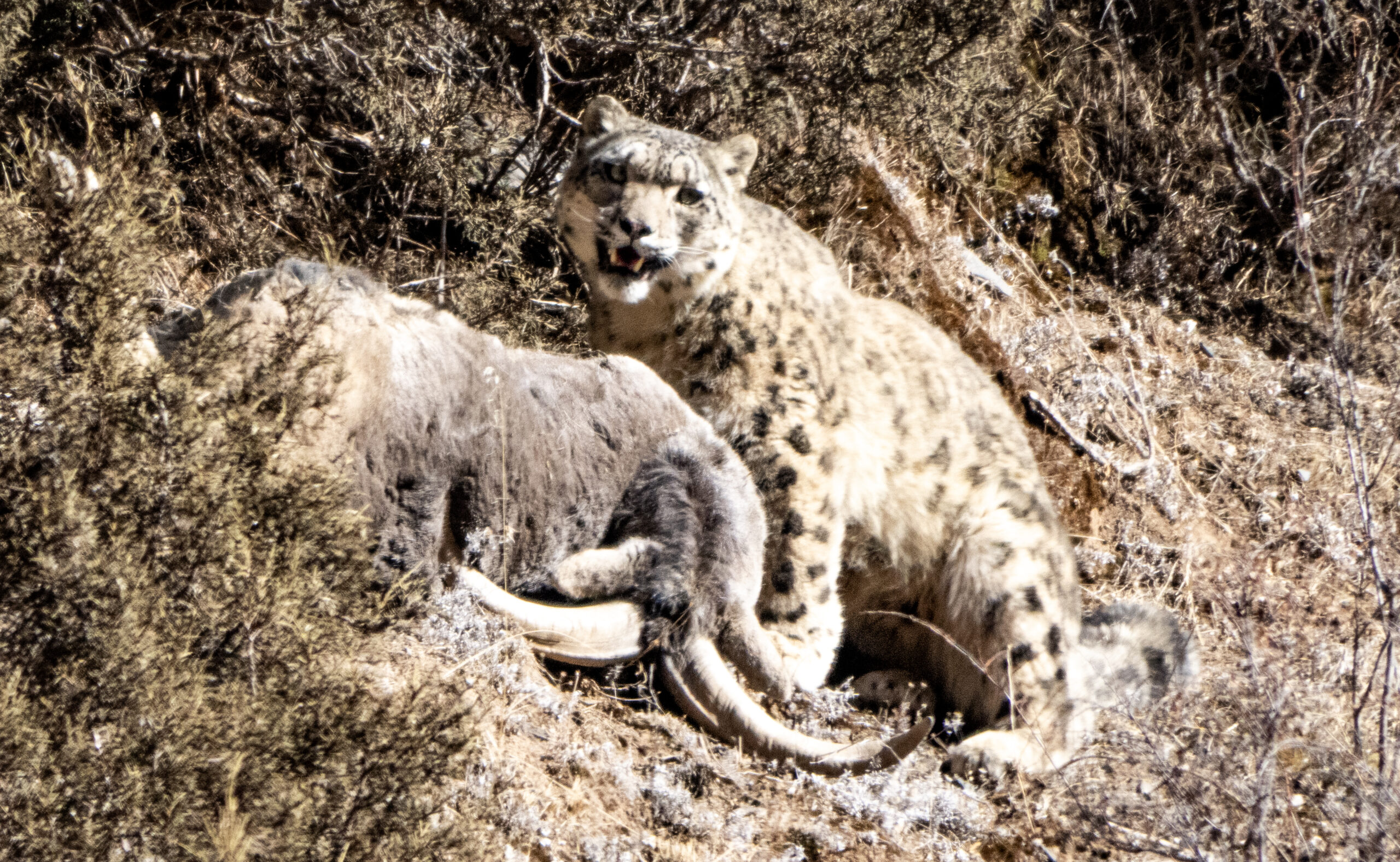
Typical Wild Prey
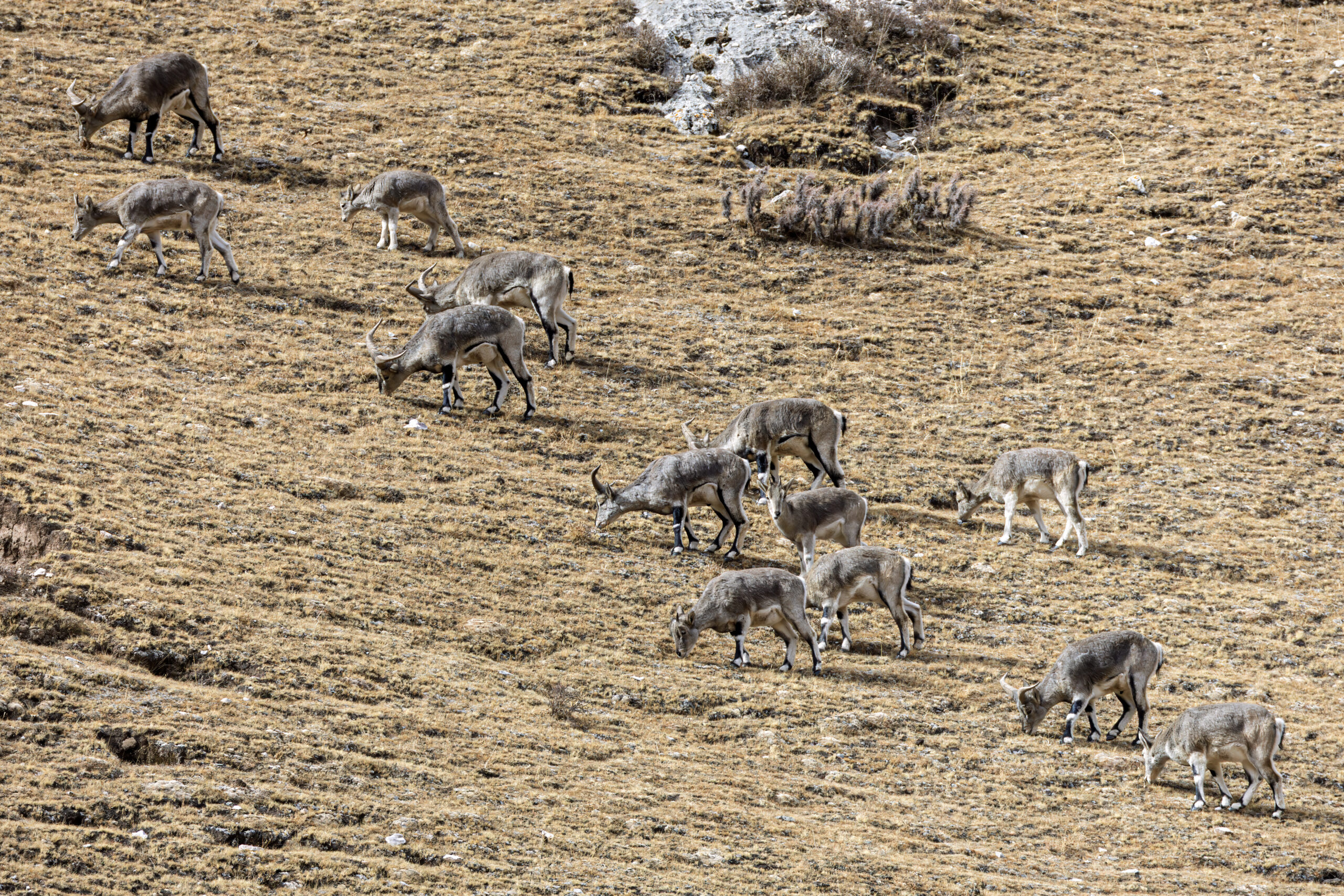
Across much of the snow leopard’s range, Siberian ibex and blue sheep form the core of its wild prey base. Their distributions are largely separated geographically. Siberian ibex dominate across the northern and western parts of the range, from Russia and Mongolia through the Altai, Tien Shan, Pamirs, and trans-Himalayan regions, while blue sheep are far more characteristic of the Tibetan Plateau and the central Himalayas.
Other mountain ungulates become important in particular regions. Markhor, for example, are an important prey species in parts of Chitral and Gilgit in Pakistan, while Himalayan tahr occur across parts of the Himalayas, including southern Tibet, western Bhutan, and Nepal.[2]
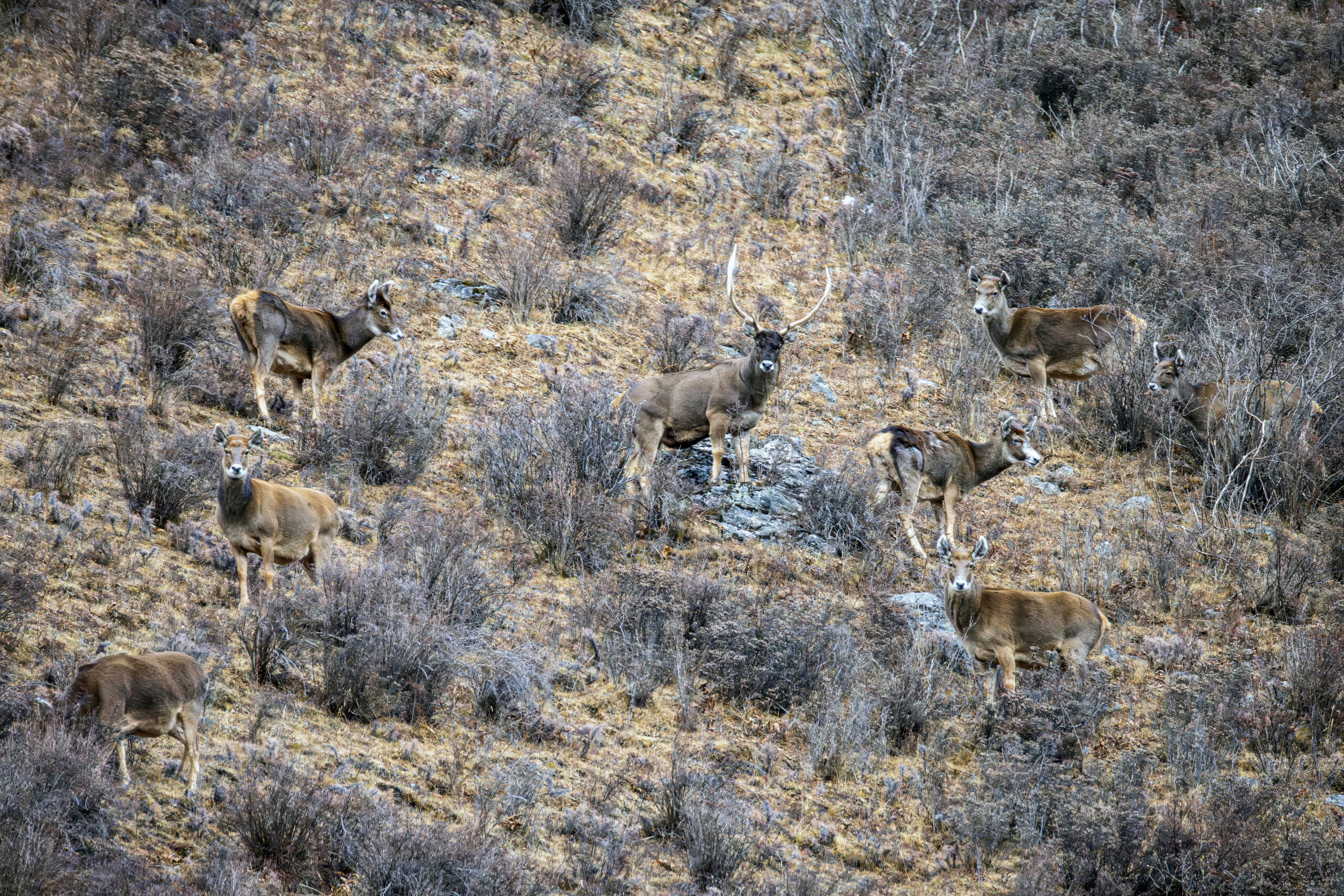
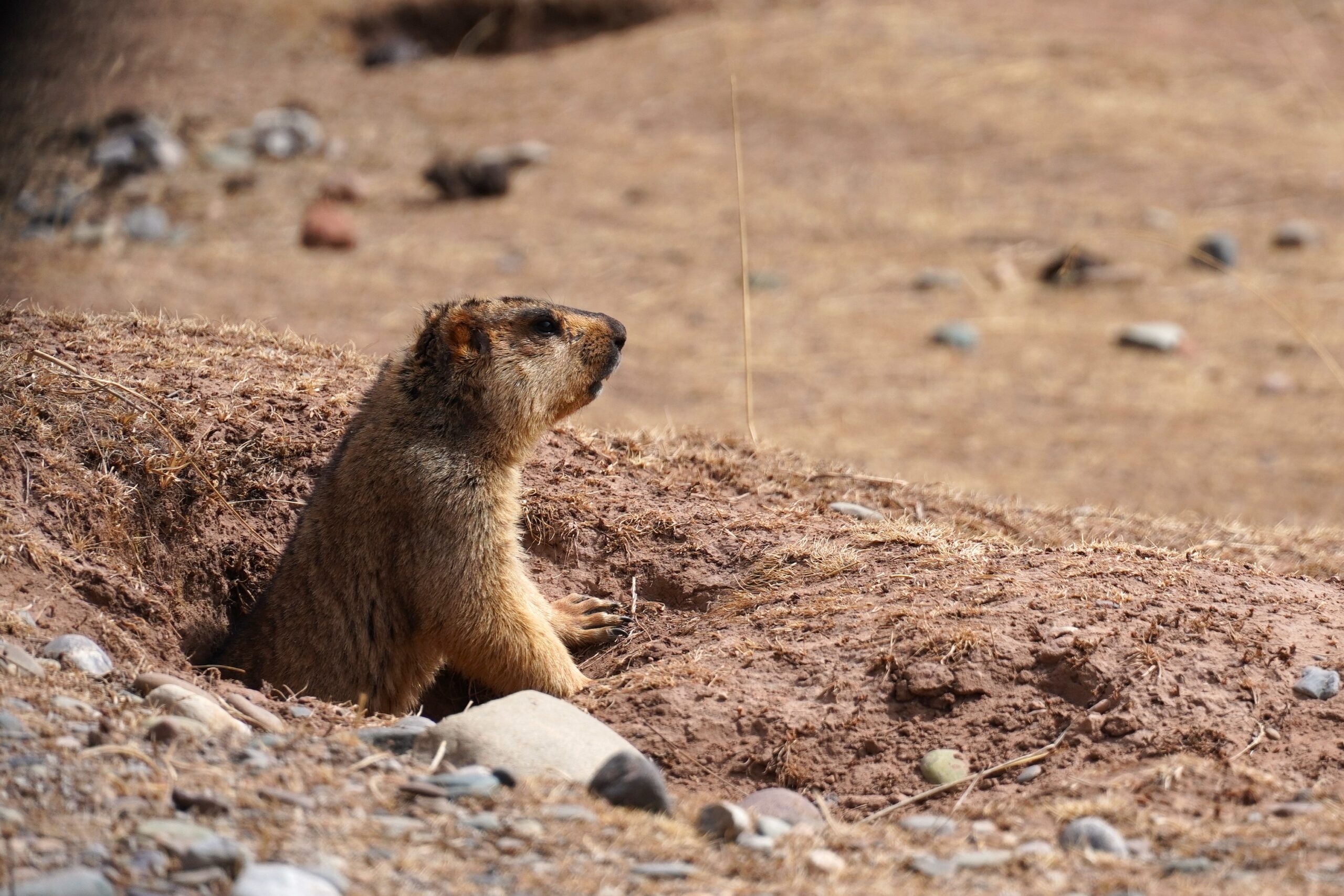
The snow leopard’s diet, however, extends well beyond wild goats and sheep. Recorded prey includes red deer, white-lipped deer, alpine musk deer, eastern roe deer, kiangs, wild boar, gorals, takins, serows, goitered gazelles, and wild camels. Smaller mammals such as marmots, hares, pikas, and voles also feature in the diet, along with birds and, occasionally, other carnivores.[2]
Among avian prey, galliform birds appear particularly often. Remains of Himalayan snowcock , Tibetan snowcock , Altai snowcock , rock ptarmigan, and blue hill pigeon have all been identified in snow leopard scat.[1]
Snow Leopard Hunting Strategy
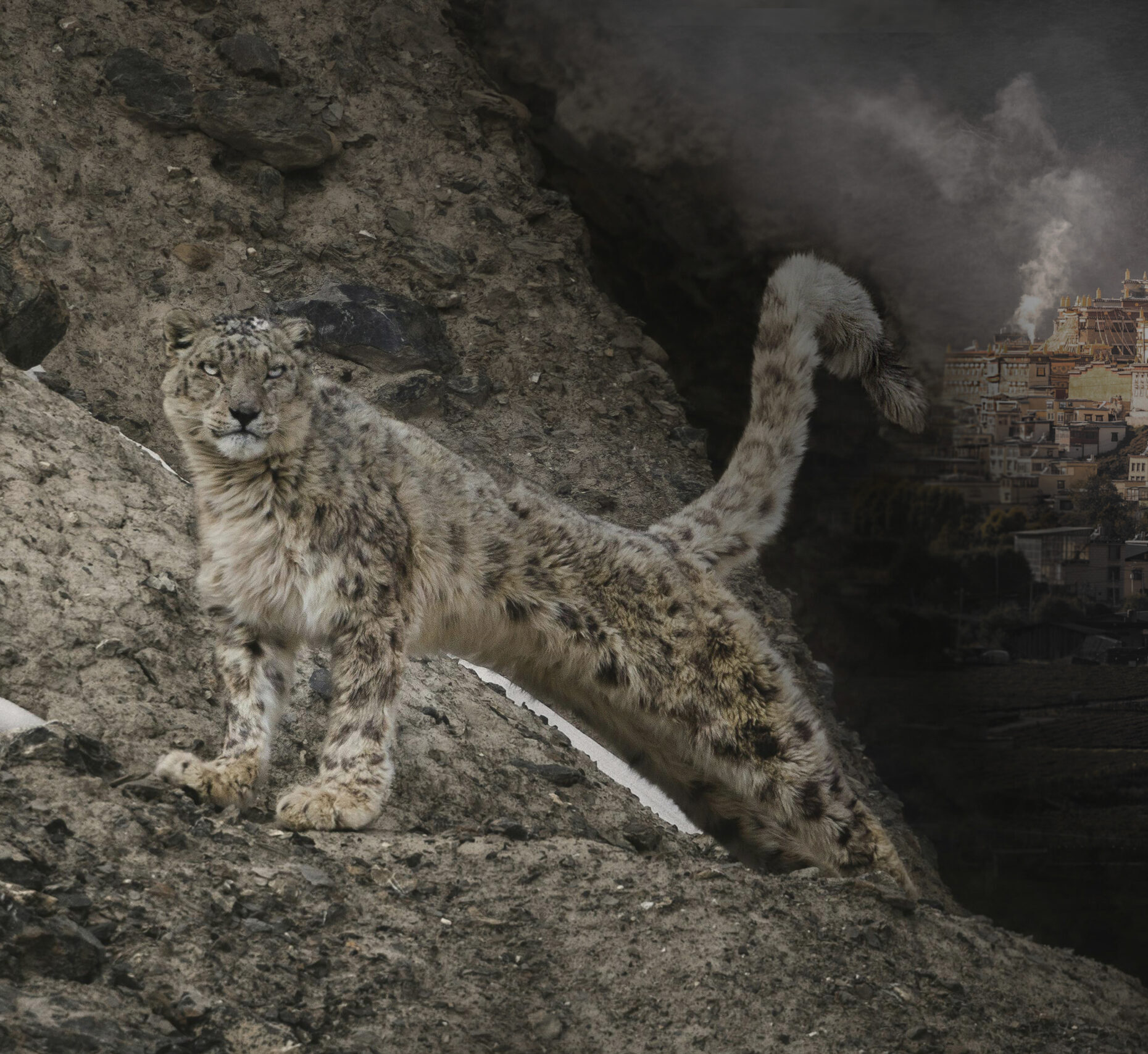
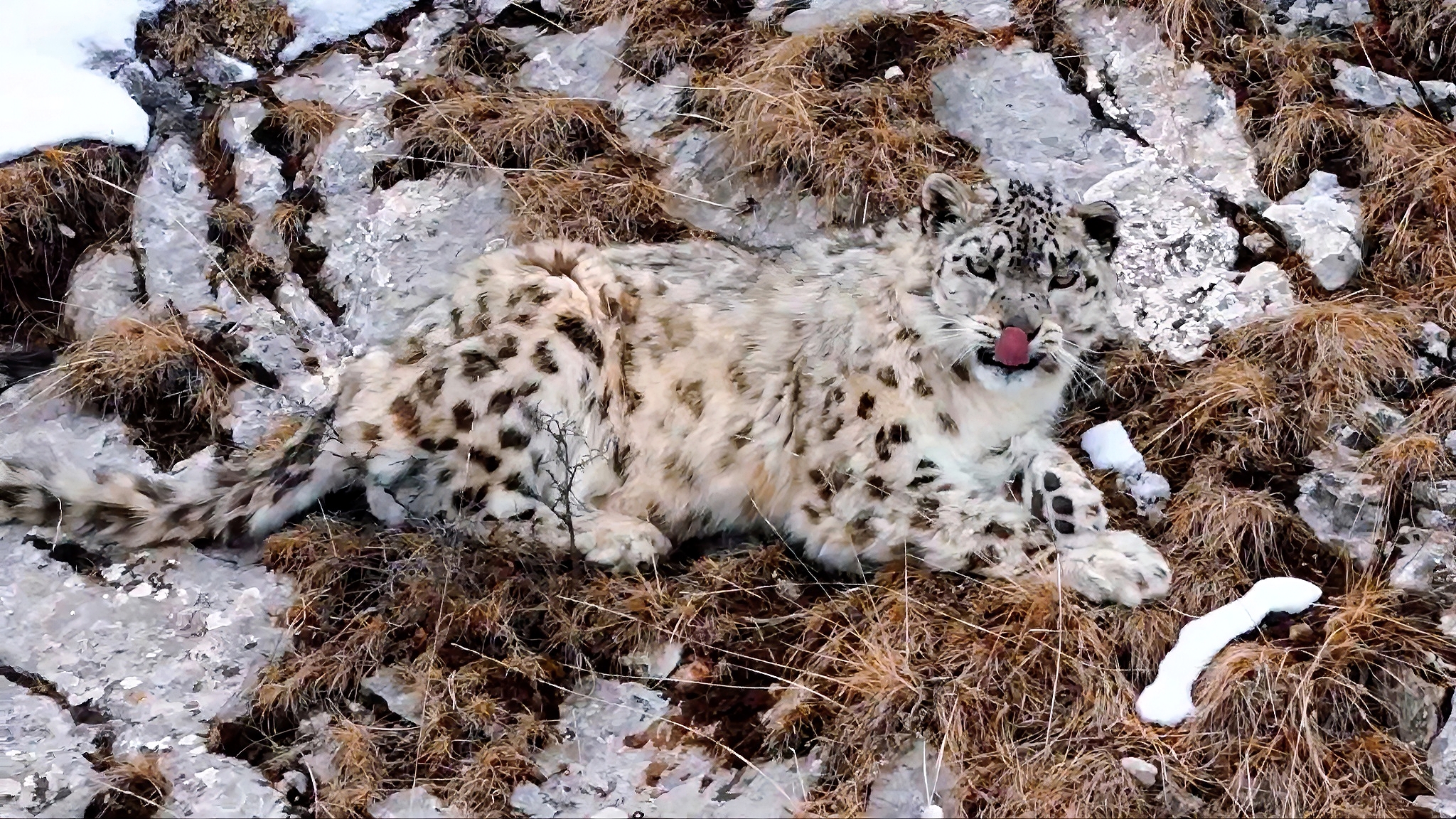
Snow leopards are classic ambush predators, perfectly suited to the broken mountain terrain they inhabit. Their pale, patterned coat allows them to disappear against bare rock as they move quietly along cliffs and boulder fields, closing the distance before waiting for the right moment to strike. Their prey may sense that danger is near long before it can actually locate the cat.
Powerful long hind limbs give snow leopards remarkable jumping ability, while the long and thick tail provides balance on cliffs, steep slopes, and uneven ground. These adaptations allow them to pursue some of the mountains’ most agile climbers, including blue sheep and Siberian ibex.
Despite their relatively modest size, snow leopards are capable of bringing down prey considerably heavier than themselves. One documented case involved a subadult weighing around 20 kg successfully killing an adult blue sheep weighing more than 55 kg.[3] Once large prey has been caught, a snow leopard typically kills by securing a bite around the neck or throat and suffocating the animal.[4] If left undisturbed, it may remain near the carcass for an extended period, returning repeatedly to feed.[5]
In China’s Sanjiangyuan region, local herders often say that snow leopards appear to favor adult male blue sheep over females. The heavy horns that give males an advantage in fights can become a liability when escaping across steep terrain, making them less agile and potentially easier for a snow leopard to catch.
Seasonal and Local Diet Variation
Although wild ungulates form the foundation of the snow leopard’s diet, the species does not rely on the same prey throughout the year. Hunting patterns shift with season, landscape, and the movement of both wild prey and livestock.
In Mongolia’s Tost Mountains, livestock predation increases during winter, when domestic animals and snow leopards overlap more closely in the same areas. In India’s Spiti Valley, by contrast, most livestock losses occur in spring and summer, when herds are moved to higher-elevation pastures and contact with snow leopards becomes more likely.[6] These seasonal periods of overlap are also when human-wildlife conflict is most likely to intensify.
Smaller mammals can become more important when seasonal conditions change. In parts of the range, including China’s Sanjiangyuan region, marmots and pikas may serve as valuable supplementary prey when other food sources are less readily available.
One of the more surprising items on a snow leopard’s menu is plant material. For an obligate carnivore built to hunt mountain ungulates, this may seem unexpected, yet plants appear in snow leopard scat with unusual frequency compared with other large cats in the genus Panthera.
In a 1976 study from Mongolia’s southern Gobi, 18% of 50 snow leopard scats contained Stipa grasses, with researchers noting particularly heavy consumption in autumn. In Ladakh, snow leopards have also been observed seeking out or favoring plants of the genus Myricaria.
Exactly why snow leopards eat plants remains unclear. The behavior may serve several functions: certain plants could help expel intestinal parasites, while others may stimulate defecation or support digestion. Whatever the explanation, it is a reminder that even the diet of a highly specialized mountain predator is more complex than it first appears.[1][7]
Livestock Predation and Retaliatory Killings
Livestock losses are shaped not only by season and geography, but also by the way animals are managed. Livestock left unattended or separated from the herd can be especially vulnerable, while poorly protected enclosures may allow a snow leopard to enter without giving the animals inside any real chance to escape. In such situations, a single attack can turn into a surplus killing event, with several animals killed at once.
For pastoral families, the consequences can be serious. Across the snow leopard’s 12 range countries, more than 40% of people live below their national poverty line. In communities with few or no alternatives to livestock-based livelihoods, losing several animals in a single night can mean the loss of a substantial share of household income. In some regions, repeated losses have contributed to retaliatory killing of snow leopards.[8]
Conflict can also feed into a wider illegal trade. Snow leopard skins have long carried value in fashion and decorative markets, while their bones have been used in parts of Asian traditional medicine. As a result, some animals killed in retaliation may not simply be discarded; their skins, bones, and other body parts can enter illegal wildlife markets as part of the wider conservation efforts needed across the species’ range.
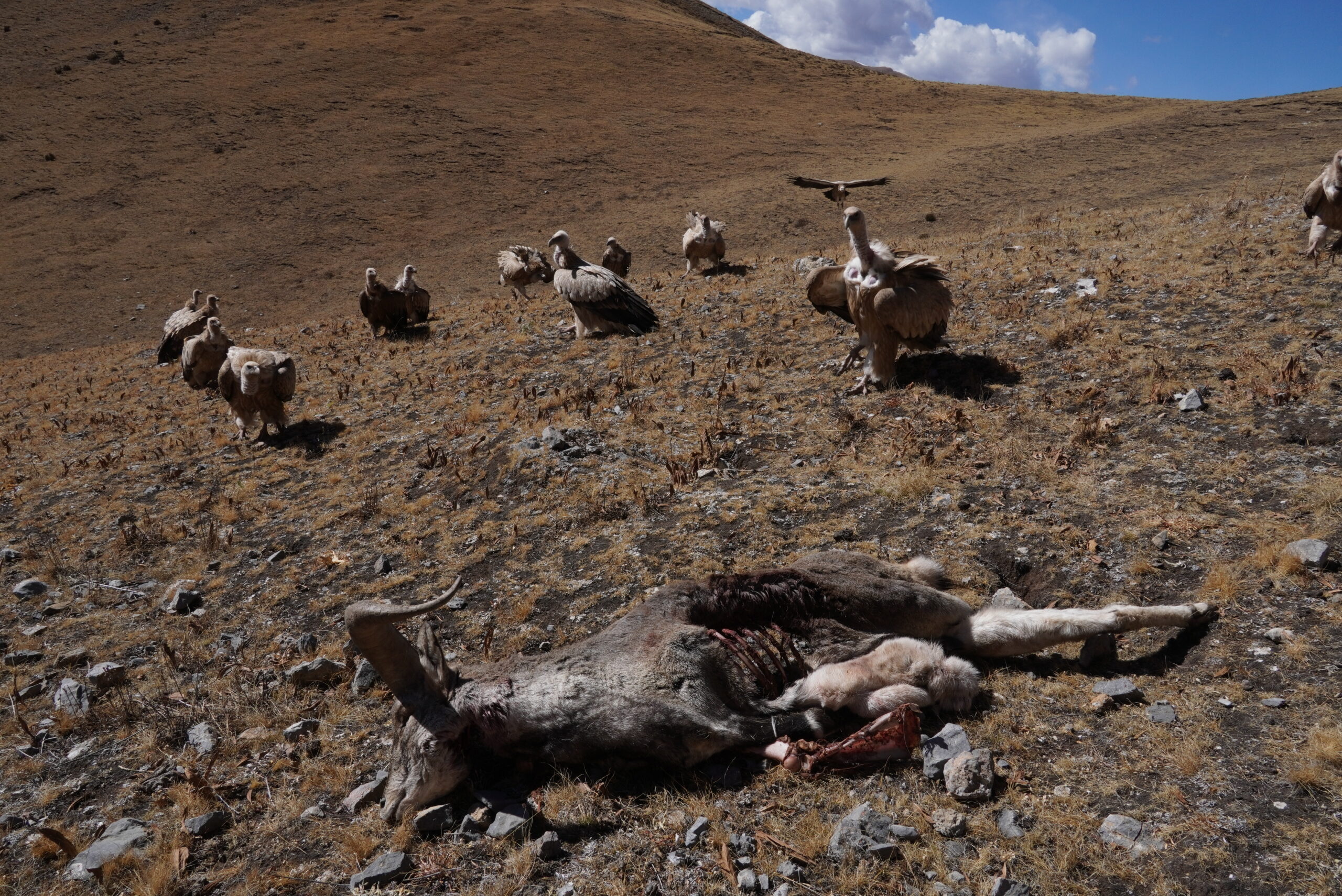
The snow leopard’s diet is clearly shaped by the natural systems around it. But once human activity begins to overlap with snow leopard habitat, those relationships inevitably start to change.
So where does that change begin, and where can it lead? To understand it, we first need to look more closely at the snow leopard itself: a predator finely adapted to life in the high mountains.
Snow Leopard Basics (Panthera uncia)
Phylum: Chordata
Class: Mammalia
Order: Carnivora
Family: Felidae
Genus & species: Panthera uncia syn. Uncia uncia
Where Did Snow Leopards Come From?
The snow leopard’s scientific story began long before its evolutionary history was understood. In 1761, Buffon described the animal as l’Once,[9] or “ounce,” a name derived from Old French and ultimately linked to the Ancient Greek λύγξ (lýnx).[10] In other words, early European naturalists initially associated the snow leopard with the lynxes rather than recognizing it as one of the big cats we know today.
Its taxonomic position remained uncertain for much longer. Snow leopards were once placed in the monotypic genus Uncia, effectively giving them a genus of their own. It was not until 2010, when researchers examined their evolutionary relationships with tigers, jaguars, leopards, and lions, that the snow leopard was formally placed within the genus Panthera.[11]
And despite the name “snow leopard,” its closest living relative is actually the tiger, not the leopard. Genetic studies suggest that the snow leopard and tiger lineages diverged from a common ancestor around 1.95–3.10 million years ago. By comparison, the lineage leading to lions and leopards is estimated to have separated from the jaguar lineage around 2.56–3.66 million years ago.[12] Together, these relationships place the snow leopard firmly within the deeper evolutionary history of the genus Panthera.
Physical Adaptations of the Snow Leopard
The snow leopard’s body seems almost purpose-built for life in the freezing, high-altitude mountains of central Asia.
- Weight
- Adult males typically weigh around 37–55 kg, while females are smaller at approximately 35–42 kg. Shoulder height is about 60 cm.
- Body Size and Skull
- Snow leopards measure roughly 1–1.3 meters from head to body. Despite being a large cat, they have one of the smallest skulls among the big cats.[13] The skull is broad and short with a domed profile, while the enlarged nasal cavity helps warm and humidify the cold, dry air of the mountains and may also increase the volume of air taken in with each breath.[14][15]
- The tail measures around 0.8–1 meter, almost matching the body in length. It is among the longest, proportionally, of any cat. On steep terrain it acts as a counterbalance, and its form reflects one of the snow leopard’s thick tails adaptations for balance and warmth; at rest the animal can wrap it around the body for insulation.[14]
- Pelage
- Snow leopards have some of the longest and densest fur of any cat, with around 4,000 hairs per square centimeter.[13] In winter, the belly is covered in thick fur that can reach about 12 cm in length.[14] Their smoky grey to creamy coat is broken by widely spaced rosettes whose tones and irregular shapes closely resemble lichen-covered rock. Against bare cliffs and scree, this camouflage can make a snow leopard extraordinarily difficult to detect, giving it a crucial advantage when stalking and ambushing prey.
- Limbs and Spine
- In limb proportions, snow leopards are unusually similar to cheetahs, with relatively long lower limbs and long hind limbs that allow for longer strides and may support greater running speed.[16]
- Their broad paws are large, furry paws that spread body weight over a larger surface area and function like snowshoes, helping them move across snow without sinking as deeply.
- An elongated thoracic and lumbar spine gives the body additional flexibility during leaps and rapid changes of direction. The pectoralis major also functions much like a biological spring, helping absorb impact during landing. Relative to body mass, snow leopards have one of the most strongly developed pectoral muscles among cats. Their jumping ability is exceptional, with reported leaps across ravines reaching as much as 15 meters.[17]
- Vocalizations
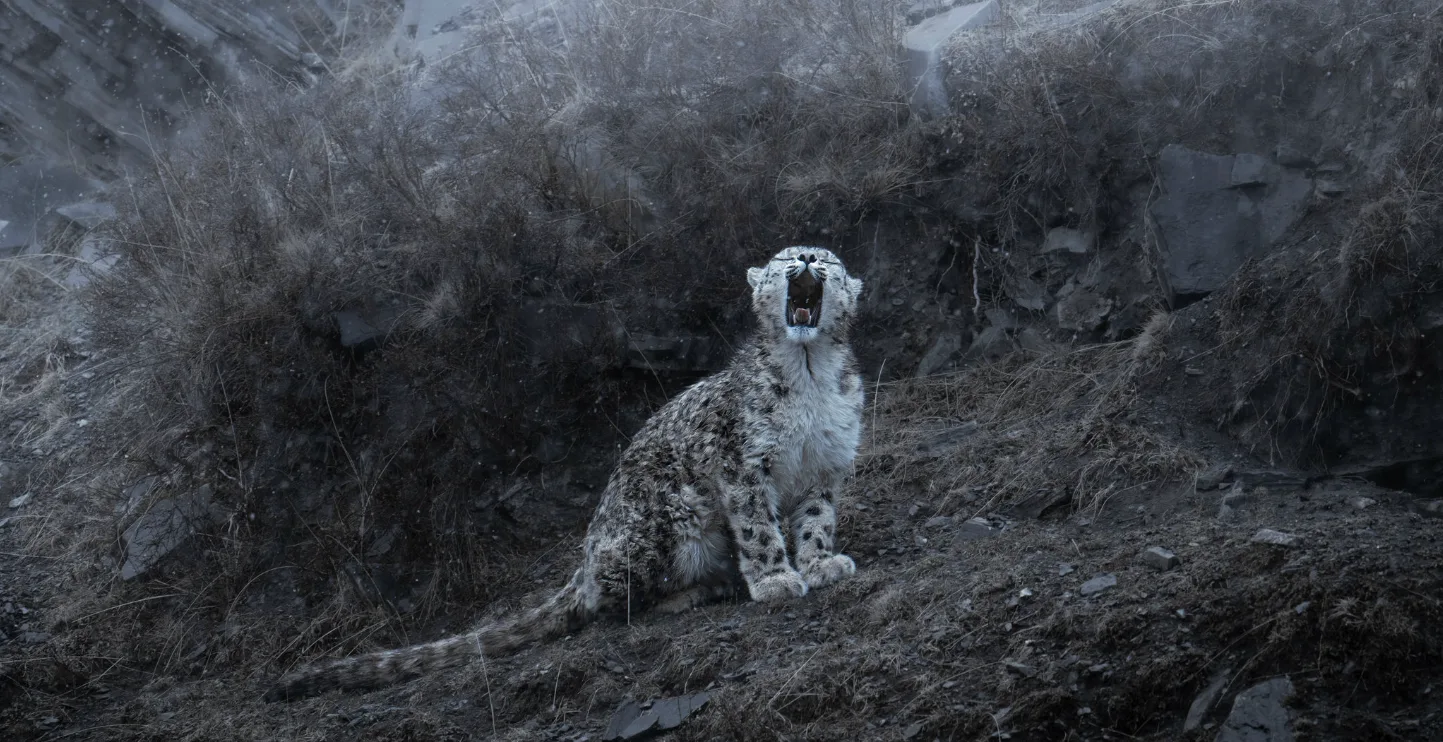
- Most cats in the genus Panthera possess relatively large vocal folds and a fibroelastic pad that help produce powerful, low-frequency calls and roars.[18] Snow leopards are different, and when people ask whether snow leopards roar, the answer is that they cannot produce a true roar. Their vocal folds are smaller and more pointed. Instead, they use a range of softer vocalizations and can even purr while breathing, much like smaller cats.[14]
Snow Leopard Behavior
- Crepuscular Activity Snow leopards are most active around dawn and dusk, when they are more likely to travel, patrol their range, or hunt.
- Solitary Life Snow leopards are solitary creatures, maintaining spatial relationships through scent marking, scrapes, and urine spraying; their elusive nature makes them difficult to observe, and outside the breeding season individuals tend to avoid close contact or much overlap with other cats.
- Satellite telemetry from the relatively open terrain of southern Mongolia found average annual home ranges of around 207 km² for adult males and 124 km² for adult females, while some individuals ranged across more than 1,000 km².[6]
- Breeding
- The breeding season usually falls between January and March. Gestation lasts around 90–105 days, and females typically give birth to two or three cubs. Young snow leopards generally reach sexual maturity at around two to three years of age, while females and their cubs may remain together for one to two years.
- Courtship brings a noticeable change in behavior. Males increase marking activity, including head rubbing against rocks, scraping, and urine spraying, while females more often display behaviors such as rolling, self-grooming, and chuffing.[19]
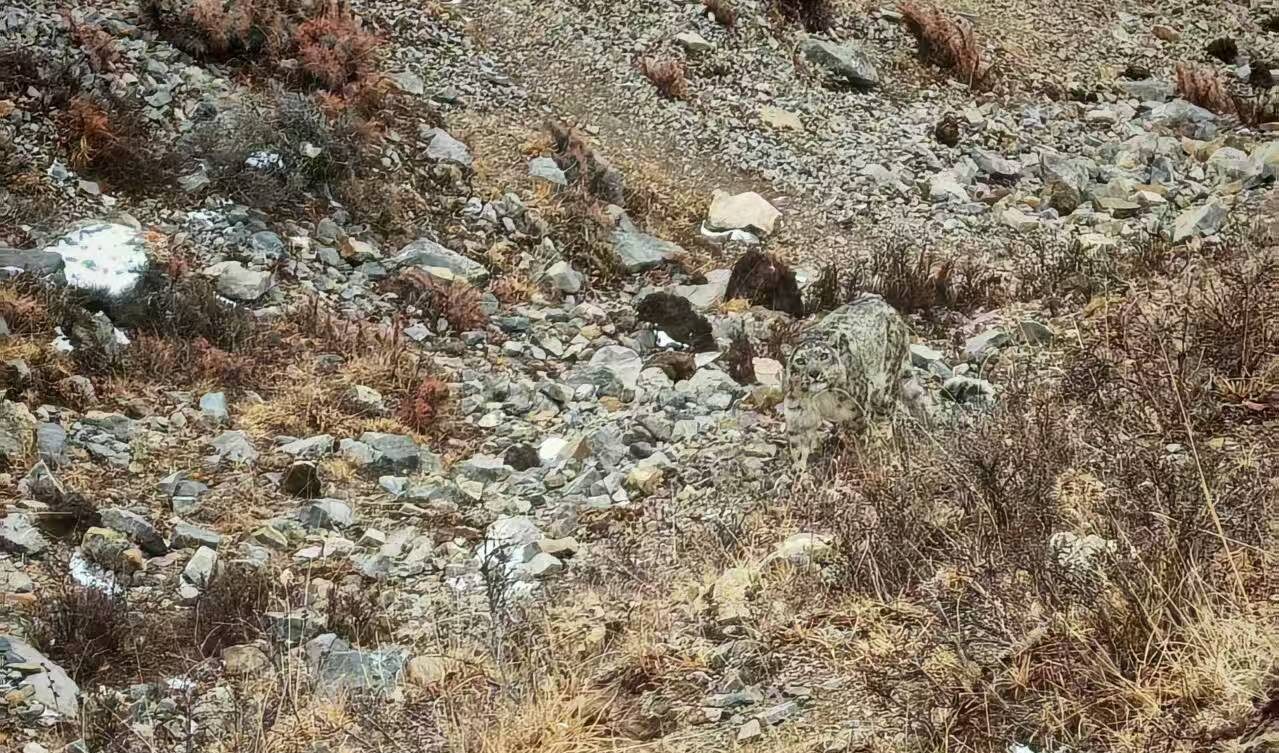
Snow Leopard Habitat and Range
Around 60% of the snow leopard’s global range lies within China. Across Asia, the species occupies a vast belt of mountain habitat stretching from the Hindu Kush of eastern Afghanistan through the Pamir, Tien Shan, Karakoram, Kashmir, and Kunlun ranges, and across parts of the Himalayas and the Tibetan Plateau. Farther north, its range extends into the Altai, Sayan, and Tannu-Ola mountains of Russia, as well as mountain systems west of Lake Baikal. Snow leopards are also found across the Mongolian and Gobi Altai, the Khangai Mountains, and north of the Altyn-Tagh in Tibet.[20]
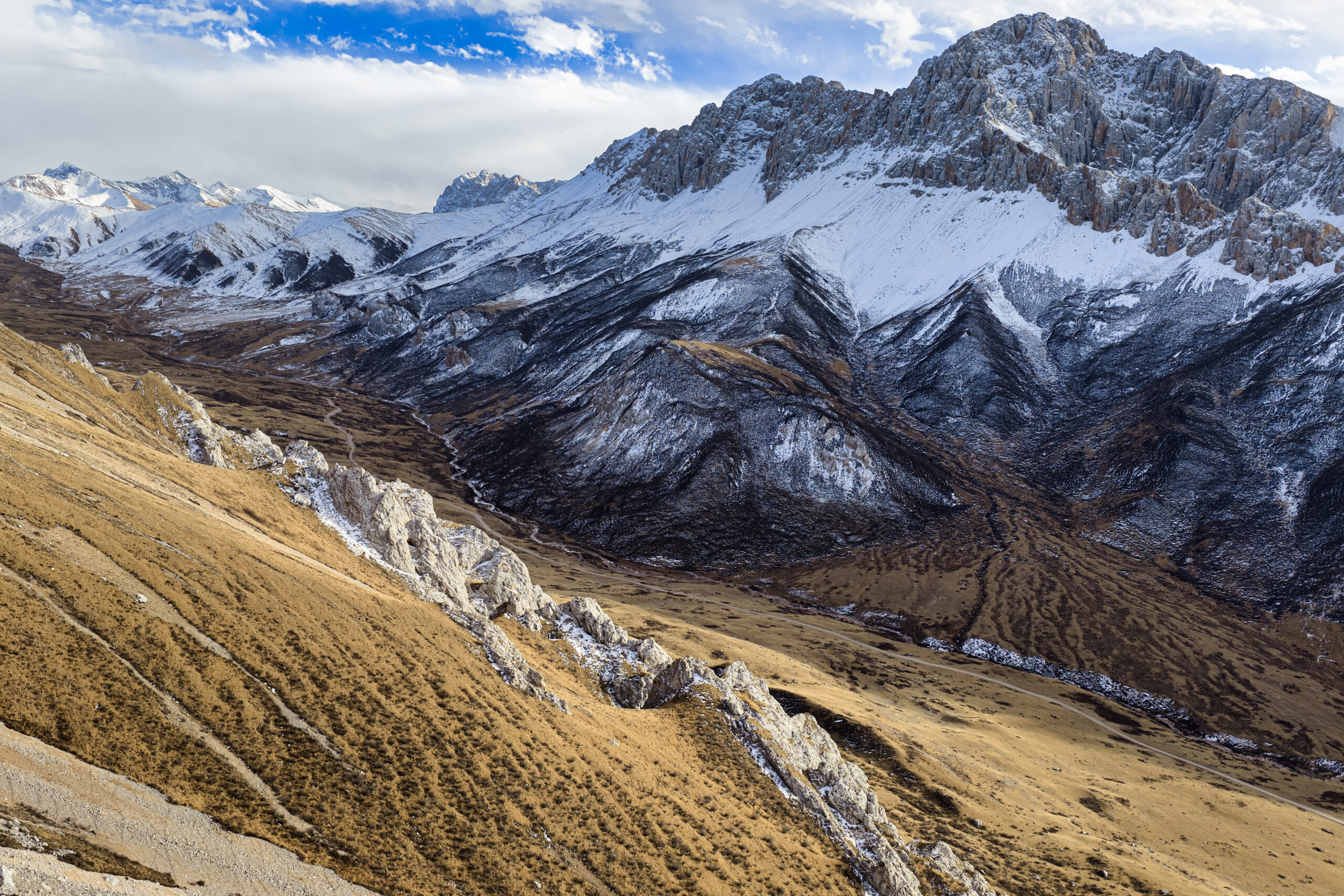
Snow leopards are most commonly associated with alpine and subalpine habitats above the treeline, although their elevational range varies considerably across their distribution. In parts of Russia’s Sayan Mountains and the Tien Shan, for example, they may also occur in open conifer or birch woodland. Across much of their range, snow leopards are typically found between 3,000 and 4,500 meters, but they can occur much lower in the northern part of the range and in the Gobi, at around 900–1,500 meters. In the Himalayas and on the Tibetan Plateau, by contrast, they may range as high as 5,800 meters.[2]
Their use of elevation also changes with the seasons. In winter, snow leopards may move down to lower slopes, while in summer they often return to higher, steeper, and more remote mountain areas.[20] These seasonal shifts are closely linked to the movements of ungulate prey and, in some regions, to the distribution of deep snow.
Regardless of elevation, snow leopards consistently favor rugged, broken terrain. Steep slopes, rocky ridgelines, cliffs, and narrow valleys form an important part of their everyday habitat, providing both cover and suitable ground for moving through the landscape.[20] Some of these areas also overlap with places used regularly by people, particularly in remote pastoral regions.[2]
How Many Snow Leopards Are Left?
The snow leopard is currently listed as Vulnerable on the IUCN Red List. The latest estimate places the global population at 7,446–7,996 individuals, including 2,710–3,386 mature individuals.
In 2017, governments across the snow leopard range jointly endorsed the Population Assessment of the World’s Snow Leopards (PAWS) initiative, coordinated by the Global Snow Leopard & Ecosystem Protection Program (GSLEP). PAWS was designed to improve the reliability of population estimates by establishing shared best practices and protocols for data collection, management, and population assessment.[21] By 2026, several range countries had published national assessments developed under this framework.
- China: approximately 5,232 adult snow leopards, with a 95% CI of 4,114–6,351.[22] China is home to the world’s largest snow leopard population.
- India: approximately 718 snow leopards.[23]
- Mongolia: approximately 953 adult snow leopards, with a 95% CI of 806–1,127.[24]
- Bhutan: approximately 134 adult snow leopards, with a 95% CI of 121–148.[25]
- Nepal: approximately 397 snow leopards, with a 95% CI of 331–476.[26]
- Kyrgyzstan: approximately 300 adult snow leopards, with a 95% CI of 246–366.[27]
Several other range countries have also published population estimates using different assessment approaches:
- Kazakhstan: approximately 152–189 snow leopards.[28]
- Pakistan: approximately 150–200 adult snow leopards.[29]
- Tajikistan: approximately 500 snow leopards.[30]
- Uzbekistan: approximately 96–107 adult snow leopards.[31]
- Afghanistan: approximately 213–253 adult snow leopards.[32]
- Russia: approximately 70–90 adult snow leopards.[33]
Biggest Threats to Diet and Habitat
As a flagship species across much of its range, the snow leopard sits at the center of a much wider ecological network. Its influence extends beyond the animals it hunts, shaping prey populations, food availability for other predators, vegetation, and even the human communities that depend on these mountain landscapes.
China’s Sanjiangyuan region offers a striking example. Research has found that snow leopard predation on blue sheep becomes more effective as prey density increases, suggesting that the cats can help prevent prey populations from growing unchecked.[34] Their kills can also continue to support the ecosystem after the hunt is over. Carcasses left by large predators may provide an important secondary food source for mesocarnivores such as red foxes, especially when other prey is scarce.[35]
The effects can extend even further. By keeping herbivore numbers in check, snow leopards may indirectly reduce grazing pressure on alpine vegetation. In Sanjiangyuan, often described as China’s “Water Tower,” healthy vegetation helps maintain the landscape’s capacity to store and regulate water. The region feeds the headwaters of the Yangtze, Yellow, and Lancang–Mekong rivers, so protecting these ecological relationships also helps safeguard the natural resources that support water security, regional economies, and the livelihoods of people far downstream.[36]
That balance becomes more fragile when the snow leopard’s natural prey begins to disappear. Siberian ibex, argali, and blue sheep are affected by illegal hunting, overgrazing, grassland degradation, and disease transmission from livestock. As wild prey declines, snow leopards are more likely to turn to domestic animals, bringing predator and pastoral communities into closer conflict.
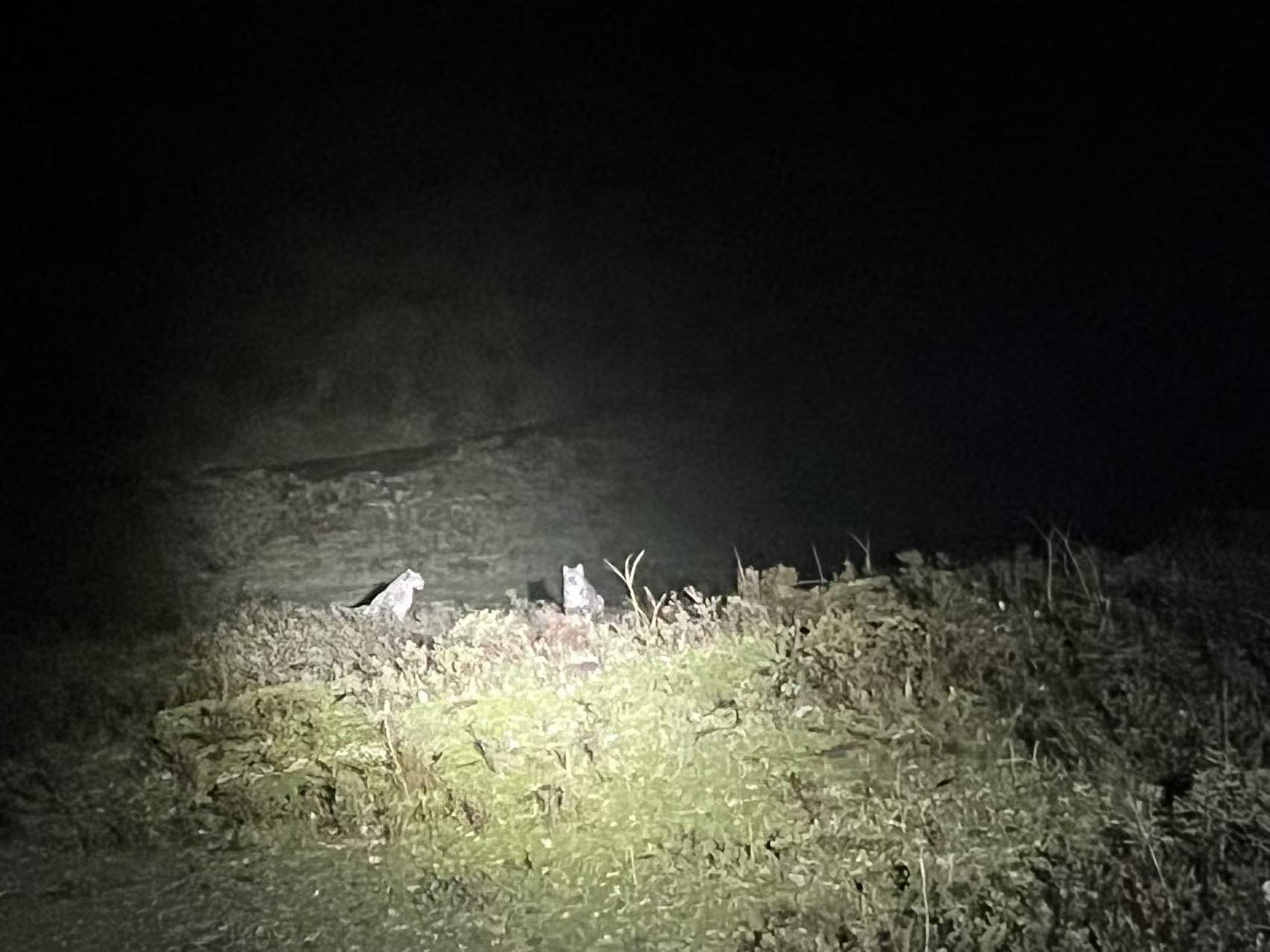
Habitat Loss and Fragmentation
Road construction, reservoirs, mining, tourism infrastructure, fencing, and expanding livestock use continue to erode and divide snow leopard habitat, reducing grazing space for wild prey and adding pressure to the cats themselves. As once-connected landscapes are broken into smaller fragments, movement between populations becomes more difficult, weakening the ecological connectivity the species depends on. In some areas, seasonal caterpillar fungus collection, free-ranging dogs, and other forms of human activity add further disturbance and competition for resources.
Climate Change Impacts
Climate change is altering the foundations of snow leopard habitat by shifting water availability, vegetation, wild prey distribution, and livestock movement. As suitable conditions become increasingly concentrated at higher elevations, snow leopards, their prey, and pastoral activity may be pushed into a smaller amount of shared space. This growing overlap can intensify competition for resources and may also increase opportunities for disease transmission among wildlife and livestock.
Conservation, Coexistence, and Management
Snow leopard conservation is a cross-border challenge. The species occurs across 12 countries, and many populations are connected through mountain landscapes that extend beyond national boundaries. Long-term protection therefore depends on both international cooperation and reducing the costs of living alongside a large predator.
The Snow Leopard Network (SLN) was established in 2002 to support the Snow Leopard Survival Strategy (SLSS) and connect snow leopard specialists worldwide.[37]
- International Cooperation
In 2013, the Global Snow Leopard & Ecosystem Protection Program (GSLEP) brought snow leopard range countries together to identify shared threats, coordinate joint action, and support wider conservation efforts. In 2017, governments formally endorsed the Population Assessment of the World’s Snow Leopards (PAWS) to improve the reliability of population estimates. By 2026, China, Mongolia, India, Nepal, Bhutan, and Kyrgyzstan had published national assessments under this framework.
- Protecting Habitat and Connected Landscapes
Almost all range countries legally protect snow leopards and have introduced measures to restrict hunting, illegal trade, and other direct threats.
Conservation is also moving beyond individual reserves toward larger connected landscapes, helping snow leopards disperse, find mates, and maintain connectivity between populations.
- Living Alongside Snow Leopards
Reducing conflict with pastoral communities is now a central part of conservation. Livestock insurance, compensation schemes, predator-resistant corrals, and conservation education can reduce the impact of livestock losses and lower the risk of retaliatory killing.
In China, Mongolia, India, Nepal, and elsewhere, ecotourism and alternative livelihoods are also being used to ease economic pressure on pastoral households. China has further expanded this approach through its national park system and community ranger programs.
- Monitoring and Future Challenges
Camera traps, genetic analysis, and satellite telemetry are improving our understanding of snow leopard populations and movements, while GSLEP supports cooperation across borders.
Looking ahead, climate change, infrastructure development, and habitat fragmentation will make ecological corridors, cross-border coordination, and long-term community involvement increasingly important.
Responsible Wildlife Watching in Snow Leopard Habitat
Snow leopard expeditions have become increasingly popular among wildlife travelers, but they are very different from the accessibility and comfort associated with a typical African safari. As the ecology discussed above makes clear, snow leopards live in remote and fragile mountain environments. Not every place where they occur can, or should, become a wildlife tourism destination, and even established observation areas vary widely in accessibility, infrastructure, and overall travel conditions.
For travelers, this makes preparation especially important. Choosing a responsible snow leopard expedition means understanding not only the itinerary itself, but also the physical demands of the journey, the realities of traveling in high-altitude habitat, and the responsibility that comes with entering a landscape shared by snow leopards, wildlife, and local communities.
- Choosing a Destination
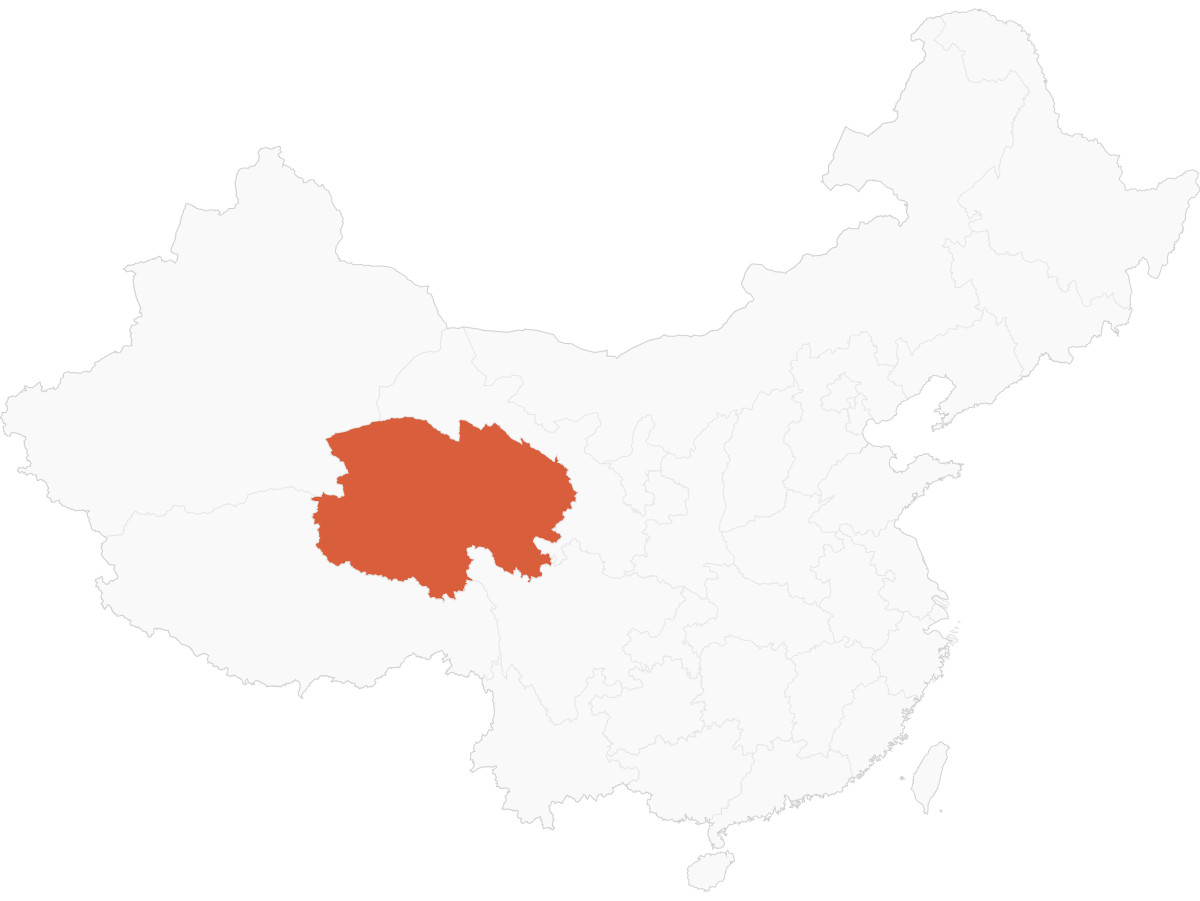
The most established destinations for snow leopard expeditions today include Yushu and Dulan in Qinghai, China; Ladakh and Spiti in India; and the Altai Mountains of Mongolia.
China supports the world’s largest snow leopard population, but organized snow leopard tourism there is still relatively young, having developed mainly over the past five years. Most expeditions are built around local herder observation networks and led by experienced wildlife guides. China’s transport infrastructure also makes many of these areas comparatively easier to reach, allowing up to 75% of the itinerary to be spent on dedicated snow leopard observation.
The trade-off is comfort. These expeditions still take place in remote mountain regions, and during observation days, accommodation and meals are often arranged in local herders’ homes. Facilities can be basic, so China is generally best suited to travelers who value more time in the field and are comfortable with a more adventurous, less polished travel experience.
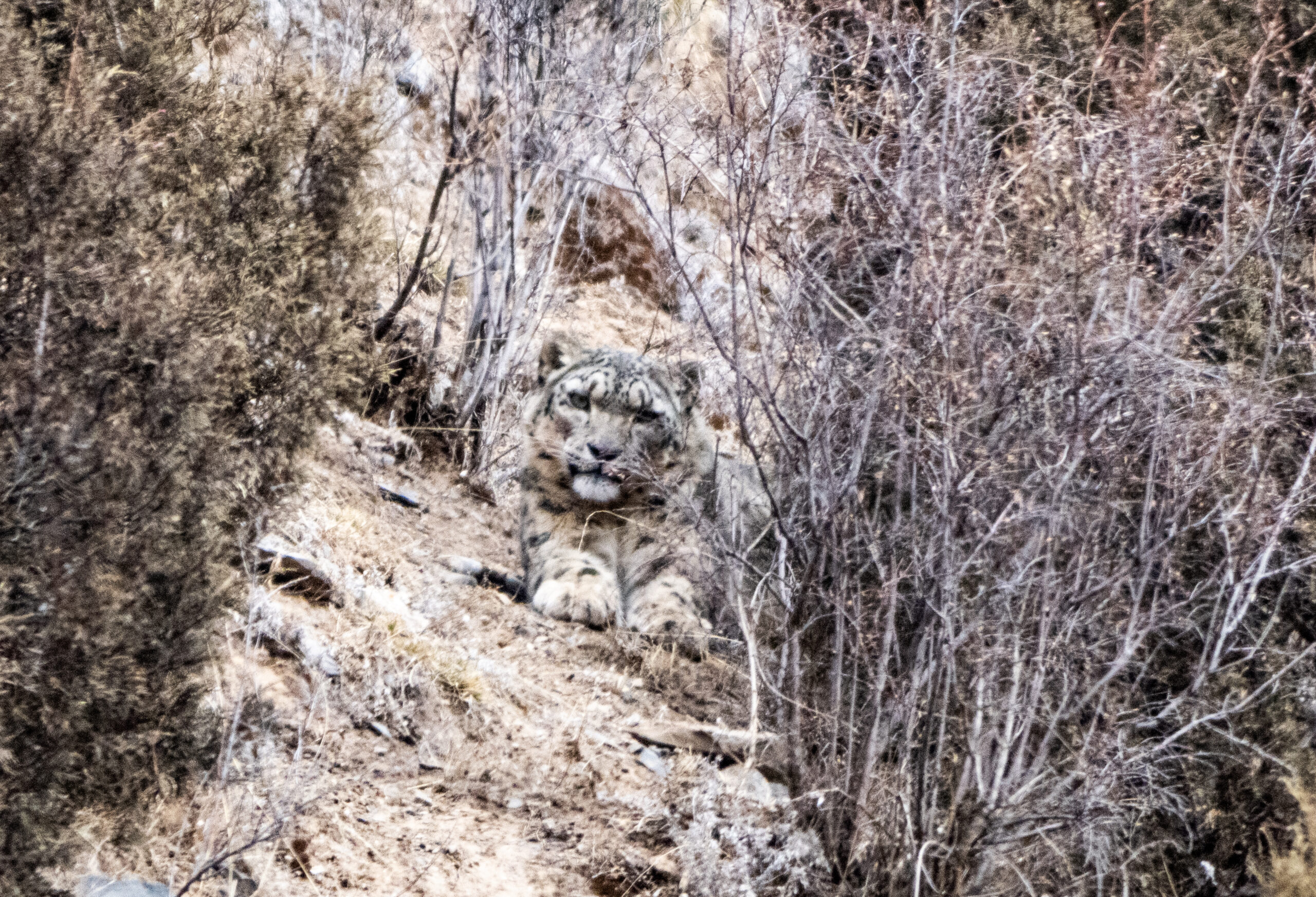
India has a longer history of organized snow leopard tourism than China, and its main destinations are supported by more established local teams. Accommodation and meal arrangements are generally more modern and better suited to the expectations of most travelers. The main drawback is access. Snow leopard areas in India are typically far from major transport hubs and often require one to three days of overland travel, so dedicated observation days usually account for only around half of the total itinerary.
Mongolia involves a similar degree of remoteness and a comparable overall trip length, but snow leopard habitat there is generally at lower elevations than in India and China. This reduces the likelihood of altitude-related discomfort and makes the experience somewhat less physically demanding.
All three countries can also be combined with broader cultural travel, so the best choice ultimately depends on what matters most to you, whether that is time in the field, comfort, accessibility, altitude, or a wider cultural journey.
- Choosing a Responsible Local Guide
A snow leopard expedition should always be built around respect for the animal’s natural behavior and the landscape it inhabits. Choosing an experienced guide who shares that principle is one of the most important decisions you can make.
When comparing guides or operators, consider their experience in the specific observation area, their relationships with local herders and wildlife observers, and how effectively they work within local information networks. Field ethics matter just as much. A responsible guide should never bait, chase, or crowd wildlife, and should never guarantee a snow leopard sighting.
It is also worth looking at where the money goes. Expeditions that employ local people, work closely with herder communities, and return part of the tourism income locally can create a stronger link between wildlife tourism and long-term conservation.
- Responsible Watching, Ethics, and Community Relations
- Keep your distance. Never approach a snow leopard. 200 meters should be treated as the minimum safe observation distance. Snow leopards are wild predators, and maintaining that buffer protects both the animal and the people watching it.
- Never bait or disturb wildlife. Do not use food, sounds, or any other method to attract a snow leopard. Baiting can alter natural behavior and create lasting problems for both the animal and future observers.
- Stay away from den sites. If you hear cub vocalizations or notice signs of a den, leave the area immediately.
- Leave no trace. Take everything you bring into the valley back out with you. Avoid leaving rubbish, strong scents, food, or other signs of human presence behind.
- Follow your guide’s lead. Local herder-guides have lived alongside snow leopards for generations, and Tibetan traditions of coexistence have helped shape that relationship. They know when to move closer, when to wait, and when it is time to leave. In the field, the guide’s decisions always take priority.
- Stay with the group. Do not wander off alone or enter private grazing land without permission. These are remote landscapes where encounters with wildlife can be unpredictable, and staying with the group is the safest option.
Responsible snow leopard watching is ultimately about ensuring that our presence does not change the way the animal uses its habitat. A photograph is never worth pushing an encounter too far. Give the animal space, respect the landscape, and leave it free to behave exactly as it would if you were not there.
Further Reading And Resources
If you are interested in traveling to China to see snow leopards in the wild, you can explore our Complete Guide to Snow Leopard Expeditions in China. We also lead tours for China snow leopard expedtion.
China is not only home to the world’s largest snow leopard population, but also to an extraordinary diversity of wildlife. By working with trusted wildlife experts across different regions, we design journeys that go beyond simply seeing animals—helping travelers understand the landscapes, local communities, and ecosystems that make wildlife travel in China so rewarding.
References
[1] McCarthy, T. M., & Mallon, D. (2016). Snow Leopards. Elsevier.
[2] China Snow Leopard Conservation Network. (2018). Status of Snow Leopard Survey and Conservation, China 2018 (Draft for Comments). [In Chinese]. http://www.snowleopardchina.org/
[3] Fox, J. L., & Chundawat, R. S. (1988). Observations of snow leopard stalking, killing, and feeding behavior. Mammalia, 52, 137–140. https://www.sciencedirect.com/science/refhub/B978-0-12-802213-9.00002-X/ref0045
[4] Jackson, R. M., & Hillard, D. (1986). Tracking the elusive snow leopard. National Geographic, 169, 792–809. https://www.sciencedirect.com/science/refhub/B978-0-12-802213-9.00002-X/ref0105
[5] Schaller, G. B. (1977). Mountain Monarchs: Wild Sheep and Goats of the Himalaya. University of Chicago Press. https://www.sciencedirect.com/science/refhub/B978-0-12-802213-9.00002-X/ref0250
[6] Johansson, O., McCarthy, T., Samelius, G., Andrén, H., Tumursukh, L., & Mishra, C. (2015). Snow leopard predation in a livestock-dominated landscape in Mongolia. Biological Conservation, 184, 251–258. https://www.sciencedirect.com/science/refhub/B978-0-12-802213-9.00002-X/ref0130
[7] Bold, A., & Dorjzunduy, S. (1976). Report on snow leopards in the southern spurs of the Gobi Altai. Proceedings of the Institute of General and Experimental Biology – Ulaanbaatar, 11, 27–43.
[8] Global Snow Leopard & Ecosystem Protection Program (GSLEP). (n.d.). Retaliation or Protective Killings. https://globalsnowleopard.org/the-snow-leopard/threats/retaliation-killings/
[9] Buffon, G.-L. (1761). La panthère, l’once et le léopard. In G.-L. Buffon, L. C. Daubenton, et al. (Eds.), Histoire Naturelle, Générale et Particulière avec la Description du Cabinet du Roi (Vol. 9, pp. 151–172, pl. 13). De l’Imprimerie Royale. http://refhub.elsevier.com/B978-0-12-802213-9.00001-8/ref0020
[10] Wikipedia contributors. (n.d.). Snow leopard. Wikipedia. https://en.wikipedia.org/wiki/Snow_leopard
[11] Davis, B. W., Li, G., & Murphy, W. J. (2010). Supermatrix and species tree methods resolve phylogenetic relationships within the big cats, Panthera (Carnivora: Felidae). Molecular Phylogenetics and Evolution, 56(1), 64–76. https://www.sciencedirect.com/science/article/abs/pii/S1055790310000473
[12] Christiansen, P. (2007). Canine morphology in the larger Felidae: Implications for feeding ecology. Biological Journal of the Linnean Society, 91, 573–592. http://refhub.elsevier.com/B978-0-12-802213-9.00001-8/ref0030
[13] Heptner, V. G., & Sludskii, A. A. (1992). Mammals of the Soviet Union. Volume II, Part 2: Carnivora (Hyaenas and Cats). E. J. Brill. http://refhub.elsevier.com/B978-0-12-802213-9.00001-8/ref0080
[14] Hemmer, H. (1972). Uncia uncia. Mammalian Species, 20, 1–5. http://refhub.elsevier.com/B978-0-12-802213-9.00001-8/ref0075
[15] Torregrosa, V., Petrucci, M., Perez-Claros, J. A., & Palmqvist, P. (2010). Nasal aperture area and body mass in felids: Ecophysiological implications and paleobiological inferences. Geobios, 43(6), 653–661.
[16] Gonyea, W. J. (1976). Adaptive differences in the body proportions of large felids. Acta Anatomica, 96, 81–96. http://refhub.elsevier.com/B978-0-12-802213-9.00001-8/ref0060
[17] Ognev, S. I. (1962). Mammals of the USSR and Adjacent Countries. Volume III: Carnivora (Fissipedia and Pinnipedia). Israel Program for Scientific Translations. http://refhub.elsevier.com/B978-0-12-802213-9.00001-8/ref0105
[18] Weissengruber, G. E., Forstenpointner, G., Peters, G., Kübber-Heiss, A., & Fitch, W. T. (2002). Hyoid apparatus and pharynx in the lion (Panthera leo), jaguar (Panthera onca), tiger (Panthera tigris), cheetah (Acinonyx jubatus) and domestic cat (Felis silvestris f. catus). Journal of Anatomy, 201, 195–209. http://refhub.elsevier.com/B978-0-12-802213-9.00001-8/ref0165
[19] Freeman, H. (1983). Behavior in adult pairs of captive snow leopards (Panthera uncia). Zoo Biology, 2, 1–22.
[20] Global Snow Leopard & Ecosystem Protection Program (GSLEP). (n.d.). The Snow Leopard: Facts About Snow Leopards. https://globalsnowleopard.org/the-snow-leopard/cat-facts/
[21] Global Snow Leopard & Ecosystem Protection Program (GSLEP). (n.d.). Population Assessment of the World’s Snow Leopards (PAWS). https://globalsnowleopard.org/gslep-projects/paws/
[22] Wei, C., Liu, Y., Liang, M., Chang, M., Yu, Y., Gao, Y., Jikmed, A., Li, X., Li, J., Bian, X., Yu, C., Li, Y., Xue, Y., Xing, R., Xiong, X., Liang, B., Li, S., Wang, H., Zhao, X., … Xiao, L. (2026). Snow leopard (Panthera uncia) status in China. Snow Leopard Reports, 5(1), 81–95. https://doi.org/10.56510/slr.v5.65095
[23] Sharma, M., Pal, R., & Bhatnagar, Y. (2026). Snow leopard (Panthera uncia) status in India. Snow Leopard Reports, 5(1), 12–16. https://doi.org/10.56510/slr.v4.63866
[24] Alexander, J. S., Bayandonoi, G., Munkhtsog, B., Lkhagvajav, P., Mijiddorj, T. N., Byambasuren, C., & Munkhtsog, B. (2026). Snow leopard (Panthera uncia) status in Mongolia. Snow Leopard Reports, 5(1), 34–40. https://doi.org/10.56510/slr.v5.63868
[25] Dhendup, T. (2026). Snow leopard (Panthera uncia) status in Bhutan. Snow Leopard Reports, 5(1), 7–11. https://doi.org/10.56510/slr.v5.63864
[26] Lama, R. P., Khanal, G., Acharya, H. B., Chetri, M., Koju, N., Thapa, K., Singh, P. B., Subba, S. A., Shrestha, S., Ghale, T. R., Kusi, N., Subedi, A., & Shrestha, B. (2026). Snow leopard (Panthera uncia) status in Nepal. Snow Leopard Reports, 5(1), 41–47. https://doi.org/10.56510/slr.v5.63869
[27] Kubanychbekov, Z., Sharma, K., Zhumabai uulu, K., Wearn, O., Durbach, I., Raulerson, M., Kochorov, C., Asykulov, T., Koshkin, M., Zhumabay kyzy, G., & Eldiiar, K. (2026). Snow leopard (Panthera uncia) status in Kyrgyzstan. Snow Leopard Reports, 5, 26–33. https://doi.org/10.56510/slr.v5.63883
[28] Grachev, A. (2026). Snow leopard (Panthera uncia) status in Kazakhstan. Snow Leopard Reports, 5(1), 17–25. https://doi.org/10.56510/slr.v5.63867
[29] Abbas, S., Hussain, Z., Abbas, K., & Aisha, H. (2026). Snow leopard (Panthera uncia) status in Pakistan. Snow Leopard Reports, 5(1), 48–57. https://doi.org/10.56510/slr.v5.63872
[30] Kachel, S. M., Shokirov, Q., Kholmatov, I., Mirzoev, M., & Saidov, A. (2026). Snow leopard (Panthera uncia) status in Tajikistan. Snow Leopard Reports, 5, 67–72. https://doi.org/10.56510/slr.v5.63876
[31] Gritsina, M., Bykova, E., Paltsyn, M., Esipov, A., Abduraupov, T., Soldatov, V., Aromov, B., Rustamov, A., Aromov, T., Golovtsov, D., & Ten, A. (2026). Snow leopard (Panthera uncia) status in Uzbekistan. Snow Leopard Reports, 5, 73–80. https://doi.org/10.56510/slr.v5.63881
[32] Moheb, Z., & Zahler, P. (2026). Snow leopard (Panthera uncia) status in Afghanistan. Snow Leopard Reports, 5, 1–6. https://doi.org/10.56510/slr.v5.63863
[33] Karnaukhov, A. S. (2026). Snow leopard (Panthera uncia) status in Russian Federation. Snow Leopard Reports, 5, 58–66. https://doi.org/10.56510/slr.v5.63874
[34] Xiao, L. Y. (2017). The Interaction Among Snow Leopards (Panthera uncia), Blue Sheep (Pseudois nayaur) and Livestock in Sanjiangyuan Region [Doctoral dissertation, Peking University]. [In Chinese with English abstract].
[35] Lu, Q., Cheng, C., Xiao, L., Li, J., Li, X., Zhao, X., Lu, Z., Zhao, J., & Yao, M. (2023). Food webs reveal coexistence mechanisms and community organization in carnivores. Current Biology, 33(4), 647–659.e5. https://doi.org/10.1016/j.cub.2022.12.049
[36] Center for Nature and Society, Peking University; Lingyun Xiao Research Group, Xi’an Jiaotong-Liverpool University; Shan Shui Conservation Center; Yuanshangcao Nature Conservation Center; & Nianbaoyuze Ecological Conservation Association. (2025). Snow Leopard Population Survey Report for the Sanjiangyuan Region 2025 (Draft for Comments). [In Chinese].
[37] Global Snow Leopard & Ecosystem Protection Program (GSLEP). (2018). Snow Leopard Network. https://globalsnowleopard.org/snow-leopard-network/