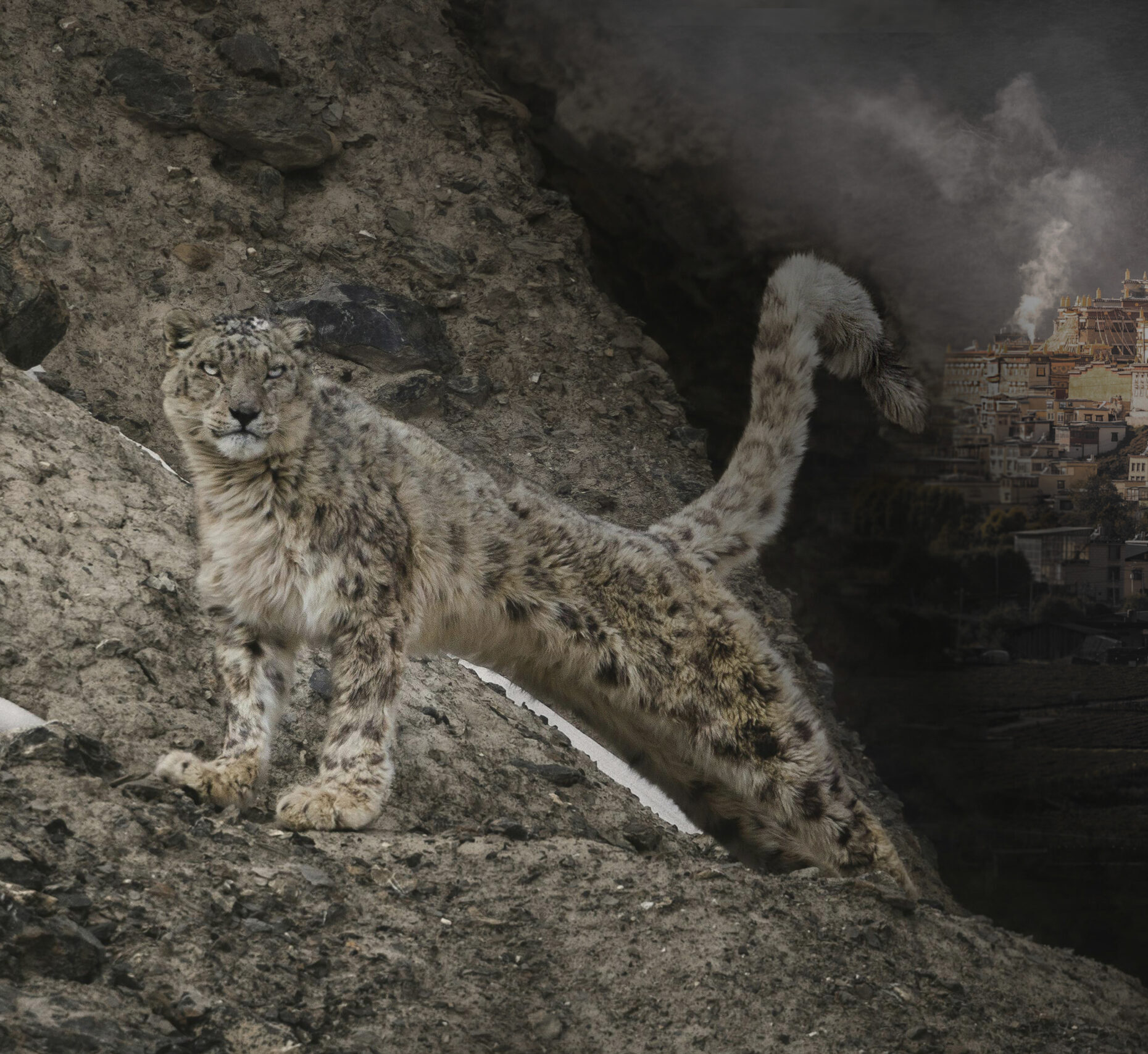
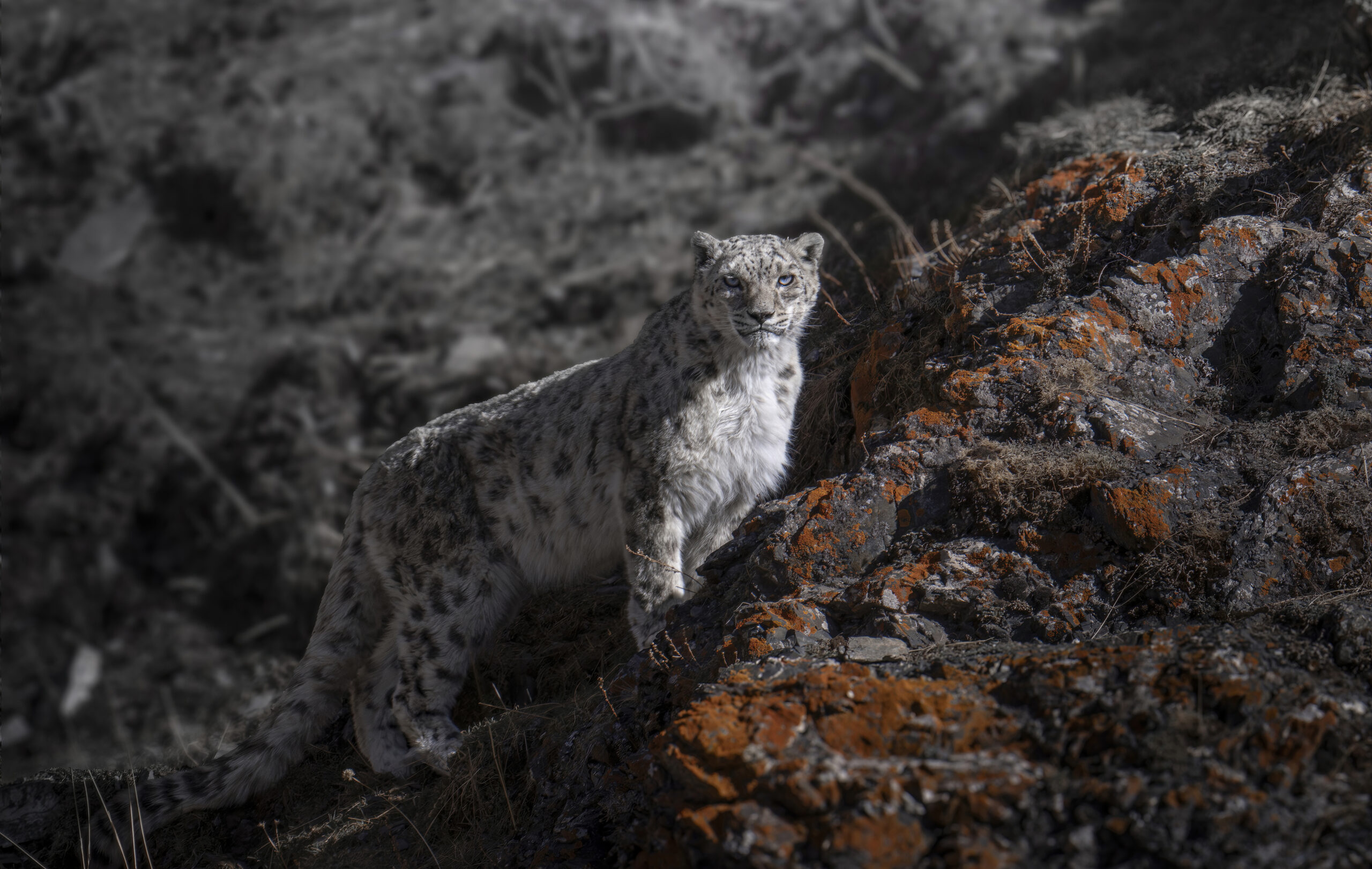
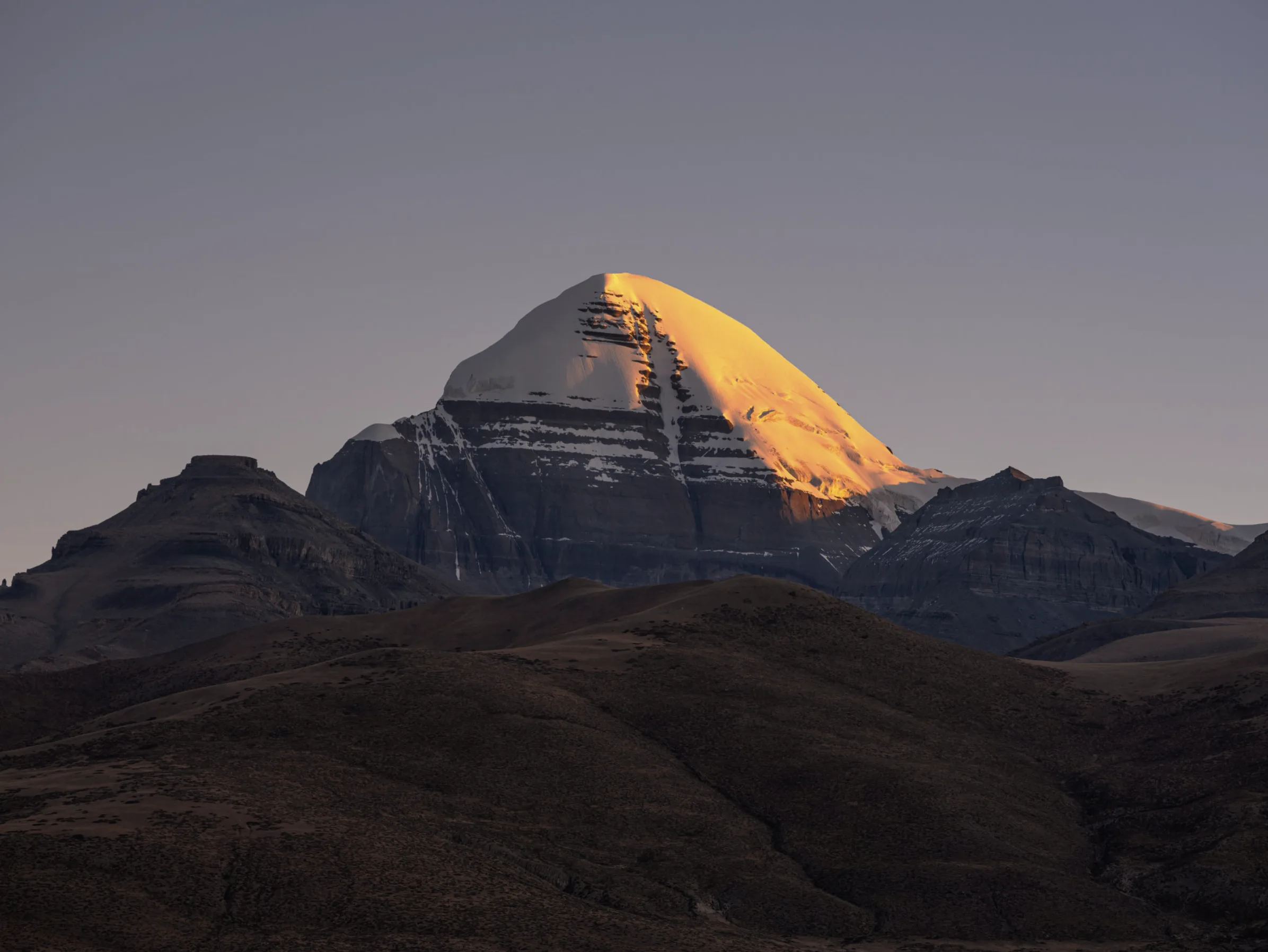
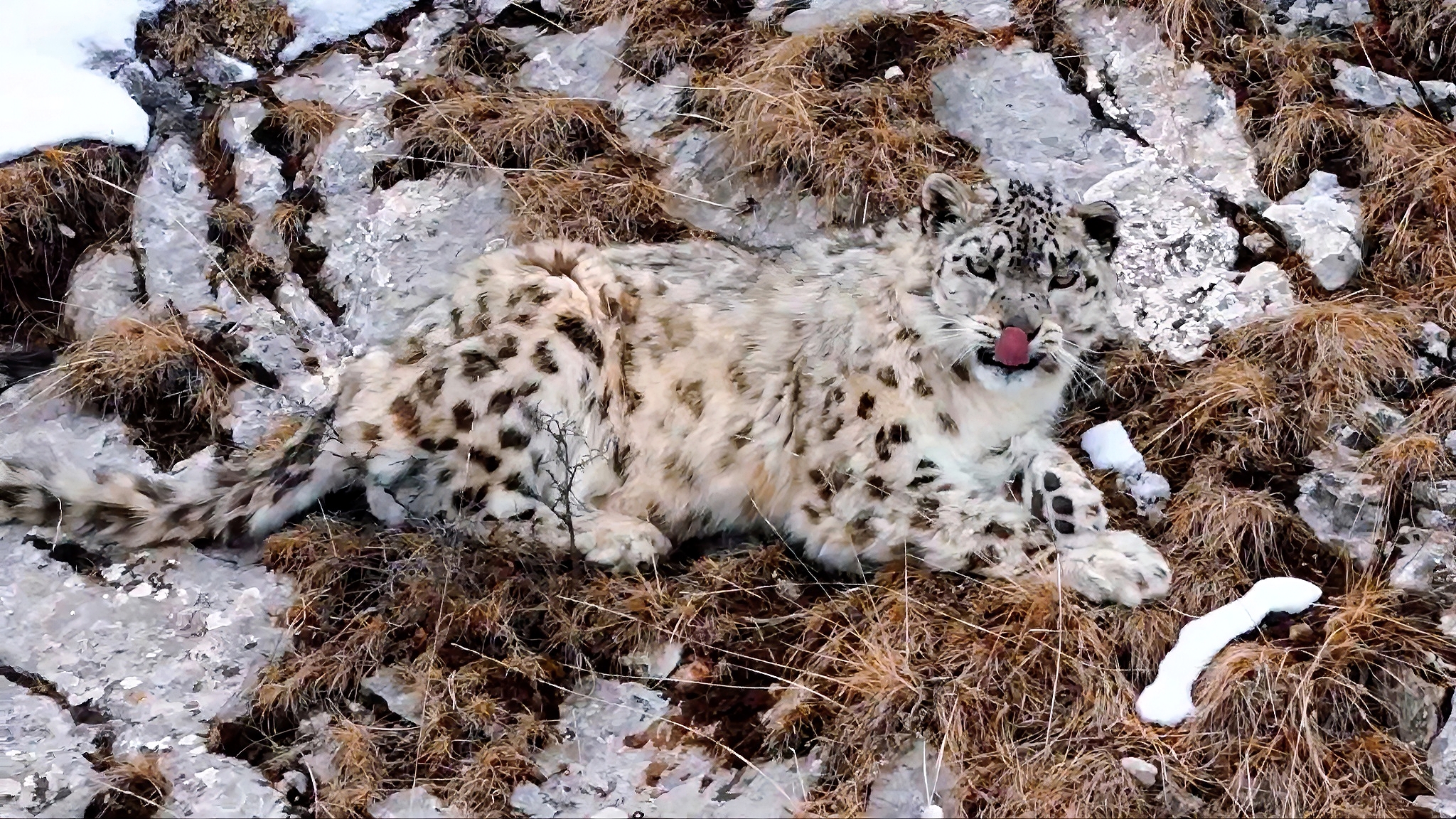
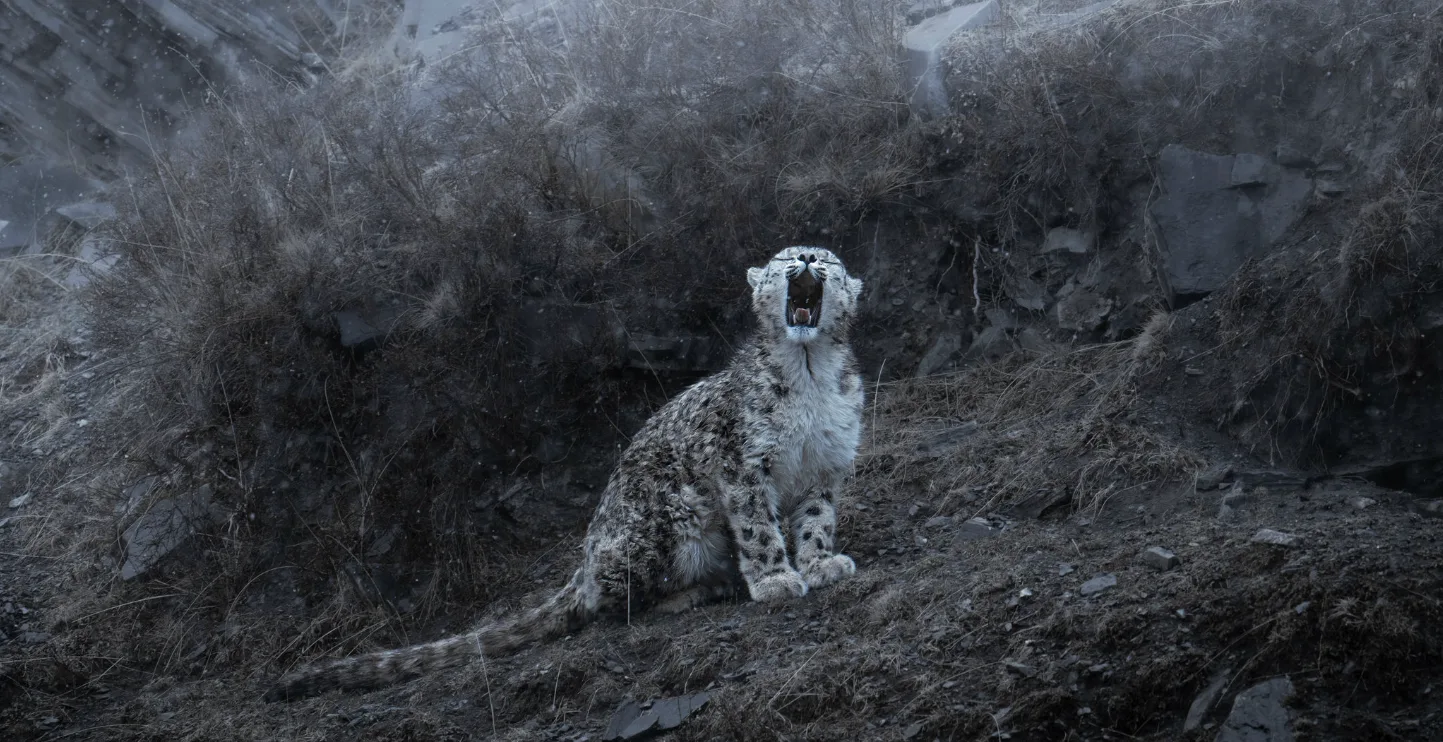
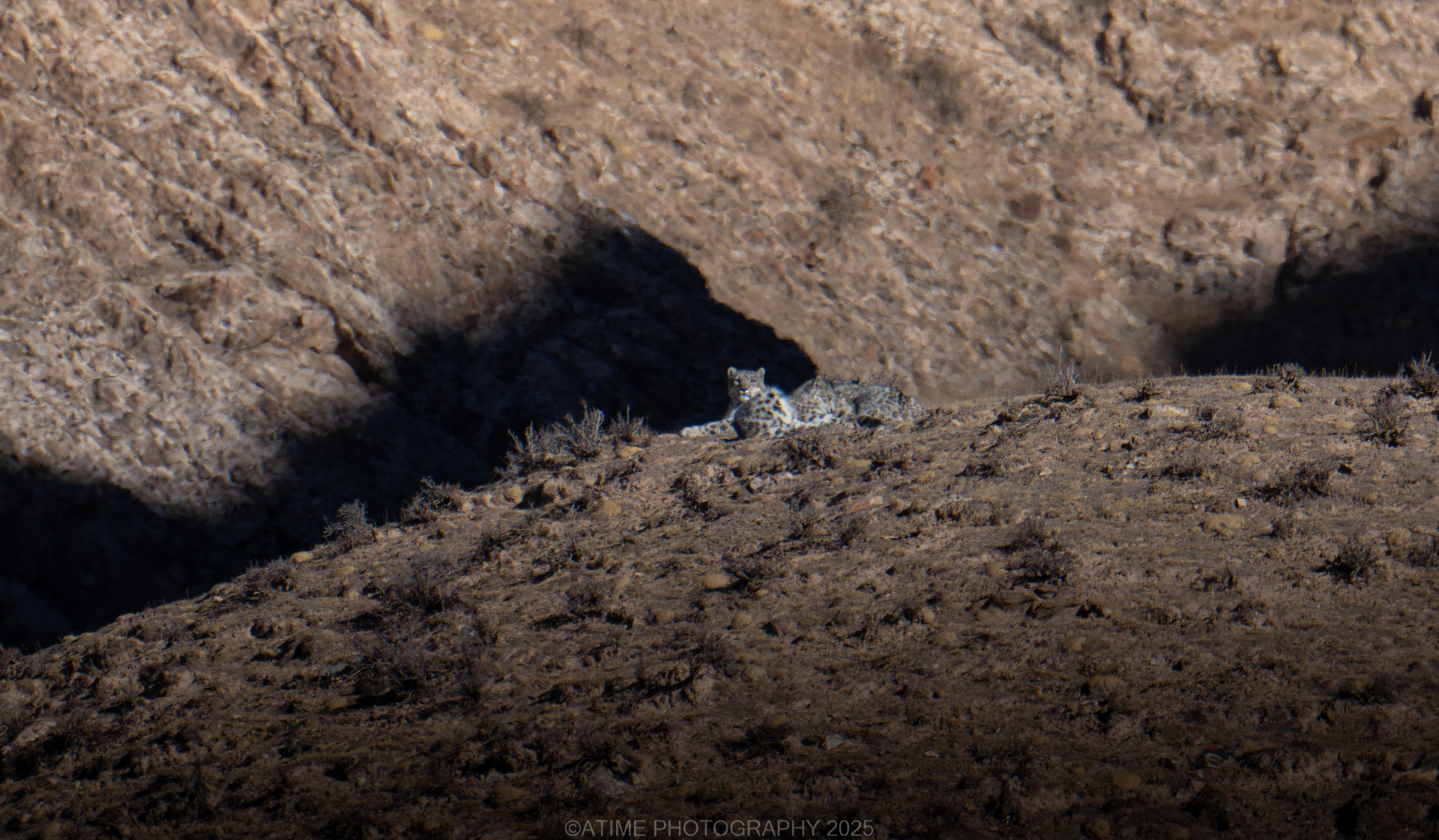
Snow leopards live in the high mountain systems of Central and South Asia, across 12 countries including China, India, Mongolia, Nepal, and Bhutan, mostly in rugged alpine and subalpine terrain above the treeline at around 3,000 to 4,500 metres. An estimated 7,446–7,996 wild snow leopards remain across the world today, with the largest populations found in China (approximately 4,114–6,351 individuals), India (around 718 individuals), and Mongolia (around 953 individuals).
For wildlife enthusiasts, photographers, conservation-minded travellers, and culturally curious adventure travellers interested in Asia’s remote mountain landscapes, this guide explains the snow leopard’s global range, habitat, prey, and the main threats it faces. It also compares three of the world’s leading snow leopard expedition destinations, China, India, and Mongolia, with practical context on landscape, travel conditions, seasonality, photography preparation, responsible wildlife tourism, and how Eastogo approaches snow leopard expeditions. Understanding where snow leopards live is the starting point for planning a realistic and responsible journey—one that supports conservation and local communities in these fragile high-altitude ecosystems.
Where Do Snow Leopards Live? Global Range Overview
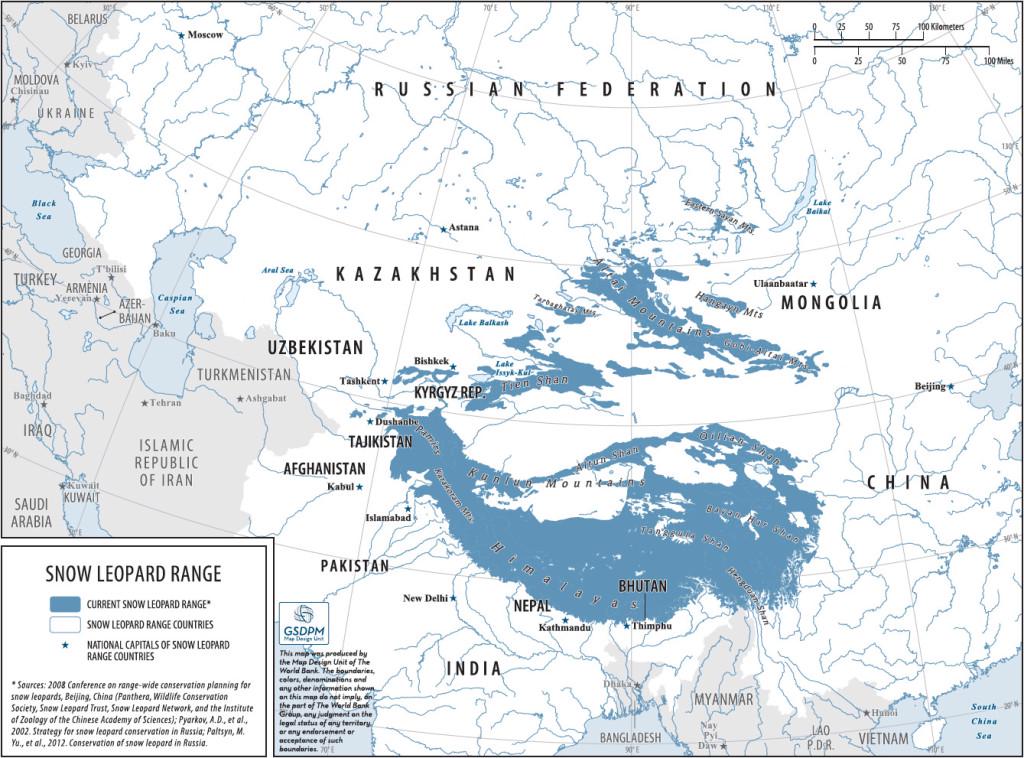
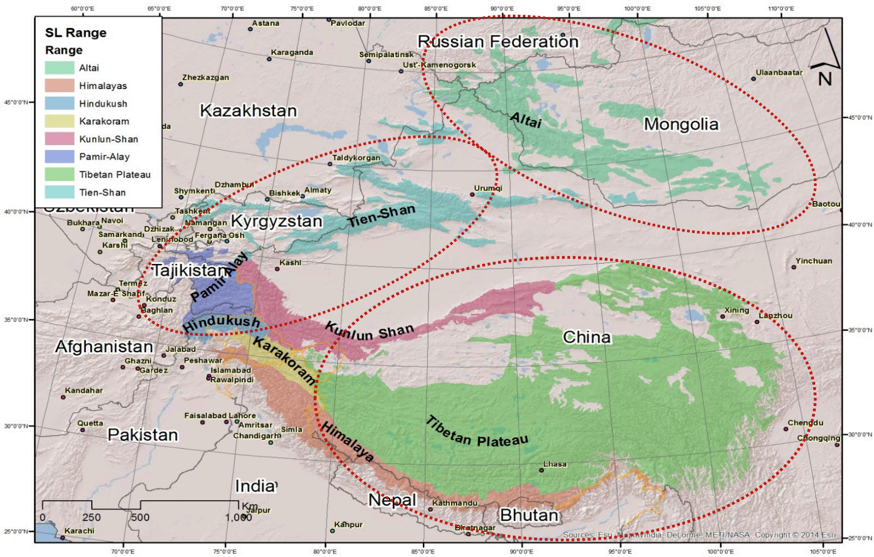
Snow leopards inhabit the high mountain systems of Central and South Asia, with a range spanning 12 countries and about 1,800,000 square kilometers of potential habitat across alpine landscapes.[1][2][3] Their distribution covers China, Afghanistan, Bhutan, India, Kazakhstan, Kyrgyzstan, Mongolia, Nepal, Pakistan, Russia, Tajikistan, and Uzbekistan, reflecting a broader range across Central Asia and extending through some of Asia’s most iconic mountain regions, including the Altai, Tien Shan, Kunlun, Pamir, Hindu Kush, Karakoram, and Himalayan ranges.
Recent research has identified seven large continuous habitat patches and ten potential linkages that are particularly important for maintaining connectivity between snow leopard populations. The strongest connections are centered around the Tien Shan–Pamir–Hindu Kush–Karakoram mountain system and the Altai Mountains.[3]
Snow Leopard Habitat: High-Altitude Mountains and Alpine Ecosystems
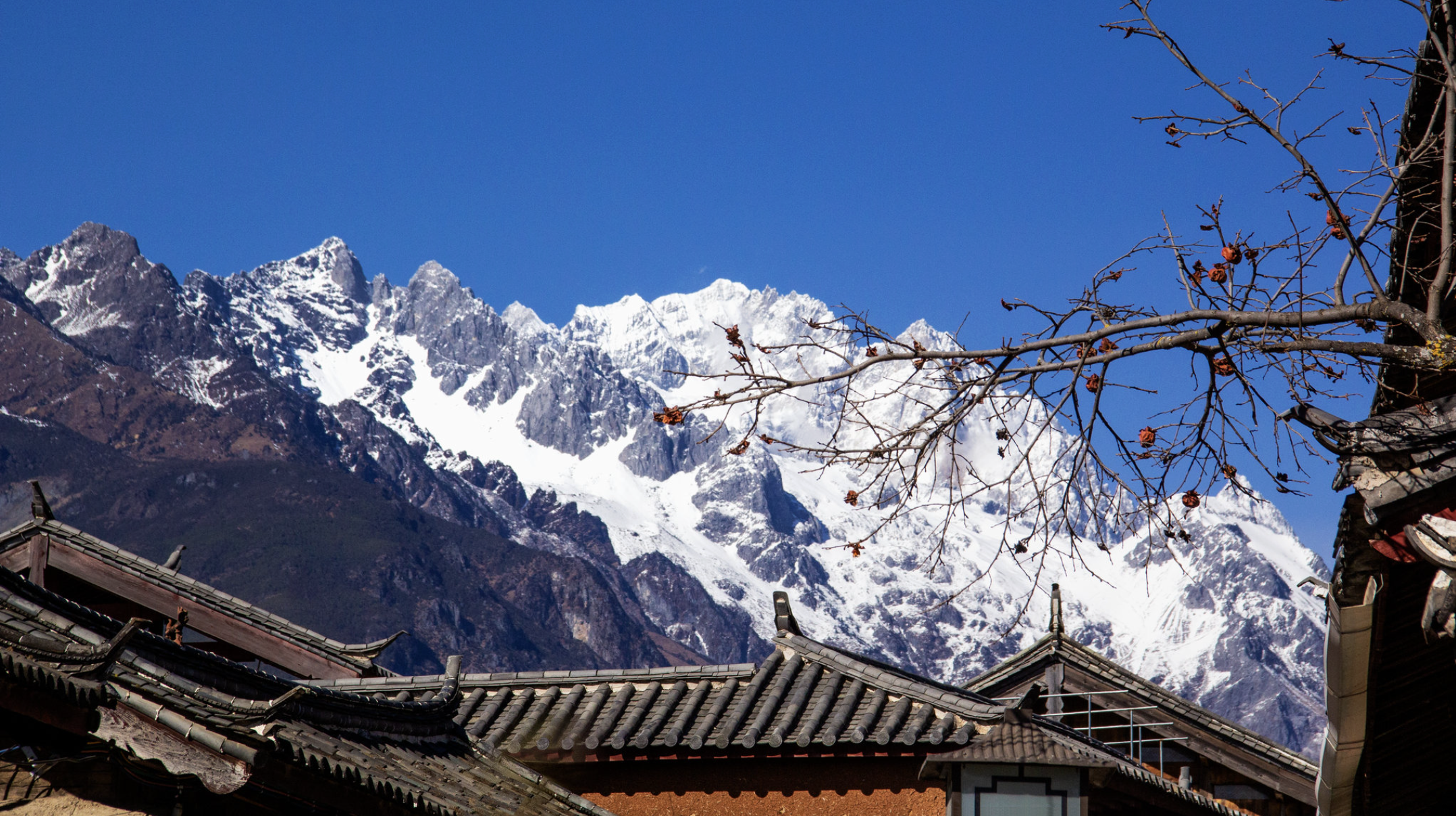
Snow leopards mainly inhabit alpine and subalpine zones above the tree line. In parts of Russia’s Sayan Mountains and the Tien Shan, they may also occur in open coniferous forests or birch forests. They are generally found at elevations between 3,000 and 4,500 meters, although populations in the northern part of their range and the Gobi Desert can occur at lower elevations of around 900–1,500 meters. In the Himalayas and on the Tibetan Plateau, their upper elevational limit can reach approximately 5,800 meters.[4]
Their preferred habitat consists of rugged, arid alpine and subalpine landscapes above the treeline, including steep slopes, ridges, cliffs, gullies, and rocky outcrops.[3][5] Their thick fur and wide, furry paws help them move through cold alpine terrain, with the paws acting like natural snowshoes.
Snow Leopard Range and Population by Country
An estimated 7,446–7,996 wild snow leopards remain globally. Listed as Vulnerable on the IUCN Red List, the species is currently found across only 12 countries in Asia.
China: The Tibetan Plateau and Qinghai Snow Leopard Habitat
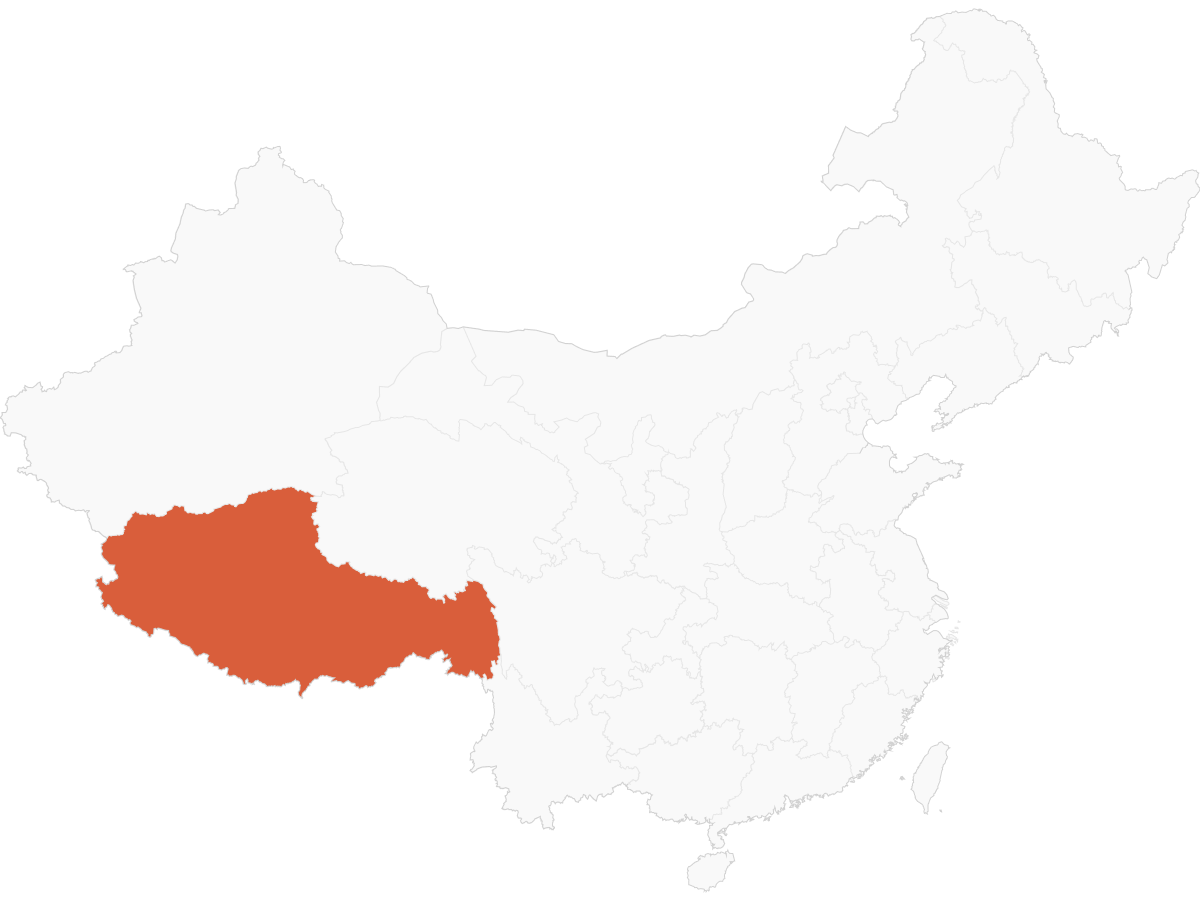
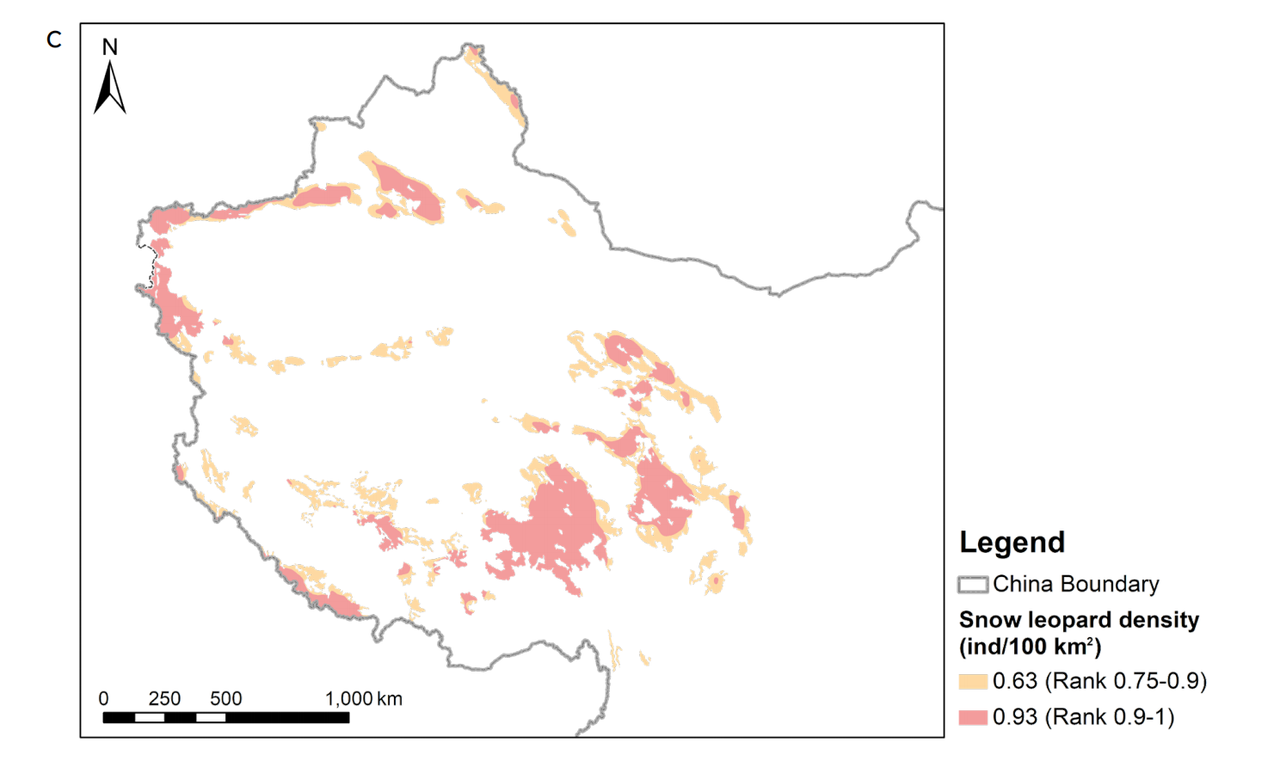
China is home to the world’s largest snow leopard population, with an estimated 5,232 adult individuals and a 95% CI of 4,114–6,351.[6] China also contains around 60% of the global snow leopard habitat, with a total potential range of 1,397,329 km². The estimated extant range covers 778,756 km², while the possibly extant range covers an additional 618,573 km².
Snow leopard populations in China are mainly distributed across the Tibetan Plateau and surrounding mountain systems, including the Himalayas, Hindu Kush, Pamir, Kunlun, Tien Shan, Altai, and Hengduan Mountains.[6]
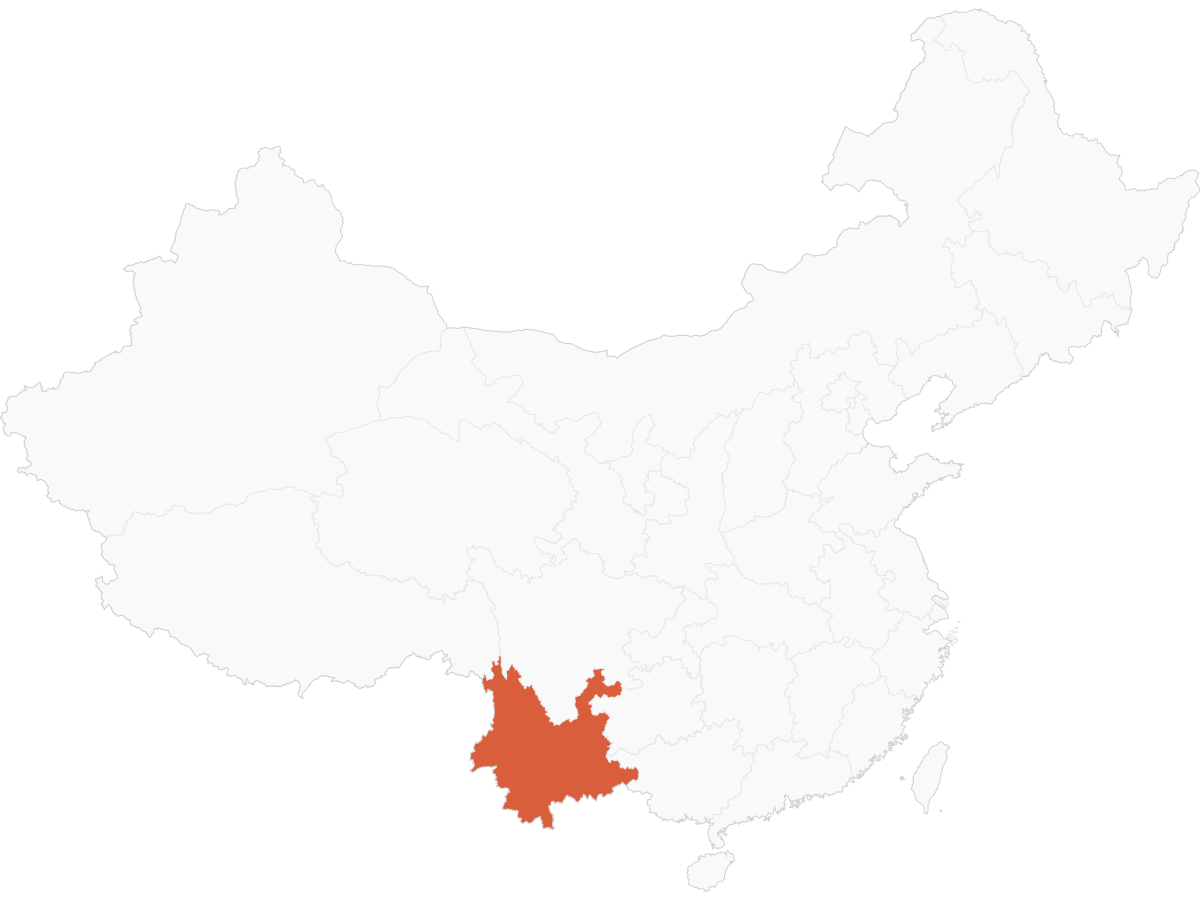
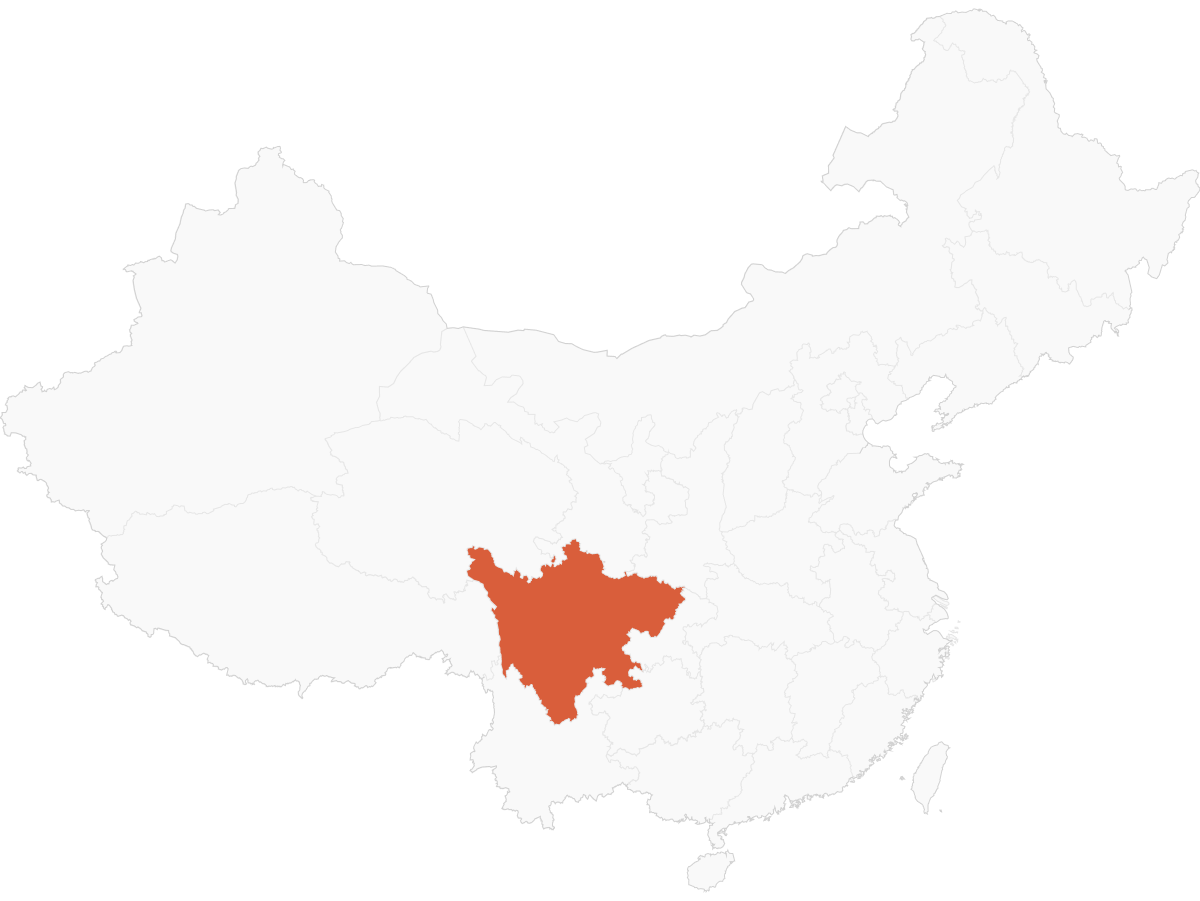
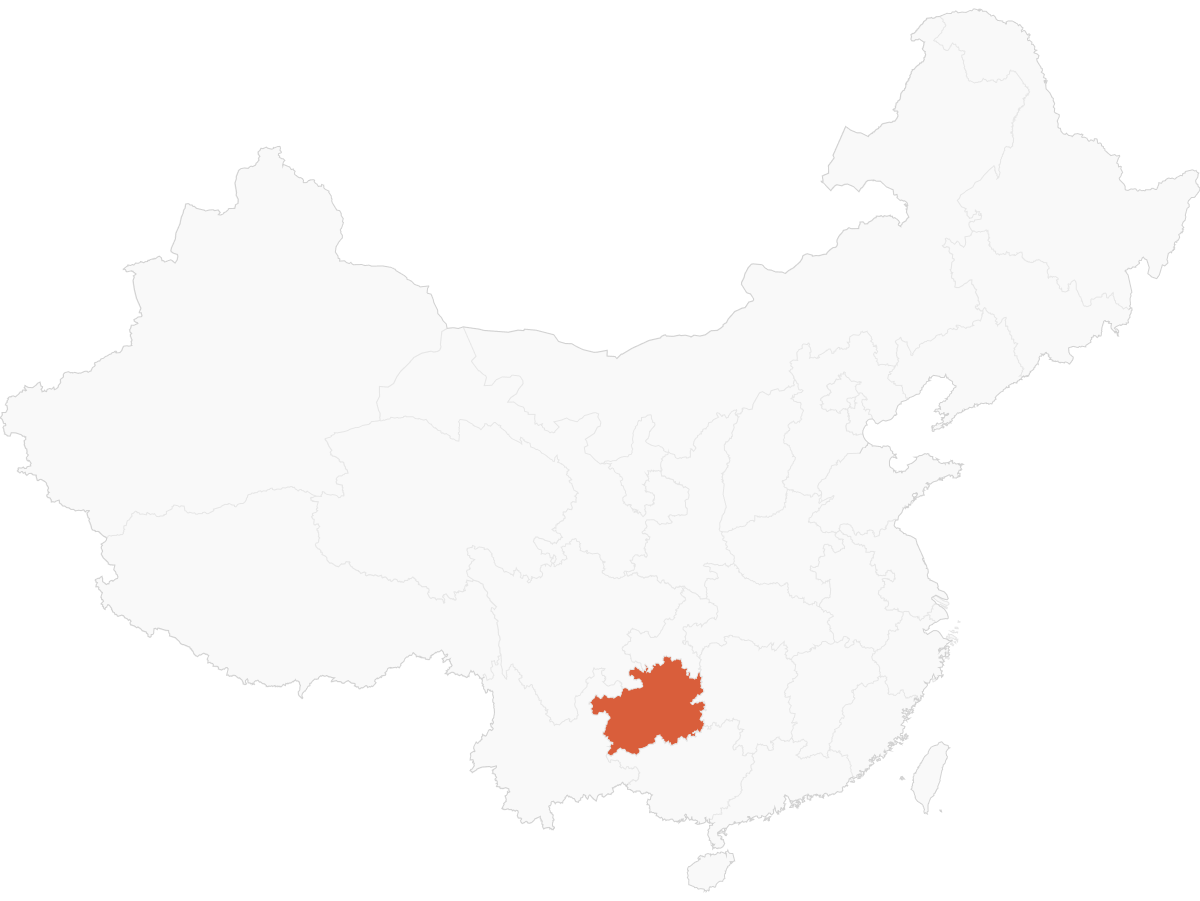
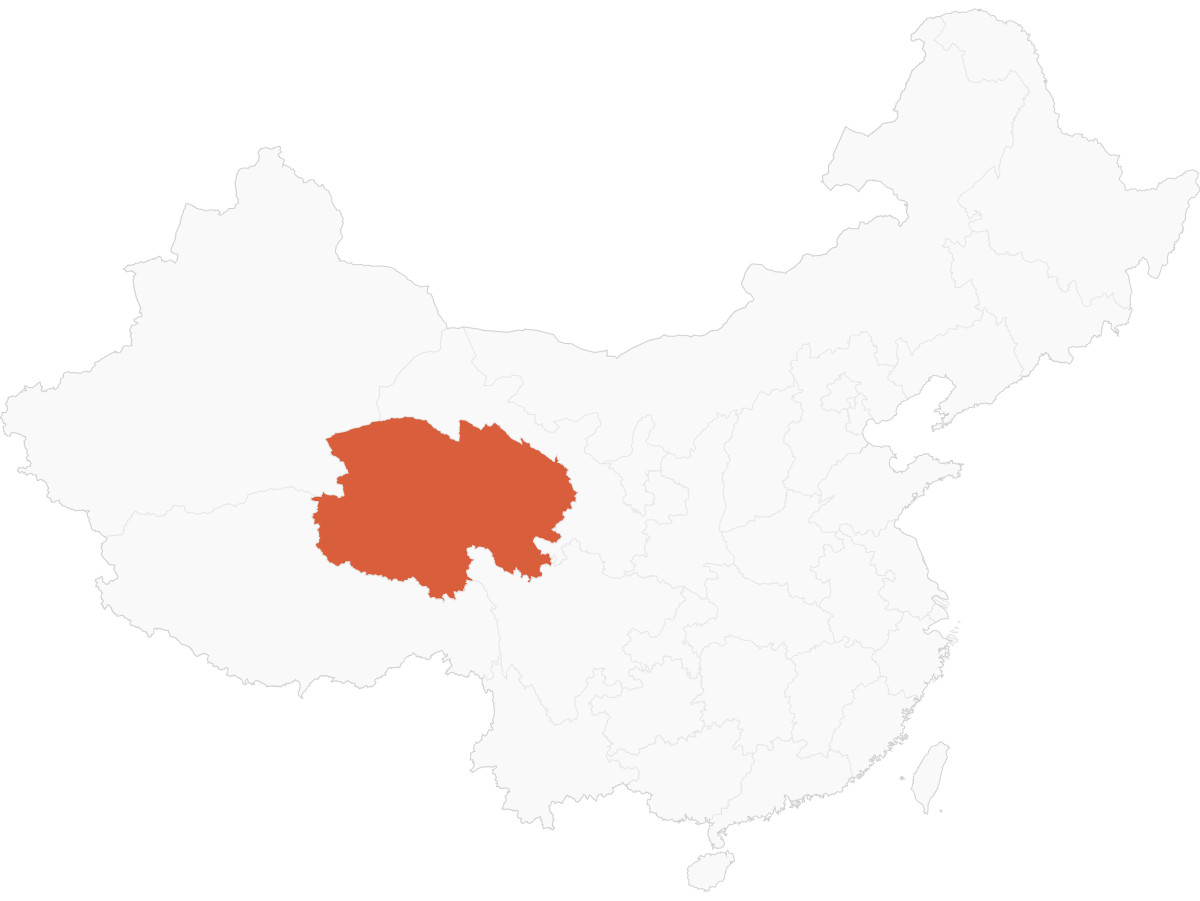
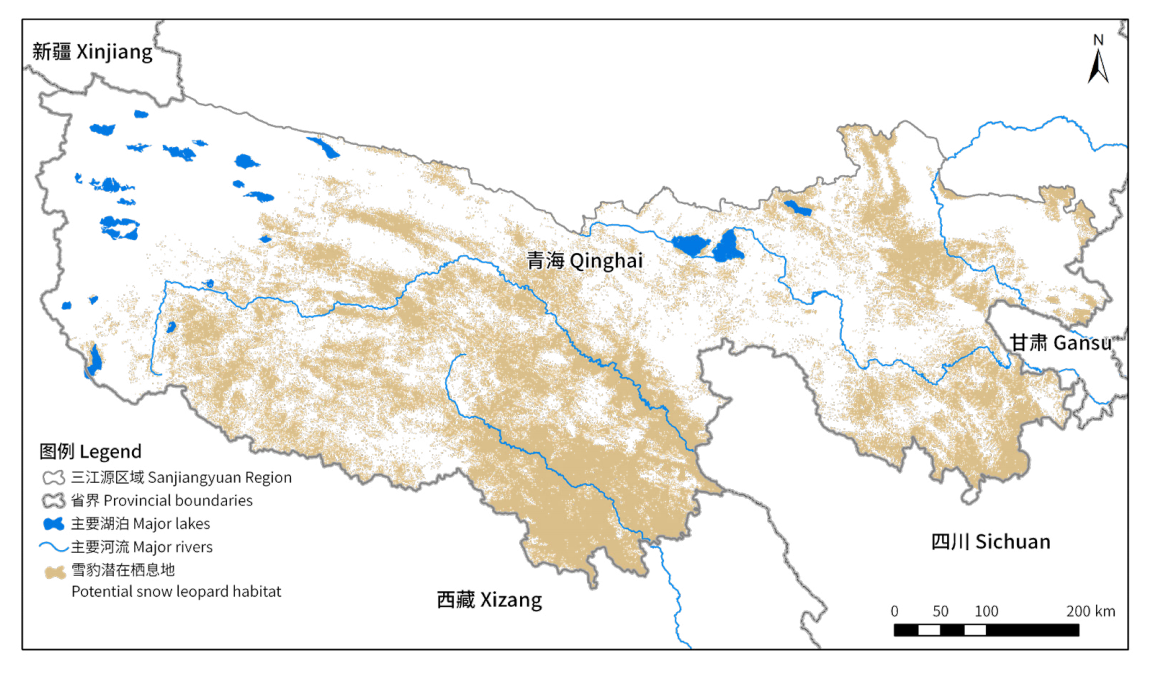
By province, snow leopards are primarily found in Qinghai, Xinjiang, Tibet, Gansu, Sichuan, and Yunnan. Estimated populations include approximately 1,765 individuals in Qinghai (including 1,002 in the Sanjiangyuan region), 1,552 in Xinjiang, 1,401 in Tibet, 280 in Gansu, 220 in Sichuan, and 14 in Yunnan.[6]
Population density also varies across regions. Surveys have estimated densities of approximately 0.9 snow leopards per 100 km² in Sanjiangyuan, Qinghai, and 1.4 snow leopards per 100 km² in the central Tibetan Plateau.[6]
India: Himalayan Snow Leopard Regions From Ladakh to Spiti Valley
India’s snow leopard habitat covers approximately 120,000 km². The species’ range extends across much of the western Himalayas, including the Union Territories of Jammu and Kashmir and Ladakh, the states of Himachal Pradesh and Uttarakhand, and parts of the eastern Himalayas, including Sikkim and Arunachal Pradesh.[8]
India is estimated to have 718 snow leopard individuals nationwide. Of these, approximately 477 occur in Ladakh, 124 in Uttarakhand, and 51 in Himachal Pradesh, where the well-known Spiti Valley is located. Population density is estimated at 0.34 snow leopards per 100 km² in Ladakh and 0.08–0.37 per 100 km² in Himachal Pradesh.[9]
Mongolia: The World’s Second-Largest Snow Leopard Population in Open Mountain Landscapes
Mongolia is home to the world’s second-largest snow leopard population, with an estimated 953 adult individuals and a 95% CI of 806–1,127.[10] The species’ potential habitat covers approximately 326,617 km², primarily across the Mongolian Altai, Gobi Altai, and Khangai mountain ranges, as well as the Sayan Mountains along the border with the Russian Federation.[11]
The national average population density is estimated at 0.31 snow leopards per 100 km². In the highest-density areas, covering approximately 48,290 km², density reaches 0.61 snow leopards per 100 km².[10]
Nepal: Himalayan Snow Leopards in Remote Mountain Regions
Nepal is estimated to have approximately 397 snow leopards, with a 95% CI of 331–476. The country contains around 30,435.78 km² of potential snow leopard habitat, with an average population density of 1.56 snow leopards per 100 km².[12]
Shey-Phoksundo National Park supports the largest estimated snow leopard population in Nepal, with a density of 2.21 snow leopards per 100 km² and an estimated 90 individuals (95% CI: 78–109).[12][13]
Bhutan: A High-Density Himalayan Snow Leopard Population
Bhutan is estimated to support approximately 134 adult snow leopards, with a 95% CI of 121–148. The estimated average density of adult snow leopards is 1.34 individuals per 100 km², across approximately 7,206 km² of suitable habitat.[13]
Pakistan: Karakoram and Himalayan Snow Leopard Landscapes
Pakistan is estimated to have approximately 150–200 adult snow leopards, with a national average population density of 0.13 snow leopards per 100 km².[14] The country contains an estimated 80,000 km² of potential snow leopard habitat.[15]
Snow leopards in Pakistan are restricted to the remote high-mountain landscapes of the north. Their range extends across the Hindu Kush, Karakoram, Pamir, and western Himalayan mountain systems, including parts of Gilgit-Baltistan, Khyber Pakhtunkhwa (especially Chitral, Swat, Dir, and Kohistan), and Azad Jammu and Kashmir, particularly the Neelum Valley.[16]
Other Central Asian Countries
- Kyrgyzstan: Kyrgyzstan is estimated to have approximately 300 adult snow leopards, with a 95% CI of 246–366. The average density of adult snow leopards across the country is estimated at 0.24 per 100 km².[17]
- Kazakhstan: The country is estimated to support approximately 152–189 snow leopards.[18]
- Tajikistan: Tajikistan is estimated to have approximately 500 snow leopards.[19]
- Uzbekistan: Uzbekistan is estimated to have approximately 96–107 adult snow leopards, including 46–47 in the Western Tien Shan and 50–60 in the Western Pamir-Alay.[20]
Although snow leopard habitat is distributed across 12 countries, these landscapes are not isolated from one another. Mountain systems remain connected across national borders, allowing populations living in neighboring regions to share similar ecological conditions, prey resources, and behavioral adaptations.
Choosing a Snow Leopard Destination: China vs Mongolia vs India
China, Mongolia, and India are among the most established snow leopard expedition destinations, but each offers a very different experience. The landscapes, observation methods, travel conditions, and other wildlife opportunities vary considerably between countries.
Choosing a destination is not simply about comparing snow leopard numbers. Factors such as travel time to reach the observation area, altitude, physical demands, accommodation conditions, the actual number of days spent in the field, and whether the expedition follows responsible wildlife practices all play an important role in shaping the experience.
China: More Field Time and Less Crowded Observation
China is home to the world’s largest snow leopard population, and Qinghai has become the country’s most established destination for international snow leopard expeditions. While Tibet and Xinjiang also support important snow leopard populations, access restrictions and less developed observation systems make them less practical choices for most international travelers.
Qinghai’s Sanjiangyuan region is a particularly promising area, with records of more than 1,000 snow leopards. Expeditions here are supported by local herder observation networks, where guides work with communities that have lived alongside wildlife for generations. This local knowledge plays an important role in understanding recent animal activity and improving the chances of finding snow leopards.
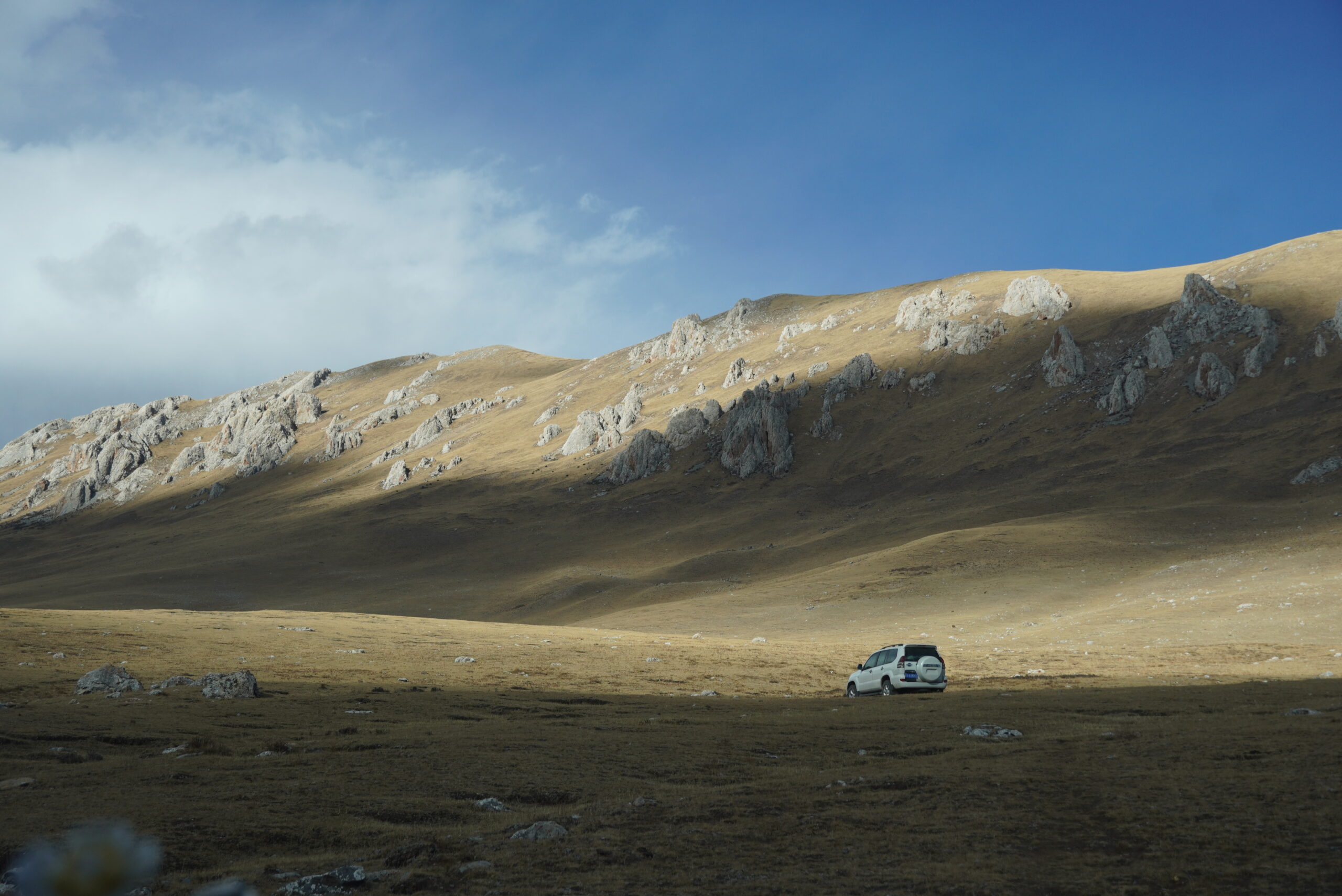
Most observation sites are located in remote pastoral areas around Yushu and the Sanjiangyuan region. After arriving in Yushu, travelers continue by 4WD into mountain villages, where observation is mainly conducted through vehicle-based searching, fixed scanning points, and patient waiting rather than long daily hikes.
Another advantage of Qinghai is efficiency. Because transportation within China is relatively convenient, a larger proportion of the itinerary can be dedicated to actual field observation. Compared with some other international snow leopard destinations, Qinghai also receives fewer wildlife travelers, offering a quieter and more immersive experience.
The trade-off is comfort. During observation periods, travelers usually stay with local herder families rather than conventional hotels. Facilities are basic, private rooms cannot always be guaranteed, and modern amenities may be limited.
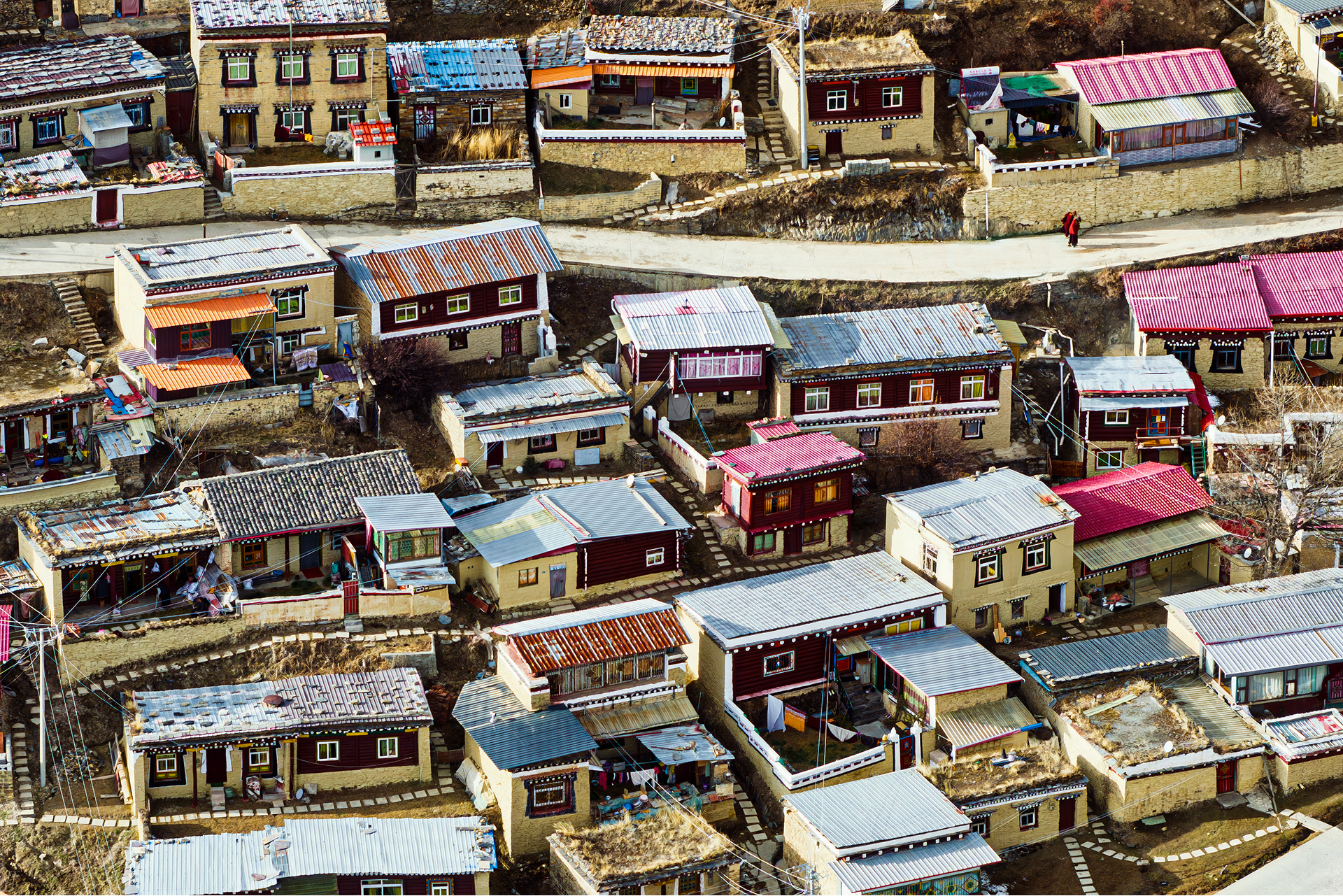
Beyond wildlife, Qinghai offers a rare opportunity to experience the landscapes and traditions of Tibetan culture. Many snow leopard habitats overlap with Tibetan pastoral communities, where centuries-old relationships between people, livestock, and wildlife continue to shape everyday life. For travelers seeking a combination of high observation efficiency, authentic Tibetan Plateau landscapes, Tibetan culture, and fewer crowds, Qinghai offers one of the most distinctive snow leopard expedition experiences in Asia.
India: Established Snow Leopard Tracking with More Physical Demands
India has one of the longest histories of organized snow leopard tourism, with established local teams and more developed services around the main observation areas. Compared with some newer destinations, accommodation and logistics are generally more prepared for international travelers.
Most expeditions begin in Leh, Ladakh, at around 3,500 meters, where travelers spend time acclimatizing before entering snow leopard areas such as Hemis National Park, Rumbak, and Ulley. Observation is usually based around hiking and fixed observation points, making Indian expeditions more physically demanding than many vehicle-based alternatives.
Another well-known destination is Spiti Valley, located at around 3,600–4,400 meters. Here, travelers combine 4WD searching with hiking in remote mountain landscapes. Winter conditions can be challenging, with freezing temperatures, strong winds, snow, and difficult terrain. Accommodation is usually in local homestays, and winter conditions may occasionally affect basic facilities.
The main trade-off in India is access. Many snow leopard itineraries require one to three days of overland travel from major transport hubs, meaning a significant part of the trip is spent reaching the observation areas. In many commercial itineraries, dedicated snow leopard observation days account for roughly half of the total journey.
For travelers who value established services, Himalayan landscapes, and a more traditional snow leopard tracking experience, India remains one of the world’s most recognized destinations. The region can also be combined with rich Himalayan culture and local experiences.
Mongolia: Open Landscapes and a Remote Nomadic Experience
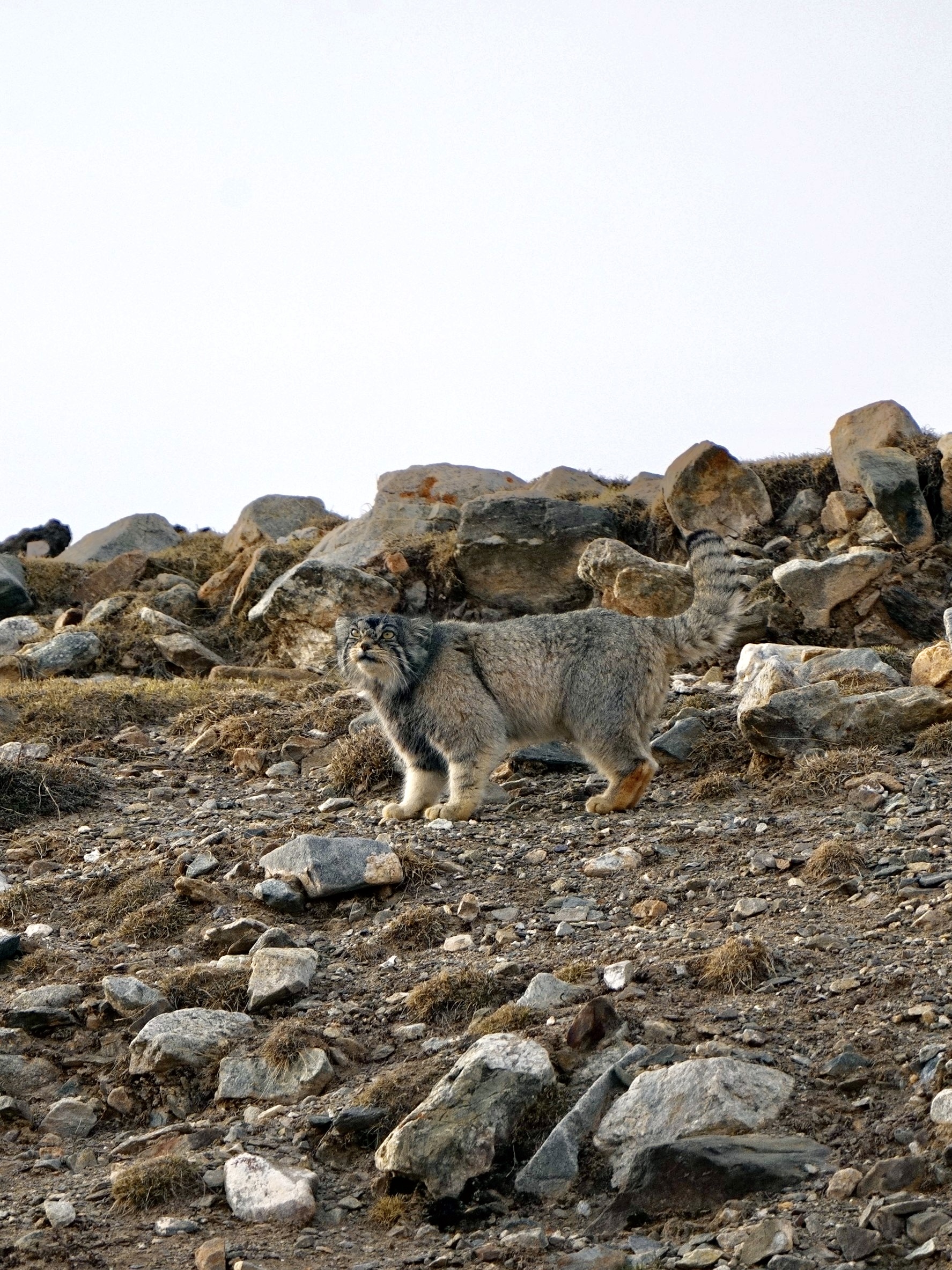
Mongolia’s snow leopard expeditions are mainly concentrated in the western Altai Mountains, where elevations are generally lower than those in China and India. This makes altitude adaptation easier for many travelers. The experience also offers a strong connection with Mongolian nomadic culture, and some itineraries can be combined with experiences such as eagle hunting traditions or Pallas’s cat observation.
Once inside the snow leopard habitat, accommodation is typically based around ger camps or local herder families. Travelers can usually expect beds, hot meals, and heating from traditional stoves, although bathroom facilities, electricity, and internet access may be limited. The approach to finding snow leopards is similar to Qinghai, relying on vehicle searching, local knowledge, and patient observation.
Snow leopards in Mongolia primarily prey on Siberian ibex and argali. Expeditions may also offer opportunities to observe other species of the Mongolian steppe and mountains, including Siberian ibex, argali, wolves, and, on extended itineraries, Przewalski’s horses.
Mongolia generally requires a longer commitment, with most expeditions lasting around 10–14 days and snow leopard observation accounting for roughly half of the itinerary. Reaching the observation areas also involves long-distance travel. September to October often provides a good balance between weather, road conditions, and field observation. Snow leopards can also be encountered in late autumn, winter, and early spring, although extreme cold, snowfall, and difficult roads can make travel conditions more unpredictable.
Travelers who value responsible wildlife tourism should also ask operators about their field practices in advance, including how they approach wildlife observation and photography.
| Destination | Landscape | Observation Elevation | Observation Style | Accessibility | Wildlife Highlights | Accommodation | Best For |
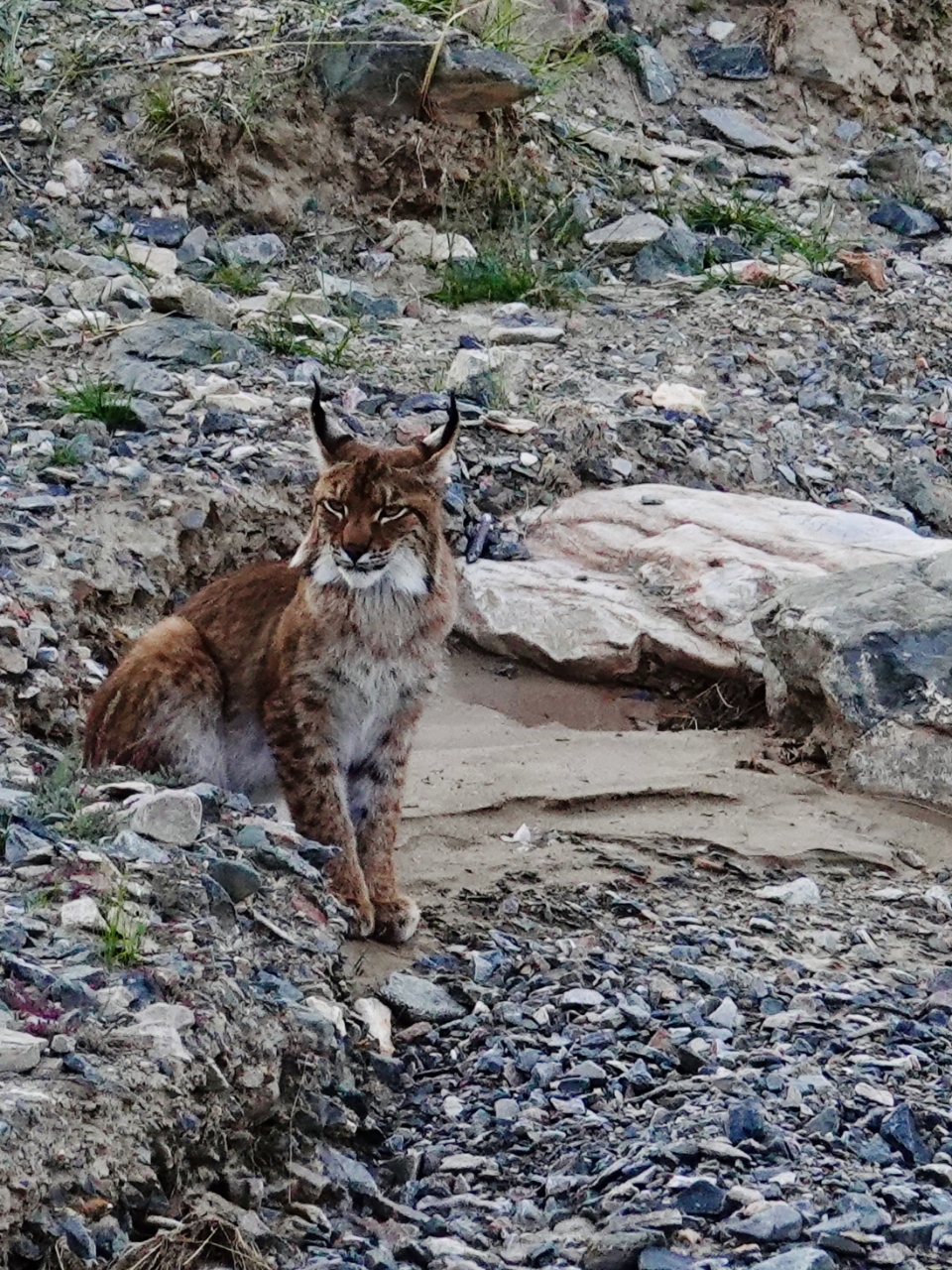
| Qinghai, China | Tibetan Plateau landscapes, broad valleys, rocky cliffs, alpine grasslands, and pastoral communities | 3,500–4,200 m (11,500–14,000 ft) | Mainly 4WD searching, long-distance scanning, and fixed observation points; relatively little hiking required | Fly to Yushu first, then continue by 4WD into remote pastoral areas. Once at the observation site, more time can be dedicated to searching for wildlife | Snow leopard, Eurasian lynx, Pallas’s cat, Tibetan fox, Himalayan wolf, brown bear, blue sheep, white-lipped deer, Tibetan gazelle, serow, red deer, and more | Comfortable hotels in towns; remote areas usually require stays with local herder families, private rooms and shower facilities cannot always be guaranteed | Travelers who want less demanding hiking, more field observation time, and opportunities to see a wide range of Tibetan Plateau wildlife |
| Ladakh and Spiti Valley, India | High-altitude cold deserts, steep valleys, rocky slopes, and snow-covered mountains | 3,500–4,000 m (11,500–13,200 ft) | Hiking, fixed observation points, and limited 4WD searching | Requires altitude acclimatization before entering observation areas such as Hemis, Rumbak, Ulley, or Spiti. Reaching the wildlife areas may take a significant part of the itinerary | Snow leopard, Eurasian lynx, blue sheep, Siberian ibex | Ladakh offers homestays, tented camps, and wildlife lodges; Spiti mainly relies on homestays, with winter facilities sometimes affected by freezing conditions | Physically fit travelers who are comfortable with cold-weather hiking and want a more established snow leopard tracking experience |
| Western Altai, Mongolia | Open mountains, desert steppe, rocky valleys, and nomadic landscapes | 2,200–2,600 m (6,600–8,530 ft) | 4WD searching, fixed scanning points, and local herder knowledge networks | Lower altitude makes acclimatization easier, but reaching the region requires long-distance travel. Most itineraries last 10–14 days, with snow leopard observation accounting for around half of the trip | Snow leopard, Pallas’s cat, Siberian ibex, argali, Mongolian wolf, Przewalski’s horse, Mongolian wild ass (kulan) | Mainly ger camps or stays with local herder families. Beds, hot meals, and heating are usually available, while showers, electricity, and internet can be limited | Travelers seeking vast wilderness, nomadic culture, and opportunities to combine snow leopard searches with ibex, argali, Pallas’s cat, or Przewalski’s horse observation |
Permits, Access, and Local Regulations
Visa requirements, protected area regulations, and local access rules vary between China, India, and Mongolia. They may also change depending on the specific region, season, and traveler nationality.
High-altitude and border regions in India, remote pastoral areas in China, and some routes in western Mongolia may require additional planning before departure. Travelers should confirm the latest entry requirements, road conditions, and local service availability before arranging a snow leopard expedition.
Even where no specific wildlife permit is required, entering snow leopard habitat independently is not recommended. These are remote and challenging landscapes where responsible observation depends on local knowledge, logistics, and appropriate field practices. Working with an experienced operator that can organize the expedition legally and responsibly is the safer and more effective choice.
Best Time to Look for Snow Leopards
Snow leopards remain in their mountain habitats throughout the year, but the chance of observing them changes significantly with the seasons. Snow cover, vegetation, prey movements, road conditions, and weather all influence both wildlife visibility and the practicality of reaching observation areas.
| Destination | Main Observation Season | Best Period | Seasonal Characteristics |
| Qinghai, China | October to April; some areas may also offer opportunities in May or July | January to March | Winter vegetation is lower, making mountain slopes easier to scan. January to March overlaps with the snow leopard mating season, when more social activity may occur. Extreme cold and high altitude remain the main challenges. |
| Ladakh and Spiti Valley, India | November to March | January to March | Winter is the traditional snow leopard tracking season. However, freezing temperatures, snow, and strong winds can make hiking more demanding, while roads and accommodation in Spiti may be affected by weather conditions. |
| Western Altai, Mongolia | Late autumn, winter, and early spring | September to October | September and October often provide a good balance between temperature, road conditions, and field observation. Winter can still offer opportunities, but severe cold, snowfall, and difficult roads increase uncertainty. |
The best season depends on what kind of experience you are looking for. For travelers focused primarily on maximizing snow leopard observation opportunities, January to March is generally the strongest window in both Qinghai, China, and the Himalayan regions of India. Qinghai is a better match for those who prefer a more observation-focused experience with less winter hiking, while India appeals more to travelers who enjoy trekking into remote valleys and following a traditional tracking approach.
For Mongolia, September to October offers a different kind of experience, combining better travel conditions with the chance to explore vast wilderness landscapes and nomadic culture before the most severe winter weather arrives.
Ultimately, no destination or season can guarantee a snow leopard sighting. The most rewarding expeditions are those that allow enough time in the field, rely on local knowledge, and embrace the uncertainty that comes with observing a truly wild animal.
What Do Snow Leopards Eat? A Look at Their Ungulate Prey Across Asia
Wild ungulates form the foundation of the snow leopard’s diet, but the main prey species vary across different parts of its range depending on local habitats and available wildlife.
Janecka et al. identified three primary genetic clusters across the global snow leopard range:[21]
- Northern cluster: Russia and Mongolia, extending from the Gobi to the Altai Mountains.
- Central cluster: the Tibetan Plateau and the core Himalayan region, including Nepal and Bhutan.
- Western cluster: the Tien Shan, including Xinjiang in China, Kyrgyzstan, Uzbekistan, and Kazakhstan; the Pamir region of Tajikistan and Afghanistan; and the trans-Himalayan regions of India and Pakistan.[4]
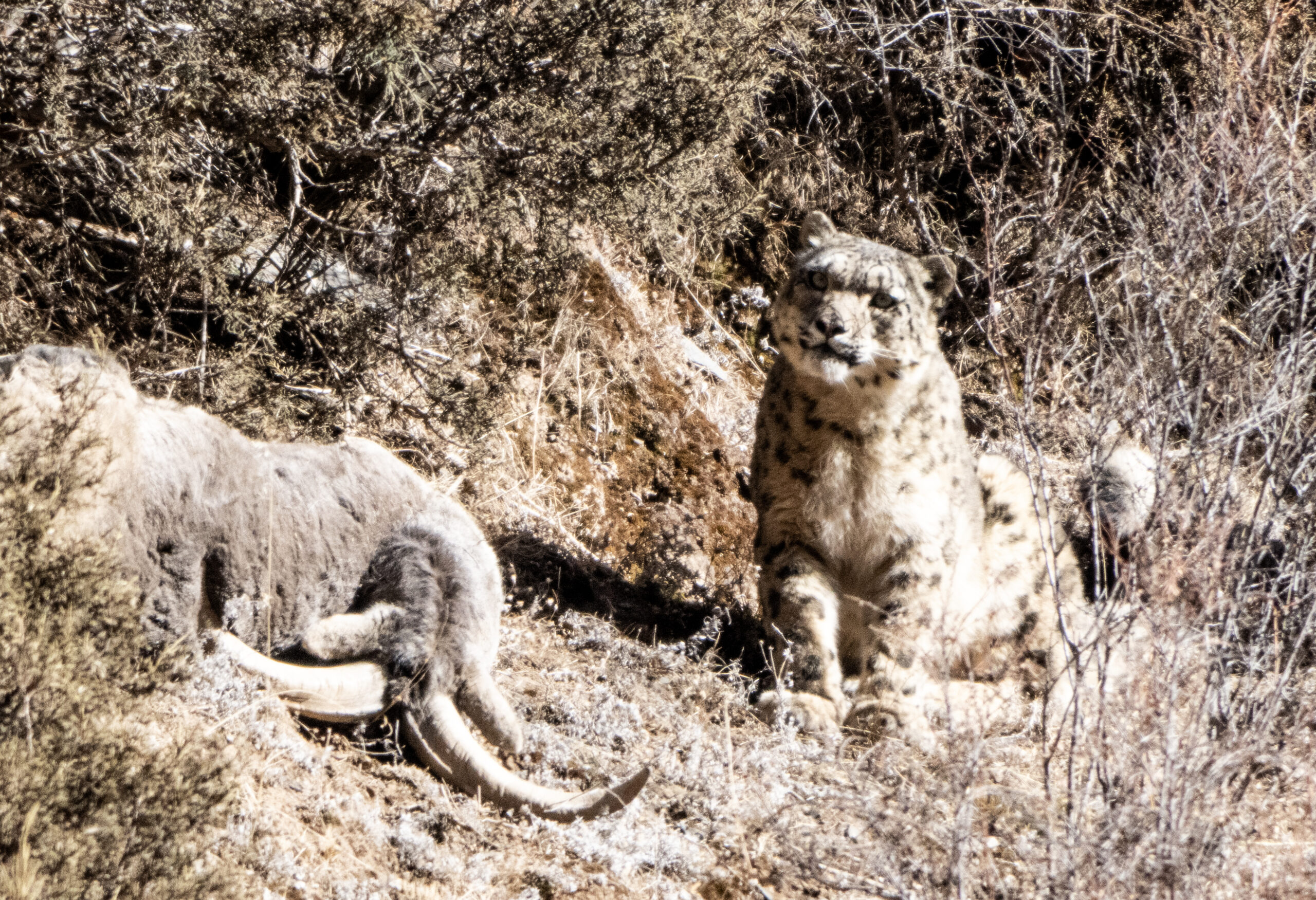
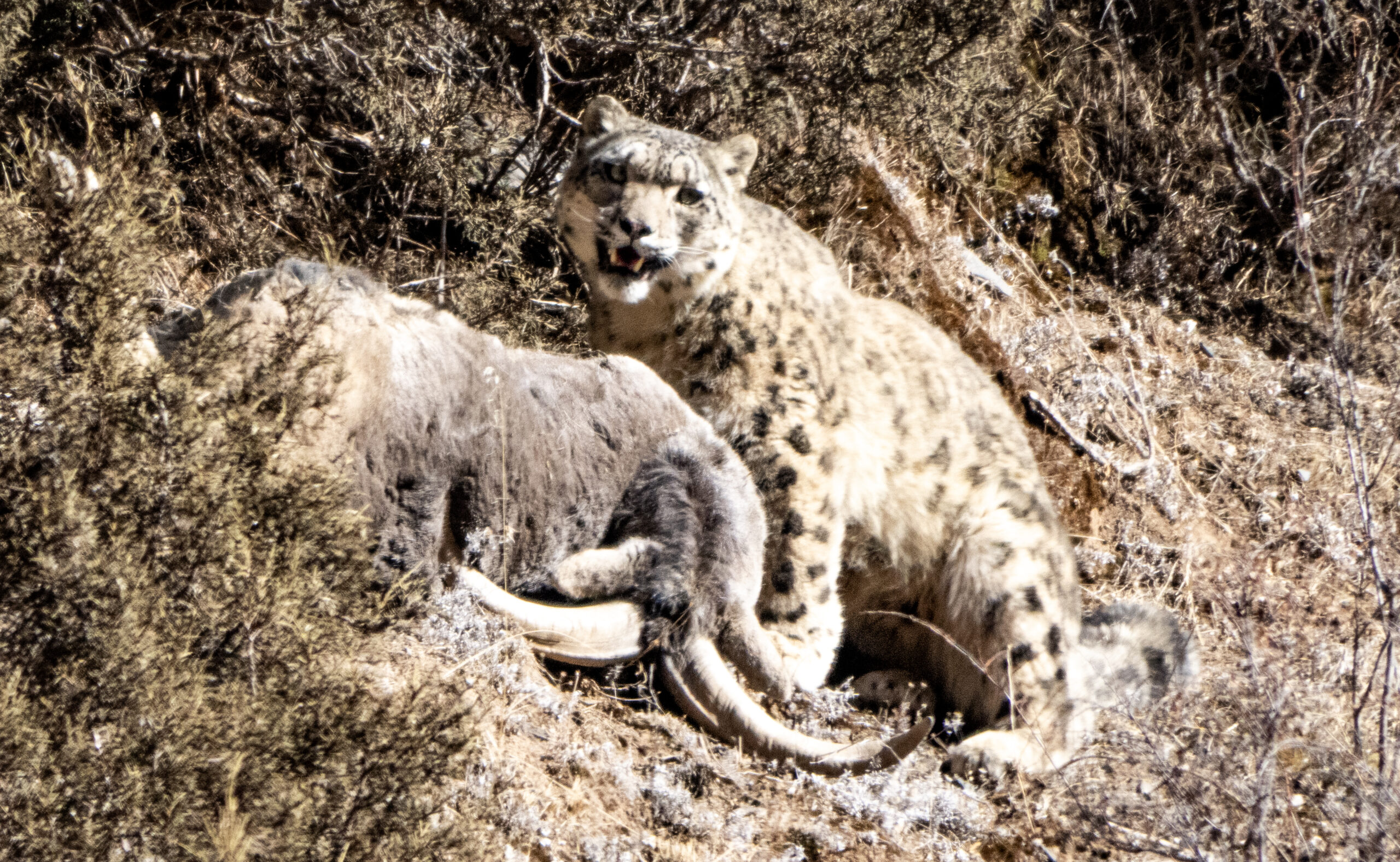
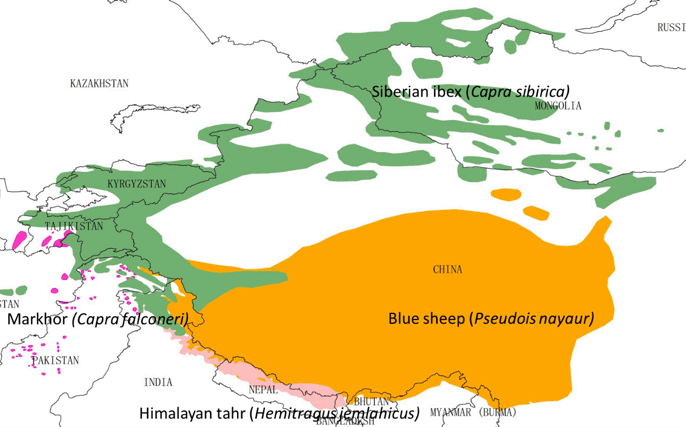
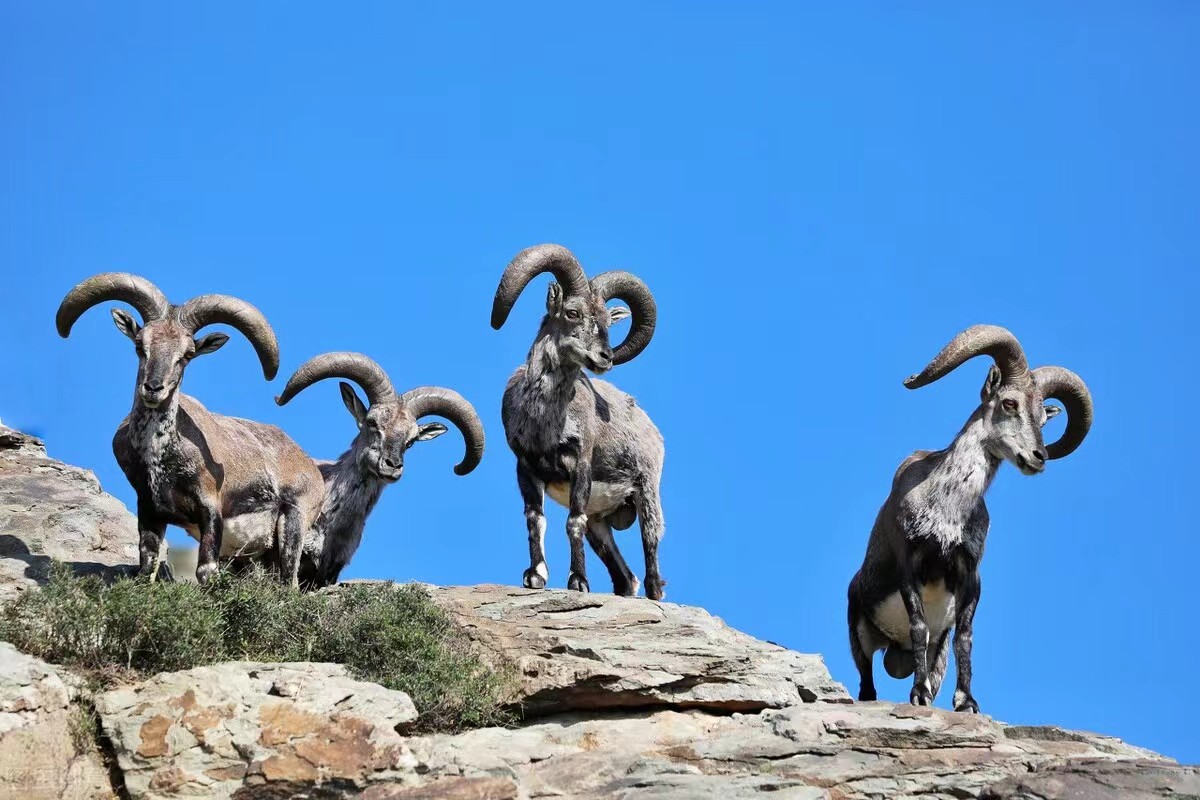
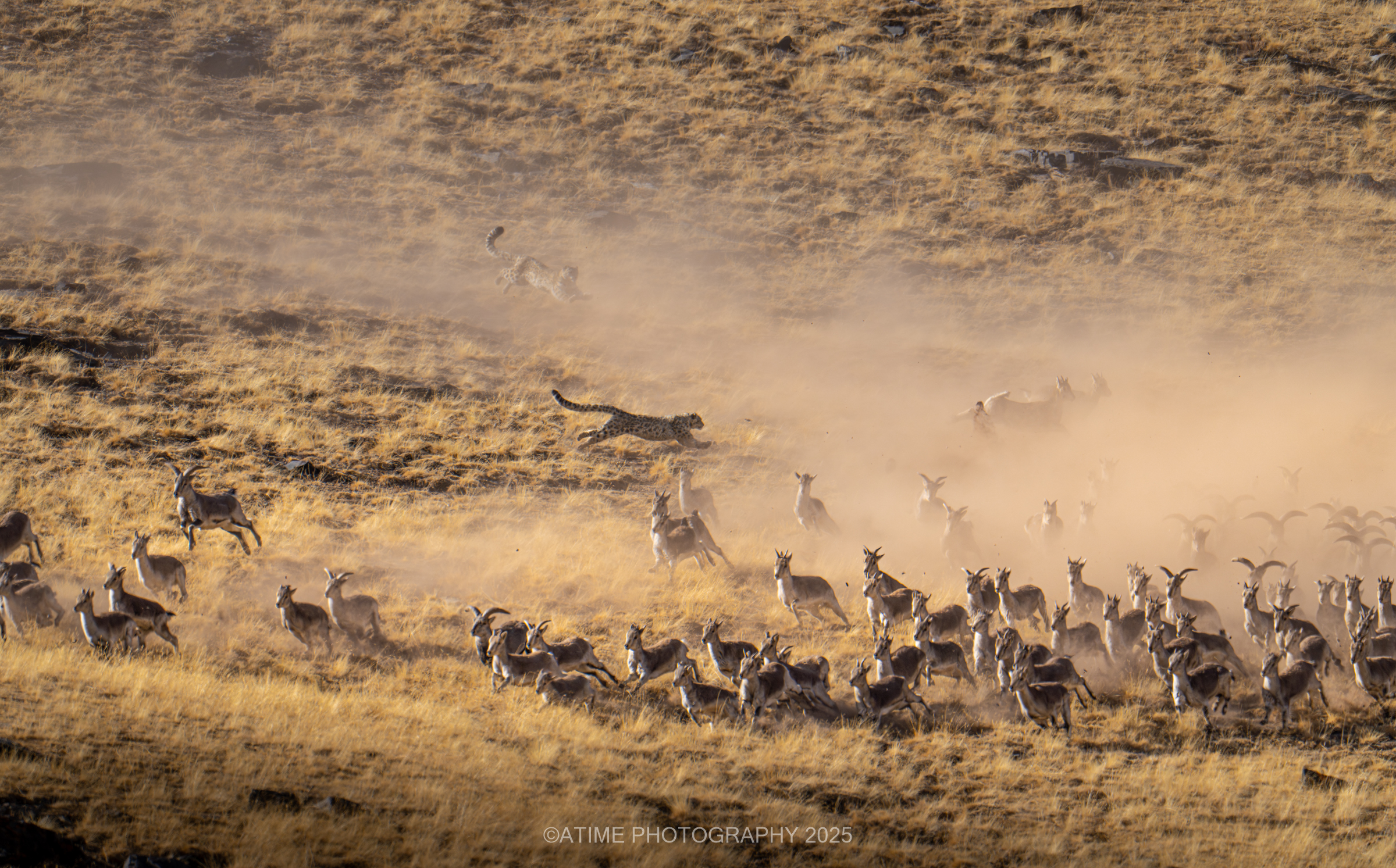
Snow leopards can kill prey much heavier than themselves in steep mountain terrain. Among their prey, blue sheep are perhaps the most familiar species associated with snow leopard hunting. Siberian ibex, a wild goat with similar adaptations to steep mountain environments, is another major prey species. Their distributions are largely complementary, with little overlap: Siberian ibex dominate much of the Northern and Western clusters, while blue sheep are the primary wild prey across the Central cluster.
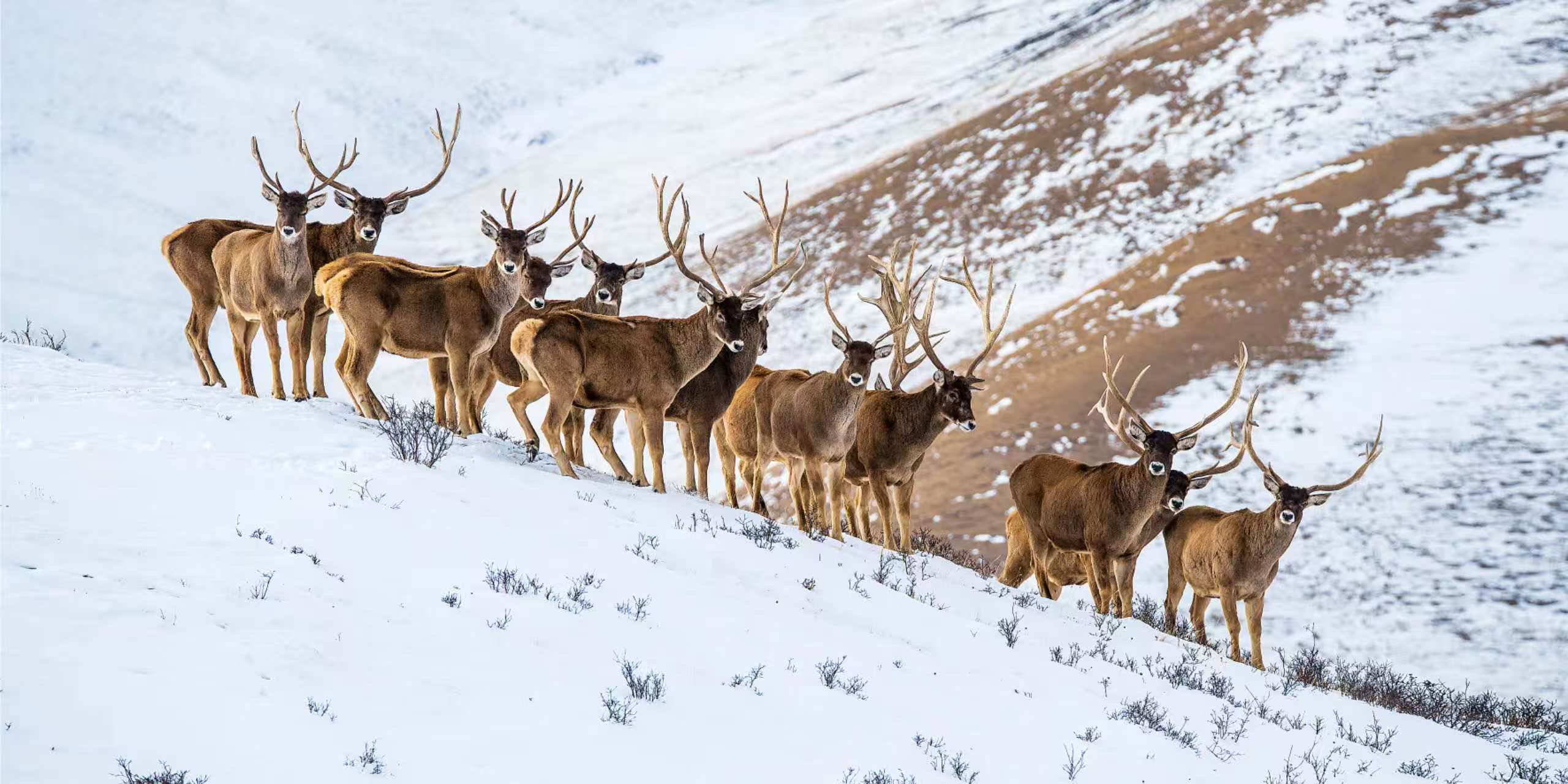
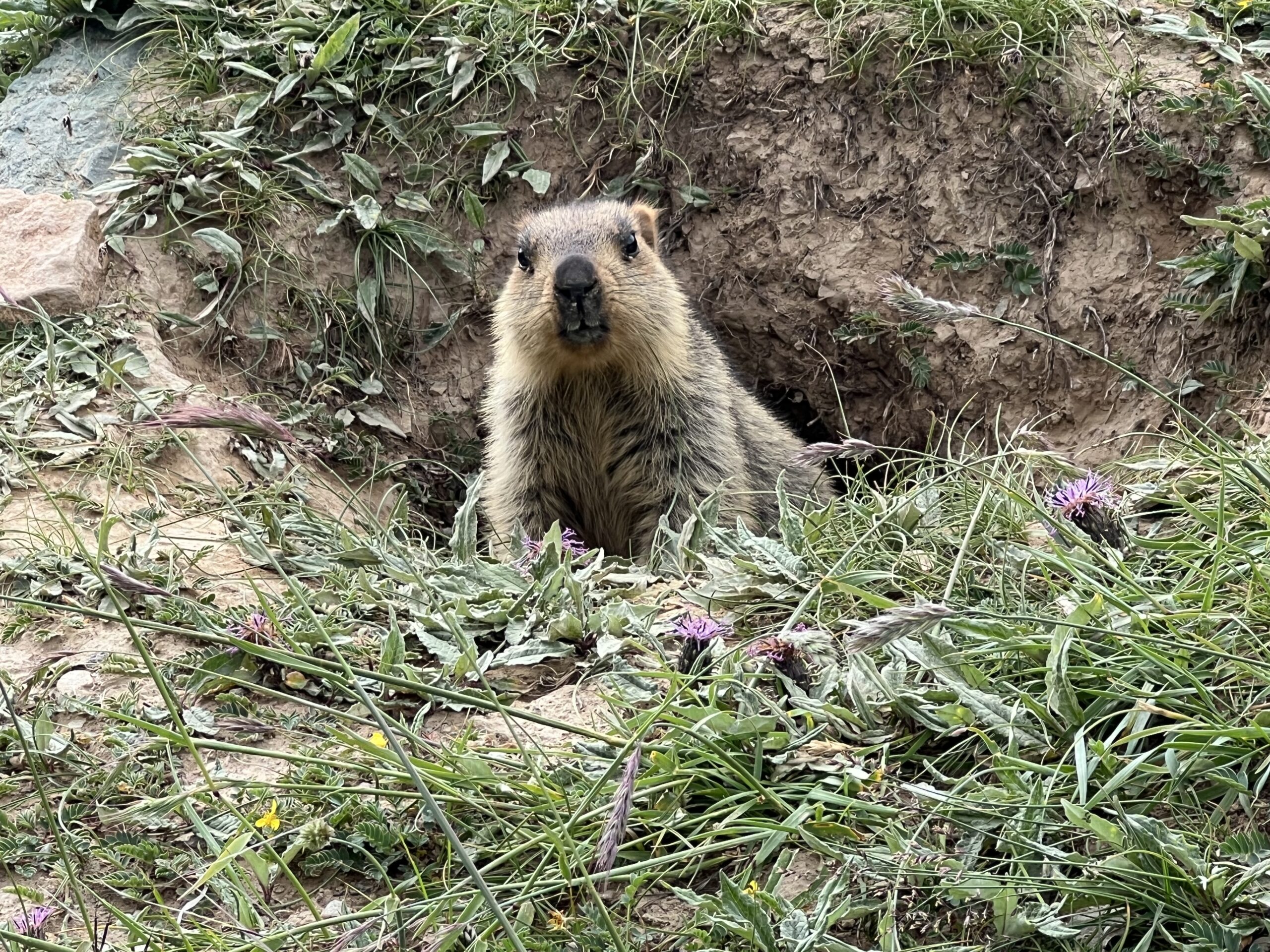
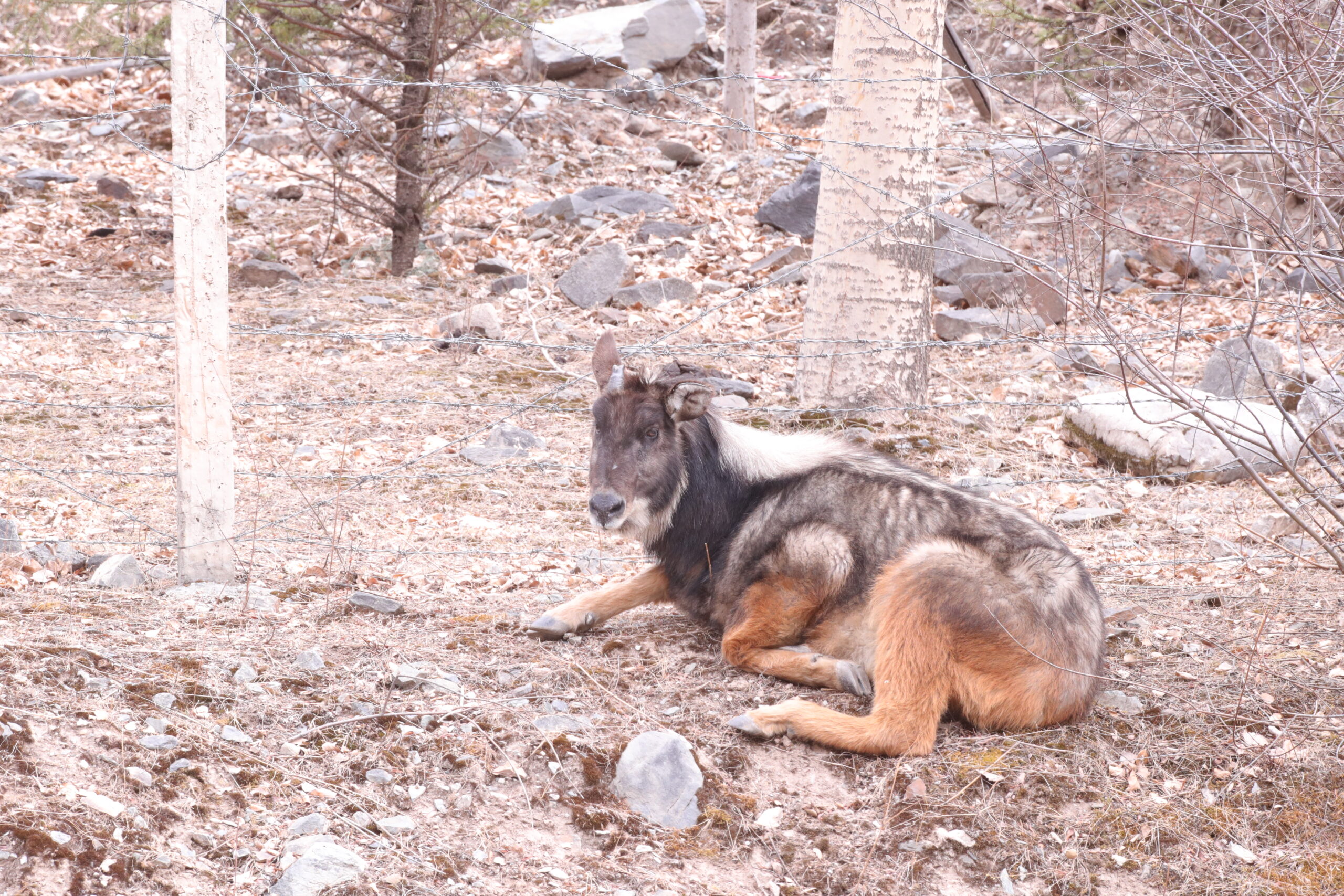
Beyond these two key ungulates, snow leopards also prey on a wide range of other animals, including markhor, Himalayan tahr, red deer, white-lipped deer, alpine musk deer, eastern roe deer, kiangs, wild boar, gorals, takins, serows, goitered gazelles, and wild camels. Their diet also includes smaller mammals such as marmots, hares, pikas, and voles, as well as birds and occasionally other carnivores.[4] When wild prey becomes scarce, snow leopards may also prey on domestic livestock, including yaks, sheep, and goats.
Why Understanding Prey Helps Snow Leopard Tracking
Tracking a snow leopard begins with understanding the landscape it moves through. The animal itself may remain hidden, but the mountains reveal clues through prey distribution, seasonal changes, snow conditions, and the movements of other wildlife.
Snow leopards do not move randomly across the mountains. Their movements are closely tied to the availability and behavior of their prey. As wild ungulates shift their range in response to changing seasons, food resources, and snow cover, snow leopards often adjust where and how they use the landscape.
In Sanjiangyuan, China, this relationship is especially clear. During winter, blue sheep descend to lower elevations where vegetation remains more accessible, increasing the chance of finding snow leopards in these areas. In summer, as alpine grasslands become more productive, blue sheep spread into higher elevations and become less concentrated, while snow leopards may follow them into more remote mountain terrain. In some regions, summer also creates different opportunities, as snow leopards may prey on Himalayan marmots after they emerge from hibernation.
For experienced local observers, changes in prey distribution, abundance, and seasonal behavior provide some of the most valuable clues when predicting where snow leopards may appear. For travelers, understanding this relationship changes the way we view a snow leopard encounter: it is not simply a matter of searching harder, but of reading the mountain ecosystem and recognizing the connections between predator, prey, and place.
Threats to Snow Leopards and Their Mountain Habitat
The threats facing snow leopards are complex and interconnected. As human activity expands into mountain landscapes, roads, reservoirs, mining, tourism infrastructure, fencing, and growing demand for grazing space drive habitat fragmentation and habitat loss, reducing the ability of snow leopards to move between areas and maintain population connectivity. Other pressures, including overgrazing, grassland degradation, caterpillar fungus collection, free-ranging dogs, and other forms of disturbance, can further affect both snow leopards and their wild prey.
The decline of key wild prey species such as Siberian ibex, argali, and blue sheep creates another layer of pressure. Illegal hunting, overgrazing, habitat degradation, and disease transmission from livestock can reduce wild prey availability. When natural prey becomes limited, or when livestock overlap more frequently with snow leopard habitat, the likelihood of livestock predation and subsequent human-wildlife conflict increases, and poaching and retaliatory killings threaten snow leopard survival. This is one reason the species appears on the IUCN Red List of threatened species.
Climate change is adding further uncertainty to these already fragile mountain systems. Some projections suggest it could reduce snow leopard habitat by about 30%. Changes in water availability, vegetation patterns, prey distribution, and seasonal livestock movements may bring snow leopards, wild prey, and domestic animals into closer contact within increasingly limited high-altitude areas. As snow leopards, wild prey, and livestock become increasingly concentrated in the same high-altitude landscapes, the balance between wildlife and human livelihoods becomes more difficult to maintain.
Planning a Snow Leopard Photography Expedition
Photographing a snow leopard in the wild requires more than just the right camera equipment. We invited professional wildlife photographers to share practical advice on photographing this elusive mountain predator, from field techniques to equipment choices.
Beyond photography skills, a successful expedition also depends on preparing for the realities of the high-altitude environment. Acclimatization, weather conditions, and appropriate clothing and gear all play an important role in staying comfortable and focused during long hours of wildlife observation.
Altitude, Weather, and Physical Preparation
- Altitude Acclimatization
Snow leopard observation sites are located at high elevations, including around 3,500–4,200 m (11,500–14,000 ft) in China, 3,500–4,000 m (11,500–13,200 ft) in India, and 2,200–2,600 m (6,600–8,530 ft) in Mongolia. Spending one to three days at a lower elevation before entering higher areas can help the body adjust gradually.
After arriving at altitude, keep activity levels moderate, avoid strenuous exercise and alcohol, and allow your body time to adapt. Any symptoms such as headache, fever, or diarrhea should be reported to your guide. If symptoms worsen, seek medical attention promptly. Travelers with heart or respiratory conditions should consult a doctor before planning a high-altitude expedition.
Most snow leopard observation is conducted by 4WD vehicles and fixed observation points, with limited walking required. No mountaineering experience is necessary. However, altitude can increase physical exertion, especially during long periods outdoors. Building basic endurance through activities such as jogging, brisk walking, or uphill training about a month before departure can help. In the final two weeks before the trip, reducing high-intensity training can help ensure you arrive rested and ready.
- Preparing for High-Altitude Weather
The best seasons for snow leopard observation often fall during autumn and winter, which are also the coldest periods on the plateau. In many observation areas in China and India, daytime temperatures may remain around 5°C, while nighttime temperatures can drop to approximately -15°C.
Since snow leopard observation often involves long periods of waiting outdoors, staying warm and comfortable is essential. Travelers should prepare adequate cold-weather clothing and field gear to maintain their health and remain focused during changing mountain conditions.
Essential items include:
Clothing
- Moisture-wicking thermal base layers
- Fleece or lightweight down mid-layer
- Heavy down jacket or cold-weather insulated outer layer
- Windproof and waterproof shell
- Warm trousers and windproof outer pants
- Warm hat covering the ears
- Neck gaiter or scarf
- Inner gloves and insulated outer gloves
- Sufficient warm socks
Footwear
- Waterproof, slip-resistant hiking boots or winter outdoor footwear with good support
- Suitable for rocky terrain, frozen ground, and light snow conditions
- Break in footwear before the expedition; avoid bringing brand-new boots
- Consider gaiters or insulated insoles for winter conditions
High-Altitude and Personal Essentials
- High-SPF sunscreen
- UV-protection sunglasses
- Lip balm and moisturizer
- Insulated water bottle
- Personal medication and basic first-aid supplies
- Hand warmers or reusable heating devices
- Headlamp
- Power bank
- Wet wipes and personal hygiene items
Wildlife Observation and Photography Equipment
- Binoculars (8–10× magnification, 42 mm objective lens, waterproof and fog-resistant recommended)
- Camera body and telephoto lens
- Stable tripod or gimbal head
- Spare batteries and memory cards
- Camera protection from dust and snow
- Lens cleaning tools
- Waterproof camera bag
Cold temperatures can significantly reduce the battery life of cameras and mobile devices. Spare batteries should be kept close to your body, where they can remain relatively warm. Our team usually provides spotting scopes and basic wildlife observation equipment for locating animals, but travelers should bring their own photography gear.
If you plan to purchase equipment online and have it delivered to your snow leopard expedition destination, allow sufficient time for delivery. In remote areas of China, receiving a package may take 5–7 days or longer.
Photographing Snow Leopards, Pallas’s Cats, and Eurasian Lynx in China (12days)
view detailResponsible Snow Leopard Tourism: Protecting the Species We Hope to See
Snow leopard expeditions offer a rare opportunity to understand one of the world’s most elusive mountain predators, while also creating income for local guides, herder families, and community conservation efforts. However, tourism can become another source of pressure if the desire for a closer view or a better photograph leads to chasing, surrounding, disturbing, or baiting animals.
The purpose of a snow leopard expedition should never be to get as close as possible. The most meaningful encounters come from observing the animal quietly, respecting its space, and allowing it to continue its natural behavior.
Responsible Wildlife Watching and the Welfare of Snow Leopards
Snow leopard expeditions offer a rare opportunity to understand this elusive mountain predator while also supporting local guides, herder families, and community conservation efforts. However, tourism can become a source of pressure if the pursuit of closer views or better photographs leads to chasing, disturbance, or baiting.
Eastogo never guarantees a snow leopard sighting. Weather, terrain, and wildlife behavior are unpredictable, and we believe a natural encounter is always more valuable than one created through interference.
When observing snow leopards, maintaining distance and respecting their natural behavior are essential. We never approach, block their movement, or use food, sounds, or other methods to attract them. If an animal shows signs of disturbance, we increase the distance or end the observation. We also avoid revealing sensitive locations such as dens or cub sites.
Responsible photography means using long lenses, avoiding flash, and allowing the snow leopard to remain wild. By following the guidance of local herder guides and respecting the landscape, travelers can experience these rare encounters without changing the behavior of the animals they hope to see.
How Eastogo Helps You See Snow Leopards
Eastogo’s snow leopard expeditions are led by experienced wildlife guides with diverse backgrounds. Some have worked alongside major documentary productions such as Disney, National Geographic, and Frozen Planet; some have spent years living near snow leopard habitats and developing a deep understanding of the wildlife around them; others are professional wildlife photographers who have dedicated their careers to documenting nature.
Our approach is built on local knowledge networks developed with herder communities. Because snow leopards are most active around dawn and dusk, we usually set out before sunrise and travel by 4WD to carefully selected observation areas with local wildlife observers. These observers monitor recent animal activity, and provide valuable information to guide daily searches. Such images can also help researchers recognise individual snow leopards by their unique spot patterns.
At the observation site, the team settles into position, sets up equipment, and scans mountain ridgelines and rocky slopes where wildlife is likely to appear. When a snow leopard or other target species is found, we stop and observe from a respectful distance rather than approaching or disturbing the animal, especially because these elusive cats are so sensitive to human presence.
Wildlife activity is often lower around midday, so we take a break for lunch either in the field or back at the accommodation before continuing observations later in the day.
Throughout the expedition, we focus on understanding recent wildlife activity patterns and preparing the right tools for field observation. The team provides basic observation equipment, including binoculars, spotting scopes, walkie-talkies, and wildlife guides. Travelers only need to prepare their own photography equipment.
Snow leopards move through remote mountain landscapes where their presence is best understood by the people who have shared these places with them for generations. Through local community partnerships, we build wildlife knowledge networks that help reveal the hidden lives of these animals and the landscapes they inhabit.
A snow leopard expedition is not only about finding a rare animal. It is also about discovering the relationship between wildlife, local communities, and the mountains they call home. Snow leopards thrive where mountain ecosystems and natural resources remain healthy, which is one reason community-based conservation matters so much. By supporting responsible tourism, we hope to create sustainable opportunities for communities whose lives have long depended on pastoral livelihoods.
The future of snow leopards, local communities, and these mountain landscapes is deeply connected. Protecting one means protecting the balance that allows all of them to thrive together.
Speak to An Expert
Starting Your Wildlife Jounrney to China
Start designing your wildlife journey with our destination experts.
Make An InquiryIf you’re interested in a snow leopard tour with local guides, here is our 8-day China Snowleopard Expedition. And this China snow leopard complete guide may help you choose a destination.
Besides, China is a bio-diverse country with plenty of magnificent wildlife, you can explore more wild China tours with our wildlife experts.
Sources And Scientific Research Behind This Snow Leopard Guide
References
[1] Bayandonoi, G., Sharma, K., Alexander, J. S., Lkhagvajav, P., Durbach, I., … MacKenzie, D. (2021). Mapping the ghost: Estimating probabilistic snow leopard distribution across Mongolia. Diversity and Distributions. https://doi.org/10.1111/ddi.13412
[2] Sharma, K., Alexander, J. S., Zakharenka, A., … Murali, R. (2024). The Global Snow Leopard and Ecosystem Protection Program. In D. Mallon & T. McCarthy (Eds.), Snow Leopards (2nd ed., pp. 633–646). Academic Press.
[3] Li, J., Weckworth, B. V., McCarthy, T. M., Liang, X., Liu, Y., … Beissinger, S. R. (2020). Defining priorities for global snow leopard conservation landscapes. Biological Conservation, 241, 108387. https://doi.org/10.1016/j.biocon.2019.108387
[4] China Snow Leopard Conservation Network. (2018). Status of Snow Leopard Survey and Conservation, China 2018 (Draft for Comments). [In Chinese]. http://www.snowleopardchina.org/
[5] Randeep Singh, Krausman, P.R., Pandey, P. et al. Predicting Habitat Suitability of Snow Leopards in the Western Himalayan Mountains, India. Biol Bull Russ Acad Sci 47, 655–664 (2020). https://doi.org/10.1134/S106235902101012X
[6] Wei, C., Liu, Y., Liang, M., Chang, M., Yu, Y., Gao, Y., Jikmed, A., Li, X., Li, J., Bian, X., Yu, C., Li, Y., Xue, Y., Xing, R., Xiong, X., Liang, B., Li, S., Wang, H., Zhao, X., … Xiao, L. (2026). Snow leopard (Panthera uncia) status in China. Snow Leopard Reports, 5(1), 81–95. https://doi.org/10.56510/slr.v5.65095
[7] Sanjiangyuan National Park Administration & Qinghai Forestry and Grassland Bureau. (2025). Sanjiangyuan Snow Leopard Population Survey Report (Draft for Comments).
[8] Bhatnagar, Y.V., Mathur, V.B., Sathyakumar, S., Pal, R., Ghoshal, A., Sharma, R.K., Bijoor, A., Raghunath, R., Timbadia, R. & Lal, P. (2024). Securing India’s snow leopards: status, threats, and conservation. In: Mallon, D. & McCarthy, T. (eds.) Snow Leopards (2nd ed.). Academic Press, pp.513–529. https://doi.org/10.1016/B978-0-323-85775-8.00003-0
[9] Sharma, M., Pal, R., & Bhatnagar, Y. (2026). Snow leopard (Panthera uncia) status in India. Snow Leopard Reports, 5(1), 12–16. https://doi.org/10.56510/slr.v4.63866
[10] Alexander, J. S., Bayandonoi, G., Munkhtsog, B., Lkhagvajav, P., Mijiddorj, T. N., Byambasuren, C., & Munkhtsog, B. (2026). Snow leopard (Panthera uncia) status in Mongolia. Snow Leopard Reports, 5(1), 34–40. https://doi.org/10.56510/slr.v5.63868
[11] Bayandonoi, G., Sharma, K., Alexander, J.S., Lkhagvajav, P., Durbach, I., Buyanaa, C., Munkhtsog, B., Ochirjav, M., Erdenebaatar, S., Batkhuyag, B., Battulga, N., Byambasuren, C., Uudus, B., Setev, S., Davaa, L., Agchbayar, K.-E., Galsandorj, N. & MacKenzie, D. (2021a). Mapping the ghost: Estimating probabilistic snow leopard distribution across Mongolia. Diversity and Distributions, 27, 2441–2453. https://doi.org/10.1111/ddi.13412
[12] Lama, R. P., Khanal, G., Acharya, H. B., Chetri, M., Koju, N., Thapa, K., Singh, P. B., Subba, S. A., Shrestha, S., Ghale, T. R., Kusi, N., Subedi, A., & Shrestha, B. (2026). Snow leopard (Panthera uncia) status in Nepal. Snow Leopard Reports, 5(1), 41–47. https://doi.org/10.56510/slr.v5.63869
[13] Shey Phoksundo National Park (SPNP). (2023). Population Assessment of Shey Phoksundo National Park’s Snow Leopard and Prey. Department of National Parks and Wildlife Conservation, Nepal. https://dnpwc.gov.np/media/publication/Snowleopard_-_Population_Assessment_SPNP-_2023.pdf
[14] Yasmeen, R., & Aslam, I. (2023). Conservation strategies and human
conflicts with snow leopard in Pakistan: A review. Journal of Wildlife and Biodiversity, 7(1), 40–54. https://doi.org/10.5281/ zenodo.6803386
[15] Government of Pakistan. (2013). National Biodiversity Strategy and
Action Plan. Ministry of Climate Change, Islamabad.
[16] Abbas, S., Hussain, Z., Abbas, K., & Aisha, H. (2026). Snow leopard (Panthera uncia) status in Pakistan. Snow Leopard Reports, 5(1), 48–57. https://doi.org/10.56510/slr.v5.63872
[17] Kubanychbekov, Z., Sharma, K., Zhumabai uulu, K., Wearn, O., Durbach, I., Raulerson, M., Kochorov, C., Asykulov, T., Koshkin, M., Zhumabay kyzy, G., & Eldiiar, K. (2026). Snow leopard (Panthera uncia) status in Kyrgyzstan. Snow Leopard Reports, 5, 26–33. https://doi.org/10.56510/slr.v5.63883
[18] Grachev, A. (2026). Snow leopard (Panthera uncia) status in Kazakhstan. Snow Leopard Reports, 5(1), 17–25. https://doi.org/10.56510/slr.v5.63867
[19] Kachel, S. M., Shokirov, Q., Kholmatov, I., Mirzoev, M., & Saidov, A. (2026). Snow leopard (Panthera uncia) status in Tajikistan. Snow Leopard Reports, 5, 67–72. https://doi.org/10.56510/slr.v5.63876
[20] Gritsina, M., Bykova, E., Paltsyn, M., Esipov, A., Abduraupov, T., Soldatov, V., Aromov, B., Rustamov, A., Aromov, T., Golovtsov, D., & Ten, A. (2026). Snow leopard (Panthera uncia) status in Uzbekistan. Snow Leopard Reports, 5, 73–80. https://doi.org/10.56510/slr.v5.63881
[21] Janecka, J. E., Zhang, Y., Li, D., Munkhtsog, B., Bayaraa, M., Galsandorj, N., … Uulu, K. Z. (2017). Range-wide snow leopard phylogeography supports three subspecies. Journal of Heredity, 108(6), 597–607.