Guangxi Private Tour
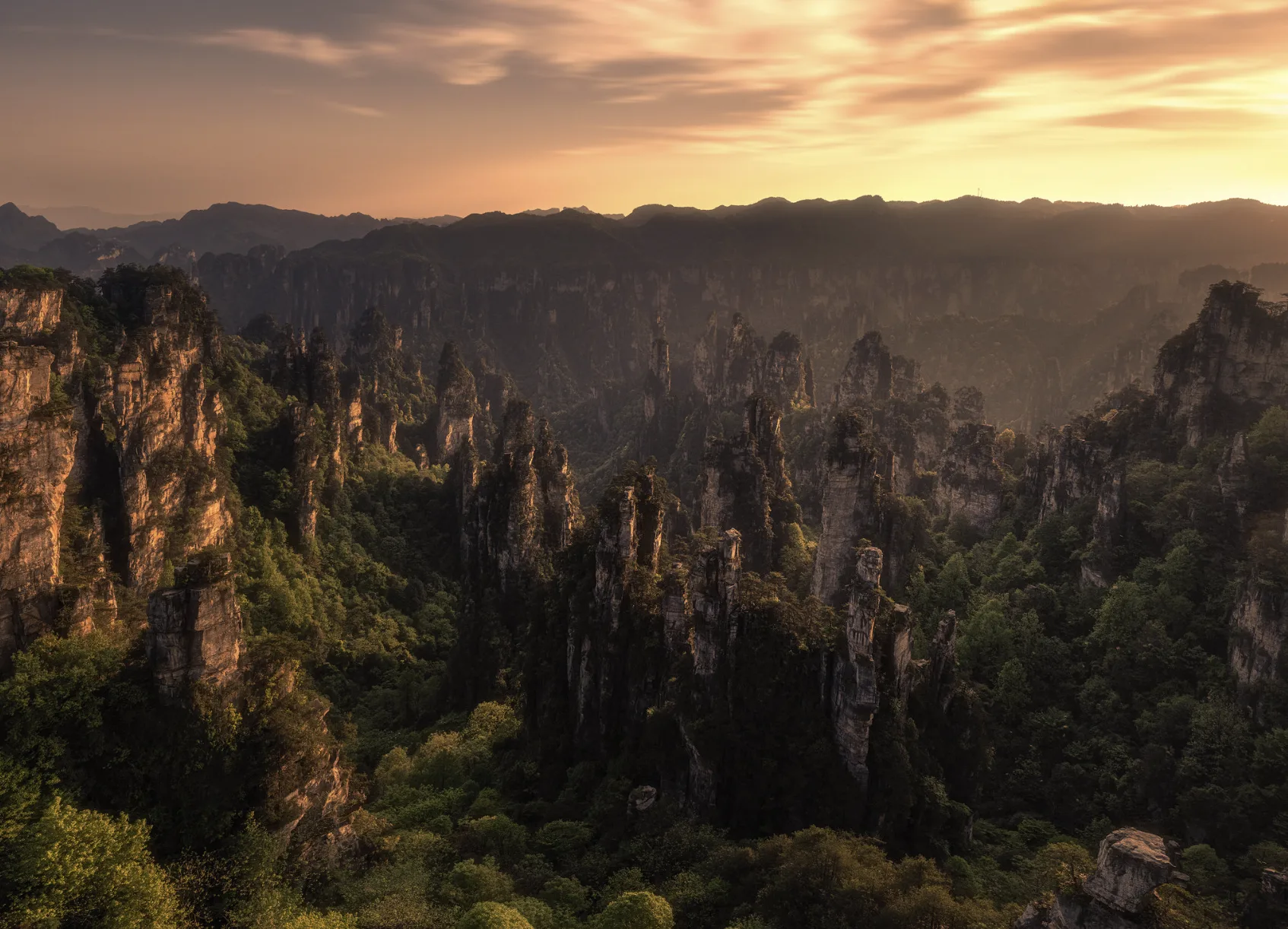
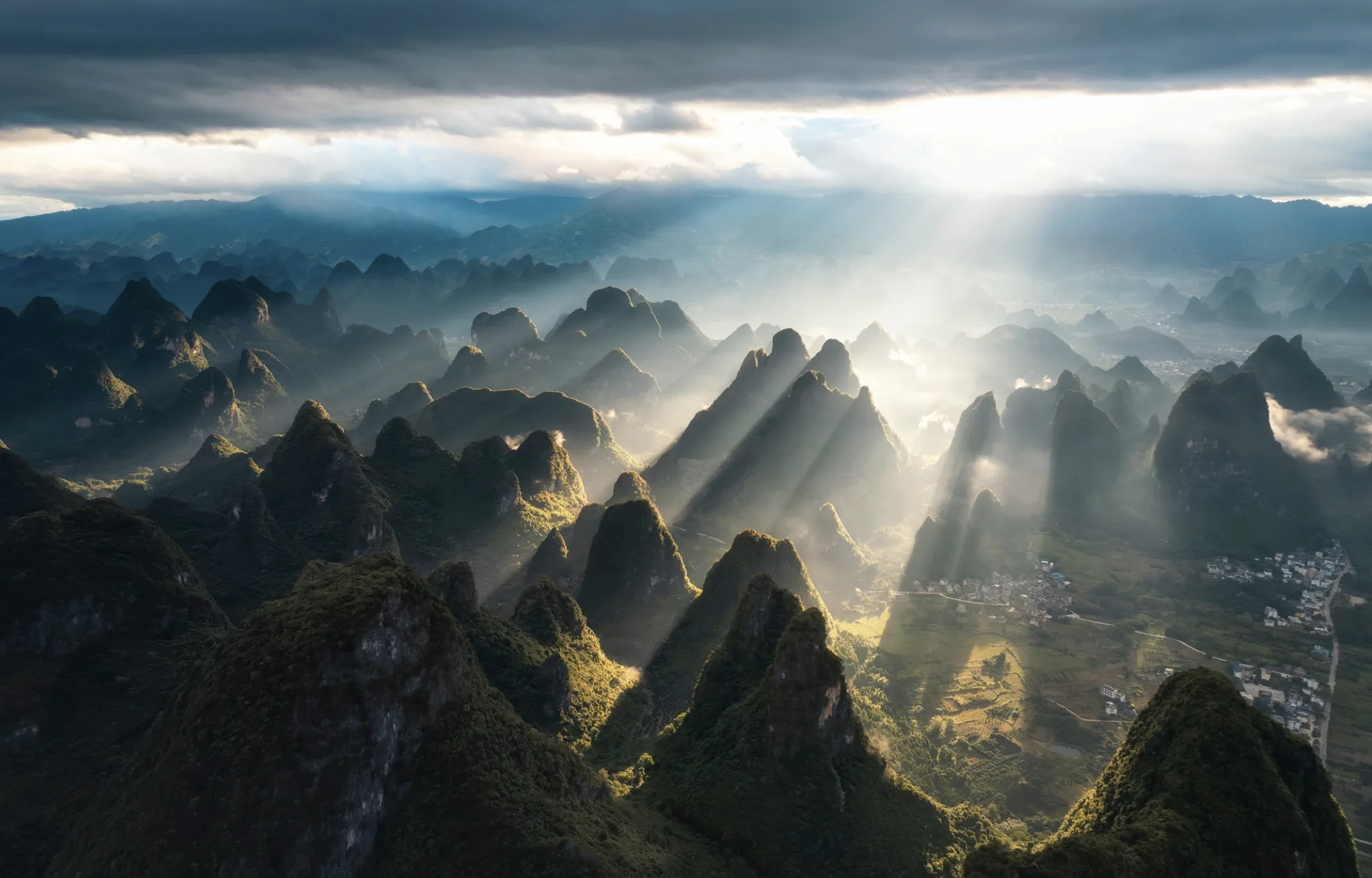
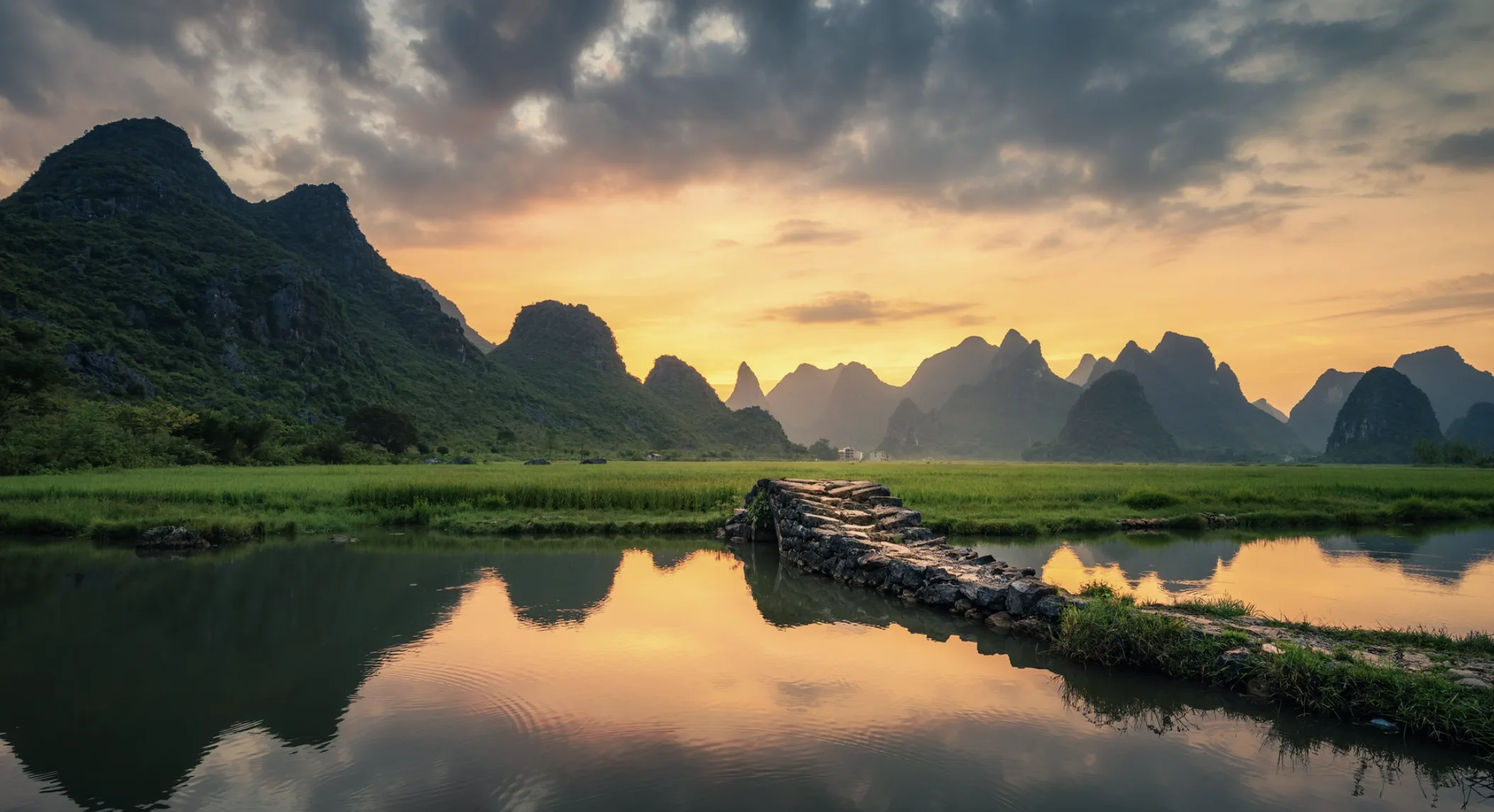
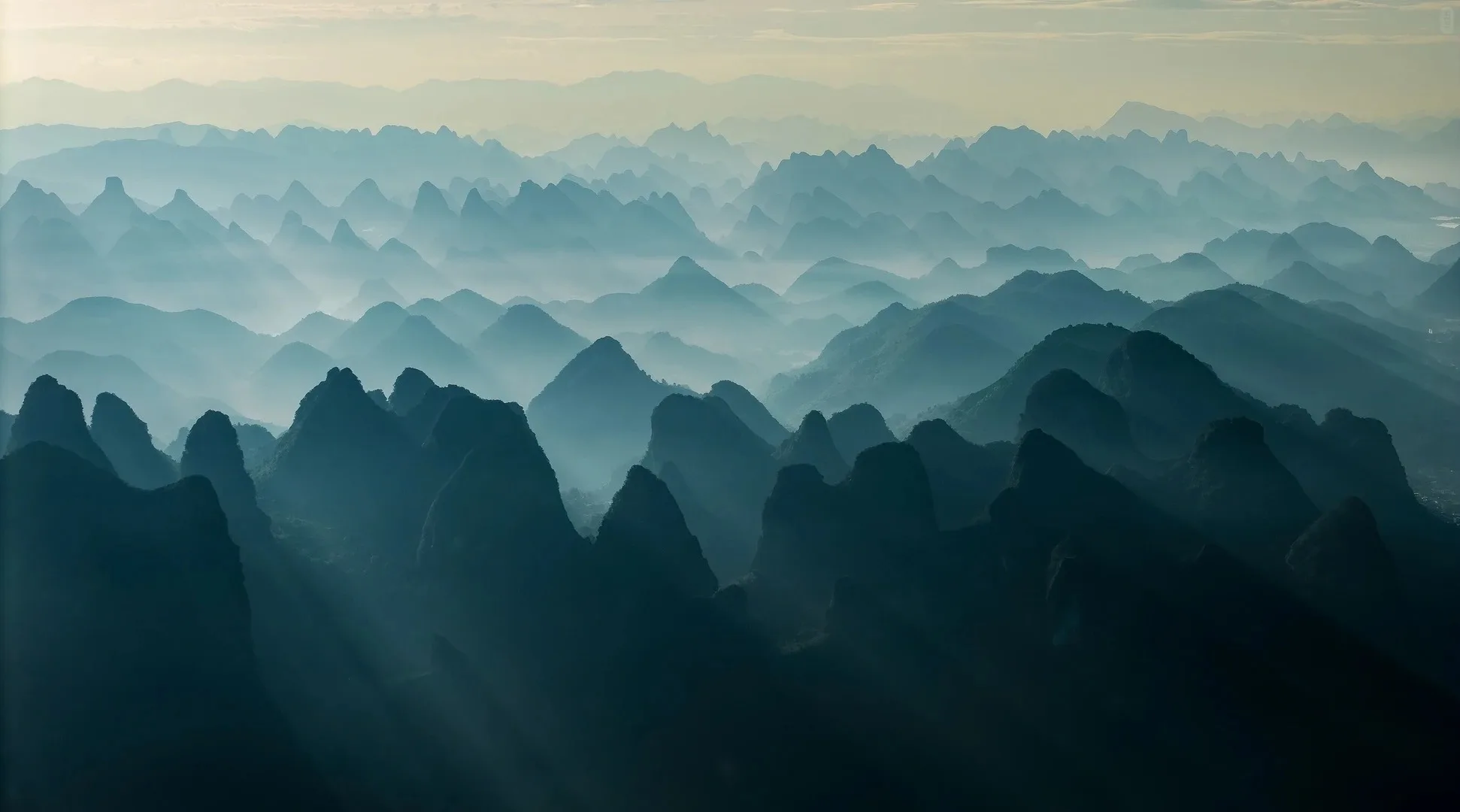
Guangxi is a land shaped by water and limestone, where towering karst peaks rise above winding rivers, vast rice terraces follow the mountainsides, and hidden valleys shelter some of China’s most remarkable wildlife. From the familiar landscapes of Guilin to the remote borderlands of southern China, the region offers a striking diversity of scenery, cultures, and experiences far beyond the usual tourist routes.
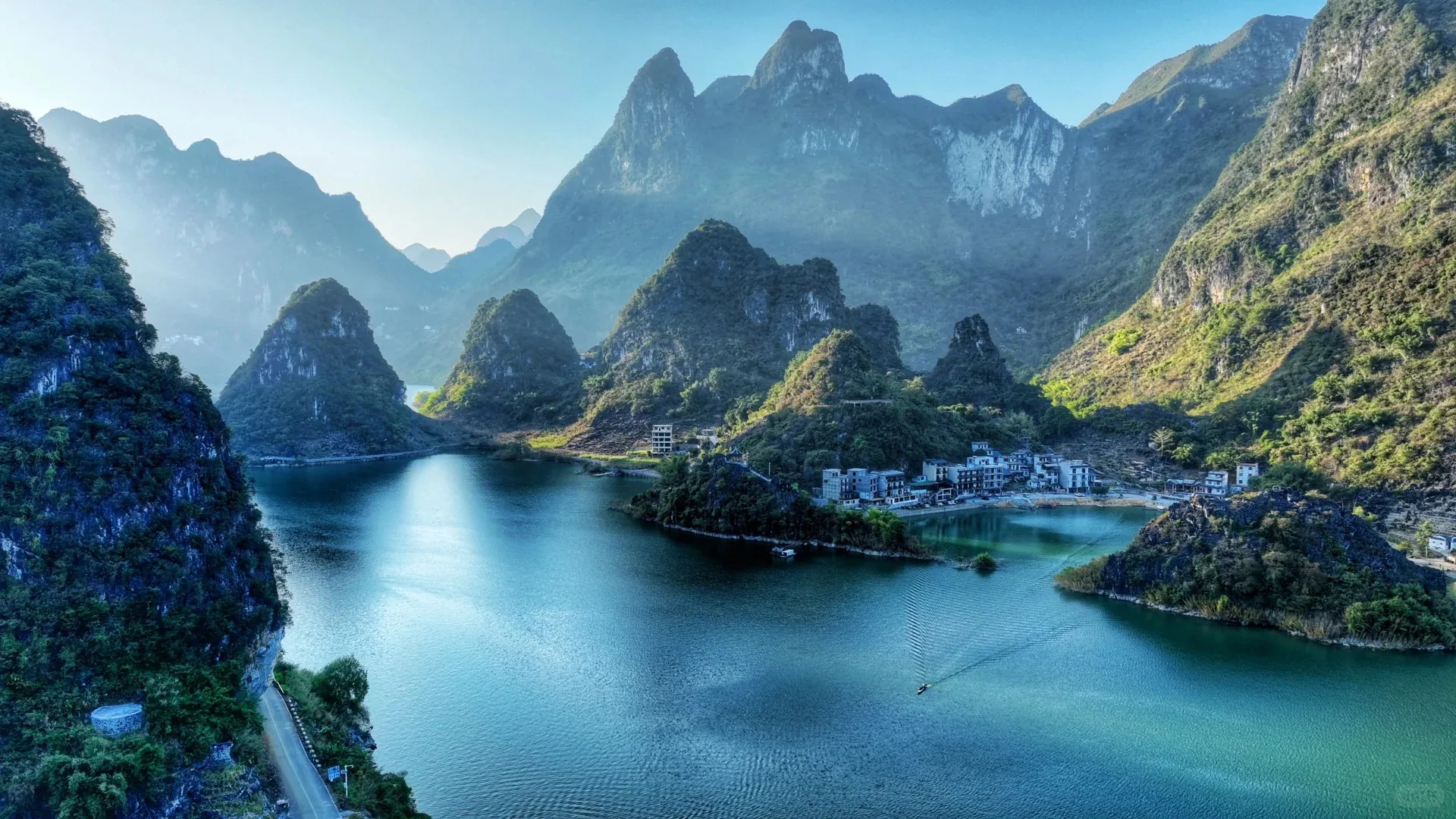
An Eastogo Guangxi Private Tour is designed to explore this diversity with greater freedom and depth. Drift along the Li River beneath its iconic limestone peaks, cycle through the peaceful countryside of Yangshuo, or walk between the terraced fields and hillside villages of Longji. Further west, discover the immense Detian Waterfall along the Vietnamese border, explore dramatic karst sinkholes, and venture into landscapes rarely visited by international travellers.
Beyond the scenery, Guangxi is home to a rich tapestry of ethnic traditions. Spend time with Zhuang and Yao communities, visit lively village markets, learn traditional crafts and cooking, or experience local festivals where music, dance, and rituals remain an important part of community life.
For wildlife enthusiasts, Guangxi holds some unexpected treasures. Search for the rare white-headed langur in its limestone forest habitat, discover the region’s remarkable birdlife, or explore the southern coast, where Indo-Pacific humpback dolphins and Bryde’s whales inhabit the surrounding waters.
With knowledgeable local guides, carefully selected stays, private transport, and long-standing local connections, Eastogo creates private Guangxi journeys shaped around your interests. Whether you’re drawn to dramatic landscapes, cultural encounters, wildlife, or outdoor adventures, we bring together the many sides of Guangxi in a journey that moves at your own pace.
Journey Highlights
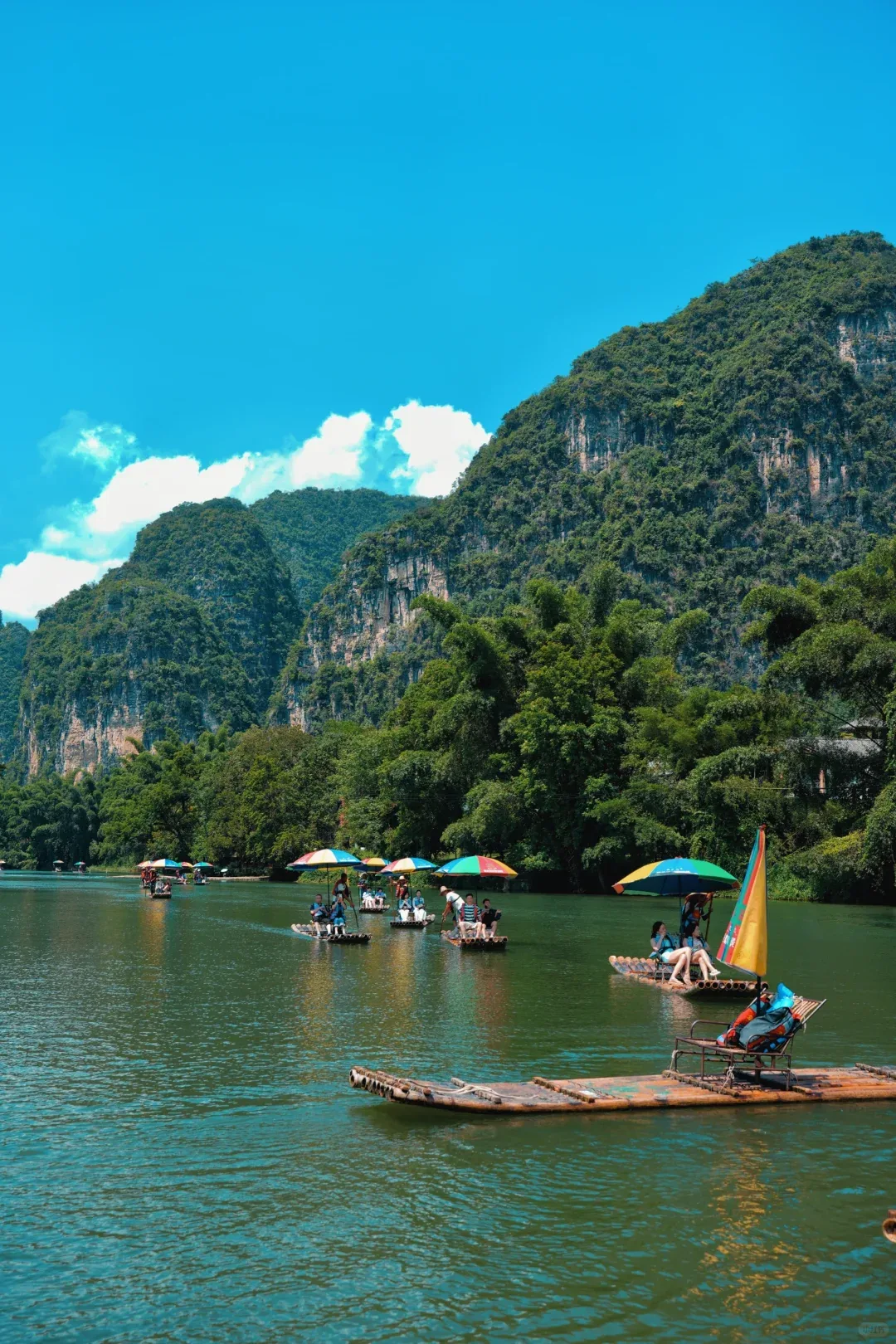
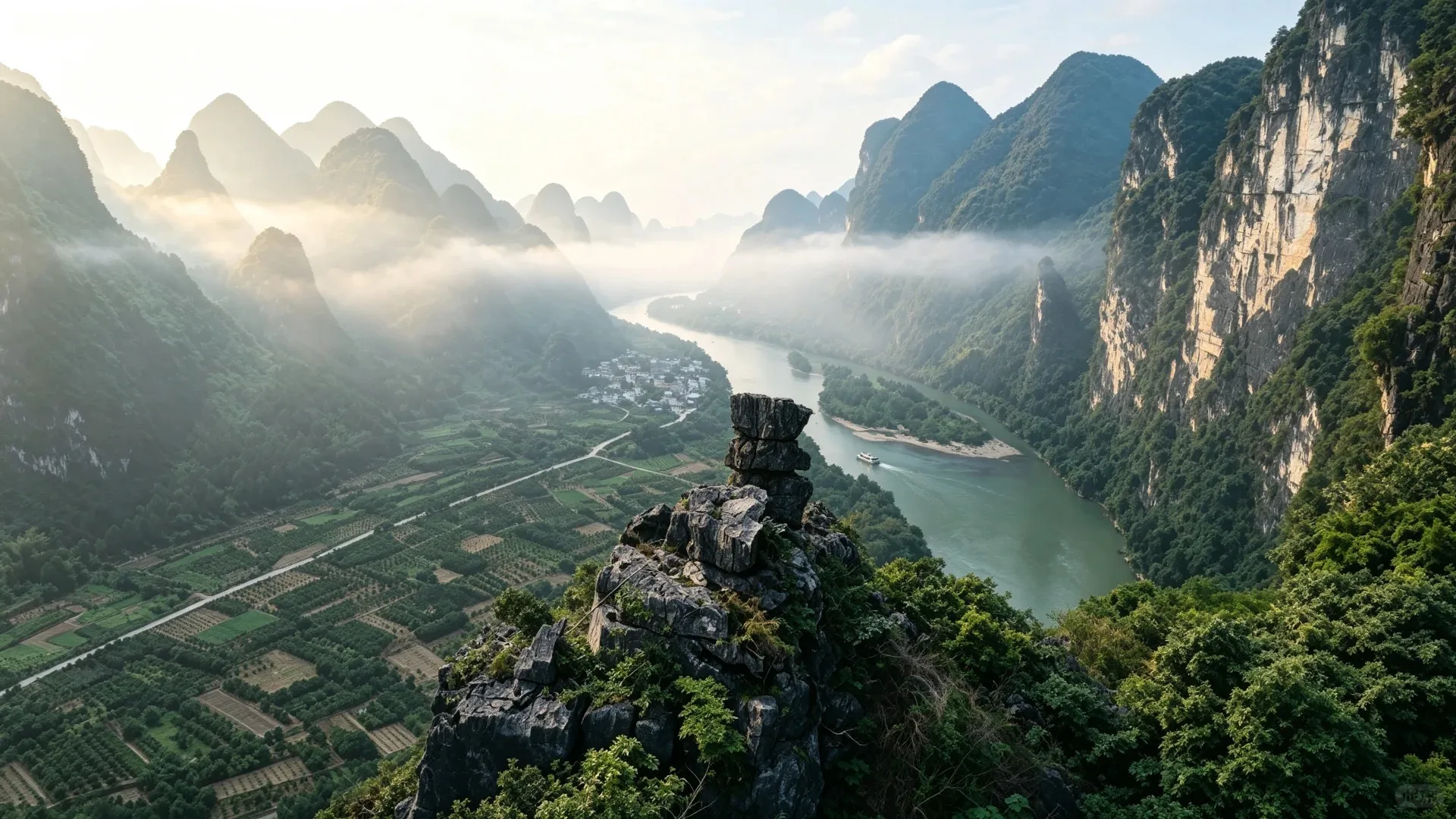
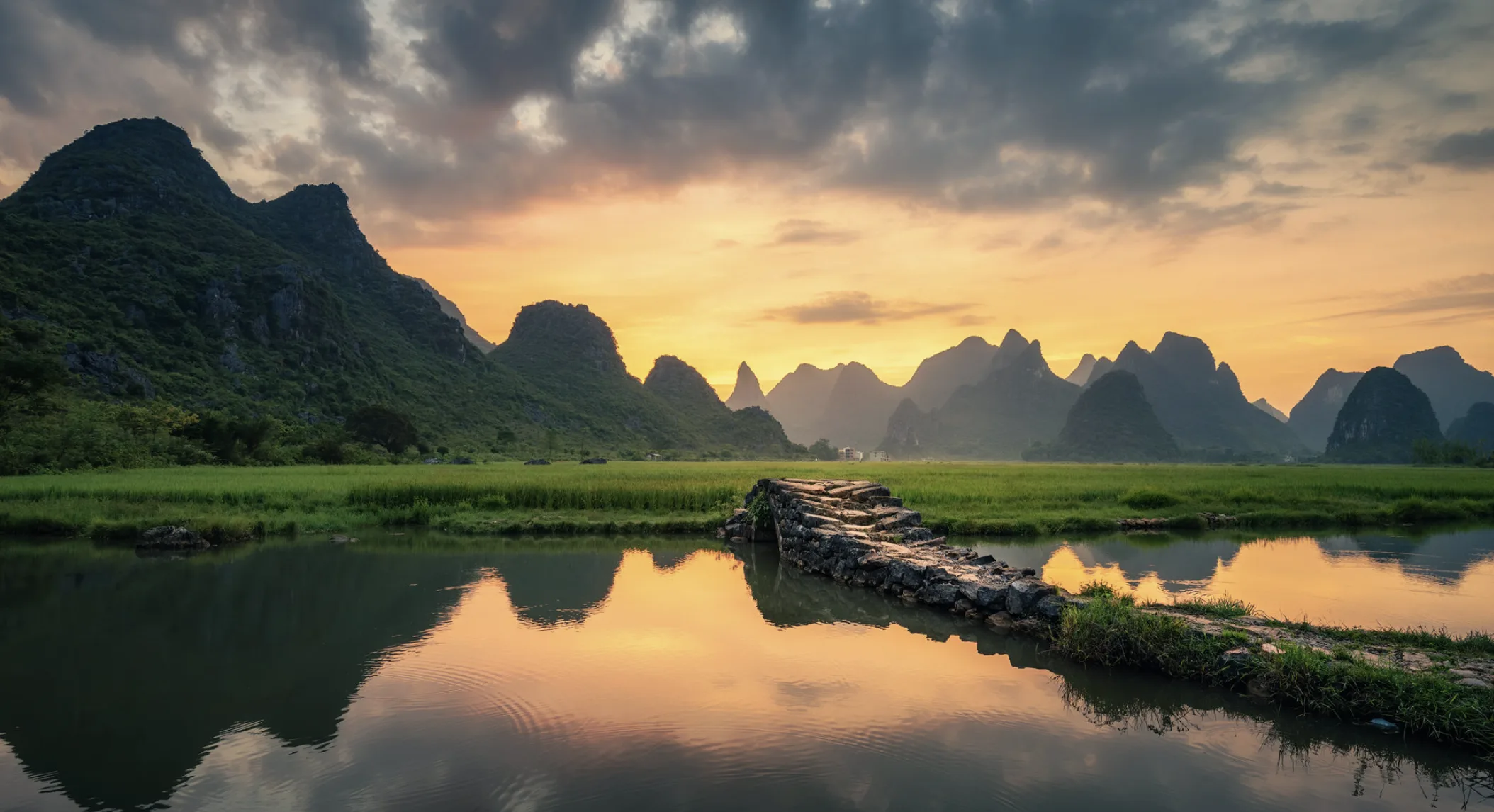
Experience China’s most classic karst scenery. Drift downstream by bamboo raft or cycle through fields and limestone peaks — this is where many travelers’ idea of Chinese landscape painting comes to life.
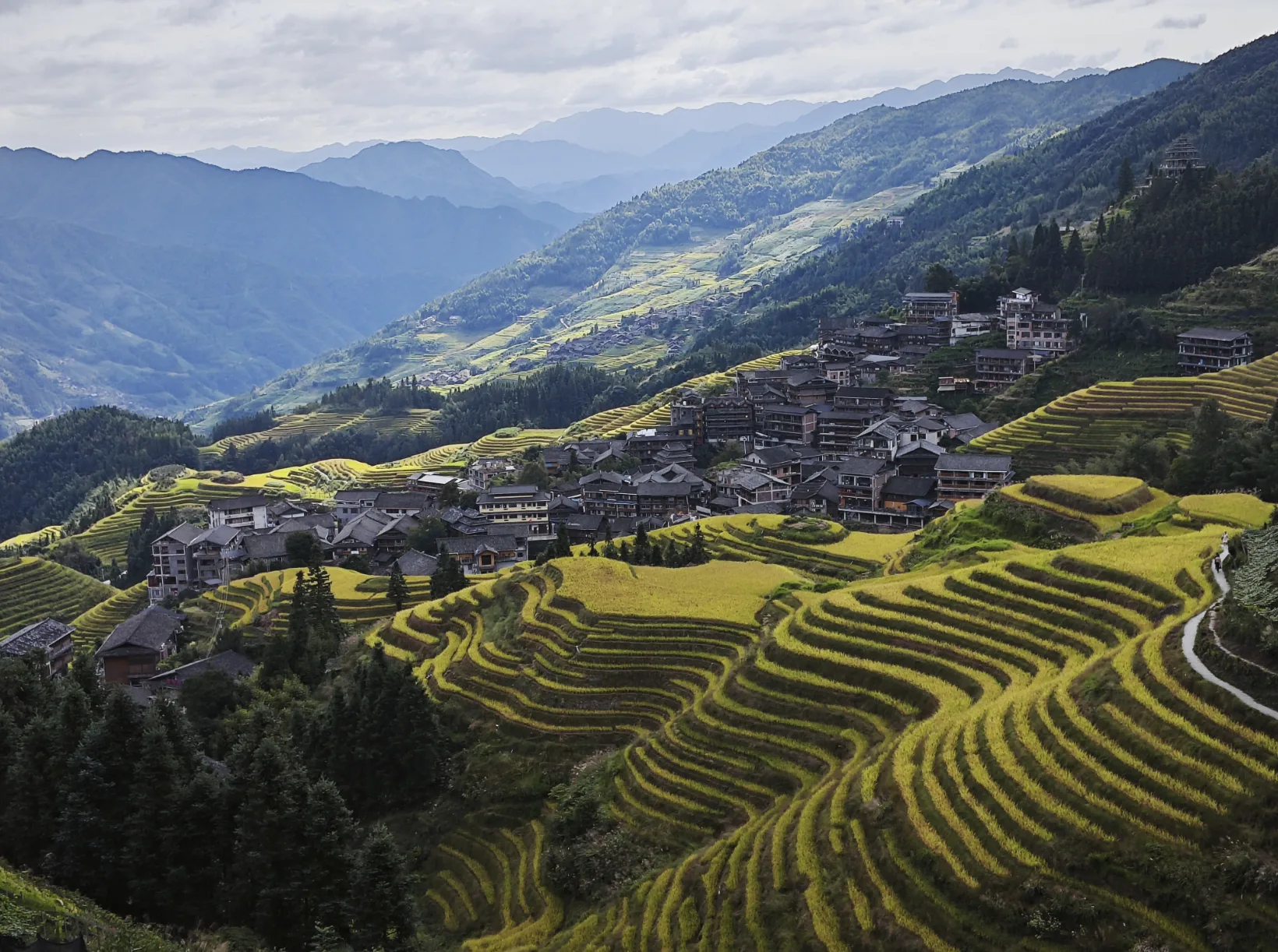
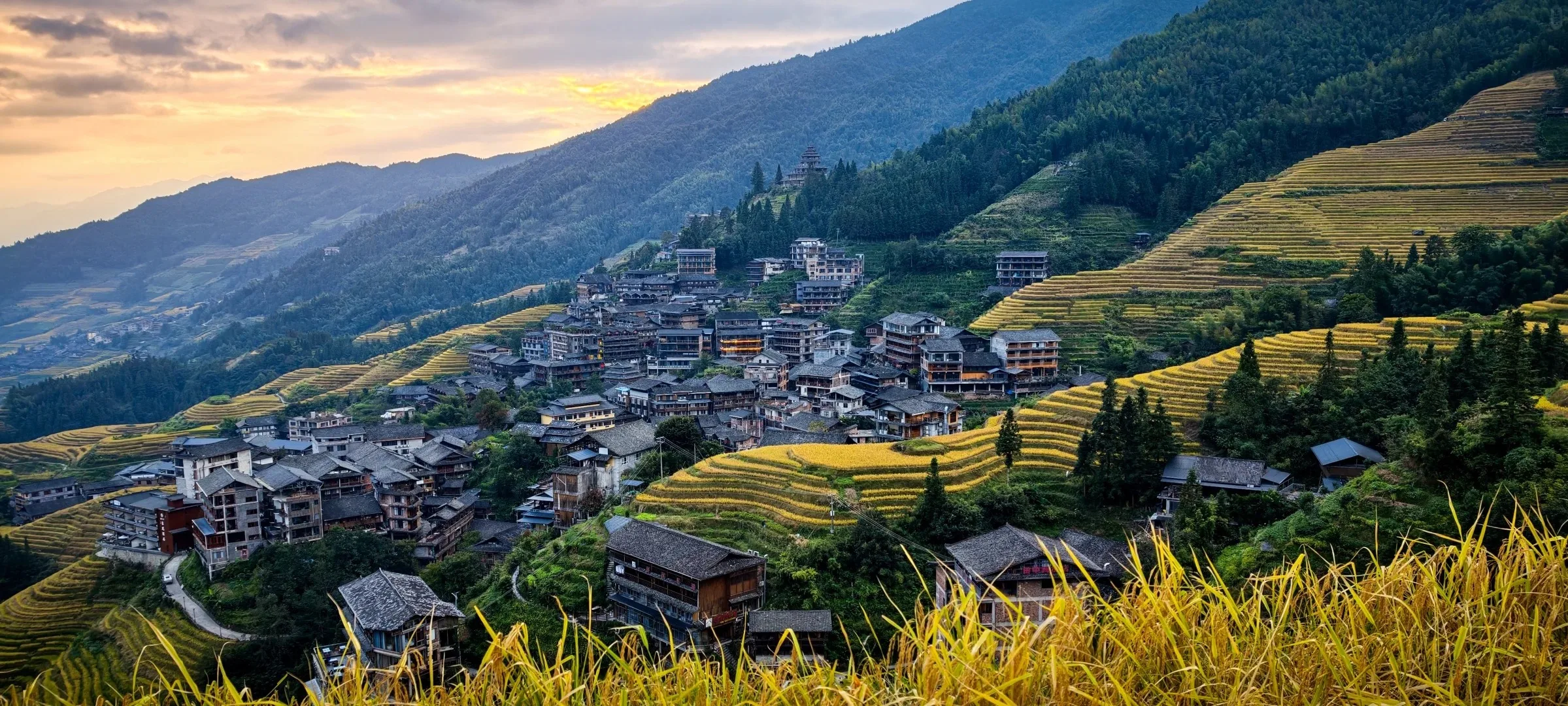
Walk among layers of rice terraces that climb the mountainsides, with Zhuang and Yao villages resting between the fields. Beyond the view, Longji reveals a farming life shaped by seasons, water, and generations of hands.
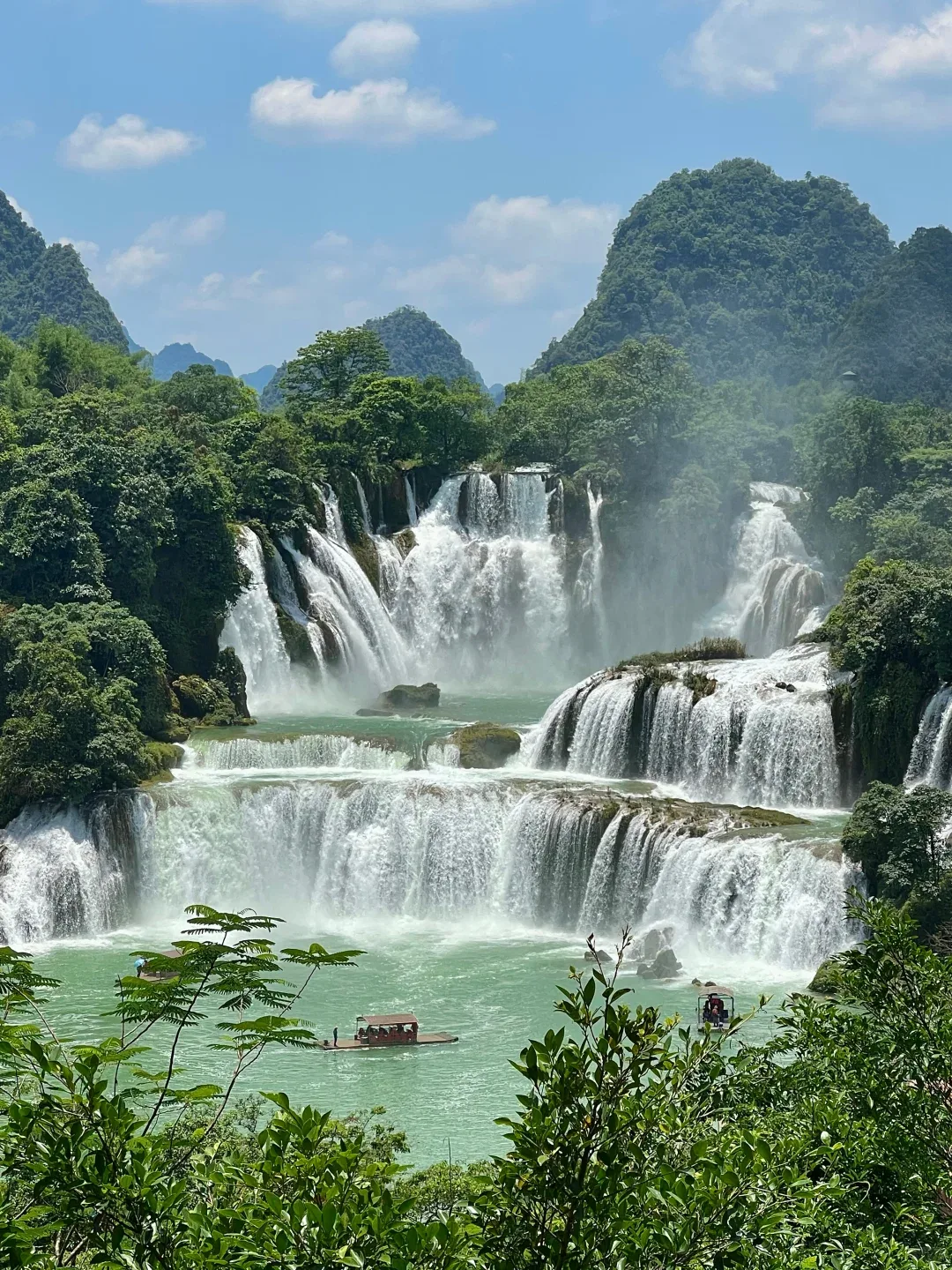
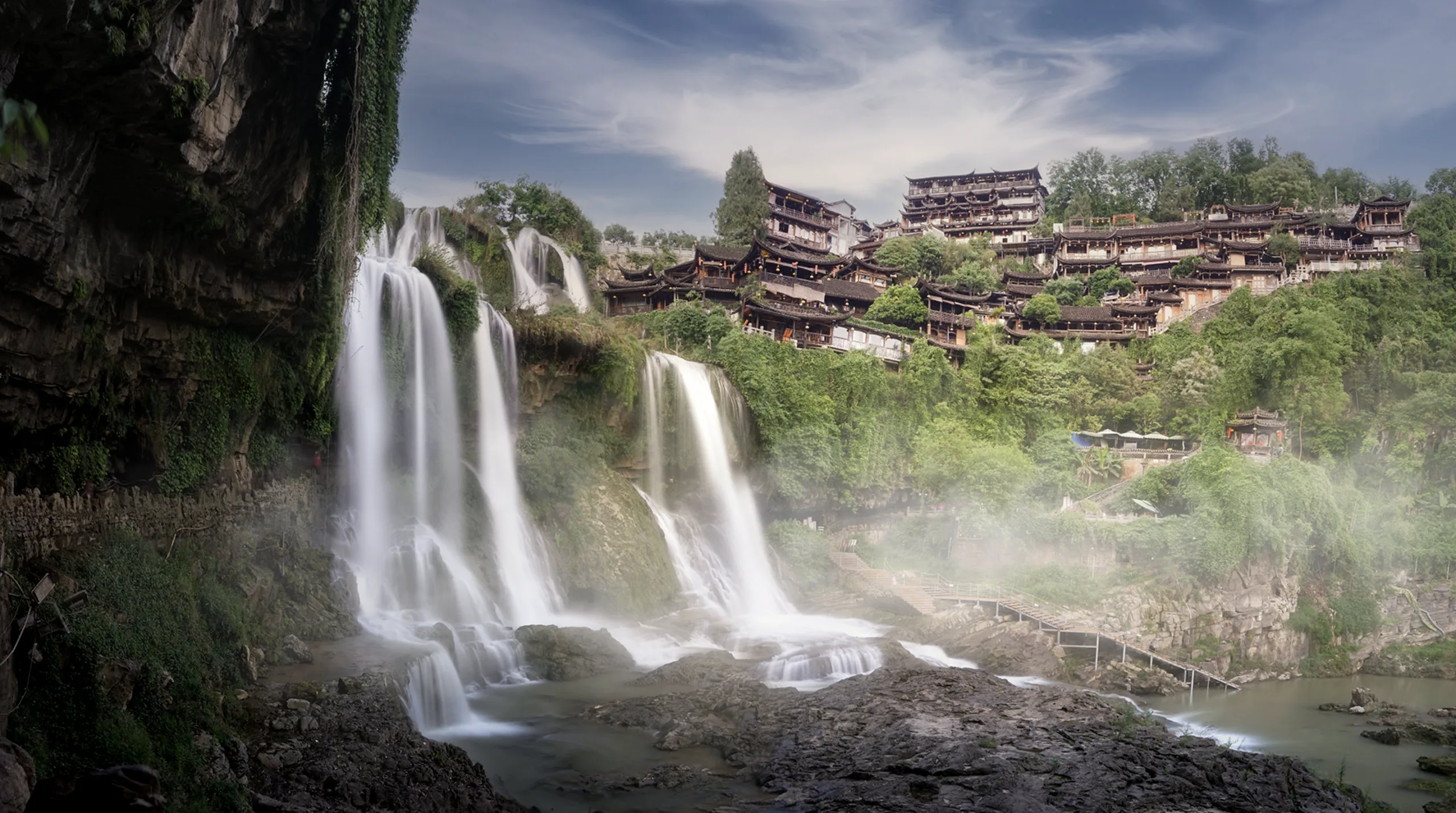
Travel along the China–Vietnam border, where waterfalls, karst peaks, rural landscapes, and borderland culture come together in one of Guangxi’s most distinctive regions.
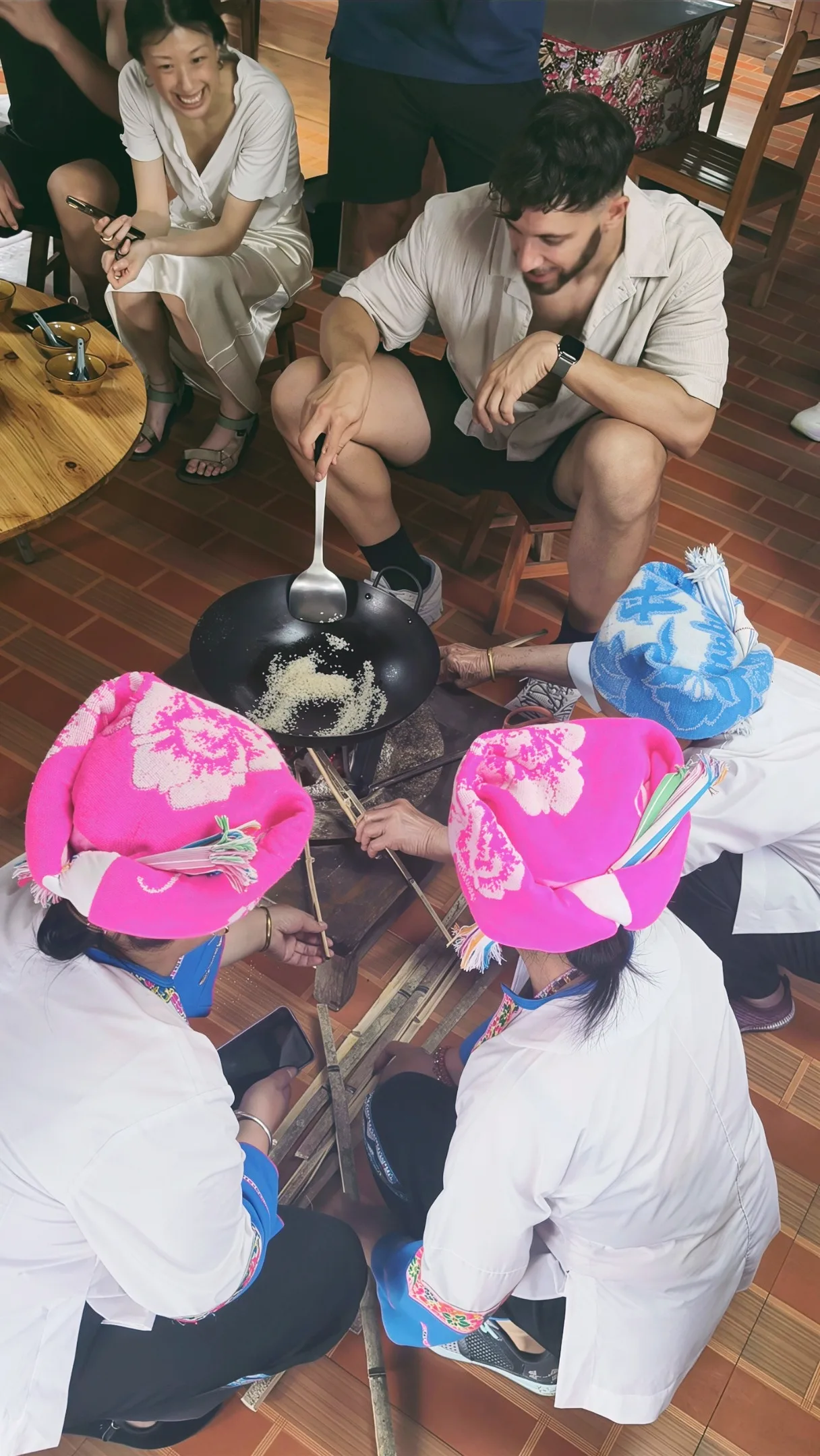
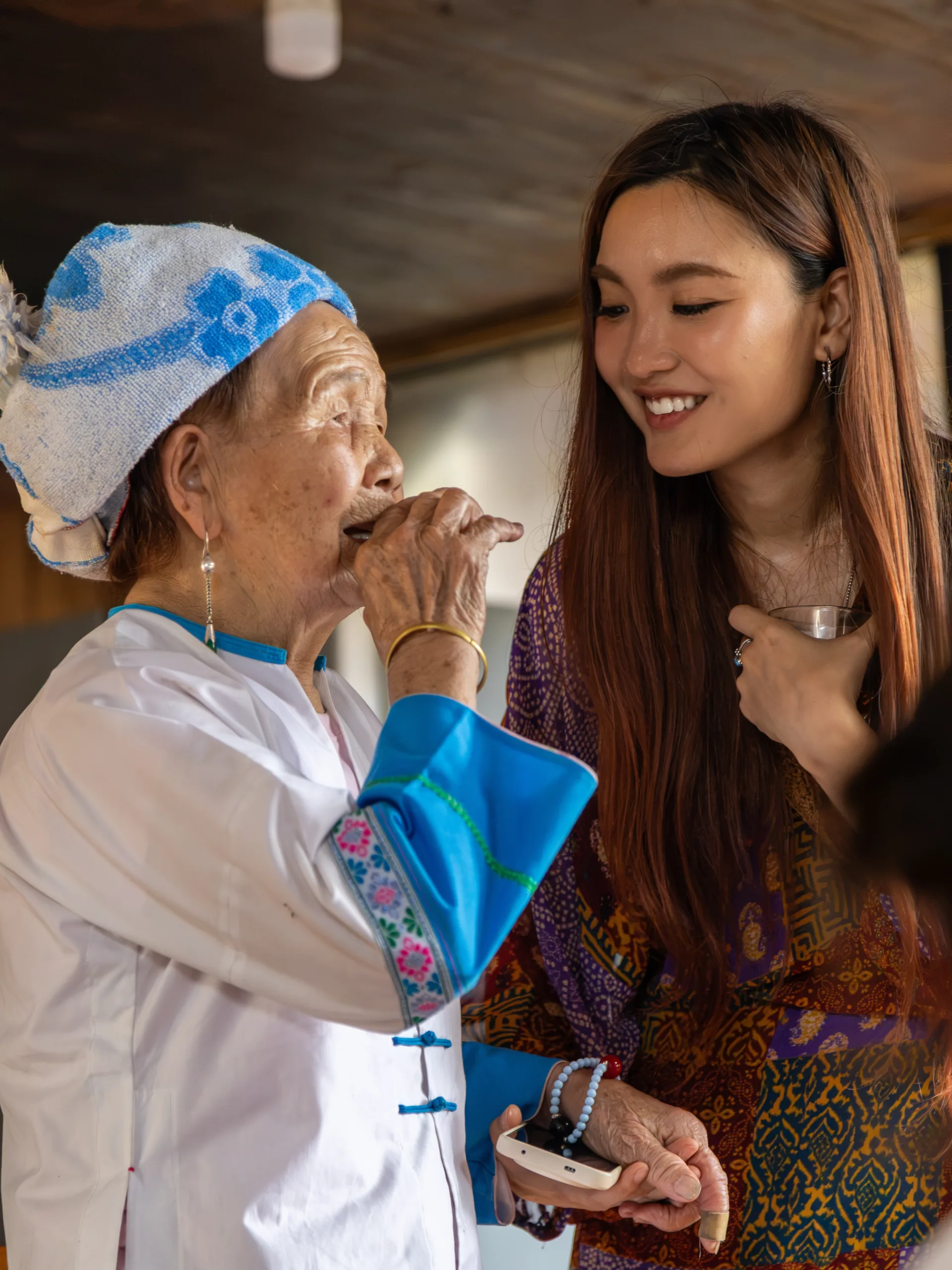
Step into a Zhuang family kitchen in Ping'an Village. Learn to brew oil tea, pound sticky rice cakes, and weave straw sandals — a glimpse into a way of life passed down through generations, kept alive in the warmth of a hearth and the grip of a hand.
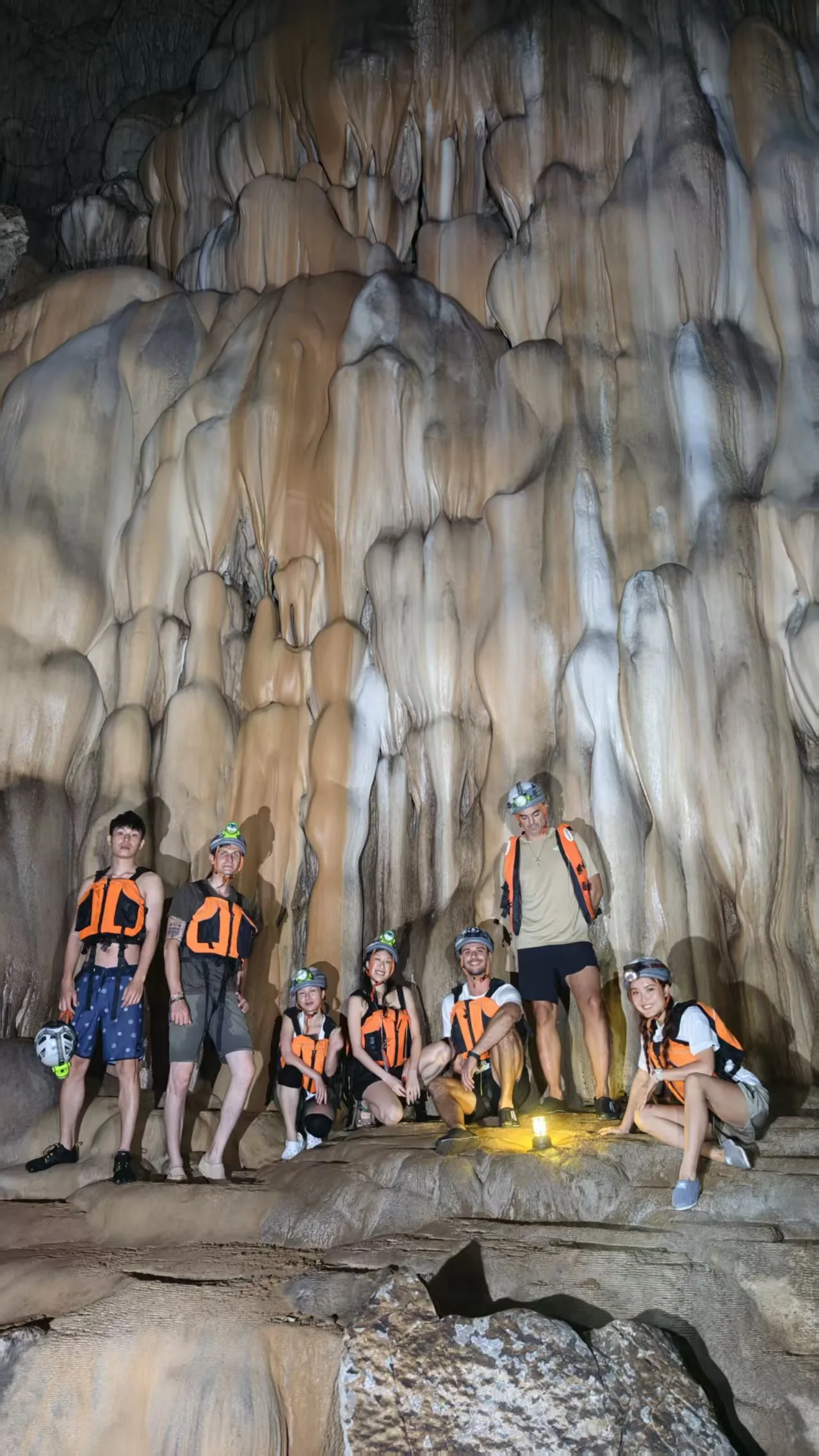
Wade deep into a cave by headlamp, where an ancient seabed lies beneath your feet and stalactites that took hundreds of thousands of years to form hang above you — a journey into the earth, carved by time itself.
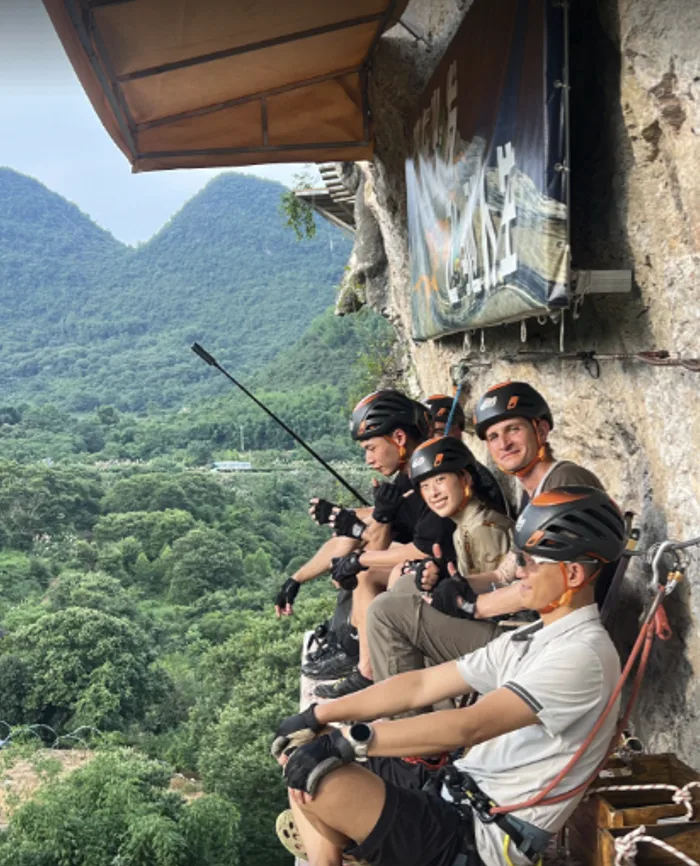
Ascend a vertical limestone cliff and see Guilin’s karst mountains from above. Stop mid-route for coffee suspended in the air, surrounded by emerald peaks, river valleys, and scattered villages far below—a rare perspective on one of China’s most iconic landscapes.
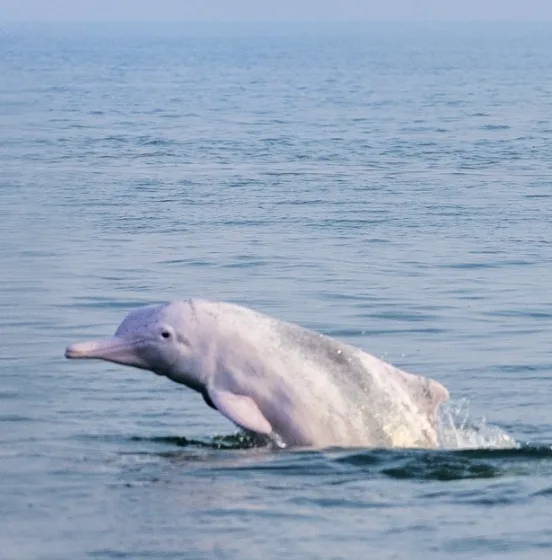
Observe Chinese white dolphins and Bryde’s whales along the coast, or visit Chongzuo to look for rare white-headed langurs moving through the limestone forests.
Inclusions & Offers
Designed Around Your Journey
Rather than fixed departures, this experience is arranged privately and shaped around your preferred dates, interests, and travel style.
Our specialists will design the journey based on your pace, accommodation preferences, and seasonal conditions.
Best time to visit
Guangxi is warm and humid throughout the year. As it is located near the coast, typhoons may occur in summer and autumn.
Traveler Reviews






FAQs
How is a private tour different from a group tour?
A Guangxi private tour offers greater flexibility, privacy, and access to local experiences than a standard group itinerary. Rather than following fixed schedules and popular sightseeing routes, you can explore at your own pace — whether that means discovering quieter stretches of the Li River, spending longer among the Longji Rice Terraces, or venturing into the remote karst landscapes along the Vietnamese border.
With Eastogo, private travel also opens the door to more distinctive experiences. Spend time with Zhuang and Yao families, learn traditional crafts and cooking, explore lesser-visited villages, or join specialist-led wildlife excursions in search of rare white-headed langurs and coastal dolphins. Routes can be adapted around local festivals, seasonal wildlife activity, and your personal interests.
With knowledgeable local guides, private transport, carefully selected stays, and long-standing community connections, we create journeys that bring together Guangxi’s extraordinary landscapes, living traditions, and wildlife — offering a more personal and rewarding way to explore the region.
How does the booking process work?
1. Submit Your Inquiry
Tell us where you’d like to go, when you’d like to travel, and what kind of experiences you’re looking for.
2. Meet Your Destination Specialist
Your regional expert will arrange a complimentary consultation to understand your interests, travel style, pace, and priorities. Together, we’ll begin shaping the journey around your curiosity.
3. Receive Your Personalized Proposal
Based on your preferences, we’ll create a personalized itinerary and quotation, including accommodations, transportation, experiences, and recommendations tailored specifically to you.
4. Refine & Confirm Your Journey
Review the itinerary with your destination specialist and make any adjustments you’d like. Once everything feels right, secure your booking with a deposit and we’ll begin preparing the trip.
5. Travel with Confidence
Before departure, you’ll receive your detailed travel documents, practical information, and pre-departure guidance. Then simply arrive and enjoy your journey while we take care of the rest.
What is Guangxi known for?
Guangxi is known for some of the world’s most spectacular karst landscapes, the Li River’s iconic scenery, Detian Waterfall—the largest transnational waterfall in Asia, the vast Leye Tiankeng sinkhole system, and Weizhou Island, China’s youngest volcanic island.
It is also one of China’s most culturally diverse regions. Guangxi is home to the country’s largest ethnic minority population, where Zhuang, Yao, Dong, Miao, and other communities have shaped local traditions, architecture, festivals, music, and food for generations.
Beyond its landscapes and cultures, Guangxi is one of China’s biodiversity hotspots. White-headed langurs, Indo-Pacifiic humpback dolphins, Bryde’s whales, and many migratory birds, including the critically endangered spoon-billed sandpiper, can be found here, making it one of the country’s most underrated destinations for wildlife and nature lovers.
Is Guangxi worth visiting?
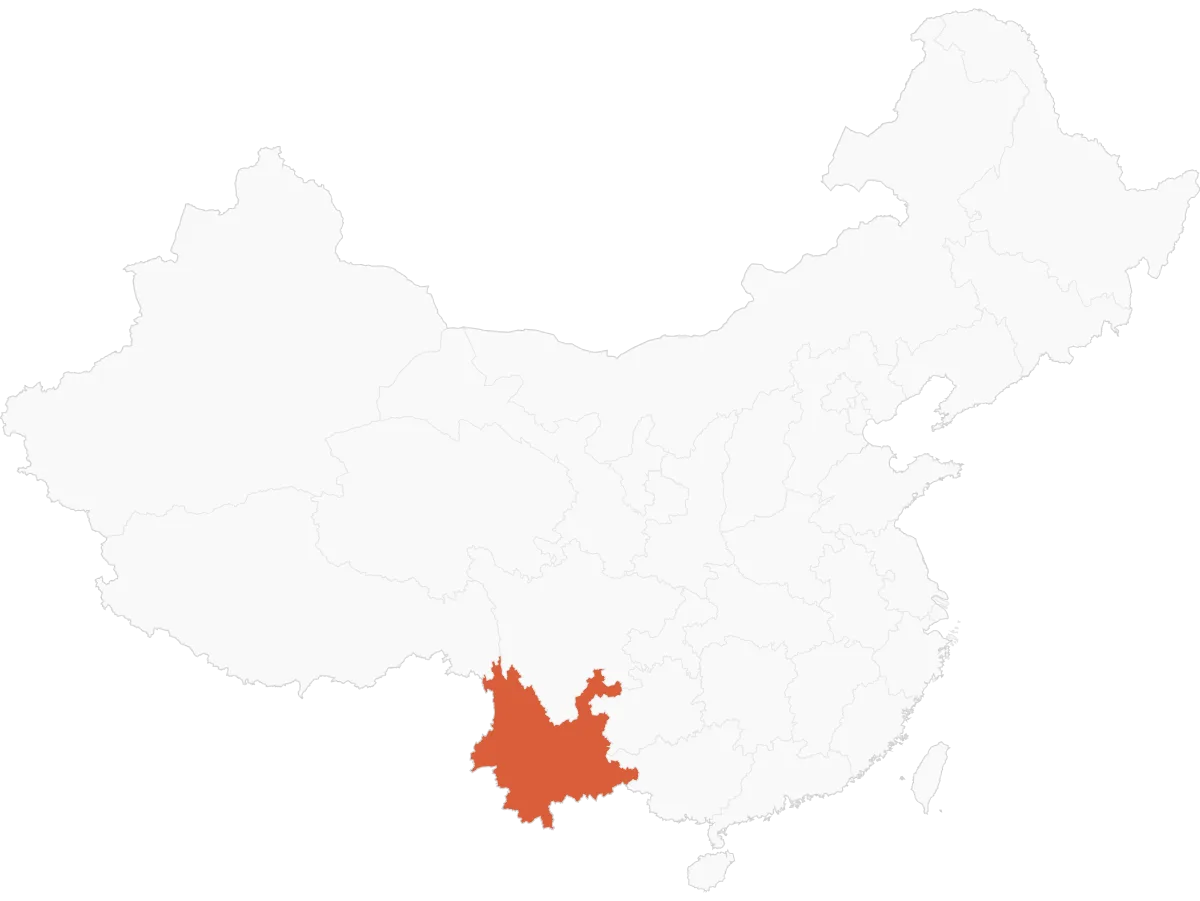
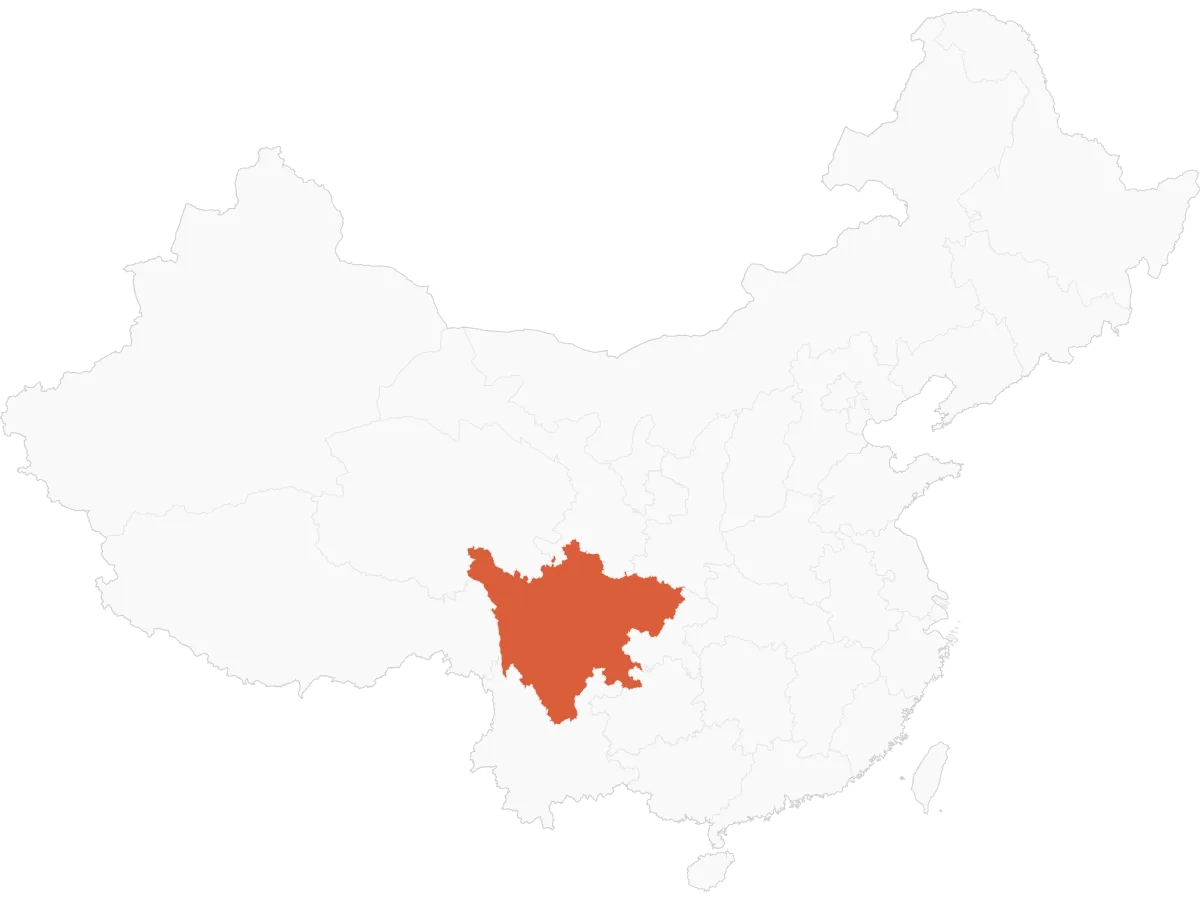
Yes. Guangxi is absolutely worth visiting, but its appeal is different from that of Yunnan, Sichuan, or Tibet.
Compared with Yunnan, Guangxi offers equally spectacular karst landscapes but attracts fewer visitors. It is still possible to cycle through countryside roads lined with rice fields and limestone peaks without seeing many other travellers.
Compared with Sichuan, Guangxi has no snow mountains or high-altitude travel. The climate is warmer, the terrain is gentler, and outdoor activities are generally more relaxed.
Guangxi is especially suitable for travellers who enjoy slow travel, local food, cycling, photography, village life, and ethnic minority cultures. Drifting along the Li River, cycling through Yangshuo’s countryside, staying with a Zhuang family in Longji Rice Terraces, or listening to Dong Grand Song in Sanjiang often leaves a deeper impression than simply visiting famous attractions.
If you are looking for snow mountains, high-altitude adventures, wildlife expeditions, or pilgrimage experiences, Sichuan, Qinghai, or Tibet may be a better fit.
In short, if you enjoy beautiful landscapes, a comfortable pace, and a few days of slower travel, Guangxi is unlikely to disappoint.
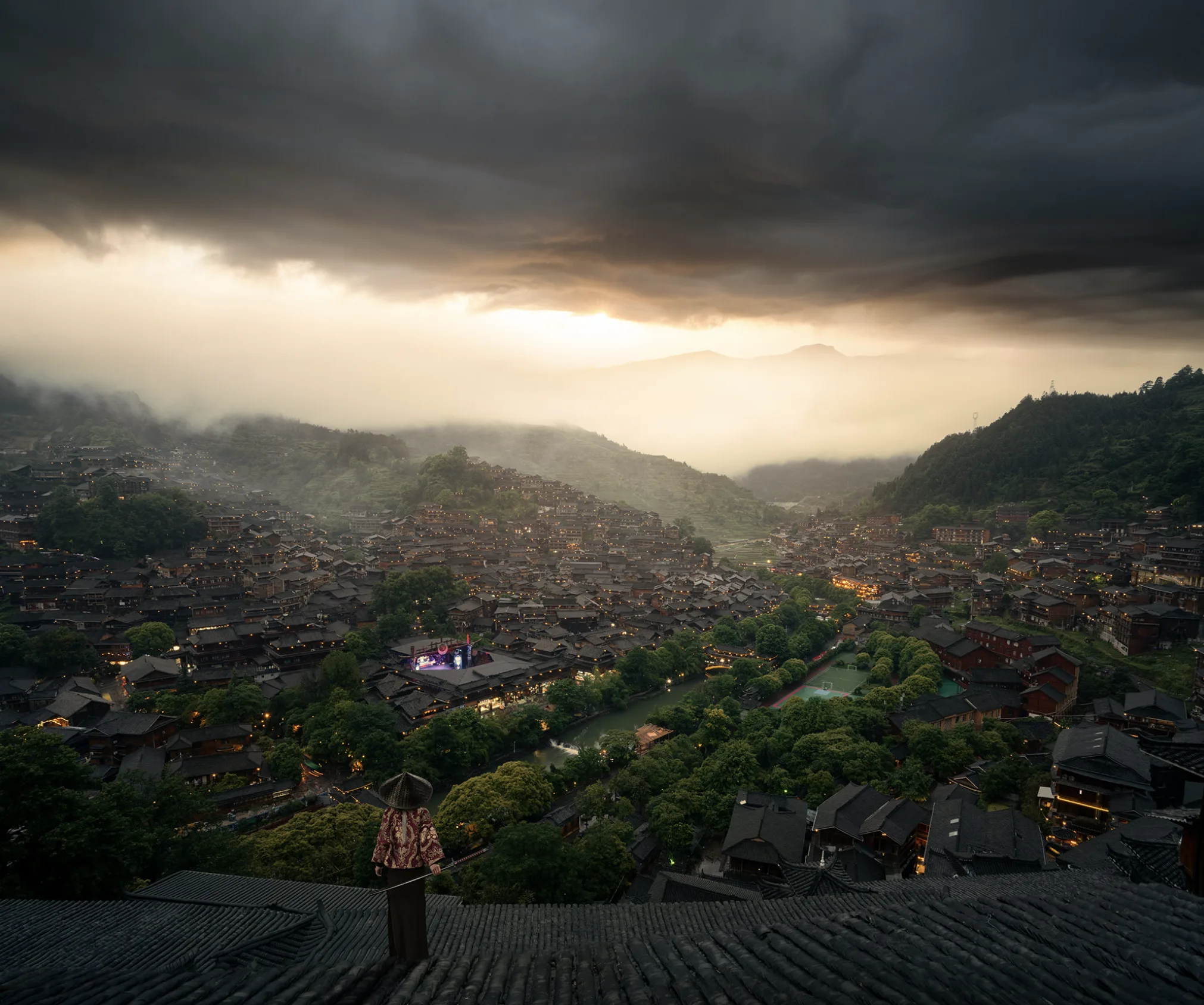
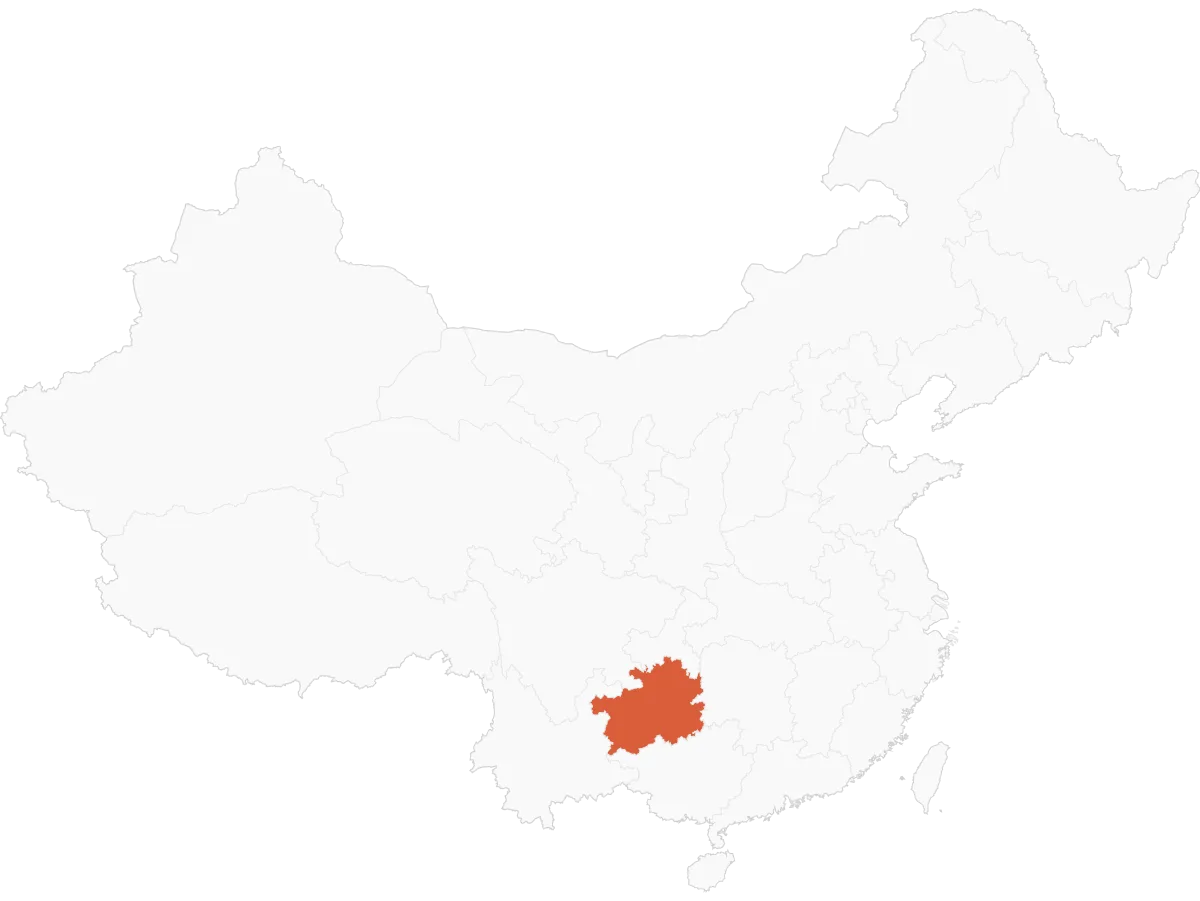
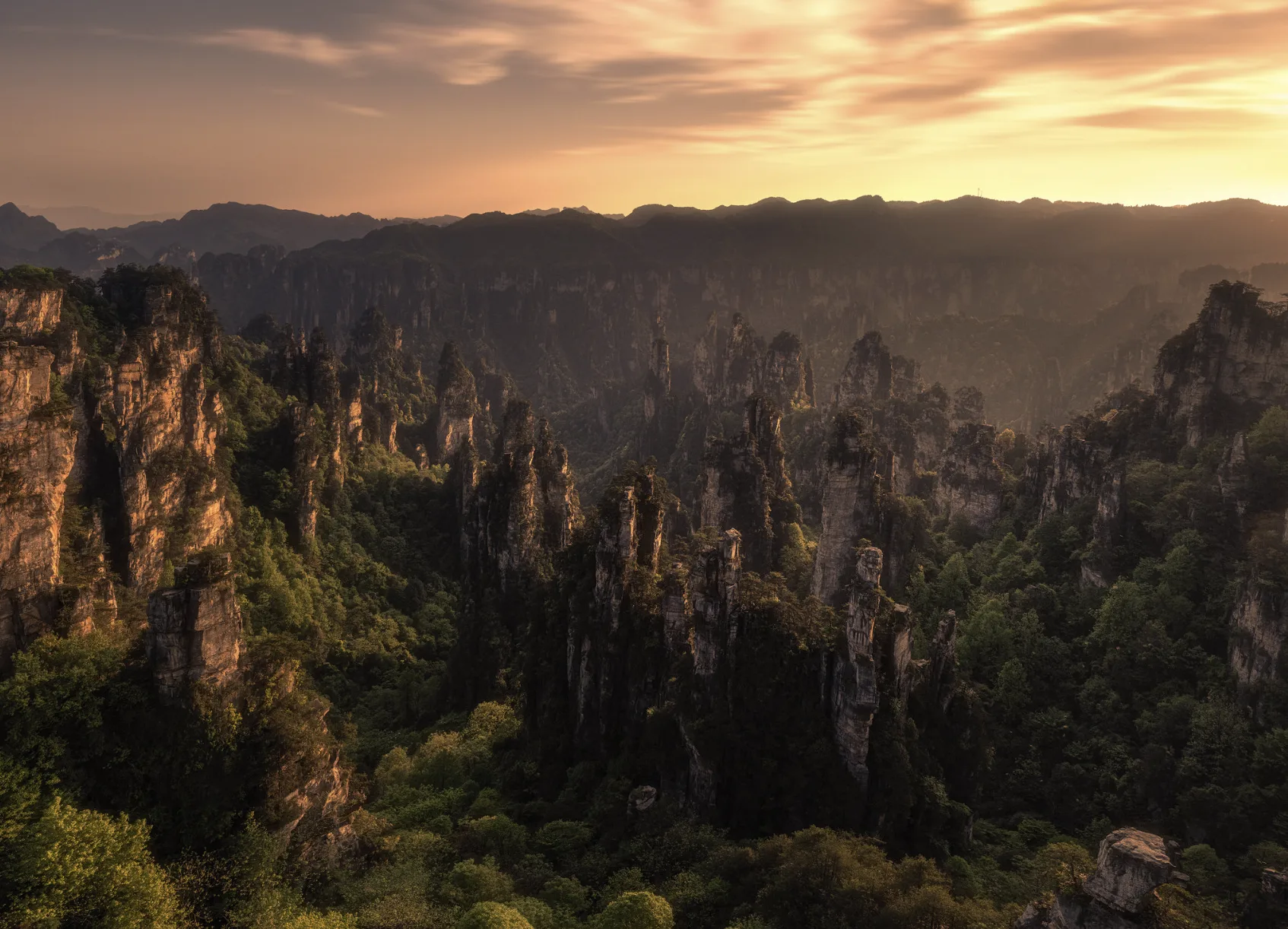
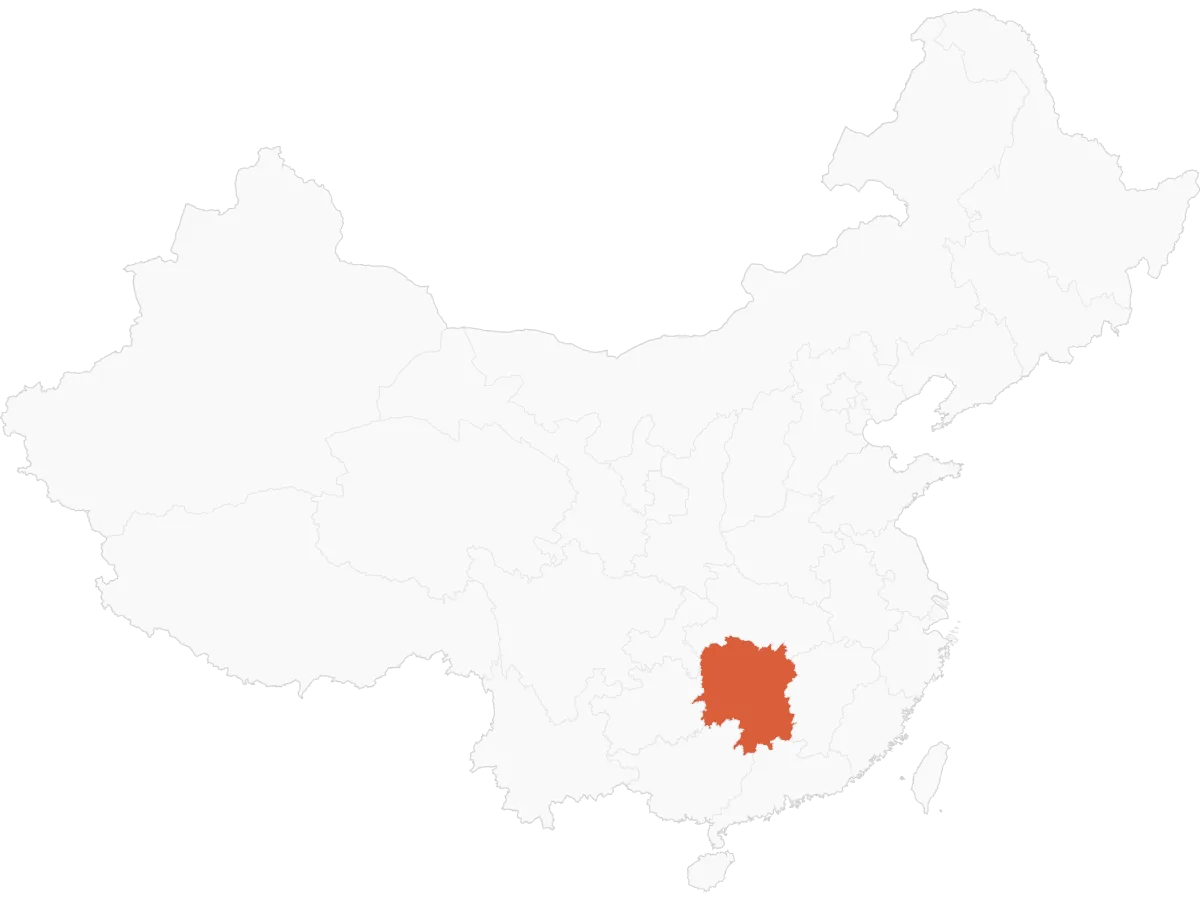
Guangxi also borders Hunan and Guizhou. With enough time, these three provinces can be combined into one journey, offering a broader view of southern China, where Miao, Dong, Zhuang, and Yao cultures meet among mountains, rivers, rice terraces, and villages.
Is Guangxi suitable for first-time visitors to China?
Yes. Guangxi is suitable for first-time visitors to China, but it is not the most typical introduction to the country.
If you’re mainly interested in understanding China’s imperial history, major cities, and famous landmarks, places like Beijing, Shanghai, and Xi’an are probably better first stops. But if you’d rather see a greener, more relaxed, and nature-focused side of China, Guangxi is a great place to start.
There is no high-altitude travel, transportation is straightforward, and tourism infrastructure is well developed. A journey through Guilin, Yangshuo, Longji Rice Terraces, and Sanjiang allows first-time visitors to experience landscapes, village life, ethnic minority cultures, and local cuisine at a comfortable pace.
Guangxi may not give you the grandest first impression of China, but it offers something equally valuable: an easy and natural way to step into everyday life in southern China. For travellers who prefer relaxed journeys over complex itineraries and fast-paced sightseeing, Guangxi can be a gentle introduction to the country.
What are the must-see attractions in Guangxi?
What makes Guangxi special is not any single attraction, but the combination of landscapes, villages, and ethnic minority cultures that together create its unique character.
Guilin, the Li River, and Yangshuo
Home to China’s most iconic karst scenery. Whether drifting down the Li River on a bamboo raft or cycling through rice fields and limestone peaks, this is the landscape many people imagine when they think of traditional Chinese scenery.
Longji Rice Terraces
Layers of rice terraces climb the mountainsides, with Zhuang and Yao villages scattered among them. Beyond the spectacular views, this is also a place to experience a way of agricultural life that has continued for generations.
Sanjiang Dong Autonomous County
One of the best places to experience Dong culture. Drum towers, wind-and-rain bridges, and Dong Grand Song remain an important part of local community life.
Beihai and Weizhou Island
Guangxi’s coastal side. Volcanic landscapes, beaches, seafood, and cycling routes make this a good choice for travellers looking for a slower pace by the sea.
Chongzuo and Detian Waterfall
Along the China–Vietnam border, karst peaks, rural landscapes, and the spectacular Detian Waterfall create one of the most distinctive landscapes in southern China.
If time is limited, Guilin, Yangshuo, and Longji Rice Terraces are usually the best introduction to Guangxi. With more time, continue to Sanjiang, Chongzuo, Beihai, or Weizhou Island to experience a broader side of the region.
How many days should I spend in Guangxi?
For most travellers, we recommend spending at least 4–5 days in Guangxi.
With 3 days, you can focus on Guilin and Yangshuo, experiencing the Li River, karst landscapes, and countryside cycling.
With 4–5 days, you can add Longji Rice Terraces and see Zhuang and Yao villages, as well as the farming life shaped by the terraces.
With 6–8 days, the journey becomes more complete. You can continue from Guilin, Yangshuo, and Longji to Sanjiang, where Dong drum towers, wind-and-rain bridges, and Dong Grand Song form an important part of local community life.
With 9 days or more, you can add Chongzuo, Detian Waterfall, Beihai, or Weizhou Island, seeing Guangxi’s border landscapes, waterfalls, and coastline.
In short, 3 days lets you see Guilin and Yangshuo. 5 days lets you experience landscapes and rice terraces. More than 7 days feels like truly entering Guangxi.
For wildlife lovers, around 9 days can make the journey richer. You can travel to the Beibu Gulf coast to look for Indo-Pacific humpback dolphins and Bryde’s whales by boat, or visit the area around Chongzuo White-Headed Langur National Nature Reserve to observe the extremely rare white-headed langur. This gives travellers a deeper experience of Guangxi’s biodiversity and conservation work.
What is the best time to visit Guangxi?
The first thing we recommend is avoiding Chinese public holidays, especially the May Day holiday and National Day holiday, when popular areas such as Guilin, Yangshuo, and Longji Rice Terraces can become very crowded.
For most travellers, the best time to visit Guangxi is March–May and September–November, when the weather is comfortable and the landscapes are at their best.
Spring (March–May)
Plants begin to grow again, karst peaks are often covered in mist, and the weather is suitable for hiking, cycling, and village visits. Longji Rice Terraces are also beautiful for photography and walking.
Summer (June–August)
The weather is hot and humid, with more rainfall, but the rivers, fields, and countryside are full of life. Longji Rice Terraces are at their greenest. As Guangxi is close to the coast, some areas may be affected by typhoons in summer and autumn.
Autumn (September–November)
Temperatures become cooler, the skies are clearer, and Longji Rice Terraces turn golden. This is one of the best seasons for photography, outdoor activities, and village travel.
Winter (December–February)
Guangxi is milder than northern China in winter. The rice terraces are less colourful, but there are fewer visitors, making it a good season for quieter travel around Guilin, Yangshuo, and nearby villages.
How do I get to Guangxi?
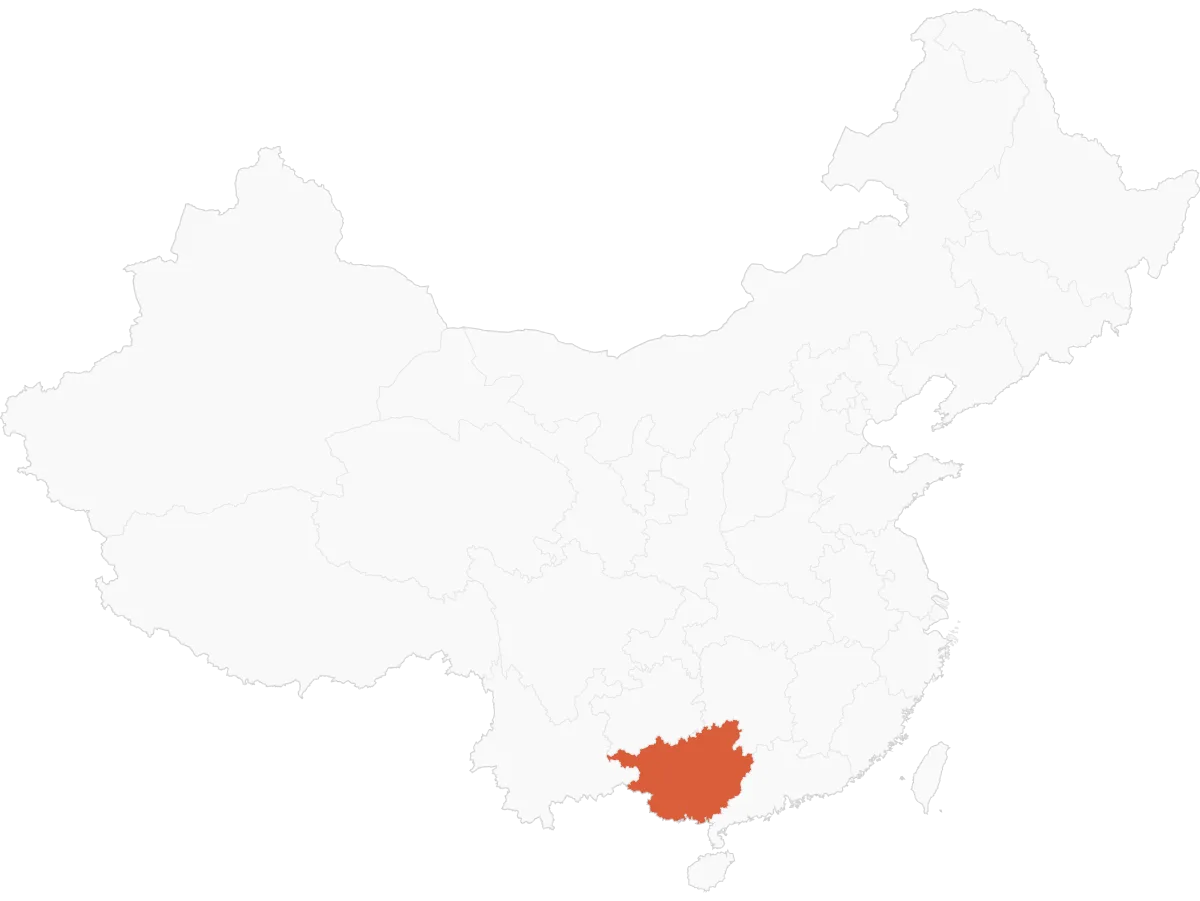
Most travellers enter Guangxi through Guilin or Nanning. Guilin is better for Yangshuo, the Li River, and Longji Rice Terraces. Nanning is better for Chongzuo, Detian Waterfall, Beihai, and the China–Vietnam border area.
International flights
Guangxi’s main airports are Guilin Liangjiang International Airport (KWL) and Nanning Wuxu International Airport (NNG). International routes are limited, so most overseas travellers first fly to major Chinese hubs such as Beijing, Shanghai, Guangzhou, Shenzhen, Hong Kong, or Chengdu, then take a domestic flight to Guilin or Nanning.
Domestic flights
Guilin and Nanning are well connected with major Chinese cities, including Beijing, Shanghai, Guangzhou, Shenzhen, Chengdu, Chongqing, Hangzhou, Xi’an, and Kunming. If your trip focuses on Guilin, Yangshuo, and Longji Rice Terraces, Guilin is usually the better airport. If you plan to visit Chongzuo, Detian Waterfall, or Beihai, Nanning is more convenient.
High-speed trains
Guangxi has a convenient high-speed railway network. Guilin and Nanning can be reached by train from Guangzhou, Shenzhen, Guiyang, Changsha, Chengdu, Chongqing, Kunming, and other cities. Guilin is a good gateway for landscape routes, while Nanning works better for border and coastal routes.
What ethnic groups live in Guangxi?
Guangxi is home to 12 long-established ethnic groups, including Zhuang, Yao, Miao, Dong, Mulao, Maonan, Hui, Jing, Yi, Shui, Gelao, and Han communities.
Zhuang: Visit Longji Rice Terraces and Huashan Rock Art, listen to folk songs during the Sanyuesan Festival, and learn about the rice-farming culture of China’s largest ethnic minority group.
Yao: Visit Yao villages in Jinxiu and Longsheng, learn about the Panwang Festival, traditional embroidery, and the local custom of serving oil tea.
Miao: Explore Miao villages in Rongshui, see lusheng music and dance, silver ornaments, festive clothing, and lively community celebrations.
Dong:Visit Sanjiang’s wind-and-rain bridges and drum towers, and listen to Dong Grand Song, a UNESCO-recognised intangible cultural heritage tradition.
Why do Indo-Pacific humpback dolphins turn pink?
Indo-Pacific humpback dolphins are not born pink. Their colour changes throughout life. Young dolphins are usually dark grey or black. As they grow, grey and pink patches begin to appear. Adults may become pale white or pink.
The pink colour does not come from skin pigment. It comes mainly from the blood vessels under their thin, pale skin. When the dolphins swim actively or become excited, blood flow increases, and the skin appears pink, much like a human face turning red after exercise.
This also helps them regulate body temperature in warm waters. In simple terms, the pink colour reflects age, activity, and physical condition, rather than being a fixed “skin colour.”